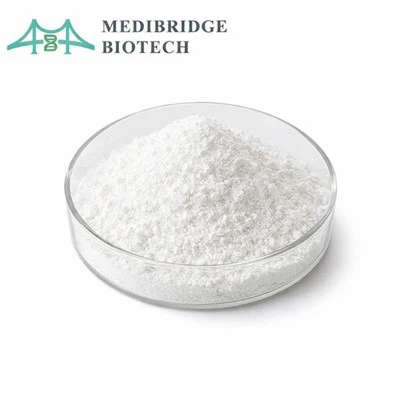
Emtricitabine API is an antiretroviral medication primarily used in the treatment of HIV (human immunodeficiency virus) and, in some cases, for hepatitis B. It belongs to a class of drugs called nucleoside reverse transcriptase inhibitors (NRTIs). It works by preventing HIV from replicating its genetic material through the reverse transcriptase enzyme, thus preventing the virus from multiplying.
It is a nucleoside analogue that mimics the building blocks of DNA. When the virus tries to replicate its genetic material, this product gets incorporated into the growing viral DNA strand. This incorporation disrupts the ability of the virus to continue replicating, effectively preventing further viral proliferation. Emtricitabine works by inhibiting reverse transcriptase, an enzyme that HIV requires to replicate. By blocking this enzyme, this product prevents the conversion of viral RNA into DNA, thereby interrupting the viral replication cycle and reducing the viral load in the body.
Shaanxi Medibridge Biotech Co., Ltd. focuses on the supply of pharmaceutical raw materials and research-use compounds. We support customers with stable quality, clear specification communication, flexible packaging options, and document-related support for different project stages.
COA
|
|
||
|
Product Name |
CAS Number |
Batch Number |
|
Emtricitabine API |
143491-57-0 |
MB2606100214 |
|
Manufacturer Date |
Analysis Date |
Expiry Date |
|
2026/6/10 |
2026/6/11 |
2028/6/10 |
|
Sample Qty Base |
Packing |
Test Method |
|
25KGS |
5KG/drum |
HPLC |
|
|
||
|
Item |
Standard |
Results |
|
Appearance |
white to off-white powder |
Complies |
|
Related substance(HPLC) - Total impurity |
≤0.5% |
0.2% |
|
Related substance(HPLC) - Max single impurity |
≤0.1% |
0.06% |
|
Odor |
Characteristic |
Complies |
|
Loss On Drying |
NMT0.1% |
0.12% |
|
Residue On Ignition |
NMT 0.5% |
0.09% |
|
Heavy Metals |
NMT 10ppm |
Complies |
|
As |
NMT 0.1ppm |
Complies |
|
Pb |
NMT 0.1ppm |
Complies |
|
Cd |
NMT 0.1ppm |
Complies |
|
Assay |
≥99% |
99.89% |
|
Conclusion |
The batch conforms to the IN-HOUSE standard |
|
|
|
||


Key Molecular Mechanisms
Competitive Inhibition and DNA Chain Termination
Substrate Competition: FTC-TP closely mimics the natural substrate deoxycytidine triphosphate (dCTP) and competitively binds to the active site of HIV-1 reverse transcriptase (RT) or HBV DNA polymerase.
Elongation Blockade (Chain Termination): Due to the absence of a 3'-hydroxyl (-OH) group on the oxathiolane ring of FTC, once FTC-TP is incorporated into the growing viral single-stranded DNA, it prevents the formation of subsequent 3'-5' phosphodiester bonds, leading to immediate physical chain termination of viral DNA synthesis.


Prolonged Intracellular Half-Life and Minimal Mitochondrial Toxicity
High Selectivity Index: Compared to first-generation NRTIs (such as AZT and ddI), FTC-TP exhibits extremely low affinity for human cellular DNA polymerases α, β and γ (especially showing negligible inhibition against Pol γ, which is responsible for mitochondrial DNA replication). Consequently, it displays minimal mitochondrial toxicity.
Extended Intracellular Half-Life: FTC-TP possesses an extended intracellular half-life of over 39 hours in human lymphocytes, providing a strong molecular pharmacology foundation for once-daily (QD) administration and durable protection in Pre-Exposure Prophylaxis (PrEP).
Antiviral Mechanism: Intracellular Activation and Chain Termination
After entering a cell, emtricitabine (FTC) is phosphorylated by host enzymes to its active form, emtricitabine 5'-triphosphate. This metabolite competes with the natural substrate deoxycytidine triphosphate for HIV-1 reverse transcriptase. Once incorporated into viral DNA, it prevents further chain extension. Research therefore considers both exposure to the parent compound and the formation of its active intracellular metabolite.
Emtricitabine also has activity against hepatitis B virus (HBV), but it is not approved as a stand-alone treatment for chronic hepatitis B. In people with HIV/HBV coinfection, stopping an emtricitabine-containing regimen may be followed by an acute worsening of hepatitis B.

Resistance and Cross-Resistance Research

The M184V and M184I substitutions in HIV-1 reverse transcriptase are central to emtricitabine resistance research. They are also relevant to cross-resistance with lamivudine, a closely related nucleoside analogue. The activity of an emtricitabine-containing regimen against resistant HIV cannot be inferred from the API alone; interpretation requires the viral genotype, phenotypic susceptibility when available, and the activity of the other drugs in the regimen. These features make emtricitabine useful for studying antiviral selection pressure and combination strategies.
Pharmacokinetics and Renal Function
Emtricitabine produces systemic exposure after oral administration, has low plasma protein binding, and is cleared primarily through the kidneys. Reduced renal function changes its pharmacokinetics and must be considered during finished-product development. This is particularly important for fixed-dose combinations: their components may have different requirements for use in renal impairment, so adjustments applicable to a single-agent emtricitabine product cannot automatically be applied to a combination product.

Safety Considerations and Research Boundaries

The safety profile of emtricitabine must be interpreted in the context of the finished product and the full antiretroviral regimen. An acute exacerbation of hepatitis B after discontinuation is a particular concern for people with HIV/HBV coinfection. Conversely, risks associated with another component of a combination product should not automatically be attributed to emtricitabine itself. API research should distinguish the properties of the individual compound from interactions within a formulation and outcomes observed in clinical use.
FAQ
What does API stand for in pharmacy?
In pharmacy and the medical industry, API stands for Active Pharmaceutical Ingredient.
What is emtricitabine for?
Emtricitabine is a prescription antiviral medicine used to treat and prevent human immunodeficiency virus (HIV).
Who are the top 10 API manufacturers in the world?
The top active pharmaceutical ingredient (API) manufacturers in the world include major global biopharmaceutical leaders and specialized bulk/generic API producers.
What is API in pharmaceutical?
In the pharmaceutical industry, API stands for Active Pharmaceutical Ingredient.
Hot Tags: emtricitabine api, China emtricitabine api manufacturers, suppliers, factory, cobicistat treatment formulation ingredient, dicyclanil chemical raw material, heparin sodium laboratory grade powder, heparin sodium pharmaceutical grade material, Mirabegron Powder, picamilon neurological compound