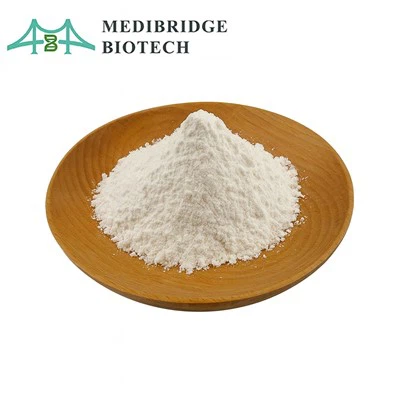
Rapamycin powder, also known as sirolimus, is a fermentation-derived macrocyclic lactone associated with Streptomyces hygroscopicus. In raw material supply, it is generally obtained through fermentation, followed by separation and purification, and is usually presented as a white to off-white powder. Its compound profile is well established, with the molecular formula C51H79NO13 and a molecular weight of about 914.2. It is not water-soluble, so solvent choice usually matters in later handling and formulation work.
This ingredient is mostly known for its link to the mTOR pathway, so it is more often discussed in mechanism-focused research, analytical work, and pharmaceutical development than in ordinary consumer ingredient use. In practice, people usually pay attention to its compound identity, purity level, solubility behavior, and how it fits into technical evaluation or formulation reference work. That is also why this kind of material is usually presented in a more research-oriented and specification-driven way.
Shaanxi Medibridge Biotech Co., Ltd. focuses on research and development raw materials and can support project-based sourcing with specification communication, packaging options, and document support according to actual needs.

COA
|
|
||
|
Product Name |
CAS Number |
Batch Number |
|
Rapamycin Powder |
53123-88-9 |
MB2602091030 |
|
Manufacturer Date |
Analysis Date |
Expiry Date |
|
2026-02-09 |
2026-02-10 |
2028-02-08 |
|
Sample Qty Base |
Packing |
Test Method |
|
150KGS |
25kg/drum |
HPLC |

|
Item |
Standard |
Results |
|
Appearance |
White to off-white powder |
Complies |
|
Identification |
Positive |
Complies |
|
Assay (HPLC) |
NLT 98.0% |
98.35% |
|
Loss on Drying |
NMT 2.0% |
0.86% |
|
Residue on Ignition |
NMT 0.5% |
0.18% |
|
Heavy Metals |
NMT 10 ppm |
Complies |
|
Related Substances |
NMT 2.0% |
1.12% |
|
Residual Solvents |
Complies with standard |
Complies |
|
Microbial Limit |
Complies with standard |
Complies |
|
Storage |
Store in cool & dry place. keep away from strong light and heat |
|
|
Conclusion |
The batch conforms to the IN-HOUSE standard |
|
|
|
||

Compound Identity & Source Background
Rapamycin, also called sirolimus, is a fermentation-derived macrolide compound associated with Streptomyces hygroscopicus. In product and technical documents, the two names are often used for the same material. Its CAS No. is 53123-88-9, the molecular formula is C51H79NO13, and the molecular weight is about 914.2.
This material is usually supplied as a white to off-white powder. In most raw material files, the basic identity information is shown through its synonym, CAS number, molecular formula, molecular weight, appearance, and purity specification. The source description is usually kept under fermentation-related background.

Roles in Other Biological Systems
Beyond its better-known immunoregulatory background, rapamycin is also frequently mentioned in work related to other biological systems. This mainly comes from the broad involvement of mTOR signaling in cell growth, nutrient sensing, protein synthesis, metabolism, autophagy, and survival across different tissues. Because of that, rapamycin often appears in technical discussion around vascular biology, renal regulation, skin-related pathways, and nervous system signaling.
In product and research material descriptions, this kind of cross-system relevance is usually presented as background information rather than as a direct end-use claim. Most of the attention stays on its pathway connection, compound identity, purity, and how it fits into laboratory research or pharmaceutical development contexts linked with mTOR-related mechanisms in different tissues. This is an inference from the broader role of mTOR across those systems and from how sirolimus is discussed in technical and regulatory literature.

Typical Research and Pharmaceutical Development Directions
mTOR-Related Research
Rapamycin powder is often mentioned in work connected with mTOR signaling. In public compound records, sirolimus is listed as rapamycin and is classified as an mTOR inhibitor, so this direction usually shows up first in research-oriented material and pathway-related technical discussion.
Immunosuppressive Pharmaceutical Background
In official medicine documents, sirolimus is linked with the prophylaxis of organ rejection in adult renal transplant patients. Because of that, rapamycin is commonly seen in pharmaceutical discussions tied to immunosuppressive development background, reference materials, and related specification work.
Topical Development Direction
Sirolimus also appears in approved topical gel materials from the FDA. That makes topical formulation another visible direction in public pharmaceutical documents, alongside the better-known oral or systemic background.
Raw Material and Analytical Work
On the raw material side, the focus is usually kept on identity, assay, impurity control, solubility behavior, and batch consistency. These points appear more often in technical communication because they are directly tied to laboratory evaluation, formulation screening, and document matching. This is an inference based on how sirolimus is described across official compound and drug records.

Why Choose Us
Shaanxi Medibridge Biotech Co., Ltd. focuses on research and development raw materials and keeps communication around specification, purity, and basic product details more direct.
We can discuss packaging, labeling, and sample arrangements based on different project needs, which makes the sourcing process easier to match with actual use.
For this type of material, we also pay attention to batch information, document support, and follow-up communication, so the overall process stays clearer from inquiry to order.

FAQ
Q: Is rapamycin the same as sirolimus?
A: Yes, rapamycin and sirolimus are two names commonly used for the same compound.
Q: What is rapamycin powder commonly linked with?
A: It is commonly linked with mTOR-related research and sirolimus-based pharmaceutical development.
Q: What is the source background of rapamycin?
A: Rapamycin is a fermentation-derived compound associated with Streptomyces hygroscopicus.
Q: Is rapamycin available to the public?
A: Rapamycin is generally known as a prescription medicine rather than a normal over-the-counter product for the public.
Q: Which food has rapamycin?
A: Rapamycin is not known as a normal food component, because it is identified as a compound produced by Streptomyces hygroscopicus rather than coming from common foods.
Hot Tags: rapamycin powder, China rapamycin powder manufacturers, suppliers, factory, Telmisartan Powder, Best NAD Powder, Cilostazol Powder, Pure Pregabalin Powder, Omadacycline Powder, Prilocaine Powder