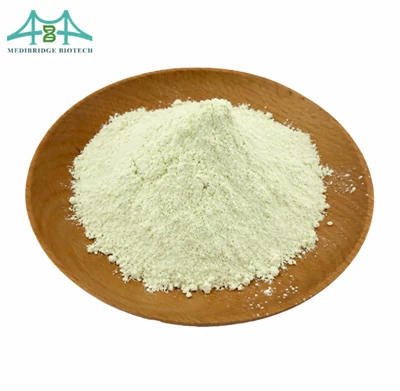
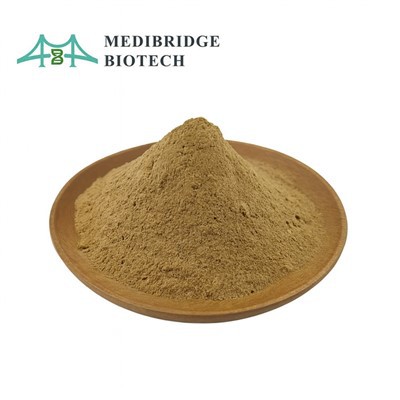
Mussel Adhesive Protein Powder, also known as mussel attachment protein or MAP, is a unique bioadhesive secreted by mussels. It is extracted from the byssus of marine mussels (haihong, also known as green mouth). It is extracted through high-precision crushing, chromatographic purification, concentration, and other steps to obtain a high-purity single protein most easily absorbed by the human body. It is secreted by the byssus structure, a series of filaments formed at the end of the mussel's foot. These byssus are attached through the secreted mucin. The uniqueness of mussel mucin is that it contains many dihydroxyphenylalanine (DOPA) residues. DOPA can form covalent solid and non-covalent bonds with various substrate surfaces in a wet environment, thereby achieving strong adhesion. DOPA gives mussel mucin super strong adhesion ability, enabling it to cure quickly in a humid climate. This property allows mussels to attach firmly and rapidly to various surfaces in the ocean without being disturbed by water.
Shaanxi Medibridge Biotech Co., Ltd. supplies plant extracts, nutritional ingredients, and custom specification products for different sourcing and formulation needs. We support stable supply, routine specification matching, and flexible packaging service for ingredient-based product development.
COA
|
|
||
|
Product Name |
CAS Number |
Batch Number |
|
Mussel Adhesive Protein Powder |
NA |
MB2604050556 |
|
Manufacturer Date |
Analysis Date |
Expiry Date |
|
2026/4/05 |
2026/4/06 |
2028/4/06 |
|
Sample Qty Base |
Packing |
Test Method |
|
50KGS |
5KG/drum |
HPLC |
|
|
||
|
Item |
Standard |
Results |
|
Appearance |
White powder special characteristic odor |
Conform |
|
Protein content |
≥85% |
92.3% |
|
DOPA content |
≥0.3% |
7.43% |
|
PH value |
3.0-7.0 |
4.52 |
|
Total Fat |
4.5 g |
6% |
|
Cholesterol |
56 mg |
18% |
|
Sodium |
369 mg |
15% |
|
Potassium |
268 mg |
7% |
|
Total Carbohydrate |
7 g |
2% |
|
Assay |
98% |
99.88% |
|
Conclusion |
The batch conforms to the IN-HOUSE standard |
|
|
|
||


Biocompatibility & Cellular Microenvironment Regulation
Low Immunogenicity & Safety: As a natural or highly humanized recombinant protein, it exhibits extremely low cytotoxicity and does not trigger significant antibody responses or localized tissue rejection.
Promotion of Cell Anchorage & Migration: Positively charged lysine residues act synergistically with DOPA to provide ideal biophysical anchoring sites for fibroblasts, vascular endothelial cells, and epithelial cells, significantly accelerating cell attachment, spreading, and migration.
Microenvironmental Antioxidant & Anti-Inflammatory Effects: The catechol structure efficiently scavenges reactive oxygen species (ROS), suppresses lipid peroxidation, and downregulates the transcriptional expression of pro-inflammatory cytokines (e.g., TNF-α, IL-6).

Tissue Engineering & Surgical Biomaterials

Wet Bioadhesives: Functions as a non-toxic, suture-free bio-glue for closing blood- and water-containing soft tissue wounds-such as in cardiac, vascular, neural, and ophthalmic surgeries-offering superior tensile strength and burst pressure resistance.
Rapid Hemostasis & Barrier Film Formation: Utilizes its micro-aggregation properties and physical surface film-forming capability to construct a dense biophysical barrier over wounds, enabling rapid hemostasis while shielding against external pathogen invasion.
Implant Surface Functionalization: Frequently applied in biomimetic surface modifications of medical implants (e.g., titanium alloys, polylactic acid [PLA]) to enhance osteointegration efficiency and histocompatibility.
Dermatological & Cosmeceutical Research
Barrier Reconstruction & Transdermal Physical Occlusion: Self-assembles on the skin surface to form a micron-scale permeable protective film, sealing damaged stratum corneum gaps and significantly reducing transepidermal water loss (TEWL).
Post-Aesthetic Procedure & Sensitive Skin Repair: Accelerates the re-epithelialization process for post-laser/phototherapy skin, microneedling wounds, or severely sensitive skin while blocking histamine and inflammatory cascades to alleviate erythema, stinging, and edema.
Hyperpigmentation Inhibition & Anti-Photoaging: Protects endogenous collagen from degradation by neutralizing UV-induced free radicals and inhibiting matrix metalloproteinase (MMP) activity.

Drug Delivery Systems & Nanotechnology

Surface-Independent Coating: Leverages MAP's universal adlayer deposition capability for one-step coating onto nanoparticles, liposomes, or microneedles, substantially extending the localized retention time of drug delivery platforms at specific lesion sites (e.g., tumors, inflammatory wounds).
Stimuli-Responsive Controlled Release: Utilizes reversible coordination between DOPA and metal ions (e.g., Fe3+) to engineer pH- or redox-responsive smart drug carriers, achieving targeted drug release within specific pathological microenvironments.
Application
Biomedical Materials & Surgical Repair
Wet Bio-Glues: Used for sutureless wound closure and tissue bonding of blood- or water-containing soft tissues (such as cardiac, vascular, neural, ophthalmic, and oral tissues), offering high burst pressure resistance and robust tissue adhesion.
Rapid Hemostasis & Wound Barrier: Utilizes its physical surface film-forming and aggregation characteristics to rapidly construct a dense barrier over wounds, achieving efficient hemostasis while isolating against external pathogen infections.
Implant Surface Functionalization: Coated onto medical implants (such as titanium alloys, bone screws, and polylactic acid [PLA]) to enhance hydrophilicity and biocompatibility, significantly improving osteointegration efficiency.


Dermatology & Cosmeceuticals
Post-Aesthetic Procedure & Sensitive Skin Repair: Formulated into repair products for post-phototherapy/laser skin, microneedling wounds, and severely sensitive skin-rapidly relieving erythema, stinging, and edema while accelerating re-epithelialization.
Stratum Corneum Barrier Reconstruction: Self-assembles on the skin surface to form a breathable micron-scale protective film, sealing damaged stratum corneum gaps and reducing transepidermal water loss (TEWL).
Anti-Photoaging & Soothing/Anti-Inflammation: Scavenges reactive oxygen species (ROS), inhibits matrix metalloproteinase (MMP) activity to prevent collagen degradation, and blocks histamine release and inflammatory cascades.
FAQ
What do adhesive proteins do?
Adhesion proteins help cells stick to each other and to their surrounding environment.
Is mussel high in protein?
Yes, mussels are very high in protein and provide about 20 to 24 grams of protein per 100-gram (3.5-ounce) serving.
What type of protein helps cell adhesion?
Adhesion proteins, also known as cell adhesion molecules (CAMs), are the specific type of protein that helps in cell adhesion.
What are glue proteins?
Protein glue is a natural adhesive made from animal collagen or gelatin, or a specialized enzyme used in cooking to bond protein-containing foods together.
If you are looking for a high-quality Mussel Adhesive Protein Powder manufacturer with whom you can establish a long-term, stable partnership, then Shaanxi Medibridge Biotech Co., Ltd. would be your best business partner. Don't hesitate to contact us at hi@medibridgeapi.com.
Hot Tags: mussel adhesive protein powder, China mussel adhesive protein powder manufacturers, suppliers, factory, Corosolic Acid Powder, grape seed extract tablet ingredient, hesperidinase biotechnological enzyme ingredient, hesperidinase recombinant enzyme powder, Mesembryanthemum Extract, Pure Resveratrol Powder