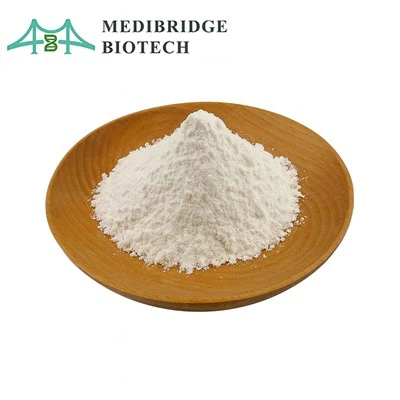
Everolimus Powder also known as RAD 001 powder, is a derivative of sirolimus (sirolimus, also known as rapamycin, i.e., rapamycin), so it is also called 40-O-(2-hydroxyethyl)-rapamycin, or 40-O-(2-hydroxyethyl)-sirolimus. RAD 001 is a drug used to treat various cell diseases and other diseases. Its main ingredient is everolimus, an mTOR (mammalian target of rapamycin) inhibitor that works by interfering with cell growth, proliferation, and survival. mTOR is a critical serine-threonine kinase. It can bind to the intracellular protein FKBP12 to form an inhibitory complex, mTORC1, which can inhibit the activity of mTOR. Inhibition of the mTOR signaling pathway can lead to reduced activity of the transcriptional regulator S6 ribosomal protein kinase (S6K1) and the eukaryotic elongation factor 4E-binding protein (4E-BP), thereby interfering with the translation and synthesis of related proteins such as cell cycle, angiogenesis, and glycolysis. It can reduce the expression of vascular endothelial growth factor (VEGF). RAD 001 is a strong inhibitor of fibroblasts, vascular smooth muscle cells, endothelial cells, and sick cells' development and division. It can inhibit glycolysis in solid diseases in vitro and in vivo.
Shaanxi Medibridge Biotech Co., Ltd. focuses on the supply of pharmaceutical raw materials and research-use compounds. We support customers with stable quality, clear specification communication, flexible packaging options, and document-related support for different project stages.
COA
|
|
||
|
Product Name |
CAS Number |
Batch Number |
|
Everolimus Powder |
159351-69-6 |
MB2608121952 |
|
Manufacturer Date |
Analysis Date |
Expiry Date |
|
2026/8/12 |
2026/8/13 |
2028/8/12 |
|
Sample Qty Base |
Packing |
Test Method |
|
400GS |
20GS/bottle |
HPLC |
|
|
||
|
Item |
Standard |
Results |
|
Appearance |
White or off-white powder |
Complies |
|
Identification |
Positive |
Complies |
|
Assay (HPLC) |
≥99.0% |
99.82% |
|
Solubility |
Soluble in ether, chloroform, acetone, methanol and DMF Very sparingly soluble in hexane and petroleum ether Insoluble in water |
Complies |
|
Loss on drying |
≤0.5% |
0.30% |
|
Related substances |
Any single impurity: ≤1.0% Total impurities: ≤2.0% |
Complies 0.90% |
|
Residue on ignition |
≤0.1% |
Complies |
|
Heavy metals |
≤20 ppm |
Complies |
|
Particle size |
100 pass 80 mesh |
Complies |
|
Conclusion |
The batch conforms to the IN-HOUSE standard |
|
|
|
||


FKBP12-Dependent Inhibition of mTORC1
Everolimus first binds to the intracellular protein FKBP12. The resulting complex interacts with mTORC1 and suppresses its signaling output. This mechanism can be summarized as:
Everolimus → FKBP12 binding → mTORC1 inhibition → altered protein synthesis and cell-growth signaling.
Official prescribing information identifies S6K1 and 4E-BP1 as important downstream effectors affected by everolimus-mediated mTOR inhibition.
Everolimus is a rapalog-class allosteric inhibitor. Its mechanism differs from that of inhibitors targeting the ATP-binding catalytic site of mTOR, and it should not be described as completely shutting down every mTOR function.

Tumor-Cell Proliferation, Cell-Cycle Regulation, and Feedback Adaptation
Everolimus is widely used to investigate relationships between the PI3K–AKT–mTOR network and tumor-cell growth. Relevant processes include protein translation, cell-cycle progression, metabolism, and angiogenesis-associated signaling. Official information describes reduced proliferation, angiogenesis, and glucose uptake in experimental systems.
Slower proliferation does not necessarily indicate cell death. Different experimental findings require different interpretations:
|
Observation |
Possible interpretation |
Useful additional measurements |
|
Reduced ATP-based luminescence |
Fewer cells or altered cellular metabolism |
Direct cell counting, imaging, and membrane integrity |
|
Reduced EdU incorporation |
Suppressed DNA synthesis or proliferation |
Cell-cycle analysis |
|
Increased G₁-phase population |
Cell-cycle arrest |
Cell-cycle proteins and recovery after washout |
|
Increased apoptosis markers |
Activation of programmed cell death |
Annexin V, caspase activity, and PARP cleavage |
|
Reduced colony formation |
Impaired long-term proliferative capacity |
Washout recovery and continuous-exposure comparisons |
Autophagy and Cellular Homeostasis Research
Because mTORC1 regulates nutrient-responsive and growth-associated processes, everolimus is frequently used to investigate autophagy. Primary studies have reported autophagy-related changes in selected breast cancer models and examined relationships between autophagy and sensitivity or resistance to everolimus.
Autophagy should not automatically be described as the mechanism by which everolimus causes cell death. Depending on the model, it may support stress adaptation or accompany cellular injury. Functional interventions are needed to establish whether autophagy contributes to survival, damage, or neither.

Immune-Cell Regulation and Immunometabolism

Everolimus has an established immunomodulatory background. Official ZORTRESS prescribing information states that it inhibits antigen- and interleukin-2/interleukin-15-stimulated activation and proliferation of T and B lymphocytes.
- Lymphocyte Proliferation and Activation
Proliferation-dye dilution, direct cell counting, activation-marker analysis, and cytokine measurements can help distinguish reduced proliferation from altered activation or cell death. These endpoints should be interpreted together rather than relying on a single viability assay.
- Differences Between Immune-Cell Subsets
Responses may vary with cell identity, activation state, stimulation method, culture conditions, and exposure duration. Studies should define these variables clearly and avoid generalizing results from one immune-cell population to the entire immune system.
- Immunometabolic Responses
Glucose uptake, glycolysis, mitochondrial respiration, and functional immune endpoints can be assessed together to investigate how metabolic changes relate to proliferation and effector activity.
Although everolimus and tacrolimus both interact with FKBP proteins, their downstream mechanisms differ.
FAQ
What is the primary biological mechanism and application of Everolimus in research?
It is a potent, selective mTOR complex 1 (mTORC1) inhibitor widely used in cancer research, autophagy, and immunosuppression studies.
What is the recommended storage condition for Everolimus powder?
It should be stored at -20°C in a dry, dark place protected from light to prevent degradation.
Which solvents are recommended to prepare Everolimus stock solutions?
It is soluble in DMSO and ethanol, but practically insoluble in water.
How should stock solutions of Everolimus be stored and handled?
Stock solutions should be prepared in DMSO, aliquoted, and stored at -80°C to avoid repeated freeze-thaw cycles.
If you are looking for a high-quality Everolimus Powder manufacturer with whom you can establish a long-term, stable partnership, then Shaanxi Medibridge Biotech Co., Ltd. would be your best business partner. Don't hesitate to contact us at hi@medibridgeapi.com.
Hot Tags: everolimus powder, China everolimus powder manufacturers, suppliers, factory, heparin sodium fine powder, phenibut drug substance, phenibut pharmaceutical compound, picamilon pharmaceutical grade material, picamilon pharmaceutical powder, rapamycin assay grade material