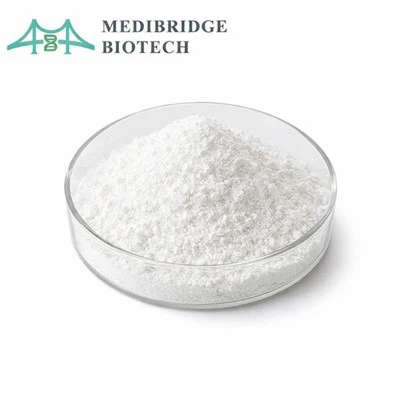
Phenibut bulk powder is a synthetic compound known chemically as β-phenyl-γ-aminobutyric acid. It is produced through controlled chemical synthesis rather than plant extraction, resulting in a single, clearly defined substance with a stable and traceable profile. Supplied as a white to off-white crystalline powder, this material is easy to handle in laboratory and development settings, where precise identification and consistency are important. Its structure is related to γ-aminobutyric acid (GABA), which is why it has been referenced for many years in scientific and technical discussions involving the central nervous system.
In research and development contexts, this material is mainly associated with studies involving GABA-related pathways. It has appeared in historical medical use and modern research settings connected to anxiety-related models, sleep and sedation studies, and broader cognitive or neurofunctional evaluation. In these cases, phenibut is not treated as a consumer-facing ingredient, but rather as a reference or evaluation compound used to explore how GABA-linked mechanisms behave under controlled conditions. Its value lies in the clarity of its structure and the consistency it brings to experimental and formulation assessment work.
At Shaanxi Medibridge Biotech Co., Ltd., the focus is on stable bulk supply, clear specifications, and complete supporting documents such as COA and MSDS. This makes the material suitable for long-term research projects, formulation screening, or analytical work that requires a well-defined GABA-related compound rather than a complex or variable raw material.

COA
|
|
||
|
Product Name |
CAS Number |
Batch Number |
|
phenibut bulk powder |
1078-21-3 |
MB2601171530 |
|
Manufacturer Date |
Analysis Date |
Expiry Date |
|
2026-01-17 |
2026-01-18 |
2028-01-16 |
|
Sample Qty Base |
Packing |
Test Method |
|
500KGS |
25kg/drum |
HPLC |

|
Item |
Standard |
Results |
|
Appearance |
White crystalline powder |
Complies |
|
PH |
2.3~2.7 |
2.56 |
|
Loss on drying |
≤0.5% |
0.18% |
|
Assay |
≥99.0% |
99.35% |
|
Melting point |
194℃~202℃ |
198.5℃~200.5℃ |
|
Residue on Ignition |
≤0.1% |
0.05% |
|
Related substance |
≤0.5% |
0.04% |
|
Heavy metals |
≤10ppm |
Conforms |
|
Iron |
≤50ppm |
Conforms |
|
Sulfate |
≤500ppm |
Conforms |
|
Arsenic |
≤2ppm |
Conforms |
|
Lead |
≤3ppm |
Conforms |
|
Mercury |
≤0.1ppm |
Conforms |
|
Cadmium |
≤1ppm |
Conforms |
|
Storage |
Store in cool & dry place. keep away from strong light and heat |
|
|
Conclusion |
The batch conforms to the IN-HOUSE standard |
|
|
|
||

What It's Used For
Phenibut is mainly talked about in research and development settings as a compound related to the GABA system. Because its structure is similar to GABA, it often comes up in discussions around how the nervous system handles inhibition, calming signals, and overall neural balance. For many researchers, its role is less about results and more about understanding how GABA-related chemistry behaves in controlled environments.
Over time, phenibut has been used in studies and technical evaluations connected to anxiety-related models, sleep-associated neural activity, and certain cognitive research topics. In these situations, it is usually treated as a reference or test material rather than a finished solution. Researchers use it to observe patterns, compare responses, or explore how changes in GABA-related signaling may affect experimental outcomes, without positioning it as a consumer-facing ingredient.
From a practical point of view, phenibut works well as a single, clearly defined material in formulation and evaluation work. Its stable profile makes it easier to control variables when running tests, comparing different compounds, or checking compatibility in early-stage formulation trials. In this context, its function is simply to provide consistency and clarity, helping teams focus on the data rather than the material itself.

Typical Application Areas
Anxiety-Related Research Models
In research settings, phenibut is often mentioned in connection with anxiety-related study models. Because of its link to the GABA system, it has been used to explore how inhibitory signaling in the central nervous system relates to stress and anxiety states. In these cases, the material is typically applied as a reference compound to help researchers observe response patterns under controlled conditions, rather than as a finished solution.

Sleep and Sedation Studies
Phenibut has also appeared in studies that look at sleep-related neural activity and sedation responses. In laboratory or technical evaluations, it may be used to examine how GABA-associated pathways interact with sleep regulation mechanisms. These applications focus on understanding signaling behavior and response trends, not on promoting the material as a consumer sleep aid.

Cognitive and Neurofunctional Evaluation
In some research contexts, phenibut is included in work related to cognitive function and broader neurofunctional assessment. Its role here is usually tied to studying how changes in neurotransmitter-related activity may influence cognitive performance or neural processing within experimental models. It is commonly treated as a comparative or exploratory material rather than a performance-enhancing ingredient.

How It Works
Phenibut works in a way that is usually explained through its relationship with the GABA system. Structurally, it is similar to γ-aminobutyric acid (GABA), which is one of the main inhibitory neurotransmitters in the nervous system. Because of this similarity, it is often used to help researchers look at how GABA-related signaling behaves in different experimental settings.
In practical terms, phenibut is discussed as interacting with GABA-associated pathways, especially those involved in calming or inhibitory neural signals. In research models, this makes it useful for observing how changes in inhibitory signaling may influence neural activity linked to stress response, sleep-related patterns, or cognitive processing. The focus here is on understanding signal behavior, not on producing a direct outcome.
From a development and evaluation point of view, phenibut works best as a clearly defined reference compound. Its single-compound nature allows researchers and formulators to isolate variables more easily when studying neurotransmitter-related mechanisms. This clarity is what makes it valuable in laboratory studies, comparative research, and early-stage formulation assessment, where controlled conditions matter more than end-use performance.

Phenibut HCl vs Phenibut FAA
|
Item |
Phenibut HCl |
Phenibut FAA |
|
Chemical form |
Hydrochloride salt form |
Free amino acid (non-salt) form |
|
Appearance |
White to off-white crystalline powder |
White crystalline powder |
|
Molecular state |
Salted form with hydrochloride |
Non-salted, free-base form |
|
Solubility |
Generally water-soluble |
Lower water solubility compared to HCl |
|
Stability |
Stable under standard dry storage conditions |
Stable, but more sensitive to moisture |
|
Taste / handling notes |
More acidic due to salt form |
Less acidic, often described as milder in handling |
|
Typical research preference |
Commonly used in laboratory and reference studies due to solubility |
Often chosen for specific formulation or compatibility evaluation |
|
Formulation considerations |
Easier to dissolve in aqueous systems |
May require additional consideration for dissolution |
|
Regulatory note |
Regulatory status varies by region |
Regulatory status varies by region |
|
Use orientation |
Research, analytical, and development use |
Research, analytical, and development use |
FAQ
Q: What is phenibut bulk powder mainly used for?
A: It is mainly supplied for research, analytical work, and formulation evaluation rather than consumer-facing use.
Q: Is phenibut a natural ingredient?
A: No, phenibut is a synthetic compound produced through controlled chemical synthesis.
Q: Does phenibut show up on a drug test?
A: Phenibut doesn't show up on drug screenings.
Q: Is phenibut suitable for research related to anxiety or sleep?
A: It has appeared in research models related to anxiety, sleep, and cognitive studies under controlled conditions.
Hot Tags: phenibut bulk powder, China phenibut bulk powder manufacturers, suppliers, factory, apis, Dicyclanil Powder, Gabapentin Powder, Heparin Sodium Powder, Picamilon Powder, Rapamycin Powder