


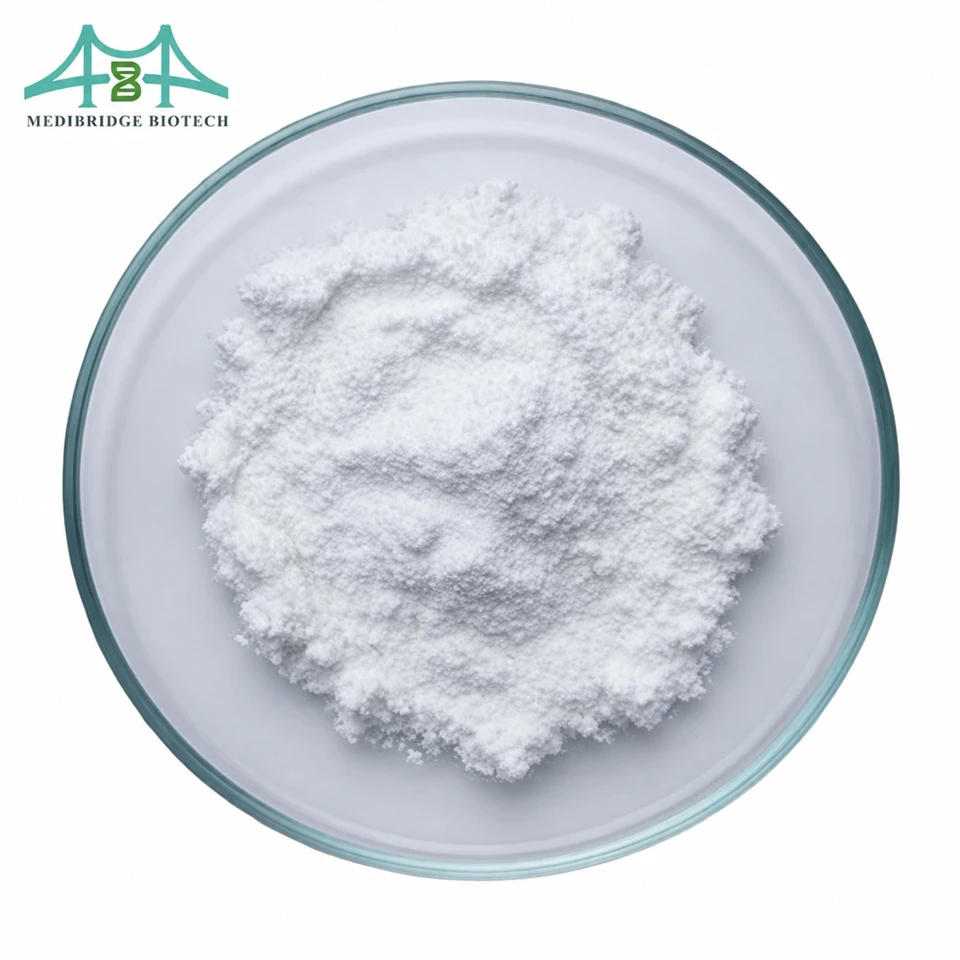


Tegoprazan Powder is also called CJ 12420 powder. This medication, which is often used to lower stomach acid production, is a member of the proton pump inhibitor (PPI) class. It is principally used to treat disorders associated with excess stomach acid, including as peptic ulcers, erosive esophagitis, and gastroesophageal reflux disease (GERD). It works by inhibiting proton pumps in stomach cells, thereby reducing acid production. This helps relieve symptoms associated with conditions such as heartburn, acid reflux, and ulcers. It is a rapid-acting and long-lasting acid suppressant and is considered the most advanced drug currently available for treating gastroesophageal reflux disease. It can overcome the shortcomings of traditional proton pump inhibitors. The safety and efficacy of CJ 12420 in treating individuals with non-erosive gastric reflux disease (NERD) have been assessed in recent research. The research results show that CJ 12420 has broad market demand and has good prospects in the peptic ulcer drug market.
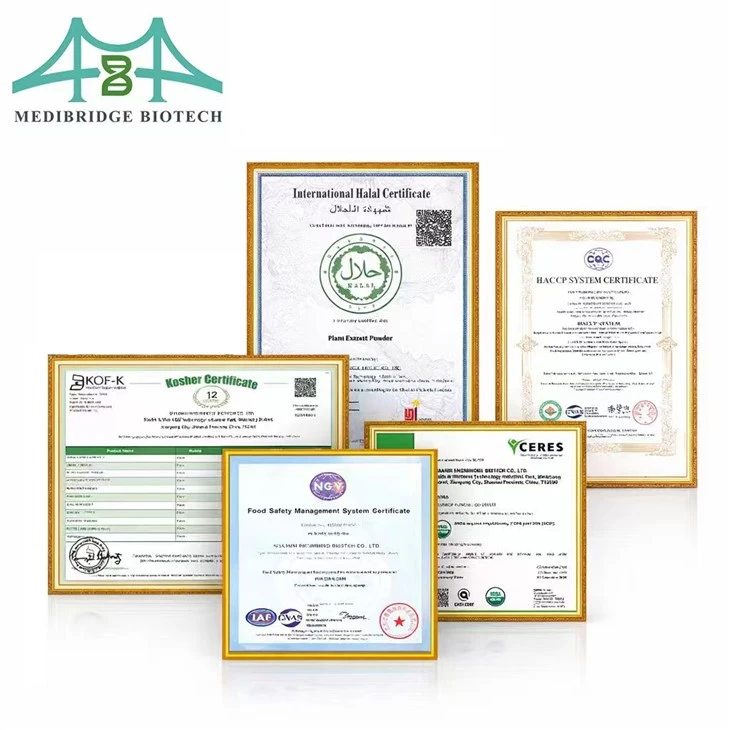
Shaanxi Medibridge Biotech Co., Ltd. focuses on the supply of pharmaceutical raw materials and research-use compounds. We support customers with stable quality, clear specification communication, flexible packaging options, and document-related support for different project stages.
COA
|
|
||
|
Product Name |
CAS Number |
Batch Number |
|
Tegoprazan Powder |
942195-55-3 |
MB26082500355 |
|
Manufacturer Date |
Analysis Date |
Expiry Date |
|
2026/8/25 |
2026/8/26 |
2028/8/25 |
|
Sample Qty Base |
Packing |
Test Method |
|
HPLC |
||
|
|
||
|
Item |
Standard |
Results |
|
Appearance |
White powder |
Complies |
|
Purity (HPLC) |
≥99.0% |
99.76% |
|
Solubility |
Soluble |
Complies |
|
Acidity coefficient (pKa) |
9.73±0.30 |
Complies |
|
Loss on drying |
0.18% |
Complies |
|
Residue on ignition |
0.01% |
Complies |
|
Water (KF) |
0.31% |
Complies |
|
Density |
1.371±0.06g/cm3 |
Complies |
|
Boiling point |
596.5±50.0°C |
Complies |
|
Conclusion |
The batch conforms to the IN-HOUSE standard |
|
|
|
||


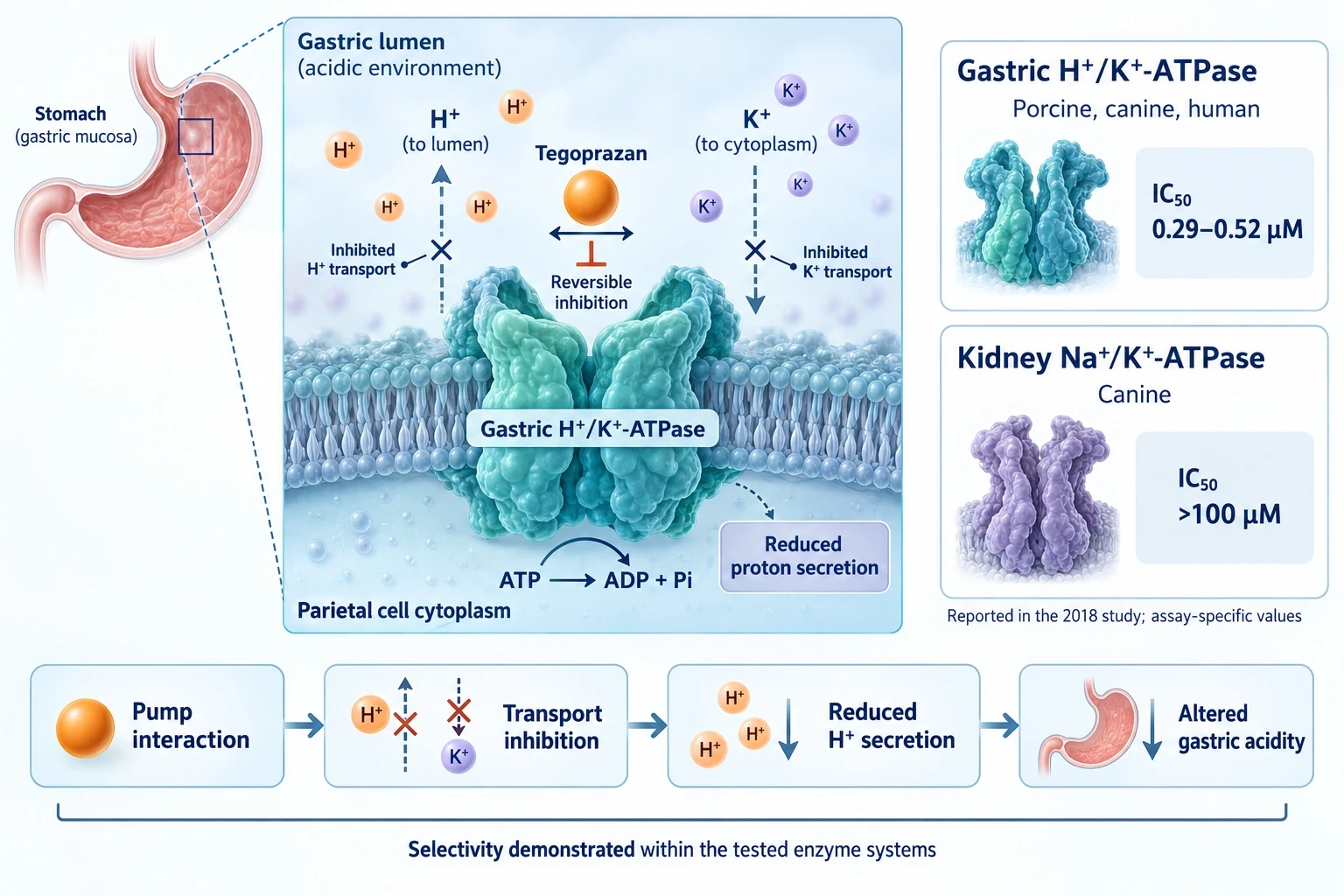
Reversible Inhibition of Gastric H⁺/K⁺-ATPase
Gastric H⁺/K⁺-ATPase uses energy from ATP hydrolysis to support proton secretion by parietal cells. Tegoprazan inhibits this final stage of gastric acid secretion.
The mechanistic framework can be summarized as:
Tegoprazan–H⁺/K⁺-ATPase interaction → inhibition of the transport cycle → reduced proton secretion → altered gastric acidity.
An original 2018 study reported IC₅₀ values of 0.29–0.52 μM against porcine, canine, and human gastric H⁺/K⁺-ATPases. In the same investigation, the IC₅₀ against canine kidney Na⁺/K⁺-ATPase exceeded 100 μM, supporting selectivity within the tested enzyme systems.
Potassium Competition and Enzyme Kinetics
Tegoprazan is classified as a potassium-competitive acid blocker. Mechanistic evaluation should therefore examine how K⁺ concentration influences enzyme activity and inhibition.
Subsequent original research investigated the combined effects of K⁺, H⁺, and tegoprazan on gastric H⁺/K⁺-ATPase using functional and structural approaches.
|
Experimental condition |
Research significance |
|
K⁺ concentration range |
Evaluates ion dependence and competitive characteristics |
|
pH and proton conditions |
Influence enzyme states and the transport cycle |
|
ATP and Mg²⁺ concentrations |
Support comparable catalytic conditions |
|
Enzyme source and membrane preparation |
Affect activity and compound accessibility |
|
Preincubation and reaction duration |
Help distinguish binding kinetics from endpoint effects |
|
Recovery after dilution or washout |
Assesses reversibility |
An IC₅₀ shift between only two K⁺ concentrations does not fully establish the binding mechanism. Kinetic analysis, reversibility experiments, and structural evidence should be interpreted together.
Mechanistic Differences from Conventional PPIs
Tegoprazan and conventional proton pump inhibitors, PPIs, both affect gastric H⁺/K⁺-ATPase, but their mechanisms differ.
|
Comparison |
Tegoprazan |
Conventional PPIs |
|
Pharmacological class |
Potassium-competitive acid blocker |
Proton pump inhibitor |
|
Activation requirement |
Does not require conversion into a PPI-type reactive intermediate |
Generally requires acid-dependent activation |
|
Typical inhibition |
Reversible and associated with K+ competition |
Covalent interaction after activation |
|
Main experimental considerations |
Ionic conditions, binding and dissociation, local exposure |
Activation conditions, reaction duration, enzyme modification |
Original research supports reversible inhibition by tegoprazan, while published clinical research also distinguishes its mechanism from the activation and covalent binding characteristic of conventional PPIs.
Metabolism Research: CYP3A4 and M1
An important component of tegoprazan metabolism research is its N-demethylated metabolite, M1. A human radiolabeled mass-balance study identified tegoprazan and M1 as major drug-related components in plasma.
CYP3A4 is a major focus of metabolic investigations. Related experimental and modeling work has also examined CYP2C19 involvement, so tegoprazan metabolism should not be described as exclusively dependent on one enzyme.
|
Research method |
Main purpose |
|
Human liver microsomes or hepatocytes |
Measure parent-compound depletion and metabolite formation |
|
Recombinant CYP enzymes |
Identify potentially contributing enzymes |
|
Selective inhibition experiments |
Investigate enzyme contributions |
|
LC-MS/MS |
Quantify tegoprazan and M1 separately |
|
Metabolite activity assays |
Assess functional contributions |
Metabolism and Gastric pH
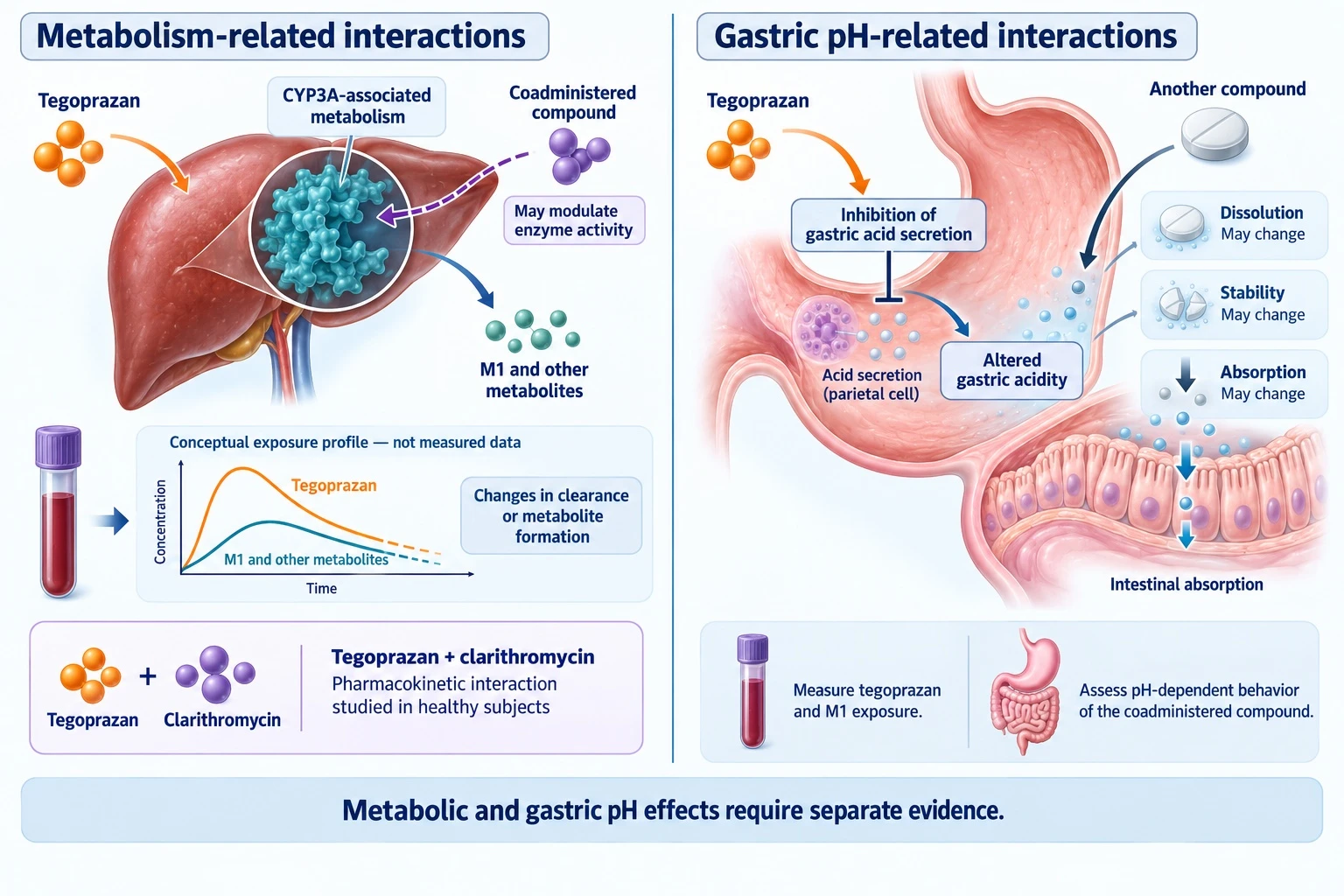
Tegoprazan interaction research should distinguish two pathways:
Metabolism-related interactions: another compound changes tegoprazan clearance or metabolite formation.
Gastric pH-related interactions: altered acidity changes the dissolution, stability, or absorption of another compound.
An original study in healthy subjects investigated pharmacokinetic changes during coadministration of tegoprazan and clarithromycin, providing evidence relevant to CYP3A-associated interactions.
FAQ
What is the mechanism of action of Tegoprazan?
Tegoprazan is a potassium-competitive acid blocker (P-CAB) that reversibly and competitively inhibits the potassium-binding site of the gastric H⁺/K⁺-ATPase enzyme (the proton pump) in the parietal cells of the stomach.
How does a potassium-competitive acid blocker work?
Potassium-competitive acid blockers (P-CABs) suppress gastric acid secretion by reversibly and competitively inhibiting the H⁺/K⁺ ATPase enzyme (proton pump) in the parietal cells of the stomach.
What is Tegoprazan used for?
Tegoprazan is a prescription medication used to treat acid-related gastrointestinal disorders, including gastroesophageal reflux disease (GERD), non-erosive reflux disease (NERD), erosive esophagitis healing and maintenance, peptic ulcers, and use in H. pylori combination therapy.
Which is more effective, tegoprazan or pantoprazole?
Tegoprazan and pantoprazole offer comparable overall healing rates for erosive esophagitis, but tegoprazan provides faster symptom relief and a more rapid onset of action.
If you are looking for a high-quality Tegoprazan Powder manufacturer with whom you can establish a long-term, stable partnership, then Shaanxi Medibridge Biotech Co., Ltd. would be your best business partner. Don't hesitate to contact us at hi@medibridgeapi.com.
Hot Tags: tegoprazan powder, China tegoprazan powder manufacturers, suppliers, factory


