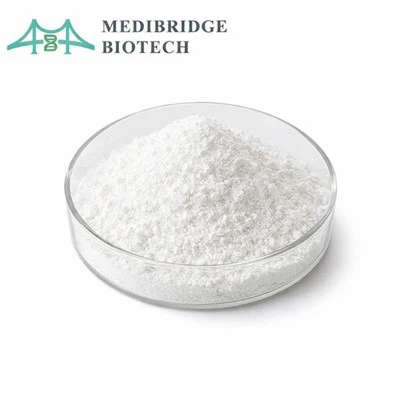
Thioxanthen-9-one Powder, is a member of the sulfur-containing aromatic ketone class of compounds with a fused aromatic ring structure. The molecule exhibits substantial light absorption and photochemical activity because to its simultaneous presence of sulfur atoms, a carbonyl group, and a massive π-conjugated system.
The most important characteristics of 9-thioxanthenone are its photosensitization ability and excited-state reactivity. It can absorb ultraviolet light to enter an excited state and participate in chemical reactions through mechanisms such as triplet energy transfer (EnT), hydrogen atom transfer (HAT), and single electron transfer (SET). It possesses excellent ultraviolet light absorption properties and is mainly used in photochemical research, the synthesis of photoinitiators and their derivatives, ultraviolet-curable materials, coatings, inks, and polymerization reactions. It can also be used as an intermediate in organic synthesis. Thioxanthen-9-one has a high triplet energy and a relatively long triplet lifetime, which is one of the main reasons for its high photochemical reactivity.
Shaanxi Medibridge Biotech Co., Ltd. focuses on the supply of pharmaceutical raw materials and research-use compounds. We support customers with stable quality, clear specification communication, flexible packaging options, and document-related support for different project stages.
COA
|
|
||
|
Product Name |
CAS Number |
Batch Number |
|
Thioxanthen-9-one Powder |
492-22-8 |
MB2606154212 |
|
Manufacturer Date |
Analysis Date |
Expiry Date |
|
2026/6/15 |
2026/6/16 |
2028/6/15 |
|
Sample Qty Base |
Packing |
Test Method |
|
110KGS |
25KG/drum |
HPLC |
|
|
||
|
Item |
Standard |
Results |
|
Appearance |
pale yellow to light yellow powder |
Conforms |
|
Purity (HPLC) |
≥99.0% |
99.2% |
|
Water content |
≤5.0% |
0.34% |
|
Identification |
Conform to the RT of Standard |
Conforms |
|
Heavy Metal |
||
|
As |
≤0.5ppm |
N.D |
|
Pb |
≤0.5ppm |
N.D |
|
Cd |
≤0.5ppm |
0.01ppm |
|
Hg |
≤0.5ppm |
N.D |
|
Microbial Limit |
||
|
Total microbial count |
≤750CFU/g |
80CFU/g |
|
Coliform |
≤3.0MPN/g |
N.D |
|
Ethanol (By GC) |
≤5000ppm |
203ppm |
|
Conclusion |
The batch conforms to the IN-HOUSE standard |
|
|
|
||


Photoinitiation & Sensitization Mechanism
Hydrogen Abstraction
Upon absorbing UV light, Thioxanthen-9-one transitions to a singlet state and undergoes efficient intersystem crossing (ISC) to a triplet state (3TX*). As a Type II photoinitiator, it cannot undergo direct cleavage to generate radicals; it requires a co-initiator, typically a tertiary amine (such as EDB, EDAB, or triethanolamine) serving as a hydrogen donor. The 3TX* species abstracts a hydrogen atom from the amine donor to form an active α-amino radical, which initiates free-radical polymerization of acrylate monomers.


Energy Transfer / Triplet Sensitization
Due to its high triplet state energy, it functions as an energy-transfer sensitizer. It transfers absorbed energy to other photoinitiators or onium salts (such as sulfonium or iodonium salts) with weaker light absorption, extending the spectral response of cationic UV-curing systems into longer wavelength regions.
Organic Photochemistry
As a triplet photosensitizer, thioxanthen-9-one is used to study light-driven reactions of alkenes and carbonyl-containing substrates, particularly [2+2] photocycloadditions. Its performance depends on the match between its triplet energy and that of the substrate, as well as the irradiation wavelength, concentration, and competing side reactions. In one study, a reaction that did not proceed without a sensitizer was achieved under approximately 420 nm irradiation using the parent compound. This makes thioxanthen-9-one a useful reference material when screening substrates or comparing photosensitizers.

Photopolymerization and Photoinitiating Systems

The thioxanthone scaffold is widely investigated in photopolymerization research. In some formulations, excited thioxanthone interacts with a co-initiator, such as a tertiary amine, to generate reactive species that initiate free-radical polymerization. Researchers should distinguish a photosensitizer used with a co-initiator from a one-component photoinitiator. The performance of unsubstituted thioxanthen-9-one cannot be assumed to match that of derivatives designed for particular LED wavelengths or resin formulations. Useful experimental measures include monomer conversion, polymerization rate, and curing depth, with and without a co-initiator.
Parent Scaffold for Derivative Design
Substitution on the thioxanthone scaffold is a research strategy for tuning light absorption and triplet-state energy. Researchers can combine UV–Vis spectroscopy, triplet-energy measurements, and computational chemistry to examine how the type and position of a substituent affect photosensitization. One study used computational predictions to guide the design of thioxanthone derivatives and then assessed their performance across ultraviolet and visible-light reactions. Results achieved at longer wavelengths with specific derivatives should not be presented as fixed properties of unsubstituted thioxanthen-9-one powder.

Major Industrial Applications

UV Curing Inks & Coatings
Deep Curing & Thick Coatings: Owing to its strong optical penetration at longer wavelengths (365–380 nm), it is widely used in screen inks, offset inks, and thick coatings containing high-opacity pigments like titanium dioxide (TiO2).
Derivatives in Commercial Use: To improve solubility and reduce volatility, commercial formulations frequently utilize derivatives such as ITX (2/4-isopropylthioxanthone), DETX (2,4-diethylthioxanthone), and RTX (2-chlorothioxanthone).
Photoresists & Microelectronics Manufacturing
Serves as a photosensitizer or photoinitiator in semiconductor fabrication and printed circuit board (PCB) solder mask inks, enhancing photoresist sensitivity and resolution.
Photoredox Catalysis in Organic Synthesis
Acts as a metal-free organic photocatalyst in modern synthetic chemistry. Leveraging its strong redox potentials, it catalyzes C–C coupling, cyclization, and selective oxidation reactions under near-UV or visible light irradiation.
Synthesis Routes for Raw Material
Thiosalicylic Acid Route (Mainstream Route)
Process: Thiosalicylic acid reacts with benzene or halobenzene as starting materials, undergoing dehydrative cyclization in the presence of concentrated sulfuric acid (H2SO4) or polyphosphoric acid (PPA) to yield thioxanthone.
Characteristics: High yield and mature process technology; however, it requires the treatment and management of large volumes of spent acid and acidic wastewater.


Diphenyl Sulfide Route
Process: Diphenyl sulfide derivatives undergo Friedel-Crafts acylation and cyclization using phosgenating or acylating agents (such as phosgene, triphosgene, or oxalyl chloride) in the presence of a Lewis acid catalyst (such as AlCl3).
Characteristics: Produces fewer by-products, but relies on highly toxic acylating reagents, demanding stringent safety controls and specialized production equipment.
FAQ
Why is it studied in photochemistry?
Its excited triplet state makes it useful as a photosensitizer.
Can it support photopolymerization research?
Yes, thioxanthone systems are studied for initiating light-driven polymerization, often with a co-initiator.
Is it used in photocycloaddition studies?
Yes, researchers have used the parent compound as a triplet sensitizer in [2+2] photocycloadditions.
Can researchers modify its structure?
Yes, thioxanthone derivatives are designed and compared to tune their photochemical behavior.
If you are looking for a high-quality Thioxanthen-9-one Powder manufacturer with whom you can establish a long-term, stable partnership, then Shaanxi Medibridge Biotech Co., Ltd. would be your best business partner. Don't hesitate to contact us at hi@medibridgeapi.com.
Hot Tags: thioxanthen-9-one powder, China thioxanthen-9-one powder manufacturers, suppliers, factory