


What Makes Amygdalin a Cyanogenic Glycoside?
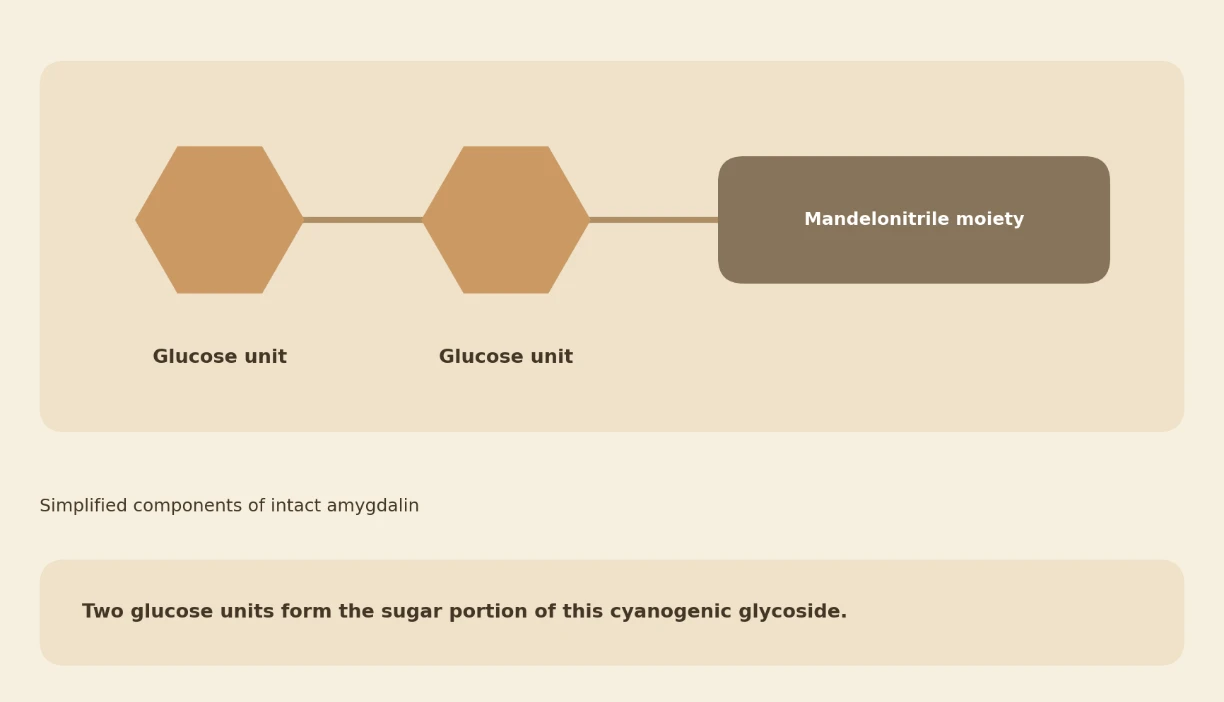
Amygdalin contains two linked glucose units attached to mandelonitrile, the part of the molecule that can ultimately yield hydrogen cyanide. The sugar units make it a glycoside, and its capacity to release hydrogen cyanide during breakdown makes it cyanogenic. These terms describe different aspects of the same molecule. An analysis that measures intact amygdalin tracks the starting compound, while an analysis that measures cyanide after breakdown tracks a reaction product. This distinction matters when comparing a purified powder with a kernel sample containing a mixture of compounds.
How Almond Genetics Shapes Kernel Bitterness
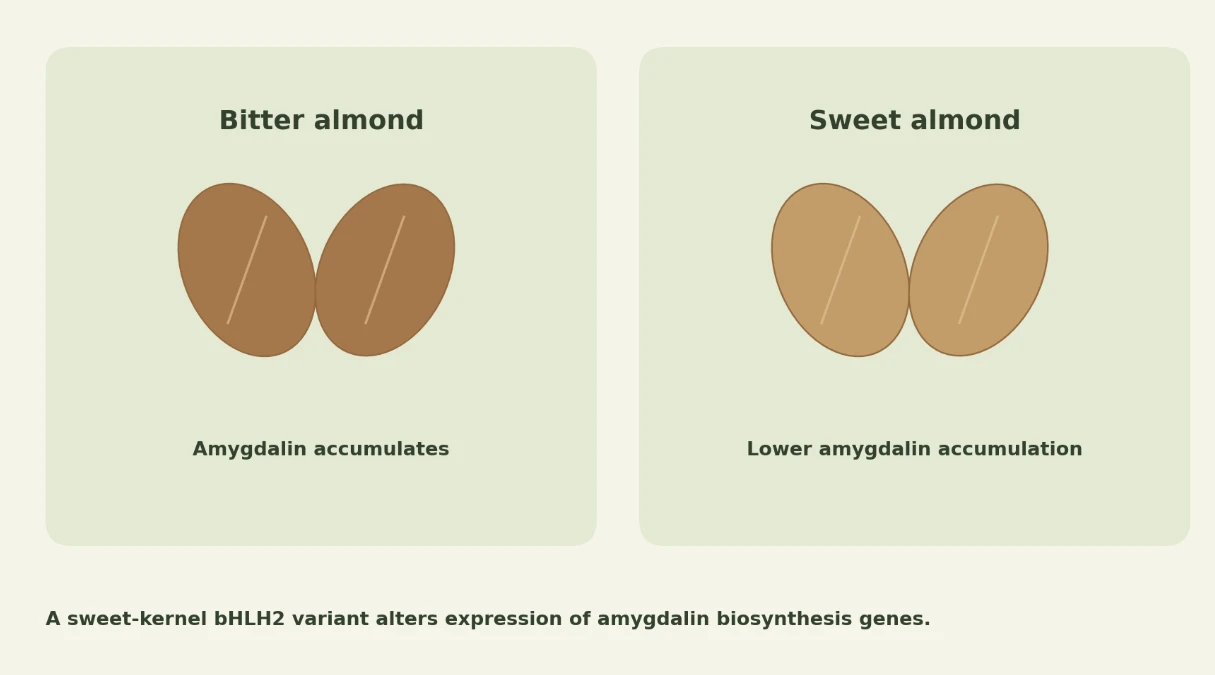
Amygdalin accumulation helps explain the difference between bitter and sweet almond kernels. In a 2019 study, researchers identified a change in bHLH2, a gene encoding a protein that regulates the expression of other genes. The variant associated with sweet kernels altered the expression of genes involved in amygdalin biosynthesis. This links a familiar trait, kernel flavor, to the regulation of a chemical pathway. For researchers comparing almond samples, cultivar identity therefore provides important context alongside measurements of amygdalin content and records of how the samples were prepared.
Why Tissue Damage Changes Seed Chemistry
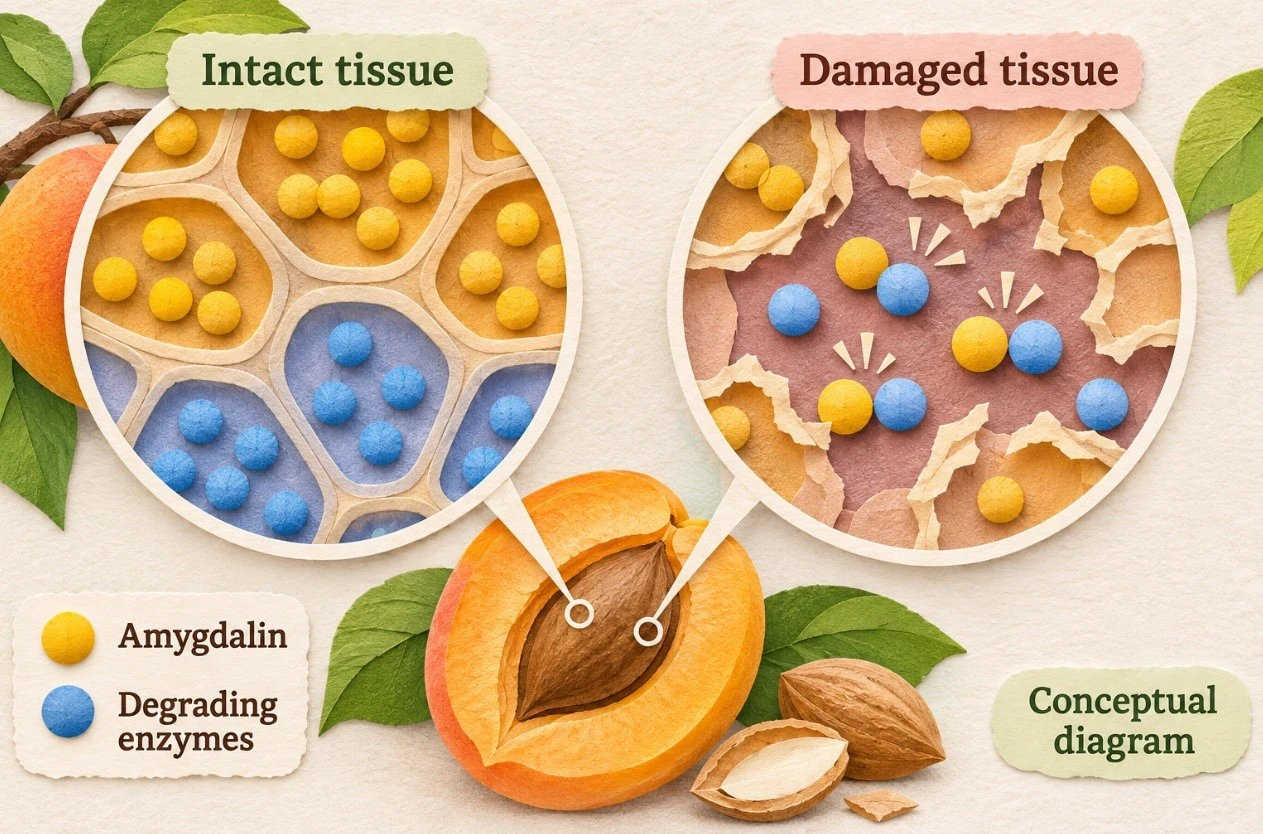
A seed's internal organization helps control when amygdalin breaks down. In intact apricot kernels, amygdalin and the enzymes that degrade it are stored in separate compartments. When the tissue is damaged, those compartments can mix, bringing the compound into contact with the enzymes. Researchers studying mature black cherry seeds used enzyme assays and antibody-based imaging to investigate where these enzymes were located. Their approach shows why the spatial arrangement of a seed matters. Knowing which compounds and enzymes are present tells only part of the story. Where they are stored helps explain when they can react.
From Amygdalin to Prunasin and Beyond
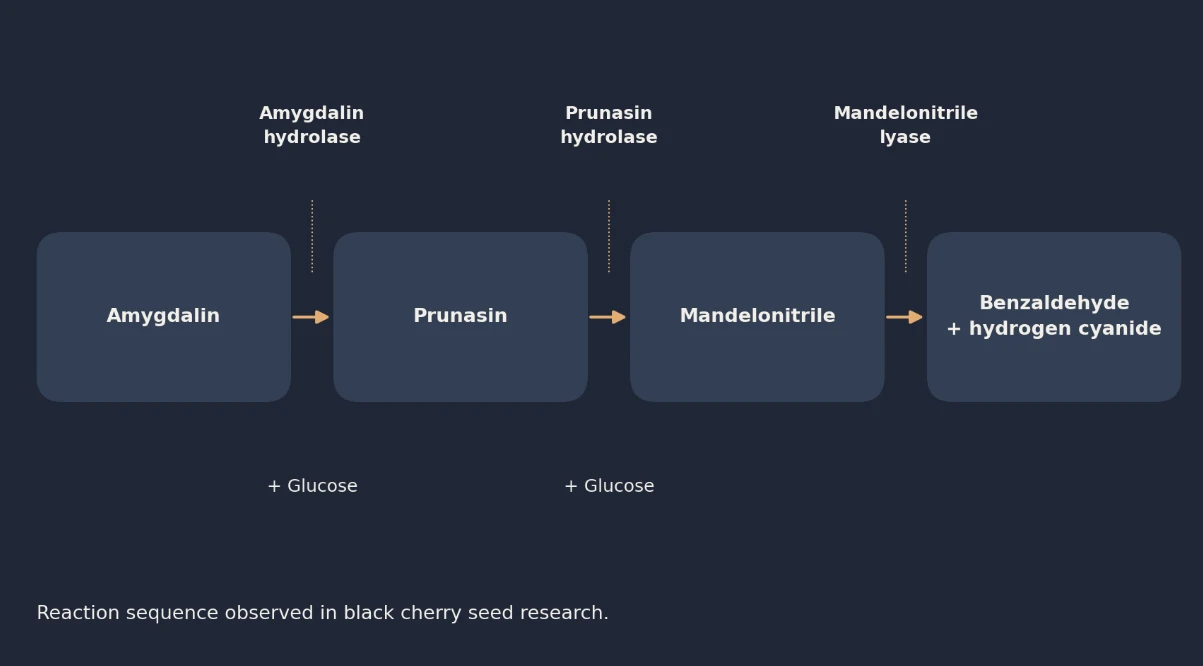
Research on black cherry seeds documented a sequence involving three enzymes. Amygdalin hydrolase removes the first glucose unit, forming prunasin. Prunasin hydrolase removes the second, producing mandelonitrile. Mandelonitrile lyase then helps split mandelonitrile into benzaldehyde and hydrogen cyanide. Each step gives researchers a different chemical marker to follow. If intact amygdalin declines during an experiment, measuring prunasin and the later products helps show how far the reaction has progressed. Hydrogen cyanide is toxic, so cyanide release is also a distinct endpoint in food safety research.

How Laboratories Measure Amygdalin
Liquid chromatography–tandem mass spectrometry, or LC–MS/MS, combines separation with selective detection. Chromatography separates components in a sample, while tandem mass spectrometry identifies and measures the target using characteristic ion signals. In one method study on apricot kernels and almonds, researchers added known amounts of amygdalin to selected samples and recovered 90–107%, with relative standard deviations of 6% or less. These figures describe how the method performed in the tested materials. They also show why analytical validation includes both recovery and precision when researchers quantify a compound in a complex sample.
How to Compare Powder and Kernel Data
The same study found amygdalin concentrations ranging from 2 to 24,000 µg/g across 18 market samples of apricot kernels and almonds. That range illustrates how widely results can vary across the materials sampled. For an amygdalin powder, a comparable report should identify the sample type, give the measured amygdalin content, and specify whether the result is expressed per gram of powder as received or per gram of dry solids. If a report also includes cyanide, it should say whether that value was measured directly or estimated from the amygdalin content.

Shaanxi Medibridge Biotech Co., Ltd. is dedicated to supplying a wide range of research-grade products-including peptides, chemical compounds, and extracts-to laboratories, academic institutions, and biotechnology organizations worldwide. If you are seeking a partner for high-purity raw materials to establish a long-term collaboration, please email hi@medibridgeapi.com.


