


How Early Heating Preserves Leaf Catechins
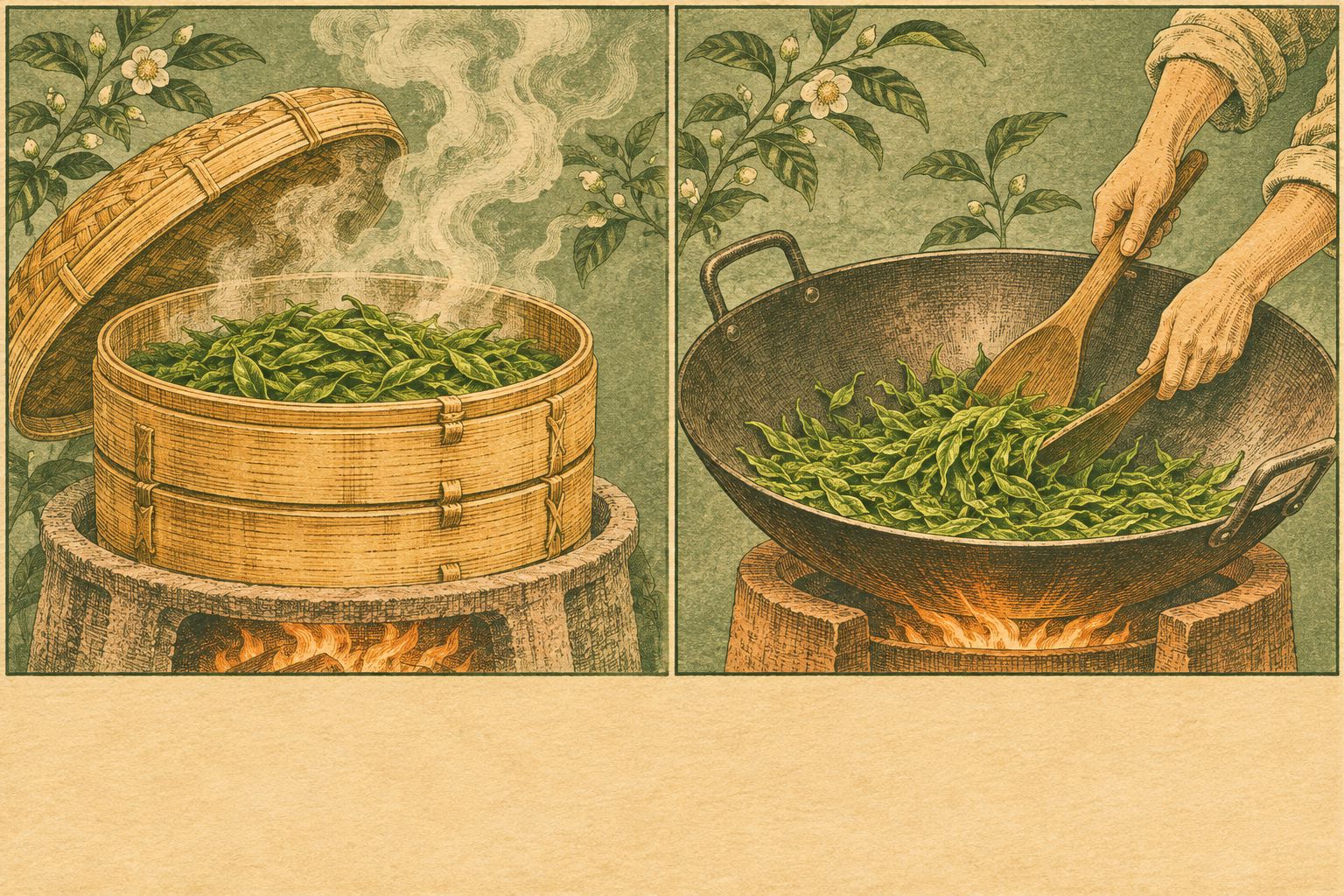
Green tea processing begins with a brief heating step known as fixation. Steaming and pan-firing are two common ways to reduce the activity of enzymes such as polyphenol oxidase, which can oxidize catechins in the leaf. The leaves are typically rolled or shaped and then dried. By limiting enzymatic oxidation early, fixation helps preserve the catechins that later become part of the extract. For researchers comparing extracts, leaf processing is therefore part of the experimental context. Two batches from the same plant species can enter extraction with different chemical profiles.
The Four Catechins Behind the Abbreviations
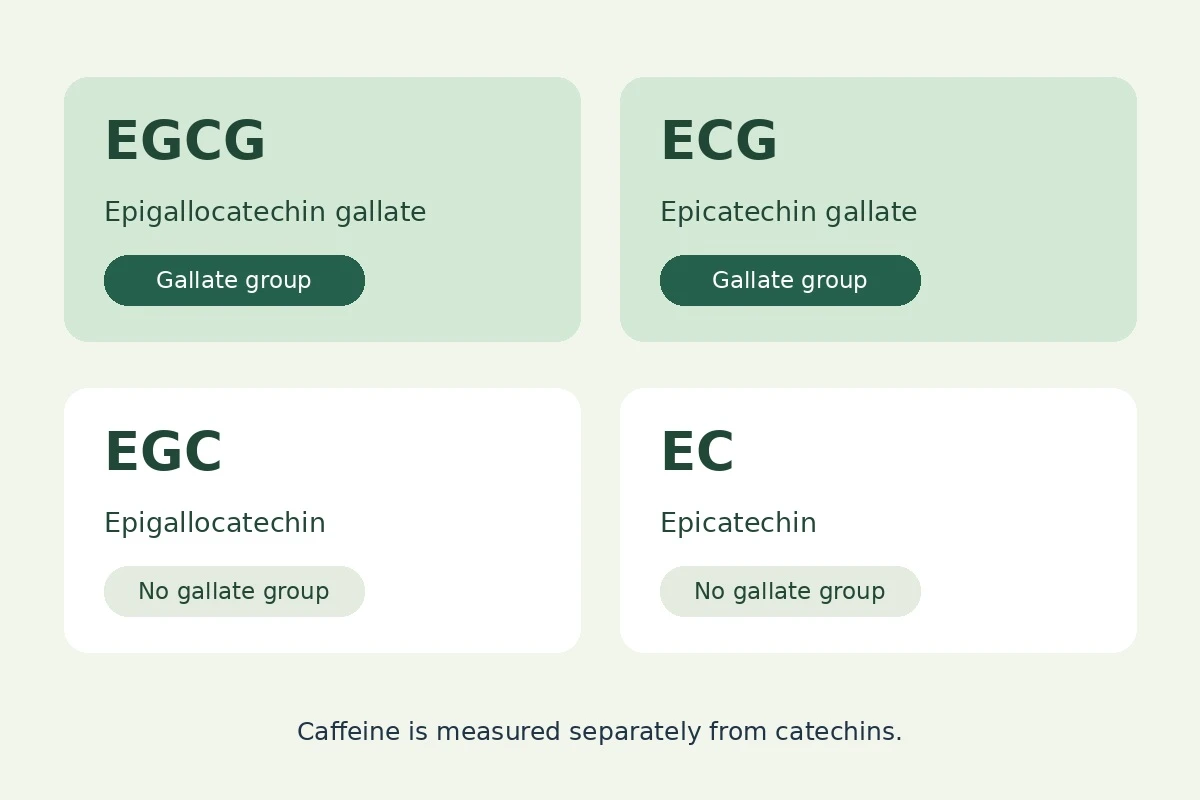
Four major green tea catechins are epigallocatechin gallate (EGCG), epigallocatechin (EGC), epicatechin gallate (ECG), and epicatechin (EC). EGCG and ECG carry a gallate group, while EGC and EC have no gallate group. This structural difference helps researchers compare how closely related molecules behave during extraction, analysis, and storage. Caffeine belongs to a separate chemical class and can be measured alongside the catechins. Reporting EGCG, total catechins, and caffeine separately gives a clearer description of an extract than a single total. Two samples can contain similar amounts of total catechins while differing in their individual proportions.
Why Extraction Yield and Concentration Tell Different Stories
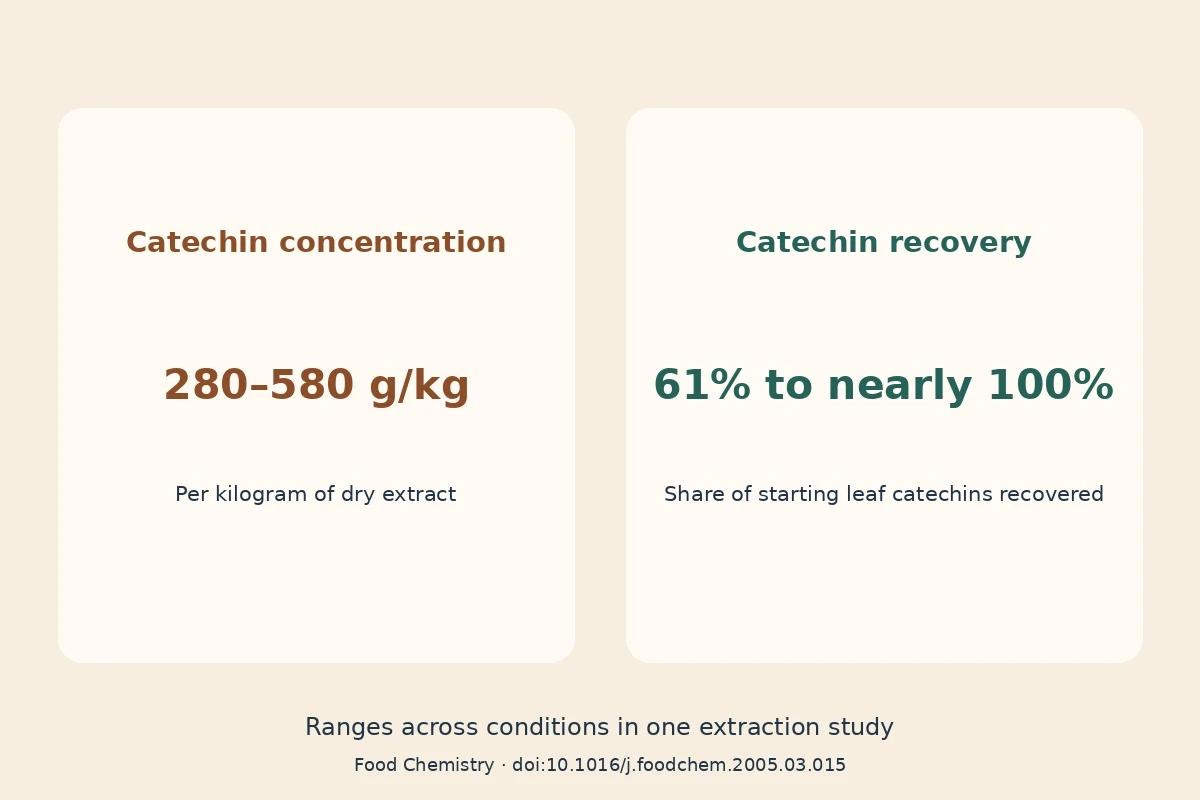
Solvent composition, temperature, and contact time influence how much of each compound moves from the leaf into the liquid. In one study that varied these conditions, major catechins accounted for approximately 280–580 g per kilogram of dry extract, while catechin recovery ranged from 61% to nearly 100%. The two measurements answer different questions. Concentration describes how much of the finished extract consists of catechins. Recovery describes how much of the catechin content in the starting leaves was captured. Reporting both helps distinguish an efficient extraction from one that produces a particularly concentrated powder.
What Heat and pH Can Change After Extraction
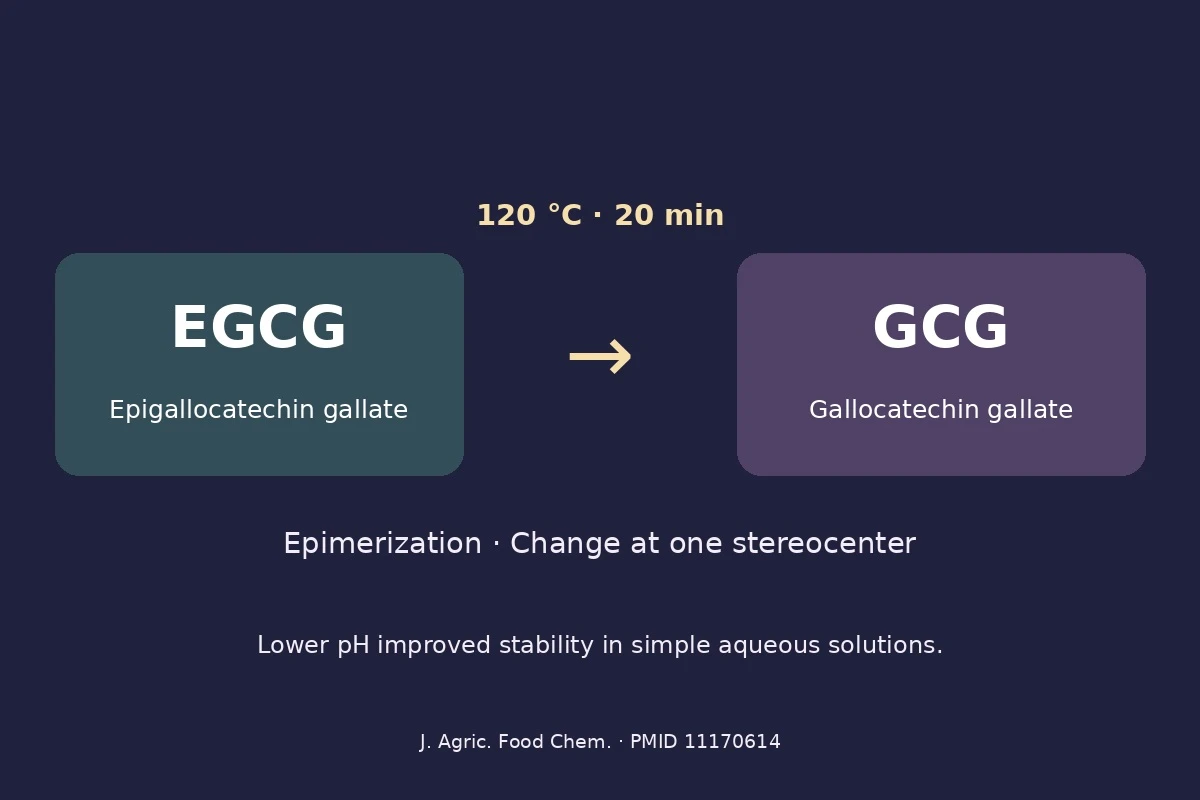
Catechin profiles can continue to change once an extract is dissolved. In one experiment, heating a green tea catechin mixture and a purified EGCG sample at 120 °C for 20 minutes led to the formation of gallocatechin gallate (GCG). This conversion is an example of epimerization, a change in the three-dimensional arrangement at one position in the molecule. In the same study, lower pH generally improved catechin stability in simple aqueous solutions. For a stability experiment, tracking both EGCG and GCG over time helps distinguish conversion from a simple drop in the measured EGCG concentration.
How a Chromatogram Makes Extracts Comparable
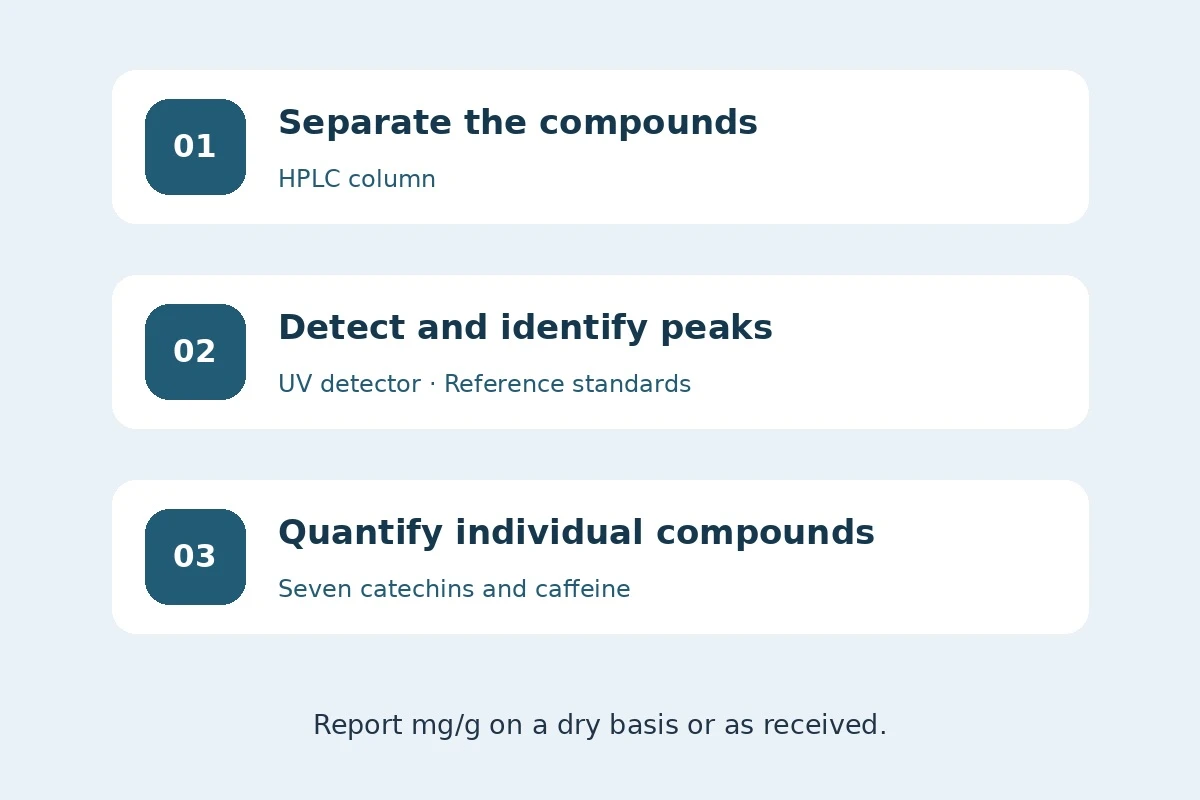
High-performance liquid chromatography with ultraviolet detection (HPLC–UV) separates compounds before measuring them. A single-laboratory validation demonstrated that the method could quantify seven catechins and caffeine in green tea leaves and powdered extracts. Analysts use reference standards to identify peaks and calibrate the response for each compound. When reporting a powder's composition, it is useful to list individual catechins in milligrams per gram and specify whether the values are calculated on a dry basis or as received. That detail makes batch comparisons easier to interpret when powders differ in moisture content.
Shaanxi Medibridge Biotech Co., Ltd. is dedicated to supplying a wide range of research-grade products-including peptides, chemical compounds, and extracts - to laboratories, academic institutions, and biotechnology organizations worldwide. If you are seeking a partner for high-purity raw materials to establish a long-term collaboration, please email hi@medibridgeapi.com.


