


What Is SS-31 Peptide?
SS-31 peptide, also known in clinical development as elamipretide, is a small synthetic tetrapeptide studied for its ability to target mitochondria, the structures responsible for cellular energy production. Unlike many peptides that act through hormone or surface-receptor pathways, SS-31 is mainly discussed in connection with mitochondrial membrane biology, especially cardiolipin-related function. This has made it a notable compound in research on energy metabolism, oxidative stress, and mitochondrial dysfunction.
How Does SS-31 Work?
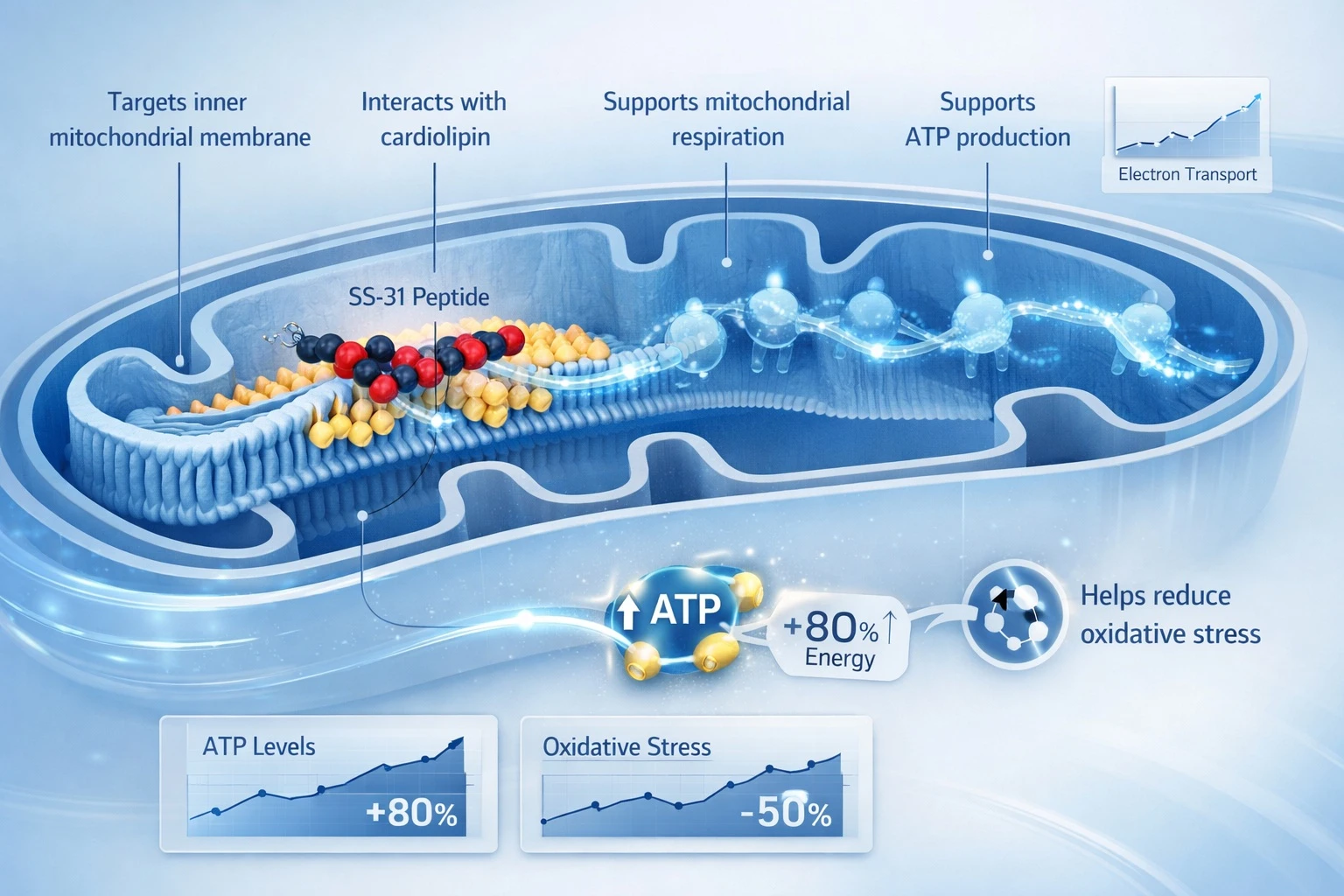
Current research suggests SS-31 works by concentrating near the inner mitochondrial membrane and interacting with cardiolipin, a lipid that helps maintain electron transport chain organization. Through this mechanism, SS-31 may support mitochondrial respiration, ATP production, and membrane stability while helping reduce oxidative stress in experimental models. Importantly, this is not a classic receptor-binding peptide mechanism, which is one reason SS-31 stands out in mitochondrial science.

Potential Benefits and Research Interest
The main scientific interest in SS-31 centers on conditions linked to impaired mitochondrial function. Researchers have explored its relevance in areas such as primary mitochondrial myopathy, Barth syndrome, cardiac stress, skeletal muscle energetics, and other disorders involving cellular energy dysfunction. Preclinical findings are broader than human evidence, so any discussion of benefits should remain evidence-graded. The most credible claims are those tied to specific disease settings and measured clinical endpoints.
Safety and Evidence Limitations
SS-31 should be understood through the lens of clinical evidence quality, not online hype. Human studies have monitored tolerability and adverse events, including administration-site reactions, but long-term safety conclusions depend on the population, formulation, and study design. Another important limitation is translation: improved mitochondrial markers in cells or animals do not automatically mean meaningful benefit in humans. That is why careful interpretation and medical oversight remain essential.


Why SS-31 Continues to Draw Attention
SS-31 continues to attract attention because mitochondrial dysfunction is relevant to many areas of medicine, from rare inherited disorders to cardiac and age-related research. Its mitochondria-targeted design gives it a distinctive place among peptides discussed in advanced therapeutic development. At the same time, growing interest has outpaced confirmed clinical application in some areas. The strongest way to evaluate SS-31 is by separating mechanistic promise from disease-specific human evidence.
Shaanxi Medibridge Biotech Co., Ltd. provides research peptides for laboratories, academic institutions, and biotechnology organizations worldwide. If you need a high‑purity peptide partner for enduring cooperation, email hi@medibridgeapi.com.


