


The Analysis Tracks Ingredient Listings in New U.S. Products
Bio-Botanica's guide compares U.S. personal care launches in the 12 months through September 2026 with those in the preceding 12 months. It tracks whether each product lists a given extract under its International Nomenclature of Cosmetic Ingredients (INCI) name and reports the share within individual product categories. That distinction matters because a botanical can appear in a large share of launches while growing slowly, whereas an ingredient with a smaller presence can post a much faster increase. The figures describe the products tracked at launch. Sales, inclusion levels and finished-product performance require separate data.
Centella Matches Green Tea in Face Creams and Gains Ground in Sunscreen
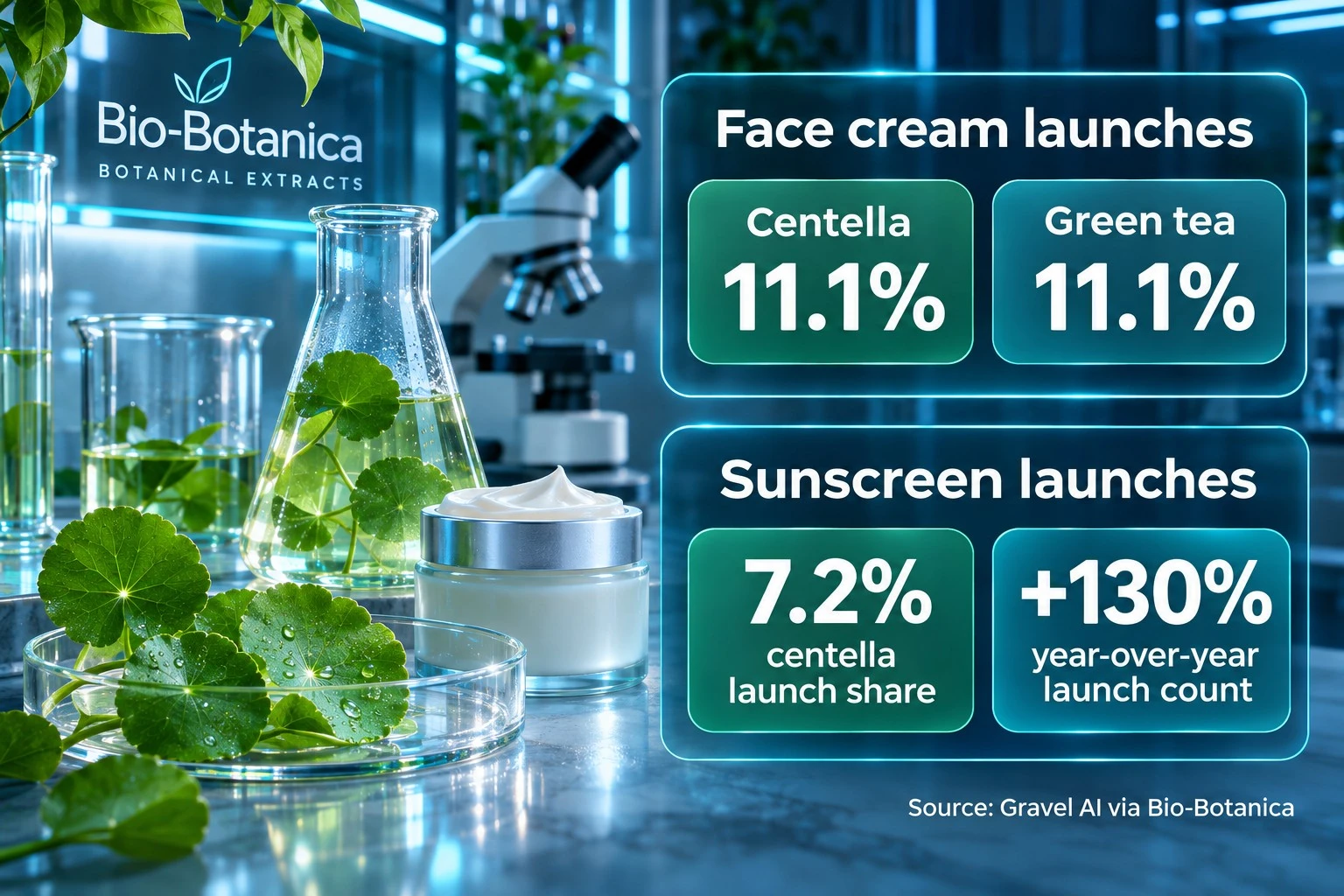
Centella, also known as cica or gotu kola, appeared in 11.1% of tracked U.S. face cream launches, tying green tea leaf extract in a sample of 4,178 products. The guide also reports year-over-year increases of 49% for centella in face serums and 73% in facial cleansers. Its strongest reported increase came in sunscreen, where the number of new launches listing centella rose 130%. Despite that growth, centella appeared in 7.2% of sunscreen launches, compared with 9.9% for green tea and 8.8% for aloe vera.

Green Tea Leads Across Categories While Holy Basil Grows From a Smaller Base
Green tea leaf extract led the guide's botanical launch-share comparisons in nine of 14 categories. It appeared in 13.7% of new facial cleansers and 12.9% of new face serums. Holy basil, or tulsi, accounted for a smaller share of launches, generally 2–5% in the categories highlighted, but recorded some of the steepest increases. The number of launches listing holy basil rose 92% in toners, 112% in facial cleansers, 95% in eye care and 130% in sun care. Facial cleansers illustrate the difference between the two measures, with green tea leading on share and holy basil posting faster growth.
Aloe Vera and Licorice Root Show Different Patterns by Product Format
Aloe vera appeared in 8.8% of the 2,211 sunscreen launches tracked, with the number of listings rising 13% year over year. Bio-Botanica also reported increases of 24% in masks and 38% in conditioners, showing that aloe's gains extended beyond skincare. Licorice root showed a different pattern, with listings up 22% in eye care, 19% in sun care and 5% in face creams. In sunscreen, licorice root appeared in 2.6% of launches. The category figures show where each extract is appearing more often and how widely it is used within each format.


The Guide Links Launch Trends to Ingredient Specifications
Alongside the market figures, Bio-Botanica lists INCI names, supplier part IDs and available carriers for its liquid extracts. Depending on the grade, those carriers include glycerin, propanediol and butylene glycol. The category pages also link to product documentation, including specifications, representative certificates of analysis and safety data sheets. For formulators, the launch data can help narrow the list of botanicals to evaluate, while the supplier documentation identifies the specific grade available for prototype work. The next question is how that grade behaves in the intended base, where the carrier, appearance and storage stability can influence ingredient selection.


