Phased Investment Adds 10,000 Liters of Synthesis Capacity
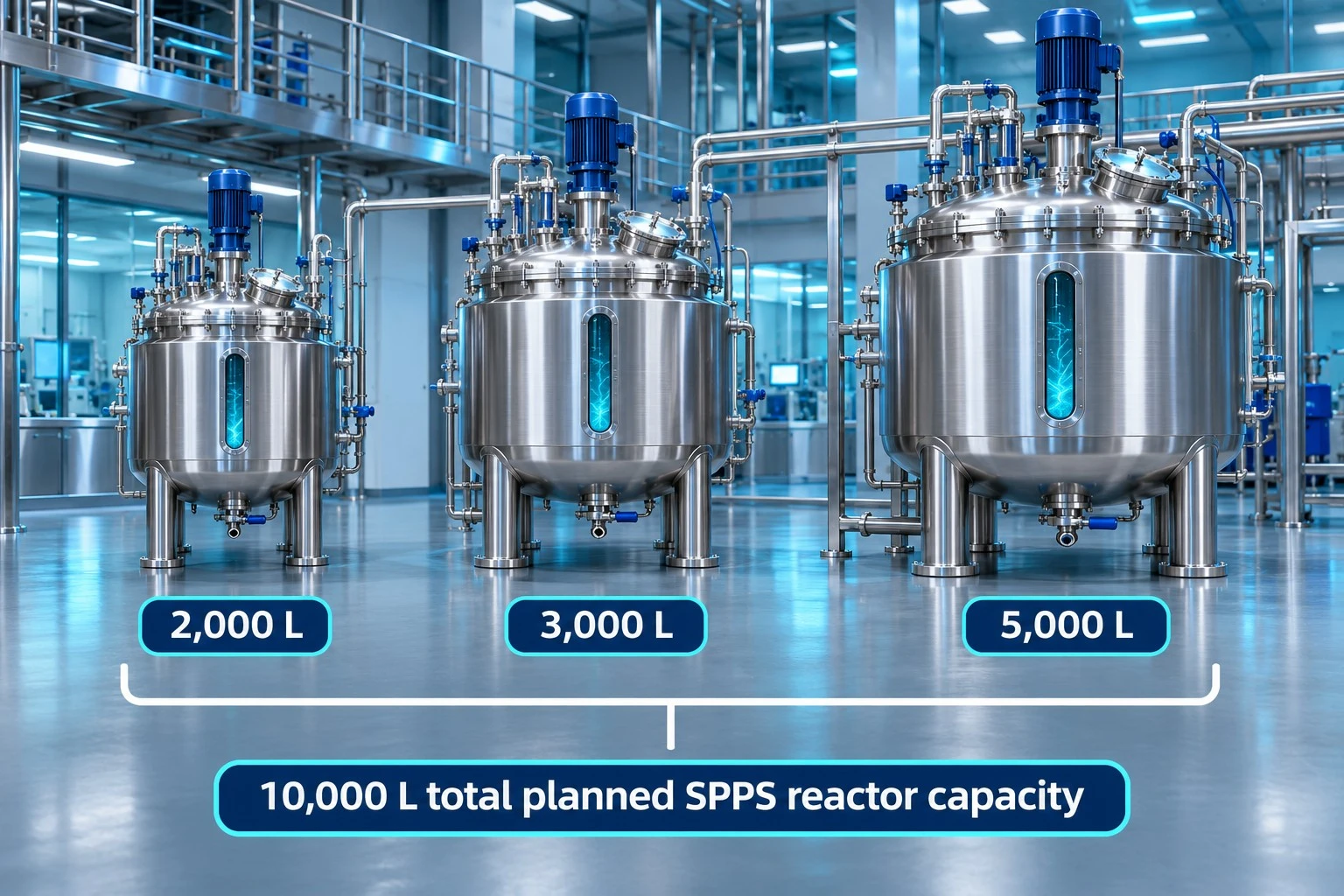
The expansion builds on three existing lines that manufacture peptides for clinical development. Over several years, Shilpa plans to add solid-phase peptide synthesis reactors sized at 2,000, 3,000, and 5,000 liters. Together, those reactors account for the 10,000 liters of additional capacity announced for the project. The figure measures combined reactor volume. Annual output is a separate measure that depends on factors such as the peptide being manufactured, batch scheduling, and recovery during purification. Shilpa disclosed a separate annual output target for the first commercial line.
First Commercial Line Is Scheduled for December 2026
Shilpa plans to open its first dedicated commercial peptide line at the Raichur Unit-I campus in December 2026. The line will house 500-liter and 1,000-liter synthesis reactors in a single production block and is designed to support annual output of up to one metric ton. That design target applies to the first commercial line. Shilpa expects supply from the line to increase through 2027 as commercial production ramps up. The December opening and the subsequent increase in supply represent separate milestones in the company's manufacturing timetable.


New Equipment Supports Purification and Final Drying
The first commercial line will combine peptide synthesis with equipment for purification, filtration, and drying. Shilpa's plans include two preparative chromatography columns and a high-performance liquid chromatography system rated at 10,000 liters per hour. The line will also have a nanofiltration system rated at 1,000 liters per hour and a freeze dryer with a stated capacity of 1,000 liters. These systems serve different stages of production. Chromatography separates the target peptide from process-related impurities, while freeze-drying removes solvent from the purified material to produce a dry ingredient.
Six Parallel Lines Will Support Multiple Peptide Programs
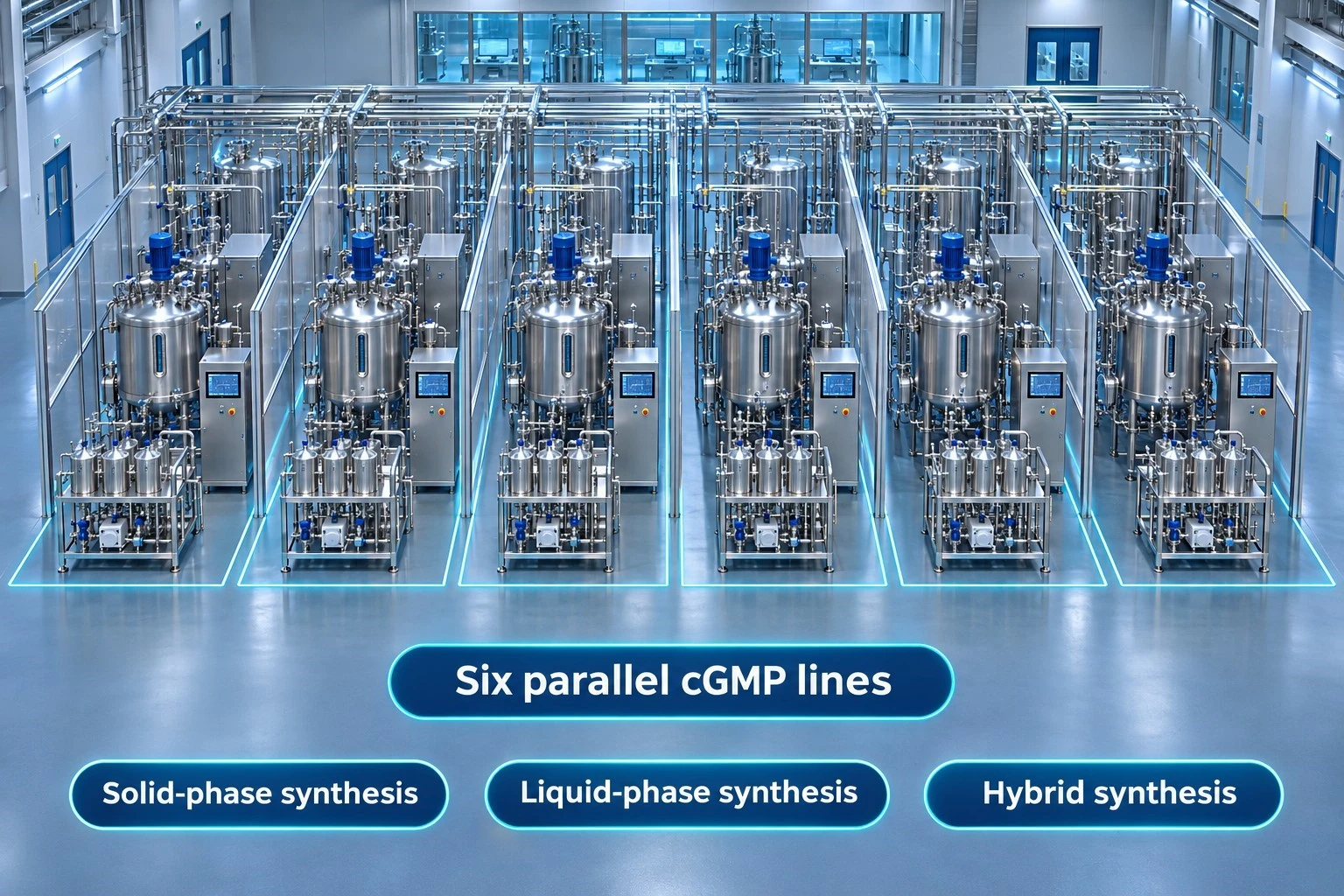
Shilpa expects the expanded operation to comprise six parallel manufacturing lines operating under current good manufacturing practices, allowing multiple customer programs to run independently. The company's platform supports solid-phase synthesis, liquid-phase synthesis, and hybrid routes that combine the two. This gives process teams options when choosing a route for a particular peptide, development stage, or production scale. Shilpa is positioning the expansion to serve demand for GLP-1 peptides and other complex molecules, including cyclic, branched, and conjugated peptides. The planned capacity covers projects ranging from clinical development to commercial supply.