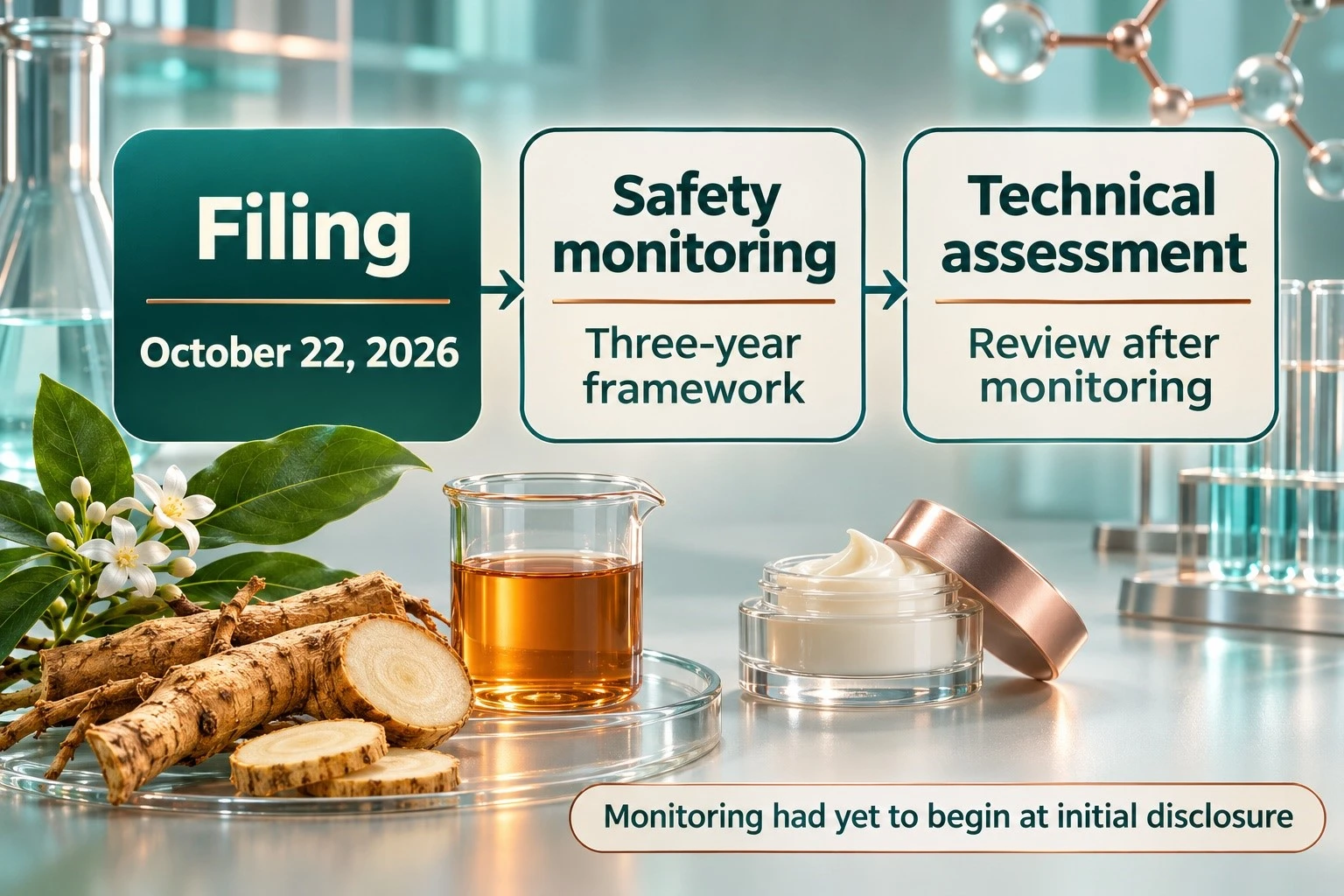
The Filing Identifies a Root-Derived Extract
The public entry names the ingredient as Nanhaia speciosa root extract, giving researchers and formulators a precise starting point for identifying the material. The reference to the root matters because extracts from different parts of the same plant can have different chemical profiles. The filing also identifies Southern Medical University as the responsible entity, making it possible to trace the record by institution as well as by ingredient name. The filing number provides the most direct reference for following any subsequent disclosures about the ingredient's specifications or regulatory status.
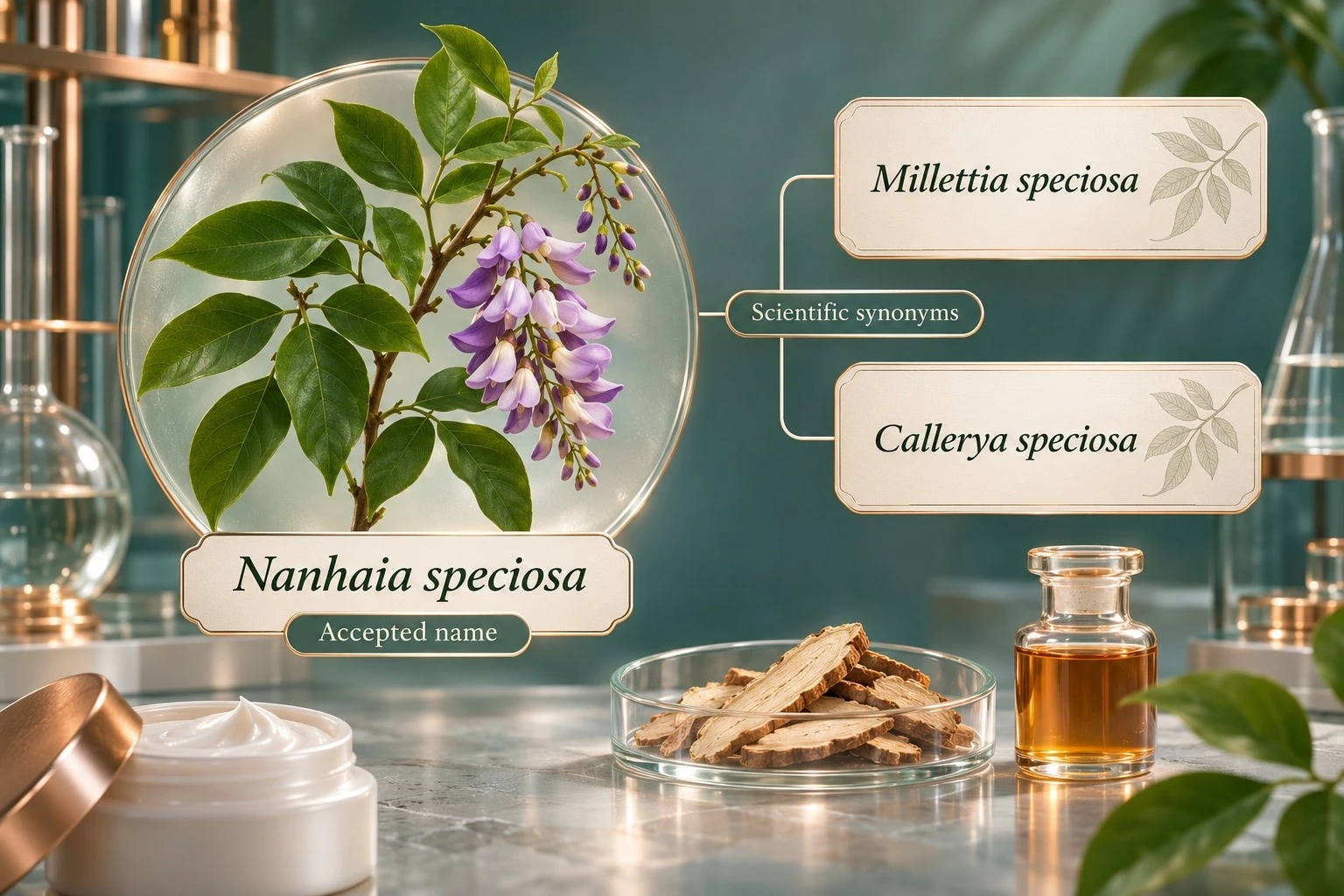
Botanical Synonyms Help Connect Earlier Research
Kew's Plants of the World Online describes Nanhaia speciosa as a climbing shrub in the legume family, native to southern China and northern Vietnam. Earlier literature may list the species as Millettia speciosa or Callerya speciosa, both recognized synonyms. These names give research teams additional search terms when reviewing published work on the plant's chemistry. The next step is to check which plant part each study examined and how the material was prepared. A study of an authenticated root sample, for example, provides a more direct comparison with the filed ingredient than a study of leaves or stems.
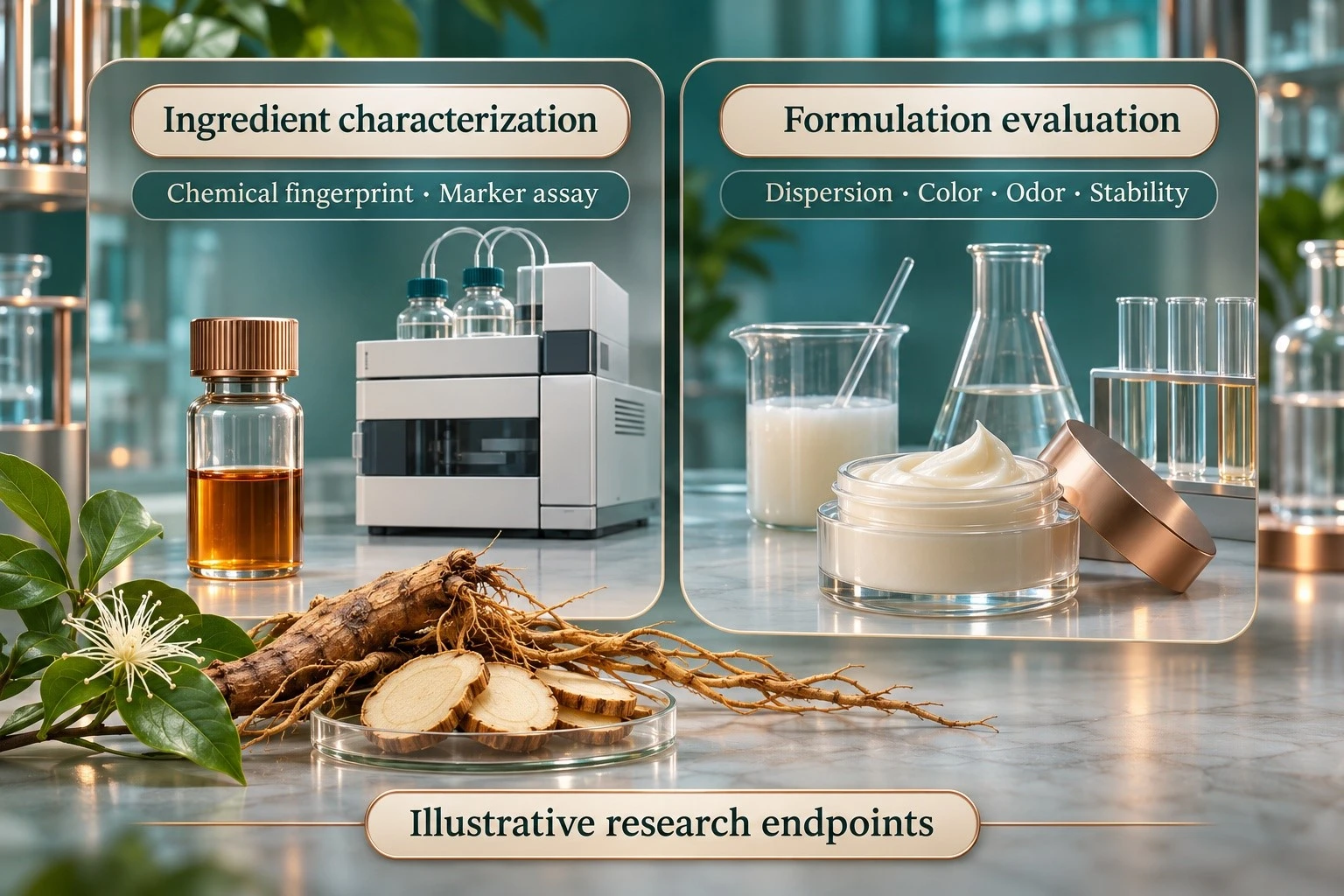
Technical Specifications Will Shape Formulation Research
The initial public disclosure left several practical details open, including the extraction process, chemical markers, and specifications for the finished ingredient. These details would help formulation teams compare lots and judge whether published research applies to the material under evaluation. A chemical fingerprint can show whether batches have similar profiles, while a marker assay can quantify a selected constituent. In a finished formulation, researchers could separately assess properties such as dispersion, color, odor, and stability under defined conditions. Those measurements would help establish how the extract behaves in a particular cosmetic base.
China's Safety Monitoring Framework Sets the Next Milestone
China's National Medical Products Administration provides for a three-year safety monitoring period for new cosmetic ingredients. During that period, the filing entity collects safety information and submits reports under the applicable rules. The technical assessment agency then evaluates whether the ingredient meets the relevant safety requirements. The October disclosure described the root extract as filed and reported that safety monitoring had yet to begin. For cosmetic developers tracking the ingredient, publication of its technical requirements and a subsequent update to its monitoring status are separate milestones to watch.