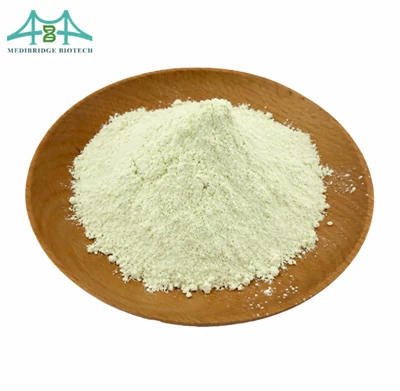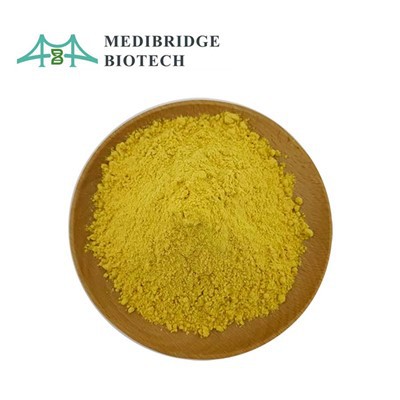
Liquiritigenin Powder is a natural compound belonging to a phytochemical class called flavonoids. It is derived from the root of licorice (Glycyrrhiza glabra), a perennial herb native to the Mediterranean region and parts of Asia. Liquiritigenin is known for its various pharmacological properties and has been used in traditional medicine for centuries.
One of the critical characteristics of liquiritigenin is its antioxidant activity. Antioxidants play a crucial role in the body by neutralizing harmful free radicals and unstable molecules that can cause damage to cells and contribute to various diseases, including cancer, cardiovascular diseases, and neurodegenerative disorders. Liquiritigenin acts as an antioxidant by scavenging these free radicals and protecting cells from oxidative stress.
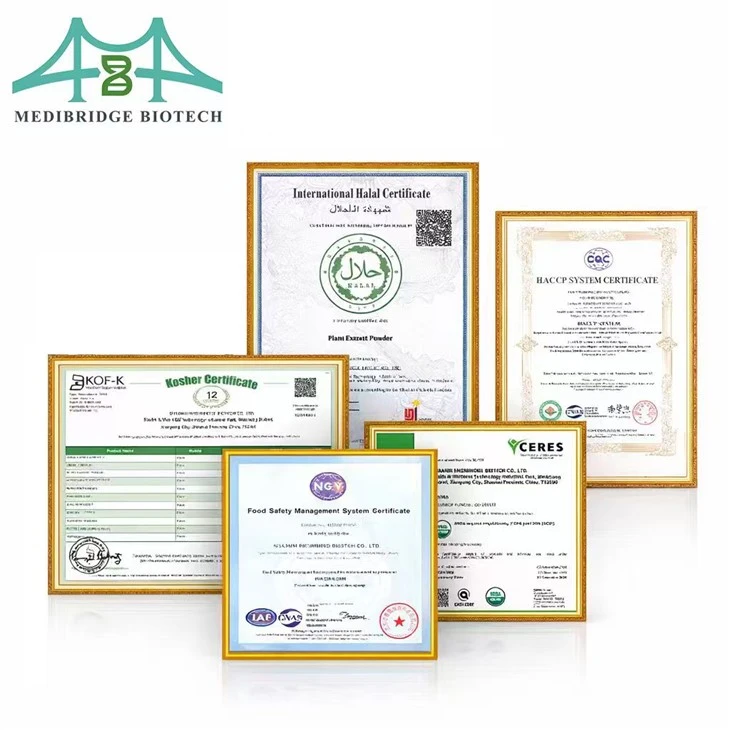
Shaanxi Medibridge Biotech Co., Ltd. supplies plant extracts, nutritional ingredients, and custom specification products for different sourcing and formulation needs. We support stable supply, routine specification matching, and flexible packaging service for ingredient-based product development.
COA
|
|
||
|
Product Name |
CAS Number |
Batch Number |
|
Liquiritigenin Powder |
578-86-9 |
MB2604150224 |
|
Manufacturer Date |
Analysis Date |
Expiry Date |
|
2026/4/15 |
2026/4/16 |
2028/4/15 |
|
Sample Qty Base |
Packing |
Test Method |
|
120KGS |
25KG/drum |
HPLC |
|
|
||
|
Item |
Standard |
Results |
|
Appearance |
White crystalline powder |
Conforms |
|
Assay |
98% |
98.36% |
|
Odor&Taste |
Characteristic |
Characteristic |
|
Particle size |
100% through 80 mesh |
80 mesh |
|
Ash |
≤0.5% |
0.06% |
|
Loss on drying |
≤1.0% |
0.27% |
|
Heavy metal |
≤15ppm |
3ppm |
|
Cadmium(Cd) |
≤0.5ppm |
Complies |
|
Lead(Pb) |
≤1ppm |
Complies |
|
Arsenic(As) |
≤2ppm |
Complies |
|
Mercury(Hg) |
Negative |
Negative |
|
Total bacteria count |
≤1000cfu/g |
67cfu/g |
|
Fungi |
≤100cfu/g |
12cfu/g |
|
Samonella |
Negative |
Negative |
|
E. Coli |
Negative |
Negative |
|
Conclusion |
The batch conforms to the IN-HOUSE standard |
|
|
|
||


Botanical Source and Production
Liquiritigenin can be isolated from plants of the Glycyrrhiza genus or produced by hydrolyzing liquiritin. Published methods include hydrolytic extraction followed by high-speed countercurrent chromatography, as well as enzymatic conversion using β-glucosidase.
Products sold as "Liquiritigenin Powder" may differ substantially. One may be a high-purity isolated compound; another may be a licorice extract standardized to a specified liquiritigenin content; a third may contain carriers to improve handling or dispersion. A specification of 98% liquiritigenin is therefore different from a licorice extract containing 5% liquiritigenin.

Mechanisms
Estrogen Receptor Beta Activity
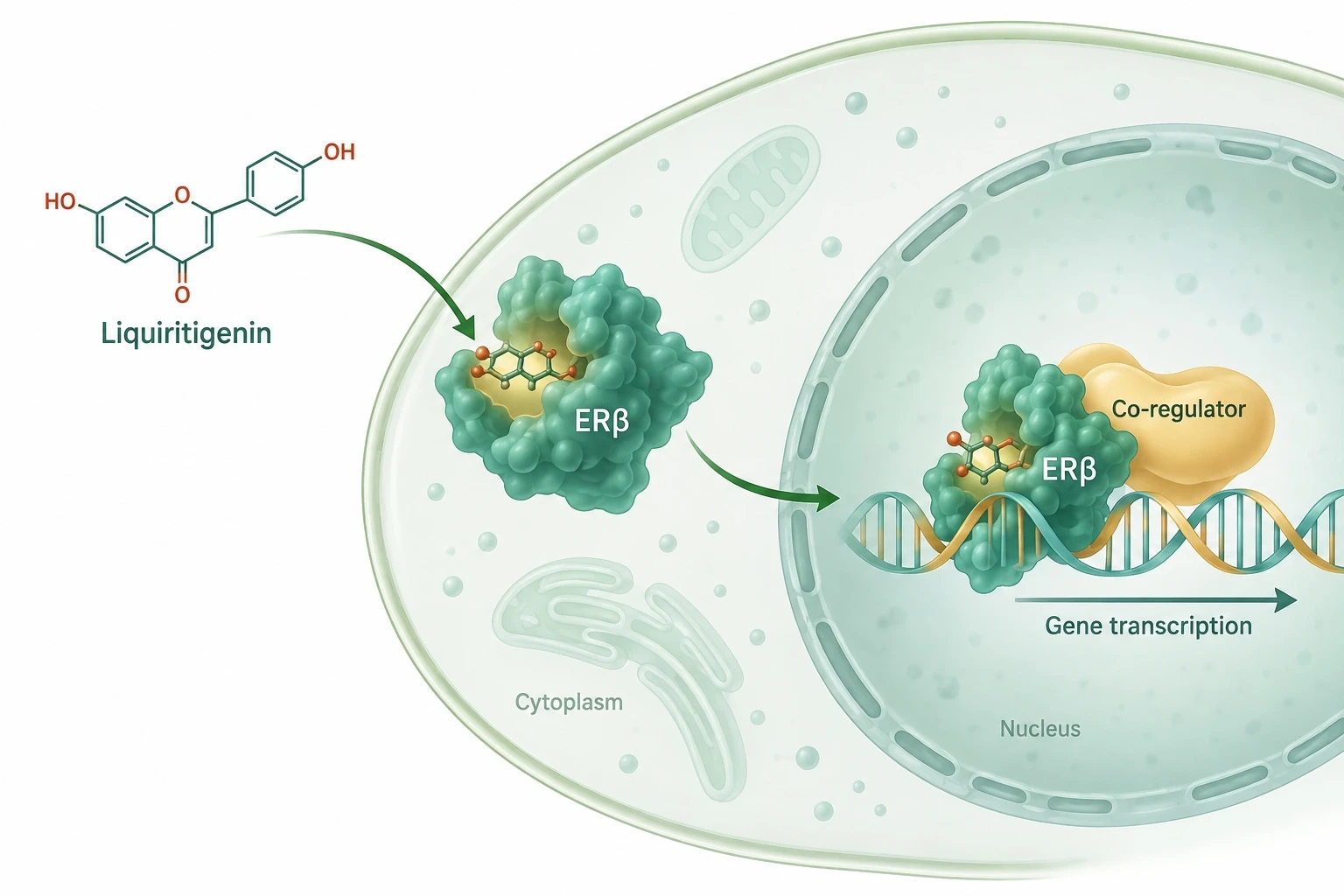
In experimental systems, liquiritigenin has preferentially activated ERβ-mediated transcriptional responses. Subsequent work has investigated how receptor behavior and the recruitment of regulatory proteins contribute to this selectivity. These findings make liquiritigenin useful for studying ERβ signaling. They do not establish that it acts exclusively through ERβ at every concentration or in every tissue, or that it is an effective estrogen replacement therapy.
Inflammatory Signaling
In lipopolysaccharide-stimulated macrophage models, liquiritigenin reduced NF-κB activation, inducible nitric oxide synthase (iNOS), and the production of certain pro-inflammatory cytokines. An experimental mouse colitis study also reported improvements in inflammation-related measures.


Oxidative Stress and Liver Models
Studies have linked liquiritigenin to the NRF2 antioxidant response and to improved oxidative-stress measures in selected cell and animal models of liver injury. A 2023 mechanistic study examined NRF2 activation involving KEAP1 and p62. Such results are relevant to drug discovery; they are not proof that liquiritigenin treats human liver disease.
Research Directions and Evidence Levels
|
Research area |
Representative evidence |
Appropriate interpretation |
|
ERβ and women's health |
Receptor, cell, and tissue studies |
A candidate for mechanistic research; relief of menopausal symptoms is not established for the isolated compound |
|
Inflammation |
Macrophage and animal disease models |
A basis for further pathway and formulation studies |
|
Oxidative stress and liver protection |
Cell and animal injury models |
Evidence for investigating NRF2-related mechanisms |
|
Cancer-related research |
Cell, animal, and limited human-tissue research |
A research hypothesis, not an established anticancer effect |
|
Food, cosmetic, or supplement development |
Depends on the specific product and intended use |
Requires separate safety, stability, and regulatory assessment |
Quality Control

- Identity: Botanical species and plant part, manufacturing process, comparison with a reference standard, and structural identification data where appropriate.
- Assay and impurity profile: HPLC or UPLC measurement of liquiritigenin, with separate reporting of liquiritin, isoliquiritigenin, and relevant unidentified peaks.
- Process residues and contaminants: Testing appropriate to the extraction and purification process, including applicable residual solvents, heavy metals, pesticides, and microbial limits.
- Powder and formulation properties: Particle size, moisture, batch consistency, behavior in the intended formulation, and stability under relevant light, temperature, and humidity conditions.
- Glycyrrhizin residue: Separate testing when the material originates from licorice extraction or hydrolysis. A high liquiritigenin assay alone does not show that glycyrrhizin has been removed.
Safety and Claims
Because liquiritigenin has estrogen-receptor-related activity in experimental systems, oral or other high-exposure uses warrant careful safety assessment, particularly for long-term use, pregnancy or breastfeeding, and people with hormone-sensitive conditions. The available mechanistic evidence does not establish a general safe human dose for liquiritigenin powder.
The risks of purified liquiritigenin should also be distinguished from those of residual compounds in a licorice-derived ingredient. The US National Center for Complementary and Integrative Health notes that glycyrrhizin in licorice can cause serious adverse effects under certain conditions, including problems involving blood pressure, potassium levels, and heart rhythm. For an orally used licorice-derived powder, glycyrrhizin residue should therefore be measured rather than assumed absent.
Overall assessment: Liquiritigenin powder is best characterized as a plant-derived research ingredient with a useful experimental foundation in ERβ signaling, inflammation, and oxidative stress. Its suitability for a finished product depends on a clearly defined specification, reproducible quality, exposure data for the intended route of use, and human evidence appropriate to the proposed claims.

FAQ
What are the benefits of licorice powder?
Licorice powder offers powerful anti-inflammatory and soothing properties that help calm digestive issues, relieve sore throats, and improve skin health.
Can we drink licorice powder daily?
Drinking licorice powder daily is generally not recommended for long periods without medical supervision due to the risk of serious side effects.
Is licorice powder good for skin whitening?
Yes, licorice powder helps lighten dark spots and even out skin tone, though it does not change your overall natural skin color.
What is the INCI name for licorice extract?
The INCI name for pure licorice extract is Glycyrrhiza Glabra (Licorice) Root Extract.
If you are looking for a high-quality Liquiritigenin Powder manufacturer with whom you can establish a long-term, stable partnership, then Shaanxi Medibridge Biotech Co., Ltd. would be your best business partner. Don't hesitate to contact us at hi@medibridgeapi.com.
Hot Tags: liquiritigenin powder, China liquiritigenin powder manufacturers, suppliers, factory, bromelain anti inflammatory enzyme ingredient, Hesperidinase, hesperidinase biotechnological enzyme ingredient, hesperidinase lyophilized enzyme powder, Orange Terpenes Powder, Rhodiola Rosea Extract Powder