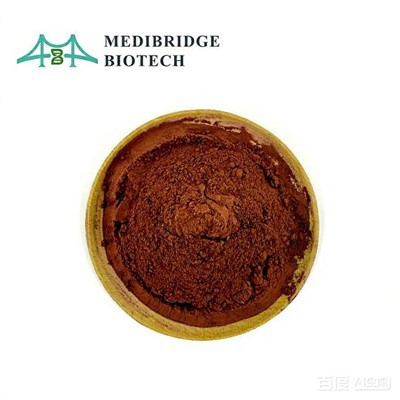
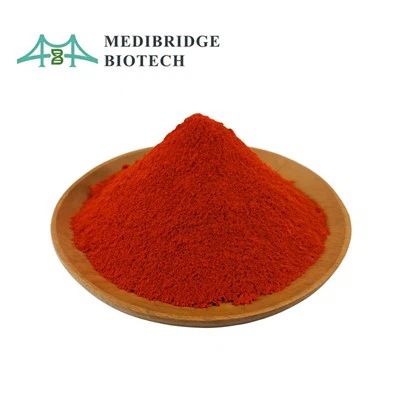
This extract comes from the whole plant or aerial parts of Mesembryanthemum crystallinum, a halophytic succulent known for the crystal-like bladder cells on its surface. It is usually made through water or hydroalcoholic extraction, then filtered, concentrated, and spray-dried into powder. This helps keep naturally present compounds such as D-pinitol, polyphenols, and flavonoids in a form that is easier to use in finished formulas.
This botanical ingredient is mainly known for its broad-use value in hydration support, antioxidant protection, and metabolic-related applications. Because the plant naturally grows under high salinity and environmental stress, it has developed its own way of maintaining osmotic balance and protecting itself under tough conditions. That is also why this extract is often used in products built around moisture balance, environmental defense, and general wellness support.
Shaanxi Medibridge Biotech Co., Ltd. focuses on supplying plant-based raw materials through standardized extraction and reliable quality control, with stable supply and formulation support for global customers.
COA
|
|
||
|
Product Name |
CAS Number |
Batch Number |
|
Mesembryanthemum Extract |
N/A |
MB2602051030 |
|
Manufacturer Date |
Analysis Date |
Expiry Date |
|
2026-02-05 |
2026-02-06 |
2028-02-04 |
|
Sample Qty Base |
Packing |
Test Method |
|
300KGS |
25kg/drum |
HPLC |

|
Item |
Standard |
Results |
|
Appearance |
Light green to brown fine powder |
Conforms |
|
Identification (HPLC/UV) |
Profile consistent with reference standard |
Conforms |
|
Extract Ratio |
10:1 (or as specified) |
Conforms |
|
Assay (D-Pinitol) |
NLT 2.0% (if standardized) |
2.34% |
|
Total Polyphenols |
NLT 5.0% |
5.72% |
|
Solubility |
Soluble in water |
Conforms |
|
Loss on Drying |
NMT 5.0% |
3.08% |
|
Residue on Ignition |
NMT 5.0% |
2.26% |
|
Heavy Metals |
NMT 10 ppm |
Conforms |
|
Arsenic (As) |
NMT 2 ppm |
Conforms |
|
Microbial Limits |
Complies with cosmetic/nutraceutical standards |
Conforms |
|
Storage |
Store in cool & dry place. keep away from strong light and heat |
|
|
Conclusion |
The batch conforms to the IN-HOUSE standard |
|
|
|
||

Products Description
This ingredient comes from Mesembryanthemum crystallinum, a halophytic plant naturally adapted to saline, dry, and high-UV environments. Unlike many common botanicals, it develops special epidermal bladder cells that can store water and excess salts, which gives the plant its crystal-like appearance.
This natural system helps the plant hold water inside the cells and keep ionic balance under osmotic stress. Because of that, it also accumulates protective compounds such as polyphenols and osmolytes. These adaptation traits are one reason the extract is often used in formulas designed for hydration support and protection from environmental stress.

Phytochemical Profile & Active Compounds
This extract contains a range of bioactive compounds shaped by the plant's adaptation to harsh conditions. Key components include D-pinitol, a naturally occurring inositol derivative often linked with metabolic support, along with myo-inositol, which is involved in cellular signaling balance.
It also contains polyphenols and flavonoids, which are commonly associated with antioxidant protection and free radical control. In addition, trace minerals and osmolytes help support moisture balance and stress resistance. Together, this compound profile gives the ingredient broad value in both skin-conditioning and metabolic-support formulas.

Osmoregulation & Water Retention Mechanism
One of the more distinctive features of this extract is its osmoregulatory character, which comes from the plant's natural halophytic physiology. In its native environment, the plant builds up osmolytes such as D-pinitol and inositols to keep intracellular and extracellular osmotic pressure in balance under salty conditions.
In formulation terms, this is often connected with water retention support and moisture balance. The ingredient may help support hydration stability by influencing moisture distribution and helping reduce transepidermal water loss. Its water-binding and humectant-like behavior also makes it a practical fit for products aimed at dry skin or stress-related dehydration.

Insulin-Mimetic & Metabolic Regulation Pathway
This extract is also discussed for its metabolic-support potential, mainly because of its D-pinitol content. D-pinitol is often described as a naturally occurring compound with insulin-mimetic properties and is associated with support for glucose uptake and utilization, which may help with cellular energy balance.
It may also play a role in lipid metabolism by influencing certain enzymatic activities involved in fat processing. Because of these combined directions, it is often used as a plant-based ingredient in formulas built around metabolic balance. Its natural origin also makes it attractive for nutraceutical and wellness products that want a more botanical positioning.

Skin Hydration & Barrier Support Model
This extract supports skin hydration through a mechanism often described as biomimetic, since it reflects the plant's own water-retention strategy. Because it contains osmolytes and other hydrophilic compounds, it can help attract and hold moisture in the stratum corneum, which helps maintain hydration over time.
At the same time, it may also support barrier integrity, helping reduce transepidermal water loss and improve skin resilience under environmental stress. Its soothing character is another reason it is often used in formulas made for dry, sensitive, or weakened skin conditions.

Application Scenarios
This ingredient can be used in a wide range of skincare and nutraceutical formulas. In cosmetics, it is often added to hydrating serums, soothing creams, masks, and barrier-support products made for dry or sensitive skin. Because of its antioxidant and stress-related profile, it also fits products aimed at urban defense or after-sun care.
In nutraceutical and functional food products, it can be used in formulas built around metabolic balance and general wellness support. Its water-soluble nature also makes it easier to work into both liquid and solid delivery systems.

Formulation Guidance & Stability Profile
This extract is water-soluble and can be added into aqueous, hydro-glycolic, and emulsion-based systems without much difficulty. To better protect its active compounds, it is usually recommended to add it during the cooling stage of formulation. Typical use levels are around 0.5% to 5%, depending on the target formula and the intended strength.
It stays relatively stable under mild processing conditions and generally performs best within a pH range of 4.5 to 7.5. Long exposure to high heat or strongly oxidative conditions is better avoided. For routine storage, keeping it in a cool, dry place away from direct light and moisture helps maintain consistency and activity.

FAQ
Q: What is Mesembryanthemum Extract?
A: It is a plant extract made from Mesembryanthemum crystallinum, a succulent known for its moisture-retention properties.
Q: What are the main active compounds in this extract?
A: The main compounds are D-pinitol, inositols, polyphenols, and flavonoids.
Q: Is this extract water-soluble?
A: Yes, it is water-soluble and works well in aqueous and hydro-glycolic systems.
Q: What is this extract mainly used for?
A: It is mainly used in skincare and nutraceutical products focused on hydration, antioxidant support, and wellness formulas.
Q: Is it suitable for sensitive skin products?
A: Yes, it is commonly used in formulas made for dry, sensitive, or stressed skin.
Hot Tags: mesembryanthemum extract, China mesembryanthemum extract manufacturers, suppliers, factory, D Theanine Powder, plant extracts, Best Berberine Powder, Rhodiola Rosea Extract Powder, Hesperidinase, Licorice Extract Powder