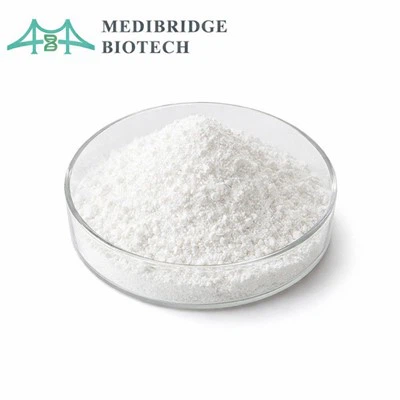
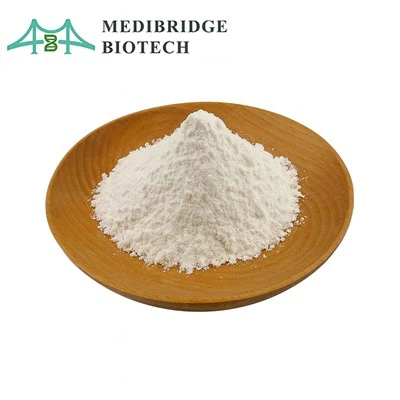
Cilostazol powder is a synthetic small-molecule raw material obtained through chemical synthesis and purification. In its usual raw form, it appears as a white to off-white crystalline powder. It belongs to the quinolinone derivative group and is commonly classified as a PDE3 inhibitor. One point people often notice early is that it does not dissolve well in water, which makes it a material that usually needs a bit more attention during initial handling and formulation work.
In pharmaceutical development, this ingredient is more often linked to oral solid dosage projects than to botanical or nutrition-style products. Its background is mainly discussed around phosphodiesterase III inhibition, platelet aggregation, vascular response, and tablet-based development. Since it is only slightly soluble in methanol and ethanol and is practically insoluble in water, solvent behavior is usually part of the conversation quite early, especially during screening and process evaluation.
Shaanxi Medibridge Biotech Co., Ltd. supplies small-molecule raw materials for research and pharmaceutical development projects with a straightforward working style. We can communicate around specification details, packaging options, sample support, and document needs according to different project stages.

COA
|
|
||
|
Product Name |
CAS Number |
Batch Number |
|
Cilostazol Powder |
73963-72-1 |
MB2602101030 |
|
Manufacturer Date |
Analysis Date |
Expiry Date |
|
2026-02-10 |
2026-02-11 |
2028-02-09 |
|
Sample Qty Base |
Packing |
Test Method |
|
150KGS |
25kg/drum |
HPLC |

|
Item |
Standard |
Results |
|
Appearance |
White to off-white crystalline powder |
Conforms |
|
Identification (HPLC/IR) |
Conforms to reference standard |
Conforms |
|
Assay (HPLC) |
NLT98.0% |
99.21% |
|
Solubility |
Slightly soluble in methanol/ethanol; insoluble in water |
Conforms |
|
Loss on Drying |
NMT 0.5% |
0.18% |
|
Residue on Ignition |
NMT 0.1% |
0.04% |
|
Heavy Metals |
NMT 10 ppm |
Conforms |
|
Related Substances |
NMT 1.0% |
Conforms |
|
Melting Point |
158 – 162°C |
160.3°C |
|
Storage |
Store in cool & dry place. keep away from strong light and heat |
|
|
Conclusion |
The batch conforms to the IN-HOUSE standard |
|
|
|
||

Chemical Identity & Physicochemical Profile
This material is a synthetic small-molecule compound in the quinolinone derivative class. In raw material form, it is usually seen as a white to off-white crystalline powder, so its basic identity is quite clear at the specification level.
From a physicochemical point of view, the more practical thing to notice is its solubility profile. It is slightly soluble in methanol and ethanol, but practically insoluble in water, 0.1 N HCl, and 0.1 N NaOH. In real project work, that usually matters more than abstract chemical wording, because solvent behavior often affects how the material is handled, screened, and discussed in formulation-related settings.
Its appearance, crystalline character, and low aqueous solubility together give it a fairly typical small-molecule pharmaceutical raw material profile. For that reason, people usually pay closer attention to purity, consistency, and handling behavior, rather than treating it like a simple water-soluble ingredient.

Pharmacological Background & Mechanism
This compound is usually described as a PDE3 inhibitor, but the clinical effect is not always presented as a neatly isolated single-pathway story. In the official labeling, the exact mechanism behind symptom improvement is described as not fully established. What is clear is that the compound and several of its metabolites inhibit phosphodiesterase III activity and reduce cAMP breakdown.
Once cAMP levels go up in platelets and blood vessels, two familiar effects start to show up in the discussion around this compound: reversible inhibition of platelet aggregation and vasodilation. The label also notes that this inhibition of platelet aggregation can be seen across different stimuli, including ADP, collagen, thrombin, arachidonic acid, epinephrine, and shear stress, so the mechanism is usually described as broader than a single narrow trigger point.
That is why this raw material is more often placed in circulatory and oral pharmaceutical development discussions rather than in general nutrition-style use. Its approved clinical background is tied to intermittent claudication and improved walking distance, so most pharmacology discussions stay close to the PDE3, cAMP, platelet, and vascular response line without stretching the section into something overly academic.

Solubility, Storage & Handling Considerations
One of the more practical things about cilostazol is that its solubility is not especially friendly in water. In the official labeling, it is described as slightly soluble in methanol and ethanol, but practically insoluble in water, 0.1 N HCl, and 0.1 N NaOH. So when people look at this material at the raw powder stage, solvent behavior is usually one of the first points that gets noticed, not something left until the end.
For storage, the published labeling gives a pretty straightforward reference point: store at 20 to 25°C, with permitted excursions to 15 to 30°C, and keep it in a tight container. For a product page, that kind of wording is already enough. It says what needs to be said without turning the section into a long set of warnings.
From a handling angle, this is usually better treated like a standard small-molecule pharmaceutical raw material than a simple easy-to-dissolve ingredient. In actual project discussion, people tend to pay more attention to container closure, routine room-temperature control, and how the powder behaves during weighing, transfer, and early formulation screening. That is not because the profile is unusual, but because low aqueous solubility usually makes basic handling decisions matter a bit more.
Why Choose Us
Clear communication on specs
This is the kind of material where project details usually matter early. The small-molecule profile is clear, the oral tablet background is well established, and the low water solubility is not something people want to discover too late. We prefer to keep specification discussion direct and easy to follow.
Support that fits project work
We can discuss specification confirmation, packaging options, sample supply, and routine document support based on the stage of the project. The focus is on practical communication rather than unnecessary back-and-forth.
Stable and straightforward supply style
At Shaanxi Medibridge Biotech Co., Ltd., we focus on research and pharmaceutical raw materials with a grounded supply approach. For a product like this, consistency, basic documentation, and response efficiency usually matter more than overly polished sales language.

FAQ
Q: Is Cilostazol powder water soluble?
A: No, it is practically insoluble in water and only slightly soluble in methanol and ethanol.
Q: What does Cilostazol powder usually look like?
A: It usually appears as a white to off-white crystalline powder.
Q: Is this product used for research or finished dosage form development?
A: It is usually handled as a raw material for research and pharmaceutical development work, not as a finished dosage form.
Q: Does Cilostazol need protection from light or moisture?
A: A tight, well-closed container at room temperature is the standard reference, and dry routine handling is the safer way to describe it on a product page.
Q: Can purity, packaging, or particle size be customized?
A: Yes, purity targets, packaging, and particle size can usually be discussed based on project needs.
Hot Tags: cilostazol powder, China cilostazol powder manufacturers, suppliers, factory, Telmisartan Powder, Best NAD Powder, Cilostazol Powder, Pure Pregabalin Powder, Omadacycline Powder, Prilocaine Powder