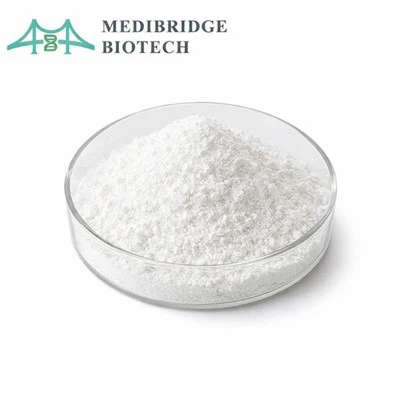
SANA Powder is a well-defined synthetic small molecule compound with the chemical name 2-Hydroxy-5-(2-nitroethenyl)benzoic acid, also known as 5-(2-nitroethenyl)salicylic acid. Its basic structure is based on a salicylic acid skeleton, retaining both ortho-hydroxy and carboxylic acid groups on the aromatic ring, and further introducing a 2-nitroethenyl (nitrovinyl) substituent with strong electronic characteristics. This structural combination endows the molecule with a unique electronic distribution, polarity, and the ability to interact with biomolecules, which is also an important structural basis distinguishing it from traditional salicylic acid compounds.
The carboxylic acid and phenolic hydroxyl groups in the molecule can participate in hydrogen bonding and acid-base interactions, while the nitroolefin structure further alters the electronic properties of the aromatic system, giving the entire molecule a structural characteristic that combines aromatic hydrophobic regions and polar functional groups. This type of structure is of great significance for studying the interactions between small molecules and proteins, cell membranes, and intracellular metabolic networks.
Shaanxi Medibridge Biotech Co., Ltd. focuses on the supply of pharmaceutical raw materials and research-use compounds. We support customers with stable quality, clear specification communication, flexible packaging options, and document-related support for different project stages.
COA
|
|
||
|
Product Name |
CAS Number |
Batch Number |
|
SANA Powder |
42571-07-3 |
MB2606130582 |
|
Manufacturer Date |
Analysis Date |
Expiry Date |
|
2026/6/13 |
2026/6/15 |
2028/6/15 |
|
Sample Qty Base |
Packing |
Test Method |
|
150KGS |
25KG/drum |
HPLC |
|
|
||
|
Item |
Standard |
Results |
|
Appearance |
Yellow Powder |
Conform |
|
Odor |
Characteristic |
Conform |
|
Assay |
≥98.0% |
98.42% |
|
Particle Size |
100% pass 80mesh |
Conform |
|
Moisture |
<5.0% |
Conform |
|
Ash Content |
<4.0% |
Conform |
|
Solvent Residue |
Eur.Pharm |
Conform |
|
Total Heavy Metals |
<10 ppm |
Conform |
|
Arsenic |
<1.0 ppm |
Conform |
|
Lead |
<1.0 ppm |
Conform |
|
Mercury |
<0.5 ppm |
Conform |
|
DDT |
<0.2ppm |
Conform |
|
E. Coli |
Negative |
Negative |
|
GMO Status |
Complies |
GMO Free |
|
Irradiation |
Complies |
Irradiation Free |
|
Conclusion |
The batch conforms to the IN-HOUSE standard |
|
|
|
||


Core Research Mechanism
Creatine-Dependent Thermogenesis
SANA is primarily studied for its effects on **creatine-dependent energy expenditure** in adipose tissue. Published research observed increased mitochondrial respiration in fat cells and metabolic changes associated with thermogenesis. In the tested models, these effects also appeared under conditions independent of the classical **UCP1** thermogenic pathway. This makes SANA a useful tool for investigating non-classical heat production, although its complete set of direct molecular targets has not yet been established.

Adipocyte and Mitochondrial Function

At the cellular level, SANA can be used to investigate how adipocytes regulate **oxygen consumption, mitochondrial respiration, and energy use**. Researchers may combine oxygen-consumption assays with metabolomics, creatine-pathway measurements, and thermogenic gene-expression analysis. Published work also examined its activity under thermoneutral conditions, helping distinguish compound-associated responses from those caused solely by cold exposure. Changes in a single gene or respiration measurement should be interpreted alongside other experimental evidence.
Diet-Induced Obesity Models
SANA has been investigated in high-fat-diet mouse models to study **body-weight changes and energy balance**. Published experiments reported changes in weight, fat mass, and metabolic measurements, with the parent compound salicylate included as a comparator. Studies using SANA powder should assess food intake, body composition, energy expenditure, and nutrient absorption alongside body weight to clarify the observed effects. Findings in mice cannot be directly translated into claims of weight loss in humans.

Glucose Homeostasis and Liver Metabolism

SANA is also used to explore the connection between adipose-tissue thermogenesis and **whole-body metabolic regulation**. Preclinical research reported changes in measures related to insulin resistance, glucose tolerance, and liver steatosis. These findings support its use in studies of metabolic interactions among adipose tissue, skeletal muscle, and the liver. The causal relationships among these effects still require further investigation, including tissue-specific and longer-term studies.
Research Applications
Neuroprotection & Neurodegenerative Disease Research
Attenuation of Microglial Activation: Suppresses the hyperactivation of central nervous system microglia induced by lipopolysaccharides (LPS) or amyloid-beta (Aβ) proteins, downregulating the expression of pro-inflammatory cytokines such as TNF-α and IL-1β.
Preservation of Synaptic Plasticity: Protects dopaminergic neurons from neurotoxic damage in Alzheimer's disease (AD) and Parkinson's disease (PD) cell models.


Cardiovascular & Endothelial Protection
Endothelial Barrier Repair: Reduces vascular endothelial cell apoptosis induced by high glucose or oxidized low-density lipoprotein (ox-LDL), promoting eNOS expression and nitric oxide (NO) release to maintain endothelial homeostasis.
Protection Against Myocardial Ischemia/Reperfusion Injury: Maintains mitochondrial membrane potential and inhibits the pathological opening of the mitochondrial permeability transition pore (mPTP) in cardiomyocytes.
Hepatic Metabolism & Anti-Fibrotic Protection
Inhibition of Hepatic Stellate Cell (HSC) Activation: Downregulates the TGF-β1 / Smad signaling pathway to reduce excessive extracellular matrix (ECM) deposition, making it valuable for mechanistic studies on metabolic dysfunction-associated steatohepatitis (MASH/MASLD) and liver fibrosis interception.


Cell Cycle & Apoptosis Regulation
Stress Response Modulation: Modulates the Bcl-2 / Bax expression ratio in tumor microenvironment and cellular stress assays, preventing non-specific apoptosis of healthy tissue cells under chemotherapy or radiation exposure.
FAQ
What is the primary research application of SANA Powder?
It is used as a specialized biochemical reagent for studying cellular oxidative stress, metabolic pathways, and signaling mechanisms.
What are the recommended solubility parameters for in vitro assays?
SANA Powder is readily soluble in organic solvents like DMSO and ethanol, as well as standard aqueous buffer solutions.
How should SANA Powder be stored to maintain compound stability?
Store the desiccated powder at -20C protected from light and moisture to prevent chemical degradation.
Can SANA Powder be autoclaved or heat-sterilized in solution?
Heat sterilization is not recommended; stock solutions should be sterile-filtered through a 0.22μm membrane filter immediately prior to use.
If you are looking for a high-quality SANA Powder manufacturer with whom you can establish a long-term, stable partnership, then Shaanxi Medibridge Biotech Co., Ltd. would be your best business partner. Don't hesitate to contact us at hi@medibridgeapi.com.
Hot Tags: sana powder, China sana powder manufacturers, suppliers, factory