


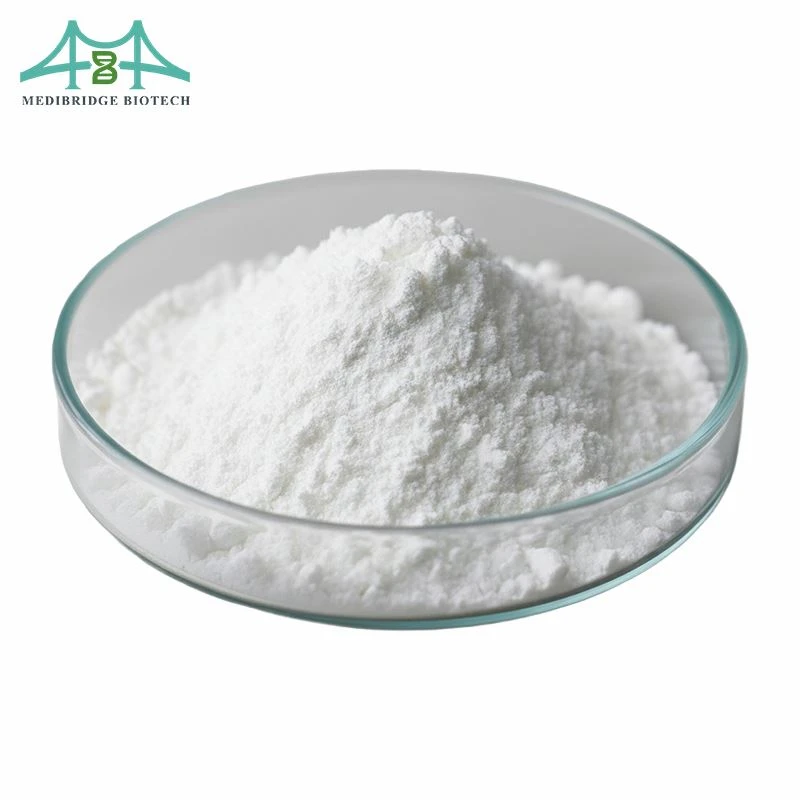

Trelagliptin Powder is an oral hypoglycemic drug used to treat type 2 diabetes. It belongs to the class of drugs called DPP-4 inhibitors (dipeptidyl peptidase-4 inhibitors). It was first approved for marketing in Japan in 2015 under the trade name Zafatek. The biggest feature of this product is that it only needs to be taken once a week, which is different from the once-daily administration of most DPP-4 inhibitors, greatly improving the patient's medication compliance.
The mechanism of action of it is based on the inhibition of the DPP-4 enzyme, thereby prolonging the duration of action of endogenous incretin. After a meal, incretin can enhance the sensitivity of pancreatic beta cells to glucose, promote insulin secretion, and inhibit glucagon secretion, thereby effectively lowering blood sugar. Since the DPP-4 enzyme can rapidly degrade incretin, inhibiting the activity of the enzyme can improve blood sugar control, especially for the regulation of postprandial blood sugar. The pharmacokinetic properties of this product indicate that it has a long half-life (about 5 days), so it can be taken orally once a week to maintain a stable blood sugar control effect.
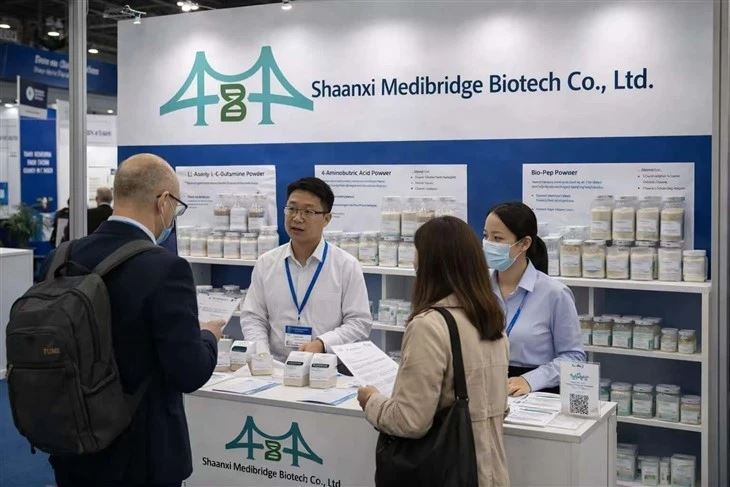
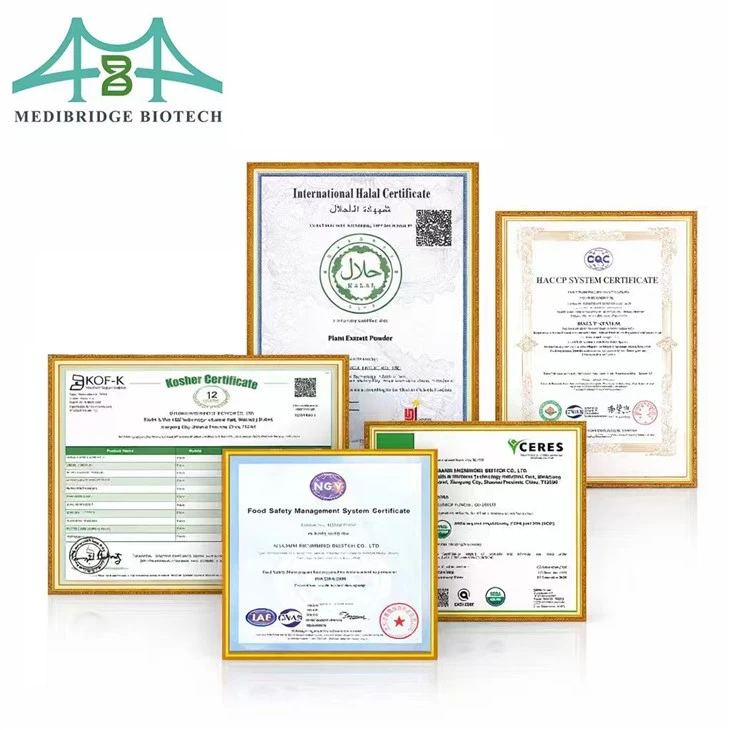
Shaanxi Medibridge Biotech Co., Ltd. focuses on the supply of pharmaceutical raw materials and research-use compounds. We support customers with stable quality, clear specification communication, flexible packaging options, and document-related support for different project stages.
COA
|
|
||
|
Product Name |
CAS Number |
Batch Number |
|
Trelagliptin Powder |
865759-25-7 |
MB2607150087 |
|
Manufacturer Date |
Analysis Date |
Expiry Date |
|
2026/7/15 |
2026/7/16 |
2028/7/15 |
|
Sample Qty Base |
Packing |
Test Method |
|
200GS |
25GS/bottle |
HPLC |
|
|
||
|
Item |
Standard |
Results |
|
Appearance |
White powder |
Conforms |
|
Identification |
By IR |
Conforms |
|
Identification |
By HPLC |
Conforms |
|
Solubility |
Sparingly soluble in methanol and soluble in water |
Conforms |
|
Water Content |
≤1.0% |
0.12% |
|
Residue on ignition |
≤0.1% |
0.06% |
|
Heavy metals |
≤10ppm |
Conforms |
|
Specific rotation |
+13°~+18° |
+15° |
|
Enantiomers |
≤0.50% |
ND |
|
Residual Solvents |
Methanol:≤3000ppm |
ND |
|
Residual Solvents |
Dichloro methane≤600ppm |
ND |
|
Residual Solvents |
Tetrahydrofuran≤720ppm |
ND |
|
Residual Solvents |
Acetonitrile≤410ppm |
ND |
|
Residual Solvents |
Isopropanol≤5000ppm |
ND |
|
Related substances |
Single impurity≤0.10% |
0.06% |
|
Related substances |
Total impurities≤0.50% |
0.17% |
|
Assay |
98.0%~102.0% |
99.87% |
|
Conclusion |
The batch conforms to the IN-HOUSE standard |
|
|
|
||


DPP-4 Inhibition and Reduced Incretin Inactivation
Dipeptidyl peptidase-4 (DPP-4) contributes to the degradation of incretin hormones, including GLP-1 and GIP. Trelagliptin inhibits this enzyme, reducing incretin inactivation and influencing glucose-dependent insulin secretion and related glucose-regulatory responses.
Research should distinguish three levels:
|
Level |
Research Question |
Suggested Measurements |
|
Enzyme activity |
Does trelagliptin inhibit DPP-4 catalysis? |
Enzyme activity and concentration–response curves |
|
Peptide metabolism |
Does it reduce active incretin degradation? |
Active and total GLP-1/GIP |
|
Functional response |
Does it alter glucose-related responses? |
Insulin, glucagon, and glucose endpoints |
Physicochemical Properties and Experimental Solution Preparation
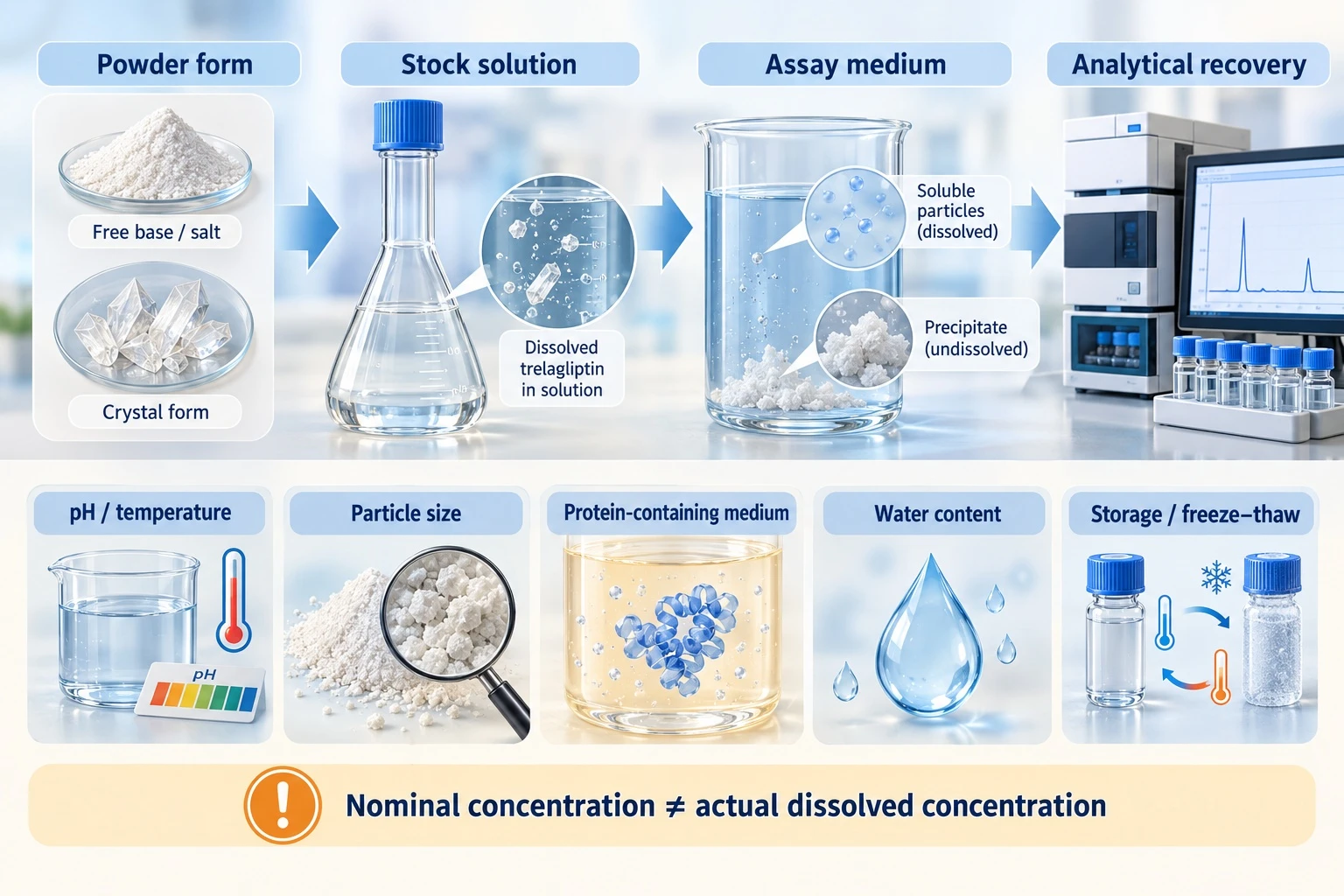
The dissolution behavior of trelagliptin powder should be evaluated according to its free-base or salt form, crystal structure, particle size, pH, and temperature. Solubility reported in one solvent cannot automatically be applied to culture medium or a finished formulation.
Recommended characterization includes:
- Equilibrium solubility in water and buffers at different pH values;
- Precipitation and concentration changes after stock-solution dilution;
- Actual available concentrations in protein-containing media;
- Crystal form, particle size, water content, and thermal behavior;
- Stock-solution stability during storage and freeze–thaw cycles.
The nominal concentration added to an assay may differ from the actual dissolved concentration. Enzyme and cellular studies should therefore assess sample condition, solvent concentration, and analytical recovery alongside biological measurements.
Enzyme Inhibitory Potency and Selectivity
Primary research found that trelagliptin inhibited human DPP-4 at single-digit nanomolar concentrations. Under the study conditions, it was approximately fourfold more potent than alogliptin and twelvefold more potent than sitagliptin, with greater than 10,000-fold selectivity over related proteases, including DPP-8 and DPP-9.
These findings require careful interpretation:
- IC50 depends on substrate concentration, enzyme source, and incubation time.
- Recombinant-enzyme results do not directly establish cellular or plasma potency.
- Greater biochemical potency does not imply proportionally greater clinical efficacy.
- Selectivity against tested proteases does not exclude every possible off-target interaction.
Studies should examine preincubation-time dependence, substrate dependence, and related-enzyme selectivity rather than relying solely on a single IC50 value.

Non-Covalent Slow Binding and Prolonged Activity
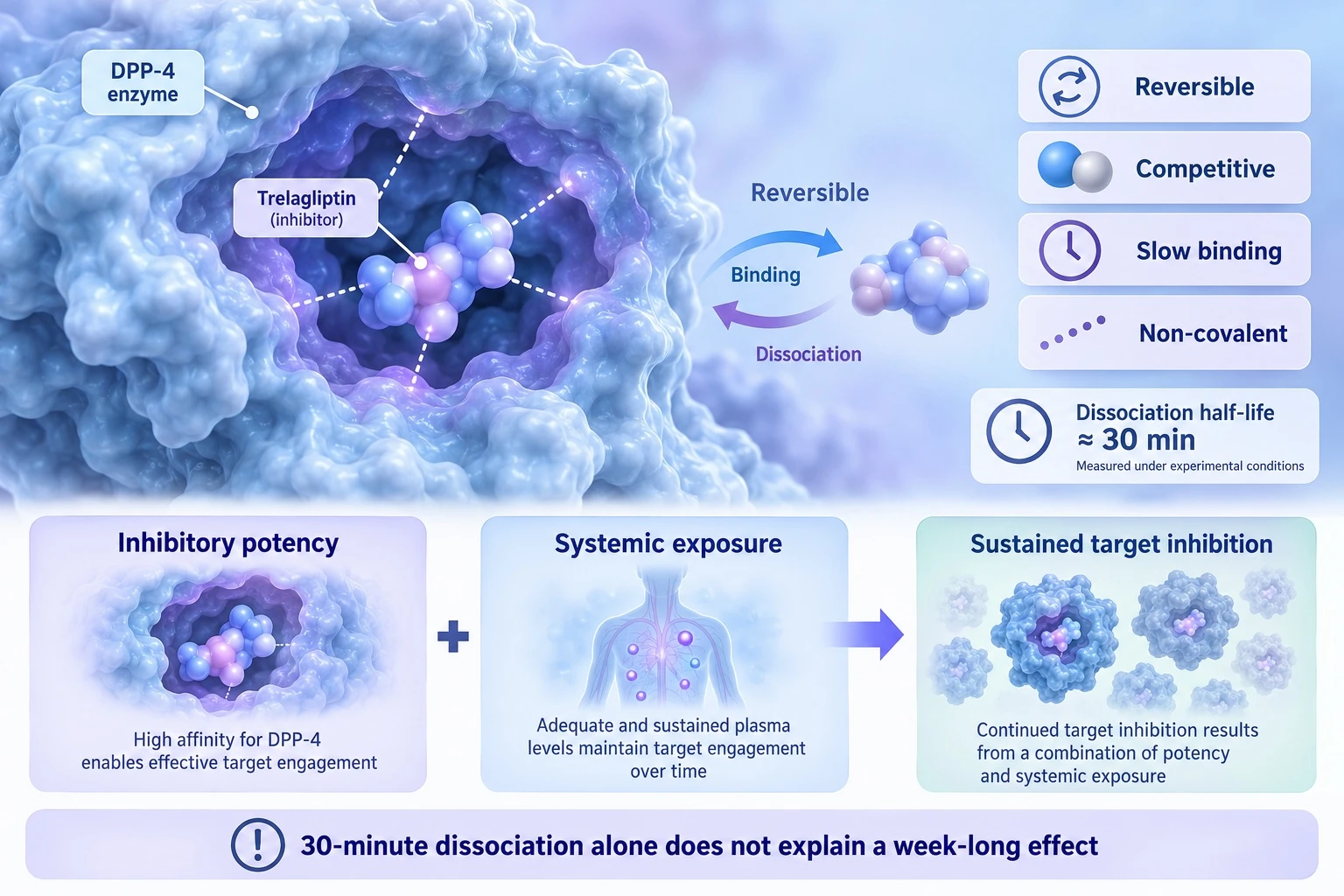
Kinetic and crystallographic studies characterize trelagliptin as a reversible, competitive, slow-binding, non-covalent DPP-4 inhibitor. The measured dissociation half-life was approximately 30 minutes under the experimental conditions.
A dissociation half-life of approximately 30 minutes cannot independently explain a week-long effect. The original study explicitly notes that sustained activity requires consideration of inhibitory potency and systemic exposure. Trelagliptin should therefore not be described as remaining bound to DPP-4 for seven days or producing irreversible inhibition.
Pancreatic Islet Function and Glucose Homeostasis Research
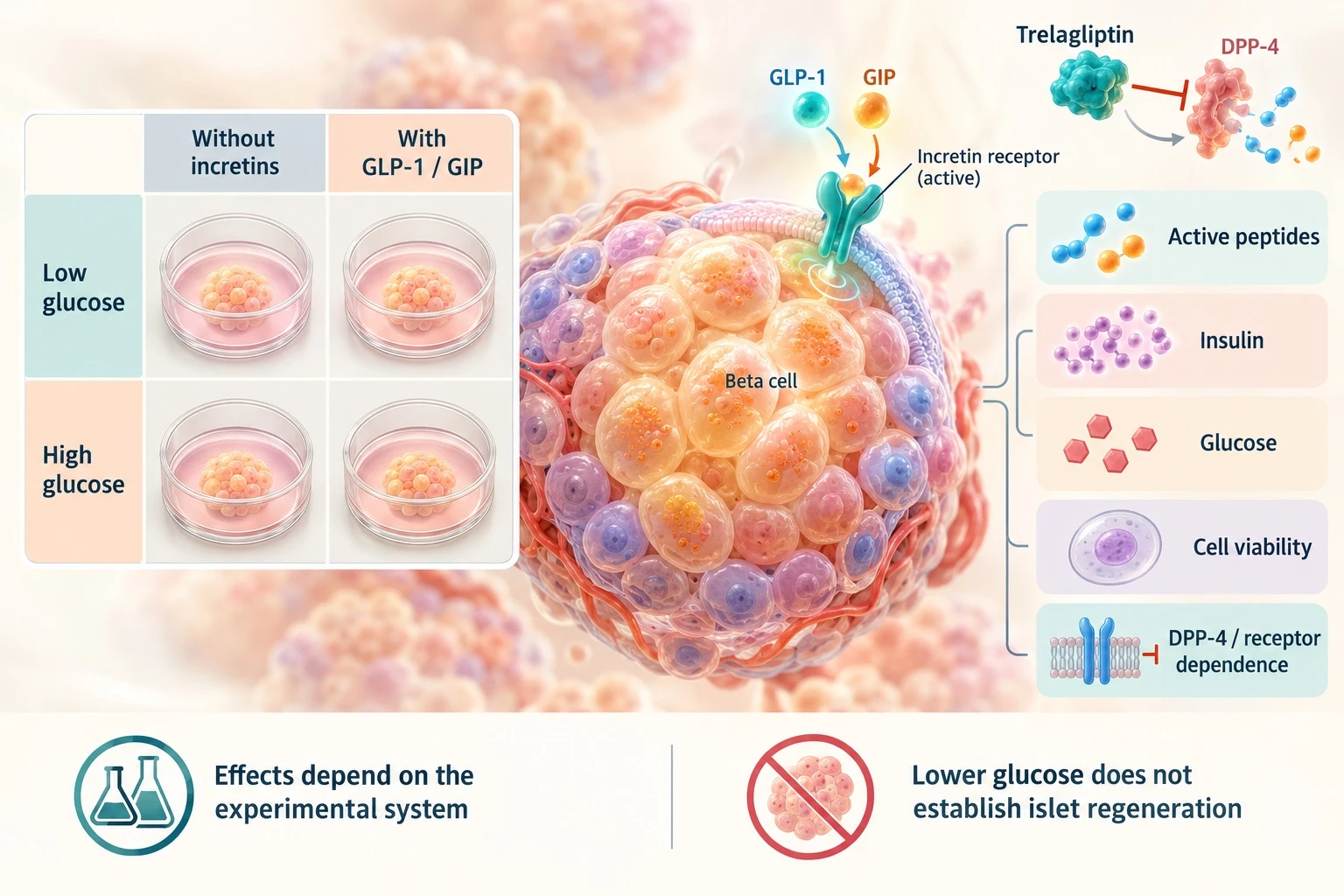
Trelagliptin can be used to investigate the DPP-4–incretin axis. However, the presence of incretin hormones, DPP-4, and corresponding receptors within an experimental system will influence the observed response.
Useful experimental comparisons include:
- Low- and high-glucose stimulation;
- Parallel conditions with and without GLP-1 or GIP;
- Time-course measurements of active peptides, insulin, and glucose;
- Islet-cell viability and functional assessments;
- Validation of DPP-4 and incretin-receptor dependence.
In isolated β-cell cultures lacking incretin hormones, a substantial direct increase in insulin secretion should not be assumed. Similarly, reduced glucose levels alone do not establish islet regeneration, increased β-cell numbers, or improved insulin resistance.
Renal Function and Drug Exposure
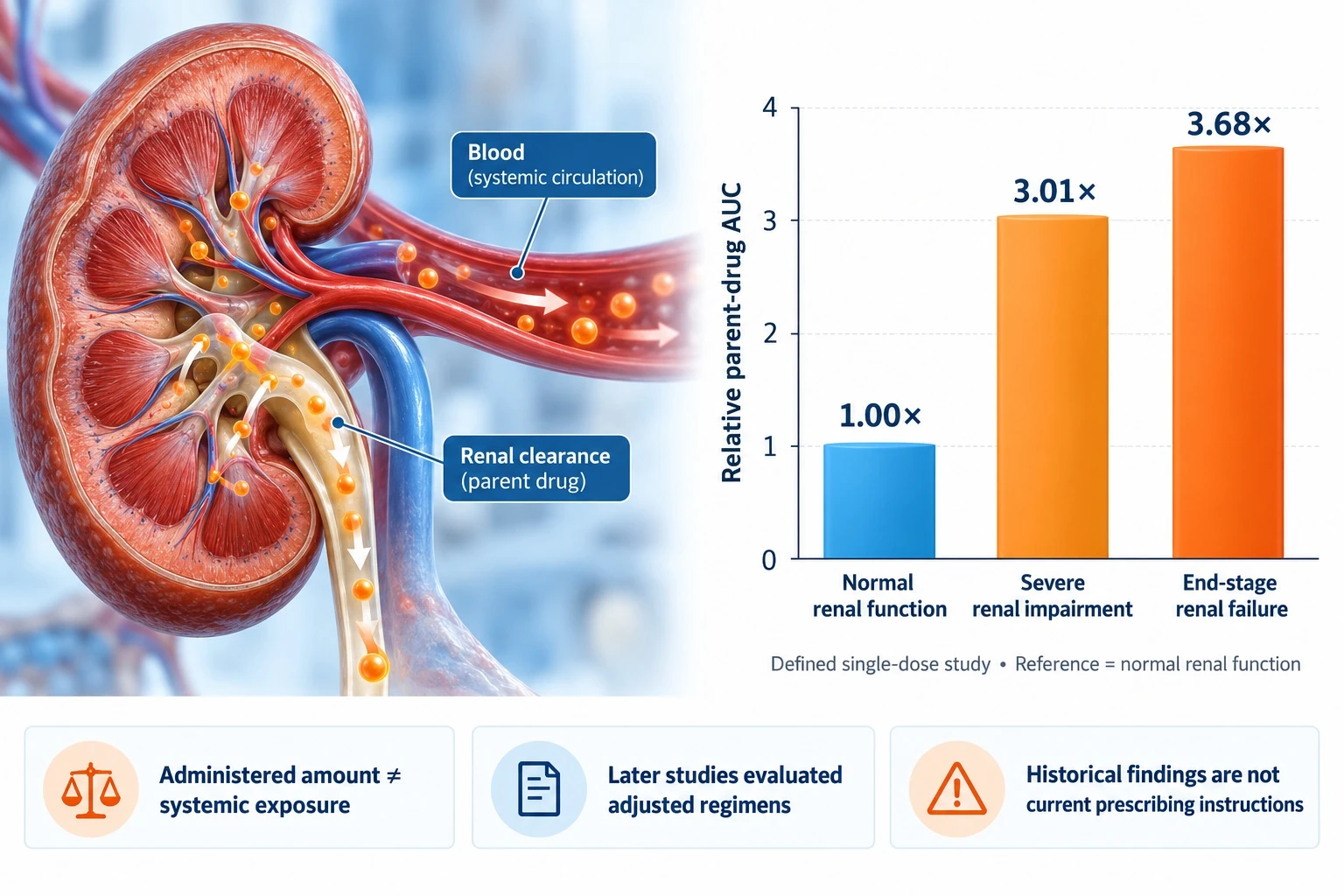
Renal function is an important variable in trelagliptin pharmacokinetic research. PMDA documentation reports that, in a defined single-dose study, parent-drug AUC was approximately 3.01-fold higher in participants with severe renal impairment and 3.68-fold higher in those with end-stage renal failure than in participants with normal renal function.
Subsequent primary research evaluated an adjusted regimen in these populations. Consequently, restrictions described in early regulatory documents should not be treated as permanently unchanged prescribing rules.
FAQ
What is trelagliptin used for?
Trelagliptin is an oral, once-weekly prescription medication used to manage and improve blood sugar control in adults with type 2 diabetes mellitus.
What are the differences between trelagliptin and metformin?
Metformin is the standard first-line oral medication for type 2 diabetes, while trelagliptin is a newer, long-acting once-weekly DPP-4 inhibitor used when metformin is insufficient or not tolerated.
How does Trelagliptin work?
Trelagliptin is a long-acting, oral dipeptidyl peptidase-4 (DPP-4) inhibitor used to manage type 2 diabetes mellitus.
Is teneligliptin safe for kidneys?
Yes, teneligliptin is considered safe for patients with kidney impairment.
If you are looking for a high-quality Trelagliptin Powder manufacturer with whom you can establish a long-term, stable partnership, then Shaanxi Medibridge Biotech Co., Ltd. would be your best business partner. Don't hesitate to contact us at hi@medibridgeapi.com.
Hot Tags: trelagliptin powder, China trelagliptin powder manufacturers, suppliers, factory, cobicistat pharmaceutical raw powder, dicyclanil feed additive ingredient, mirabegron research powder, picamilon high purity powder, picamilon raw material, telmisartan formulation ingredient


