


Why a Green Microalga Turns Red
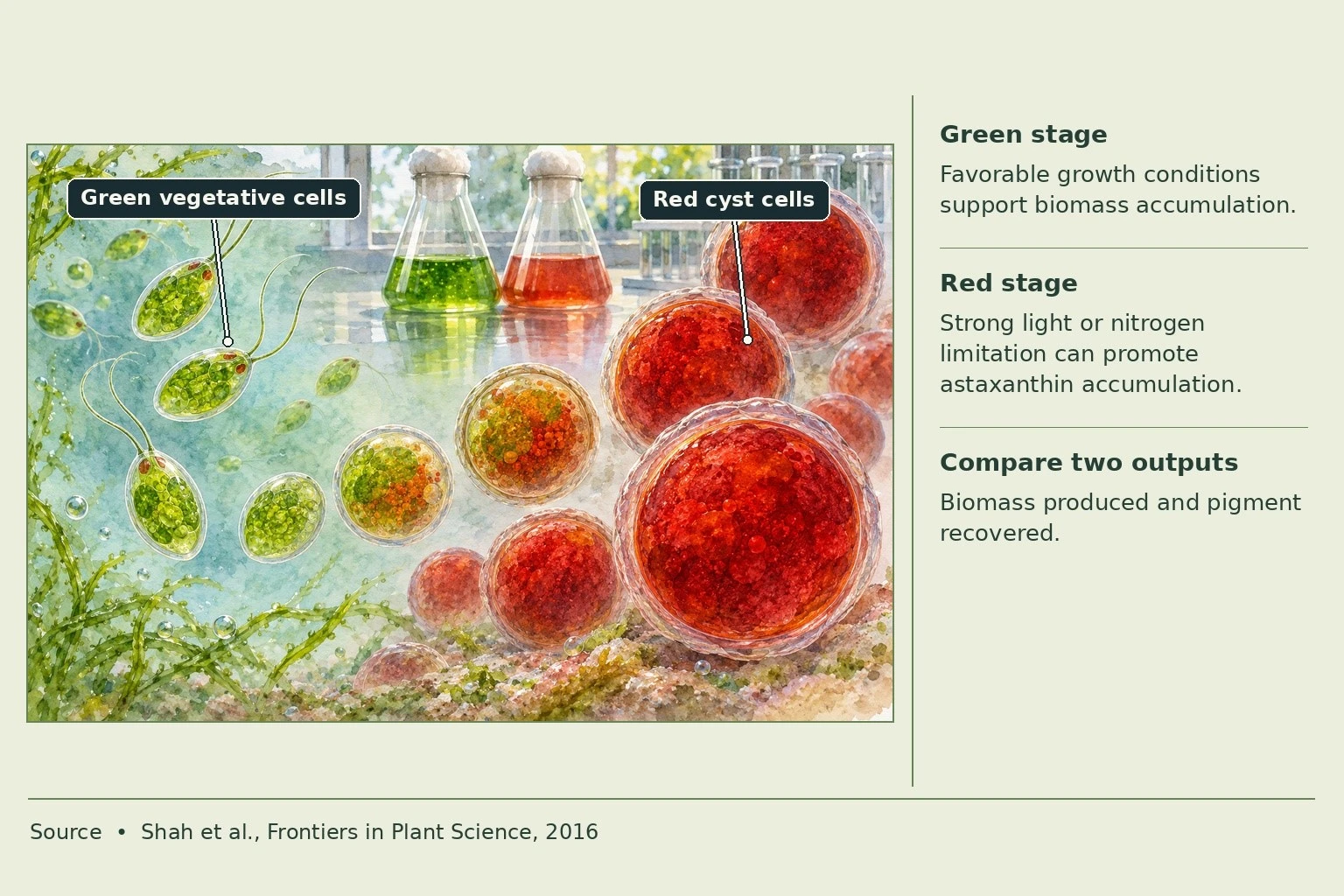
Under favorable conditions, Haematococcus pluvialis grows as green cells. High light or limited nitrogen can promote a shift toward a red stage, when the cells accumulate astaxanthin. This change gives cultivation researchers two distinct tasks. First, they build up algal biomass under conditions that favor growth. Then they adjust the culture conditions to encourage pigment accumulation. Because those conditions can affect growth and pigment production differently, researchers track both the amount of biomass produced and the amount of astaxanthin recovered from it.
How Pigment Moves Inside the Cell
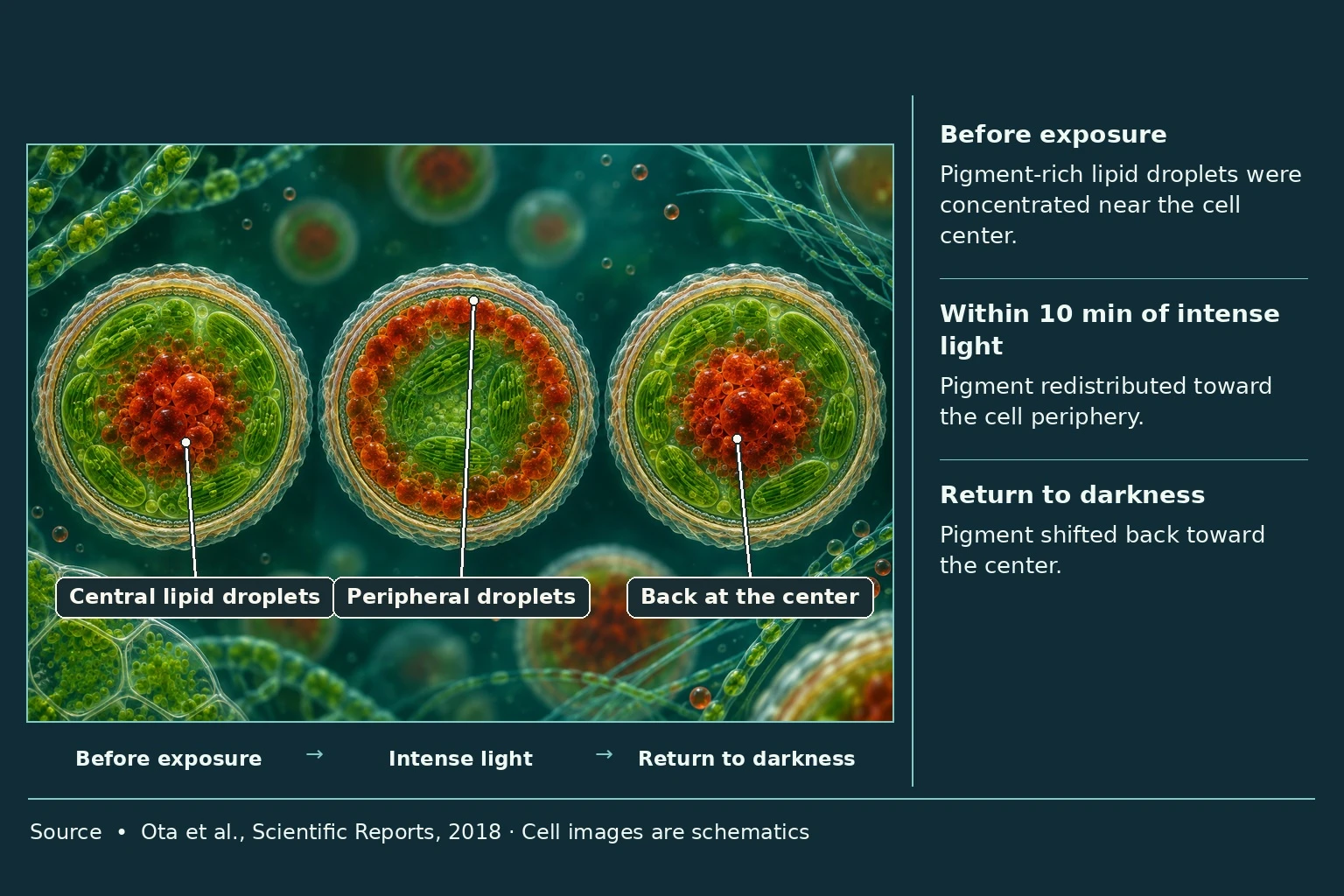
Astaxanthin accumulation and pigment movement occur on different timescales. In one microscopy study, researchers examined cells that already contained astaxanthin and exposed them to intense light. Within 10 minutes, the pigment redistributed toward the cell periphery. Imaging showed that astaxanthin was associated with lipid droplets that moved outward. When the cells were returned to darkness, the pigment shifted back toward the center. The experiment illustrates why a change in where a pigment appears can reveal a rapid cellular response, even when the question of how much pigment the cell produces requires a separate measurement.
Free Astaxanthin, Monoesters, and Diesters
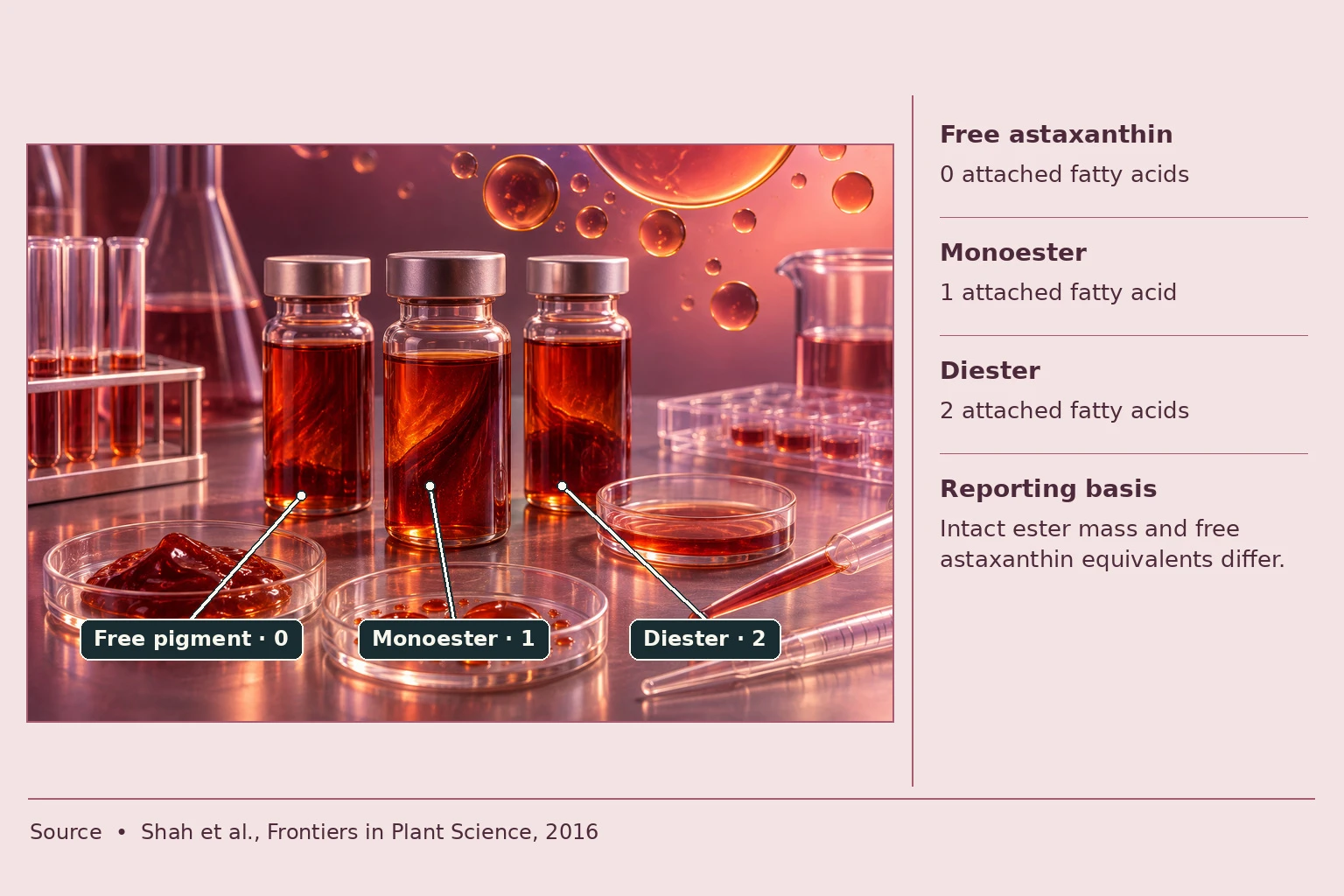
Astaxanthin is an oxygen-containing carotenoid with a long chain of alternating bonds that contributes to its red color. In H. pluvialis, much of the pigment occurs as fatty acid esters. Free astaxanthin has no fatty acid attached, a monoester has one, and a diester has two. These forms share the same pigment backbone, but the attached fatty acids contribute to the mass of each ester. This distinction matters in analysis because a laboratory can report the amount of intact ester or express the result as the equivalent amount of free astaxanthin.
From Algal Biomass to Dispersible Powder
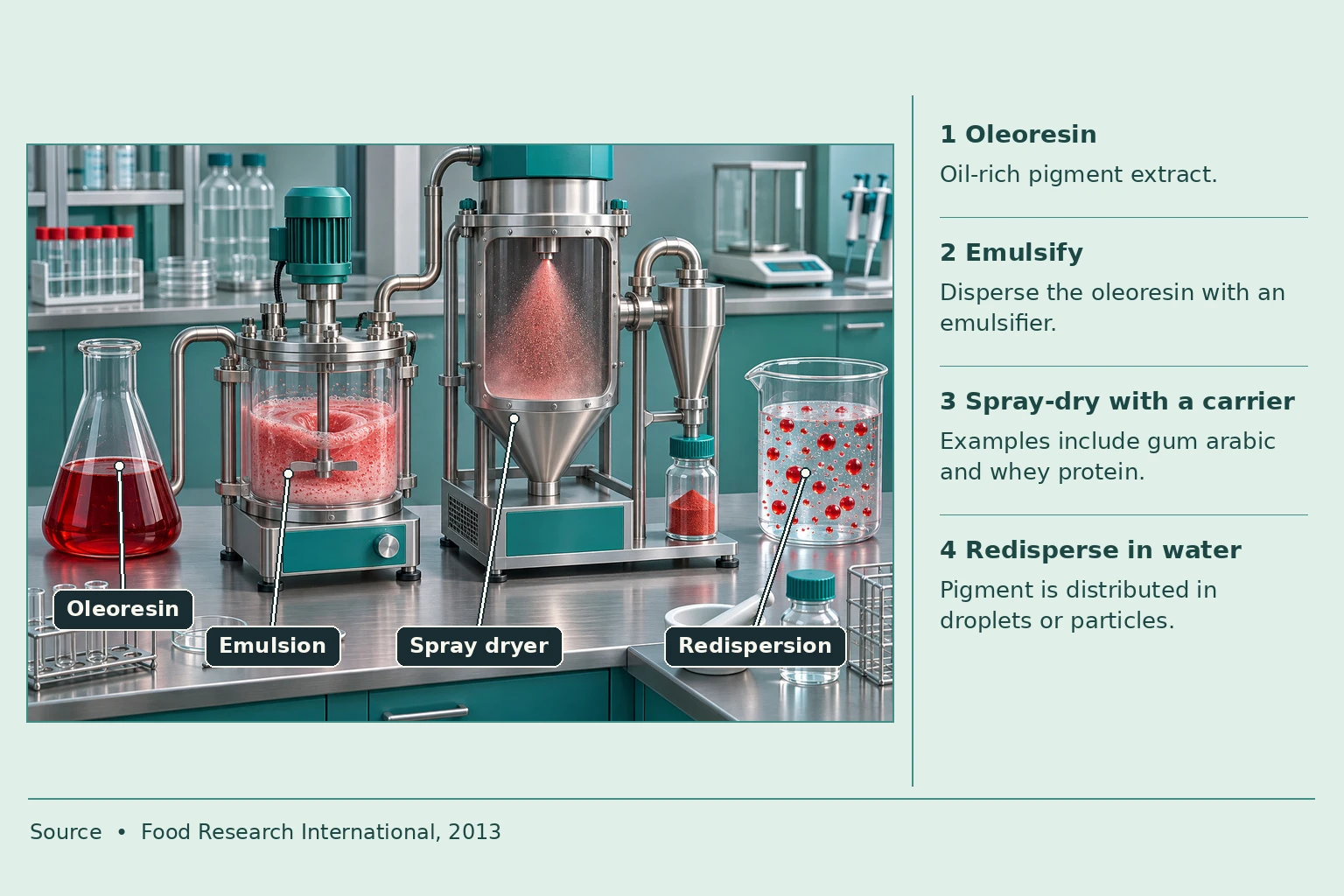
A dry astaxanthin ingredient can take several forms, including dried algal biomass or an extracted pigment formulated with carriers. One approach starts with an oil-rich extract called an oleoresin. Researchers disperse it in water with an emulsifier and spray-dry the mixture with materials such as gum arabic or whey protein. When the resulting powder is mixed with water, the formulation can help distribute the pigment in small droplets or particles. For formulation studies, droplet size, dispersion stability, and the pigment content per gram of finished powder describe different properties of the same material.
Drying Recovery and Storage Stability
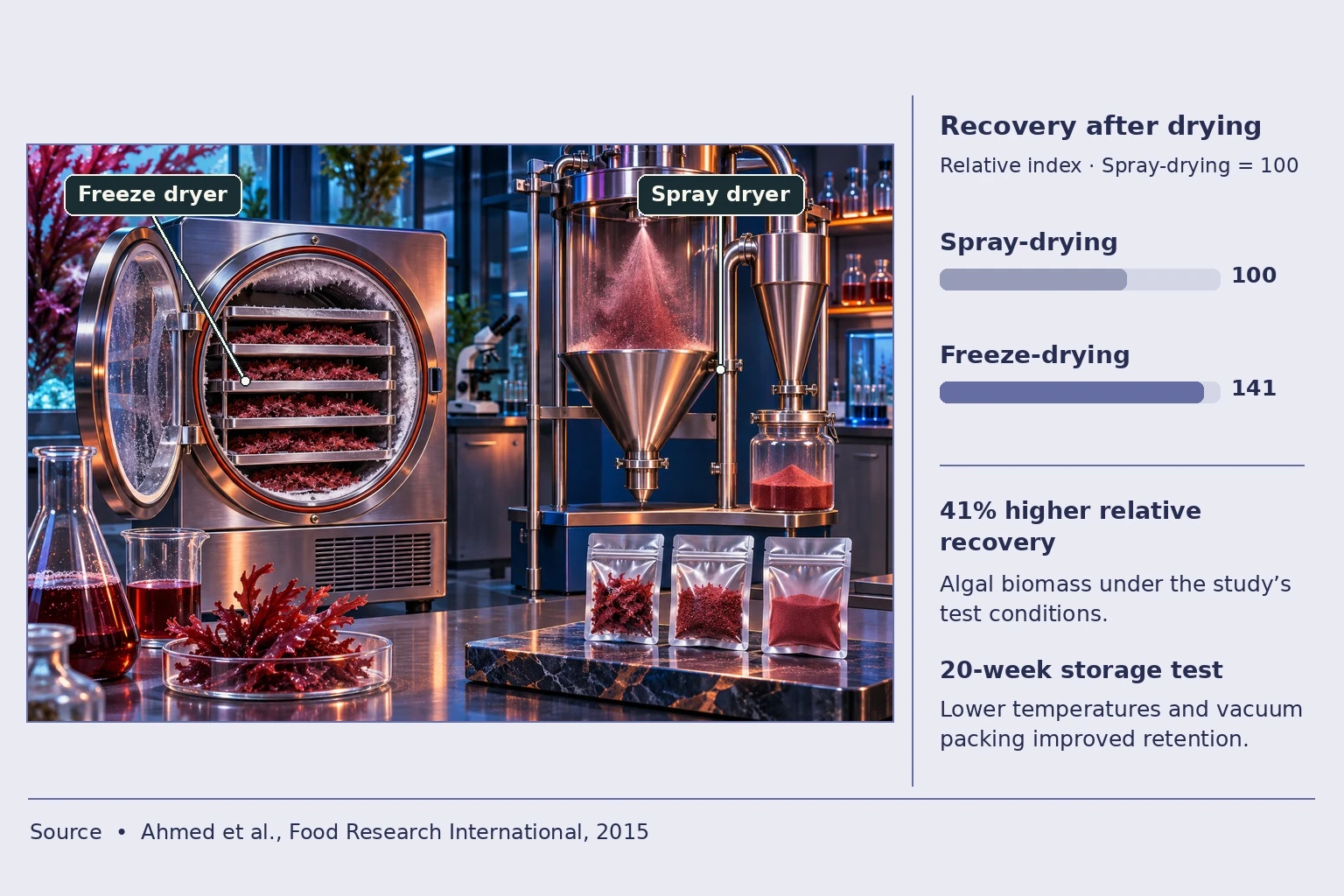
Recovering astaxanthin during drying and retaining it during storage are separate challenges. In one study of H. pluvialis biomass, freeze-drying gave 41% higher astaxanthin recovery than spray-drying under the conditions tested. The researchers then stored the powders for 20 weeks at different temperatures and compared vacuum packaging with exposure to air. Lower temperatures and vacuum packaging improved retention in that experiment. The comparison shows why stability results are most informative when they specify the powder matrix, the drying process, the packaging conditions, and the length of storage.
What a Total Astaxanthin Assay Measures
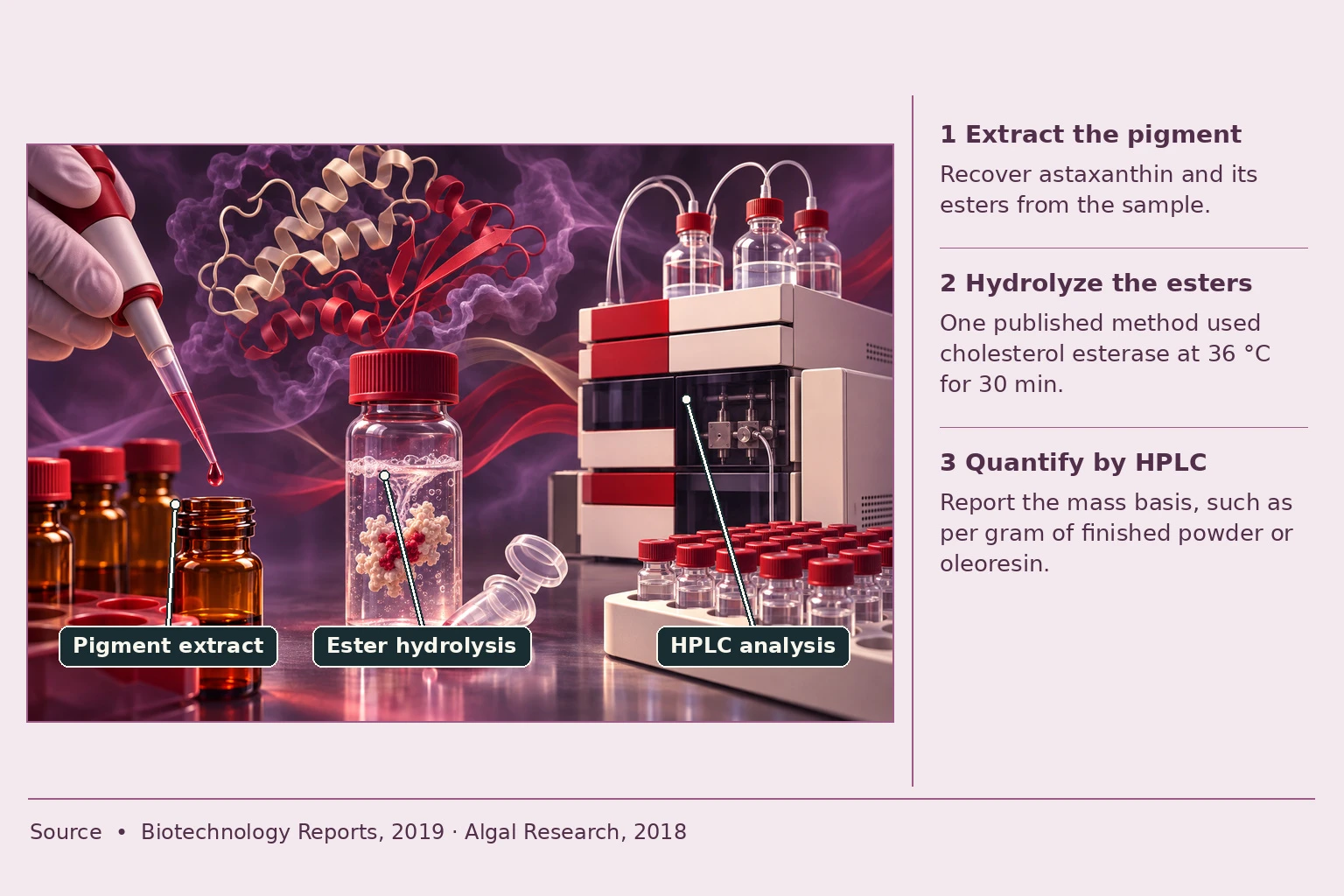
The first step in reading an astaxanthin assay is identifying which forms the method measures. One published workflow extracted the pigment, used cholesterol esterase to release astaxanthin from its fatty acid esters, and then quantified it by high-performance liquid chromatography, or HPLC. This approach can capture pigment that was present in both free and esterified forms. For meaningful batch comparisons, researchers also check how the result is expressed. A value per gram of finished powder, for example, includes any carrier in the denominator and answers a different question from a value per gram of oleoresin.
Shaanxi Medibridge Biotech Co., Ltd. is dedicated to supplying a wide range of research-grade products-including peptides, chemical compounds, and extracts - to laboratories, academic institutions, and biotechnology organizations worldwide. If you are seeking a partner for high-purity raw materials to establish a long-term collaboration, please email hi@medibridgeapi.com.


