


What Is Inside the Powder?
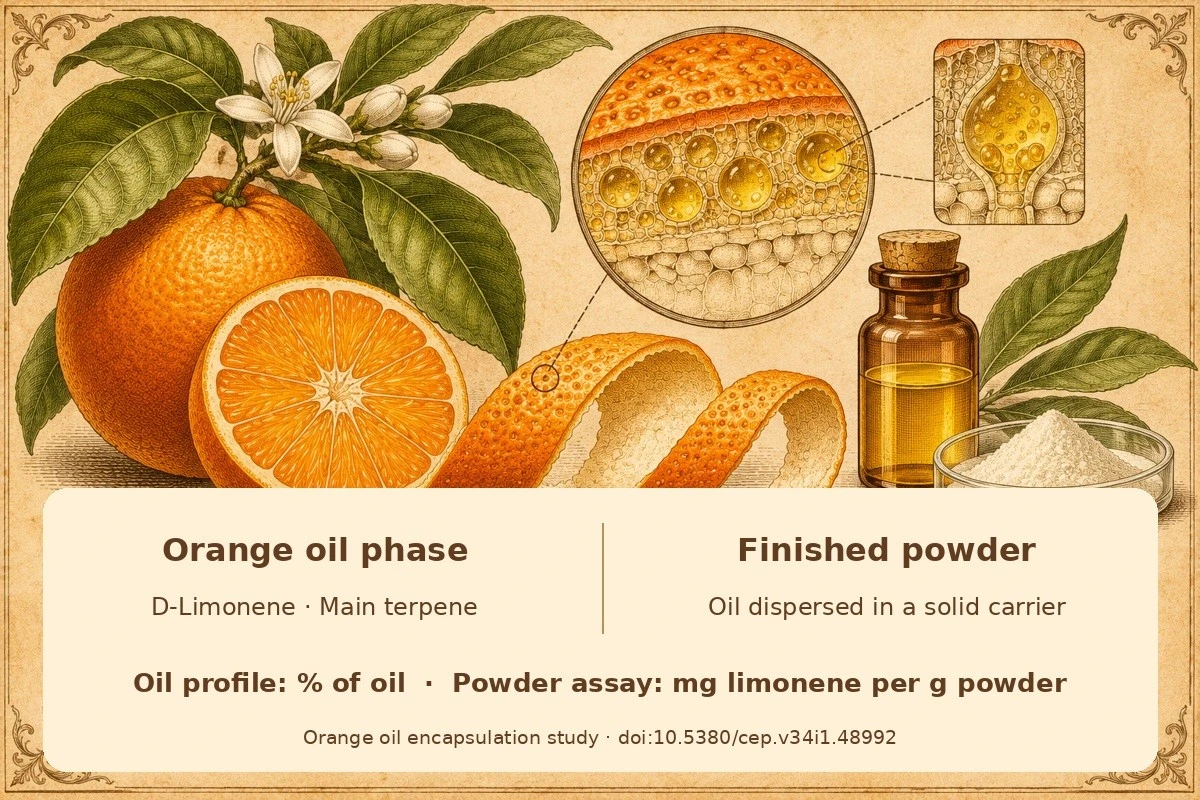
Orange terpenes are a mixture of volatile compounds associated with orange peel oil. A terpene-rich fraction can also be recovered during the concentration of orange oil by vacuum distillation. D-limonene usually dominates this fraction, with smaller amounts of compounds such as myrcene and α-pinene. In a carrier-based powder, the oil phase is only part of the finished material. The limonene percentage in that oil therefore describes a different quantity from the milligrams of limonene per gram of powder. Keeping those two figures separate is essential when comparing ingredients.
How Spray Drying Traps a Volatile Oil
In a typical spray-drying process, the oil is first dispersed as small droplets in water containing a carrier. The emulsion is then atomized into a stream of heated air. As water evaporates, the carrier solidifies around or alongside the oil droplets, forming dry particles. Published work on orange oil has used maltodextrin and modified starch as carrier materials. Researchers can vary the emulsion droplet size or carrier composition, then measure how much oil survives drying and how much remains exposed at the surface of the finished particles.


Oil Loading, Surface Oil, and Retention
Three measurements help explain how a powder was made. Oil loading is the amount of oil in the finished powder. Surface oil is the fraction that can be extracted from the particle exterior under a defined test. Retention compares the amount recovered after drying with the amount introduced before drying. Two powders can have similar oil loading while differing in how much oil is exposed at their surfaces. Reporting the extraction method and the denominator for each percentage makes comparisons clearer, especially when studies calculate encapsulation efficiency in different ways.
Why Water Activity Matters During Storage
The carrier can change physically as the powder takes up moisture. In a study of spray-dried D-limonene, researchers linked changes in release and oxidative stability to a shift in the carrier from a rigid, glassy state toward a softer, rubbery one. Water activity describes how available water is in the material, while moisture content measures how much water is present. Measuring both gives researchers a better account of the storage environment. Tracking retained limonene and oxidation products separately also helps distinguish chemical change from simple loss of a volatile compound.

Measuring What Is Present and What Is Released
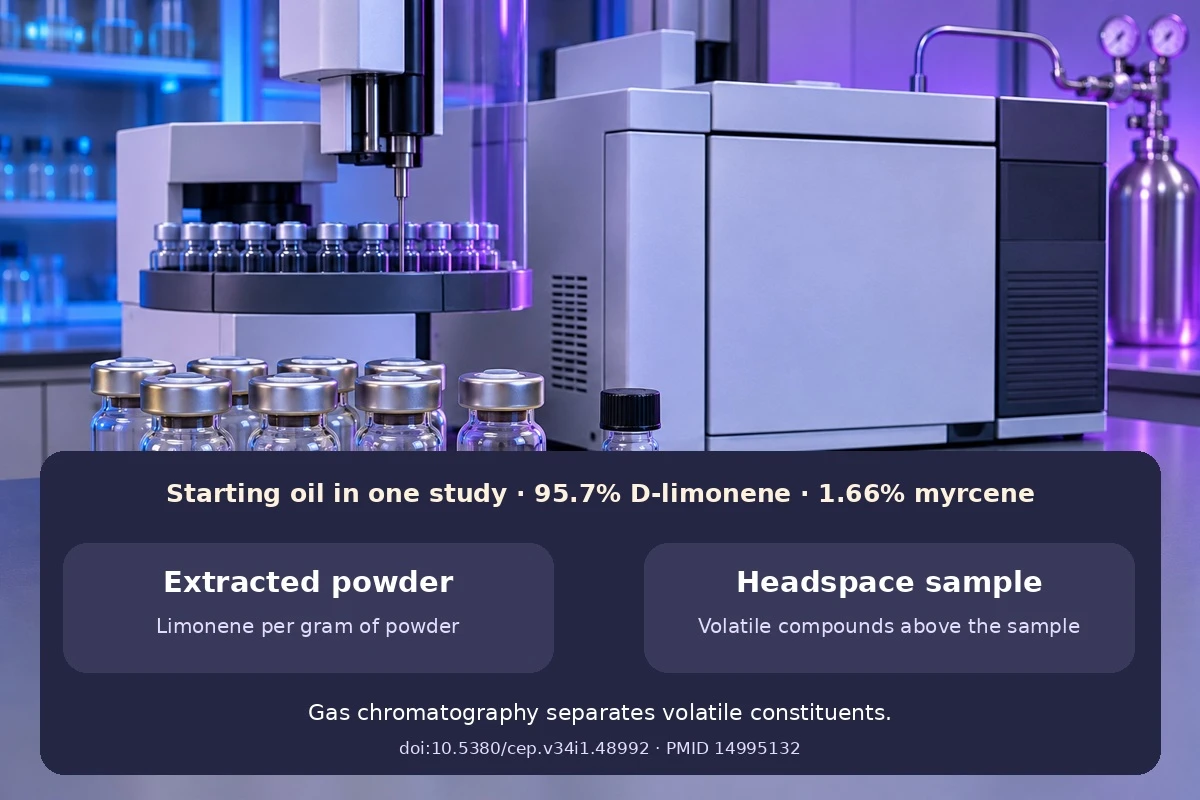
Gas chromatography can separate limonene from other volatile constituents. In one orange oil encapsulation study, the starting oil was reported to contain 95.7% D-limonene and 1.66% myrcene. Those figures describe that study's oil phase. To characterize a finished powder, a lab can extract the oil and report limonene per gram of powder. A headspace measurement instead samples the vapor above the material under specified conditions. Comparing the two measurements can show whether powders with similar limonene content release different amounts into the air over a set time.
If you are looking for a high-quality manufacturer of peptides, compounds, plant extracts, and other products with whom to establish a long-term, stable partnership, Shaanxi Medibridge Biotech Co., Ltd. is your ideal choice. Please feel free to contact us at hi@medibridgeapi.com. Or message us on WhatsApp at +44 07548632075.


