


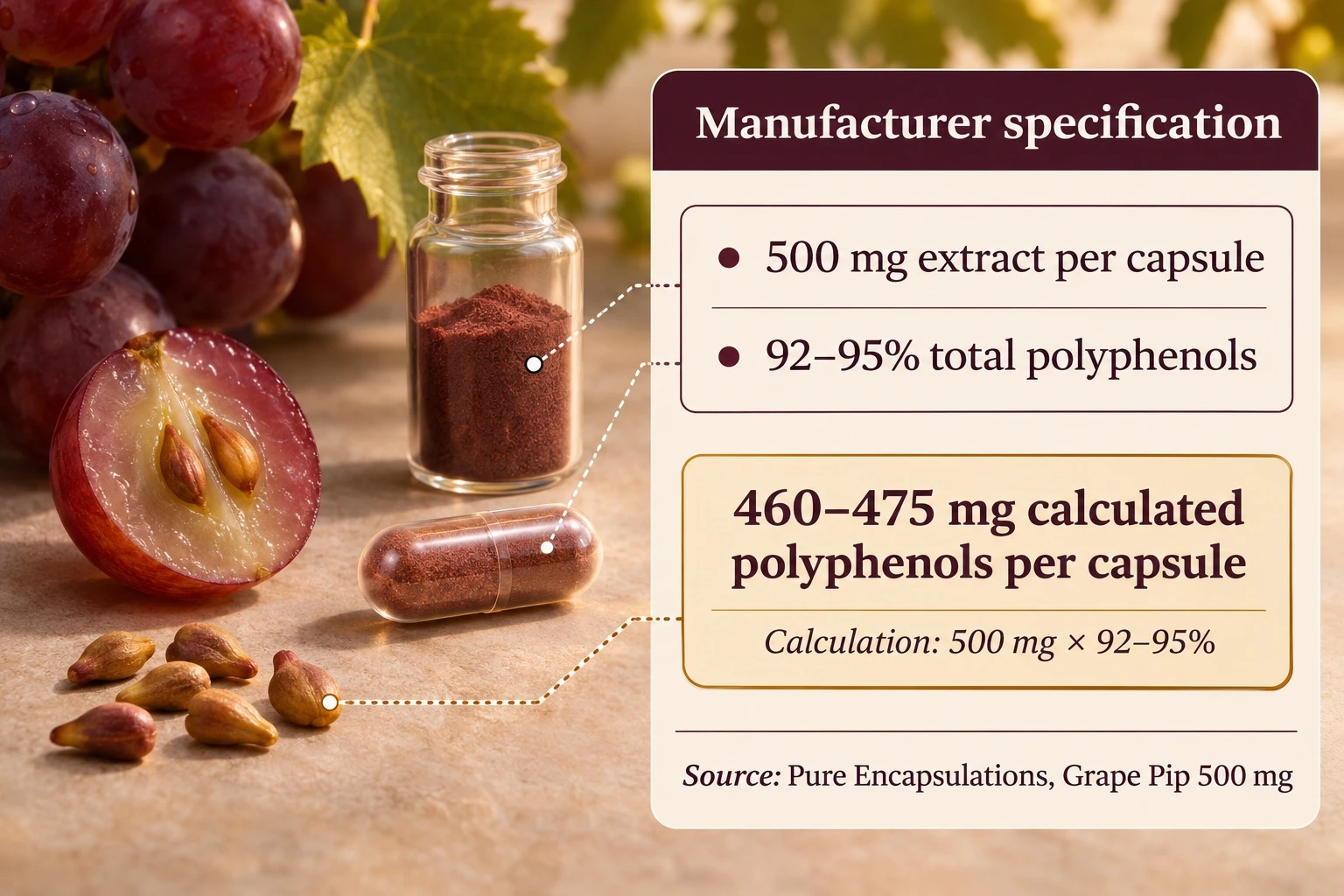
What the 92–95% Polyphenol Specification Tells Us
Pure Encapsulations describes its Grape Pip 500 mg product as containing 500 mg of Vitis vinifera seed extract per capsule, standardized to 92–95% polyphenols. The percentage refers to the extract's stated total polyphenol content. Procyanidins make up one family within that broader category. Two extracts can therefore carry similar total polyphenol specifications while containing different proportions of individual compounds. For researchers comparing extracts, the next questions are which compounds were measured, how the total was determined, and whether a detailed chemical profile is available for the batch under study.
How Small Building Blocks Form Larger Molecules
Grape seed extracts contain flavan-3-ols such as catechin and epicatechin. These molecules can occur individually or as building blocks in procyanidins, a subgroup of proanthocyanidins. A dimer contains two linked units, a trimer contains three, and longer chains are often described as polymers. Researchers use the term degree of polymerization to describe the number of units in a chain. Separating an extract into fractions enriched in shorter or longer chains lets scientists test whether molecular size helps explain differences in how those fractions behave under the same experimental conditions.


How Researchers Compare Extracts by Their Chemical Fingerprints
A chemical fingerprint records a pattern of compounds separated by chromatography. Researchers can compare peak positions and relative sizes across samples, then use reference materials to help identify selected compounds. In one published survey, scientists used chemical profiling to assess 21 commercial grape seed products and identified six samples containing high levels of peanut skin extract. The findings apply to the products sampled in that survey. For research, the broader value of fingerprinting is that it helps verify botanical identity and reveals compositional differences that a single total polyphenol figure can obscure.
What Antioxidant Tests Measure in the Laboratory
In a chemical antioxidant assay, researchers track how an extract reacts with a defined reagent under controlled conditions. One study separated grape seed procyanidins into fractions enriched in shorter and longer chains and reported a relationship between chain length and antioxidant activity in the tests used. That finding describes the behavior of the tested fractions in those assays. The choice of reagent, sample concentration, and reaction conditions all matter when comparing results. This makes chemical assays useful for studying how molecular structure influences reactivity in a specified laboratory system.


From the Original Extract to Microbial Metabolites
The compounds in a grape seed extract and the compounds measured after exposure are two different sets of data. One human study detected procyanidin B1 in serum after participants consumed a proanthocyanidin-rich grape seed extract. In a separate laboratory experiment, researchers incubated two grape seed fractions with human fecal microbiota and tracked changes in phenolic metabolites. One fraction was richer in individual flavan-3-ols, while the other contained more procyanidins. These studies illustrate two ways to follow grape seed polyphenols experimentally. Both findings apply to the specific preparations and conditions studied.
Shaanxi Medibridge Biotech Co., Ltd. is dedicated to supplying a wide range of research-grade products-including peptides, chemical compounds, and extracts-to laboratories, academic institutions, and biotechnology organizations worldwide. If you are seeking a partner for high-purity raw materials to establish a long-term collaboration, please email hi@medibridgeapi.com.


