


CEW Recognizes a Hair and Scalp Care Ingredient
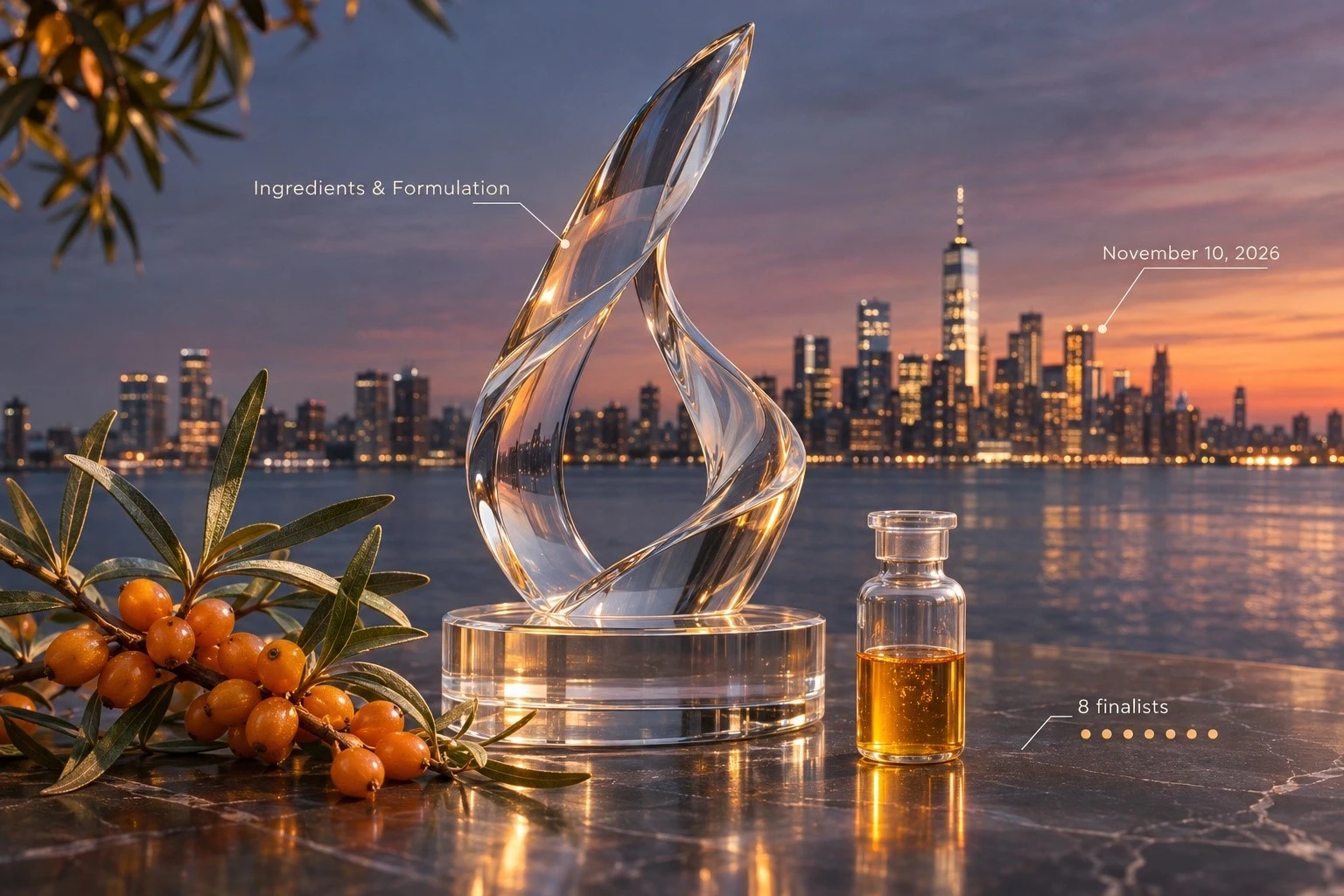
Cosmetic Executive Women (CEW) presented the award in partnership with the New York Society of Cosmetic Chemists (NYSCC). Aloversil was one of eight finalists shortlisted at NYSCC Suppliers' Day in May, with the winner announced in November at the New York Hilton Midtown. The finalist slate included Lubrizol's Lectroglaze, Solabia's ViscoPure and AlgaSurge from Lucas Meyer Cosmetics by Clariant. The award recognizes ingredient and formulation innovation, placing BASF's hair and scalp care active alongside technologies developed for a range of personal care applications.
Sea Buckthorn Seedcake Provides the Peptide Source
BASF makes Aloversil from the seedcake of sea buckthorn (Hippophae rhamnoides), a byproduct of juice and oil production. The company uses a water-based extraction process to obtain peptides from the seedcake and classifies the resulting ingredient as 100% natural origin under ISO 16128. That figure describes the ingredient's natural origin under the standard. The commercial blend lists water, pentylene glycol, sea buckthorn kernel extract and caprylyl glycol in its cosmetic ingredient declaration. BASF developed the blend for use in scalp and hair care formulations.

BASF Reports Results From a Four-Month Serum Study
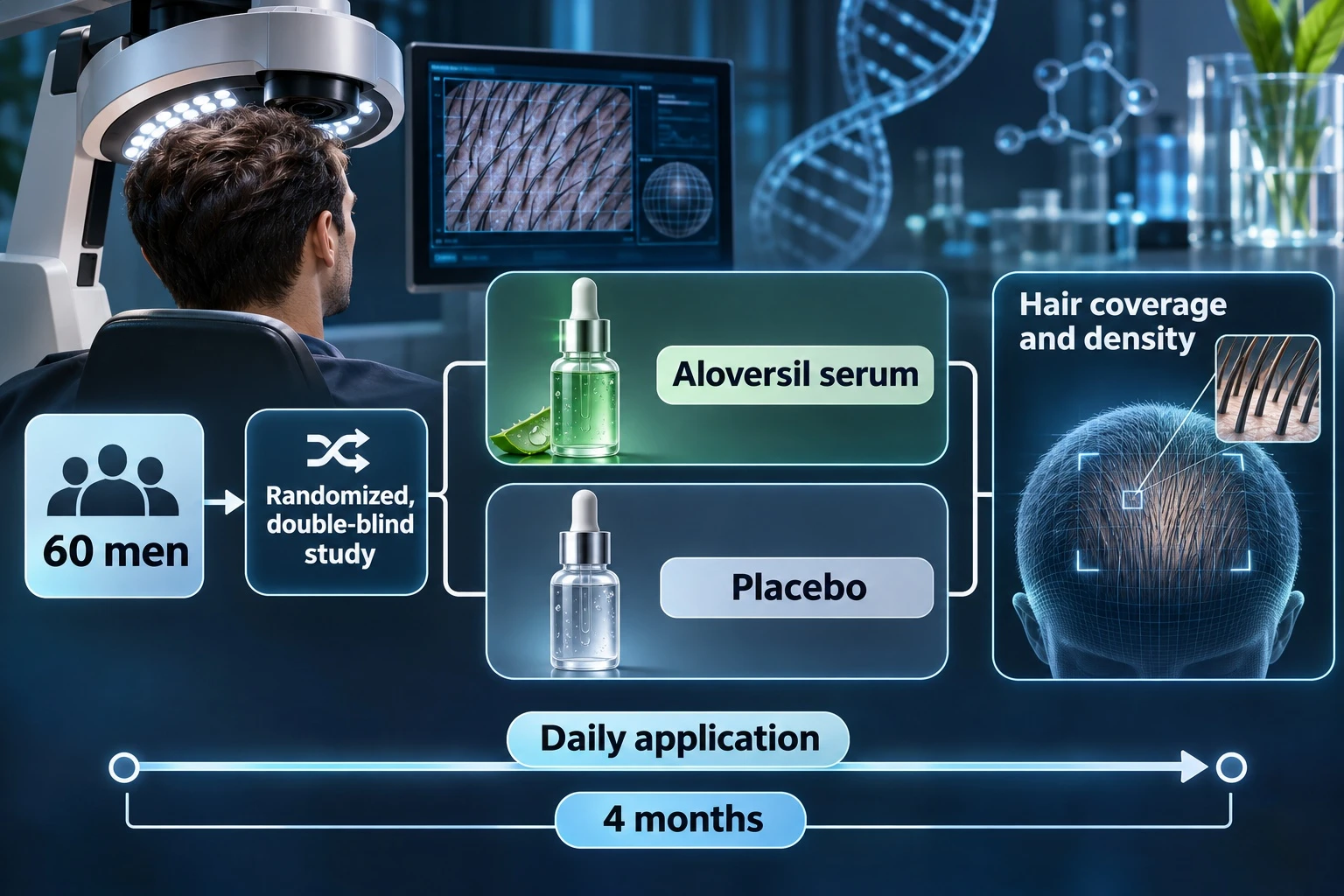
BASF reported results from a randomized, double-blind, placebo-controlled study involving 60 men. Participants in the active group applied a leave-in serum containing Aloversil daily for four months. According to BASF, instrumental assessments supported improvements in the appearance of hair density and coverage. The company also published photographs of one participant at baseline and day 112 to illustrate how coverage looked during the study. Its public announcement summarizes the direction of the findings and gives no numerical effect size for the difference in coverage or density between study groups.
Laboratory Research Examines Signaling in the Scalp Environment
BASF says its in vitro experiments examined cellular communication and microvascularization, the development of small blood vessels, as processes associated with the environment around hair follicles. The laboratory results informed the company's rationale for developing Aloversil as a scalp care ingredient. The human study addressed a separate question by assessing the appearance of hair after repeated use of a finished serum. Together, the two types of research describe the supplier's proposed biological rationale and the cosmetic outcomes it measured under the conditions of the serum study.


