


Vehicle Shredder Residue Becomes a Potential Chemical Feedstock
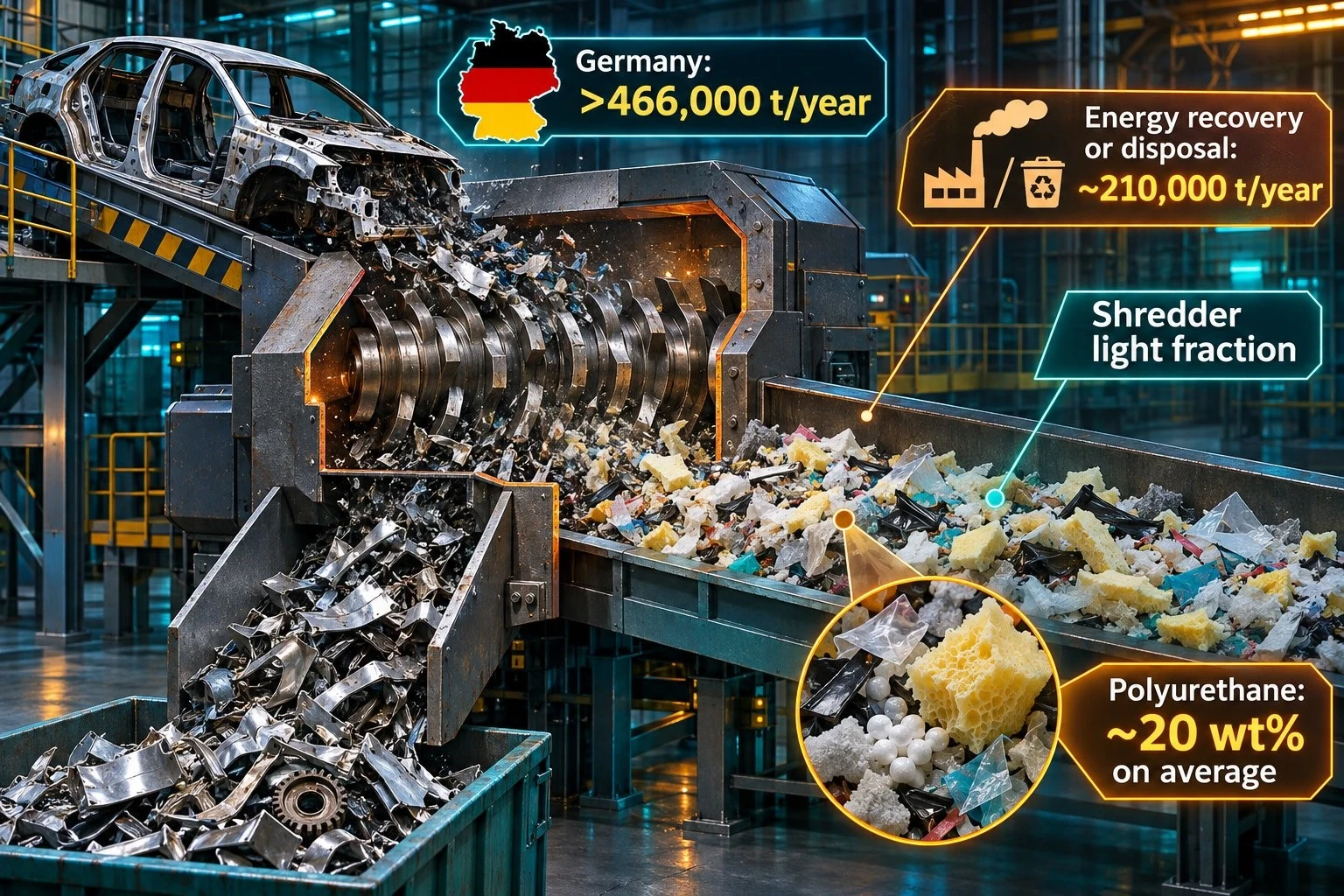
CARBEX focuses on the shredder light fraction, the mixed material left after vehicles are shredded and recoverable metals are separated. Fraunhofer estimates that Germany generates more than 466,000 metric tons of this fraction annually, with about 210,000 metric tons sent for energy recovery or disposal. Polyurethane accounts for roughly 20% of the fraction by weight on average, although the share varies with the source. That variability matters for the project because the pilot will need to establish stable operating conditions for a feedstock whose composition can change.
Pyromat Uses Its Own Coke to Produce BTEX-Rich Oil
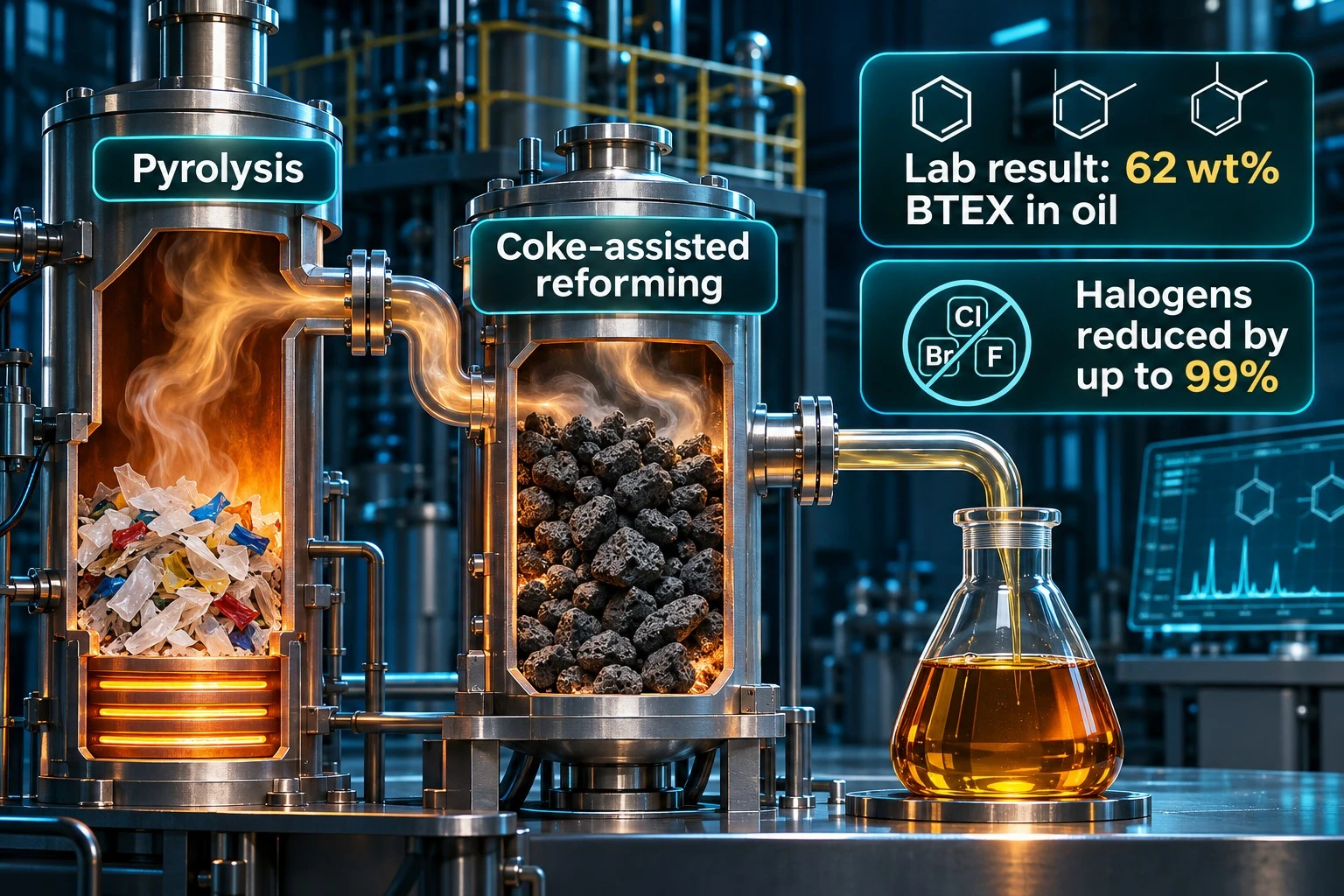
The project builds on Fraunhofer UMSICHT's patented Pyromat technology, which combines pyrolysis with a subsequent reforming step. Solid coke generated during pyrolysis serves as both a catalyst and an adsorbent. It helps promote aromatic formation and capture halogens that could otherwise enter the oil. In preliminary laboratory trials using the shredder light fraction, Fraunhofer reported that BTEX made up 62% of the resulting oil by weight and that halogen content fell by up to 99%. The 62% figure describes the composition of the oil produced in the trial.

Continuous Pilot Operation Is Planned for 2028
Fraunhofer UMSICHT plans to convert an existing fixed-bed reactor into a moving-bed system and test continuous operation at a feed rate of 10 kilograms per hour. The pilot aims to produce at least 50 kilograms of BTEX-rich pyrolysis oil with a halogen concentration below 30 parts per million, the threshold the partners cite for downstream industrial processing. CARBEX runs from September 2026 through August 2029 with funding from Germany's KlimPro-Industrie II programme. The partners expect to use the project results to inform plans for a demonstration plant.
Covestro Will Test Recovered Benzene and Toluene in Isocyanate Production
Covestro leads the industrial work and is developing a model-based distillation process to separate benzene and toluene from the pyrolysis oil. The company will assess whether recovered benzene meets its requirements for producing methylene diphenyl diisocyanate (MDI) and whether recovered toluene is suitable for making toluene diisocyanate (TDI). MDI is used in products including rigid insulation foams, while TDI is used in flexible foams for applications such as vehicle seats. If both feedstocks meet the required specifications, some of the carbon in vehicle residues could return to polyurethane production.


Life Cycle Assessment Will Test the Estimated Emissions Benefit
Fraunhofer estimates process emissions of around 1.1 metric tons of CO₂ equivalent per metric ton of BTEX for the Pyromat route, compared with 1.6 to 1.8 metric tons for conventional steam cracking. The institute also projects potential savings of up to 640,000 metric tons of CO₂ equivalent annually in Germany under a scenario of widespread industrial adoption. Carbon Minds will independently assess emissions across the proposed supply chain, from feedstock supply through production, using a cradle-to-gate life cycle assessment. Covestro will assess the economics of the route in parallel.


