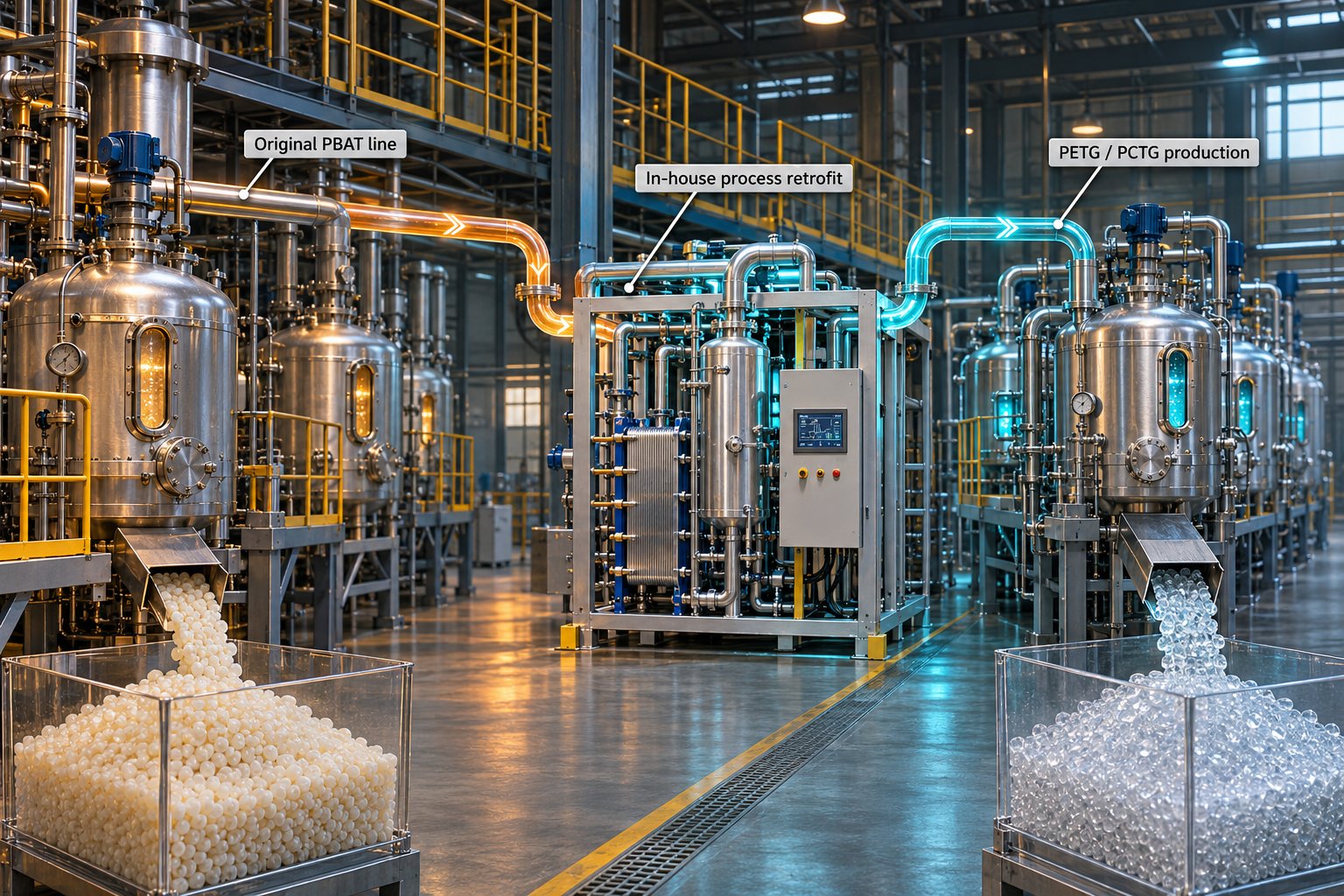
Retrofit Gives the Existing PBAT Plant a Second Production Option
Ruifeng originally built the plant to produce 60,000 metric tons per year of polybutylene adipate terephthalate (PBAT), a biodegradable polyester. The facility was ready for its intended use by the end of 2023. With downstream demand for PBAT remaining weak in recent years, the company used in-house process development to adapt the existing equipment for industrial-scale PETG and PCTG manufacturing. The retrofit gives Ruifeng more flexibility in how it uses the plant and broadens its polyester portfolio to serve markets such as packaging, sheet products and 3D printing materials.
The 30,000-Ton Capacity Depends on Full Allocation to Copolyesters
The 30,000-metric-ton annual figure applies to the combined PETG and PCTG capacity when the entire plant is assigned to those products. The original 60,000-metric-ton figure represents the same plant's PBAT design capacity. Ruifeng said it had obtained the approvals required for trial production and that the first run yielded material that met specifications. Actual output will depend on how Ruifeng allocates the equipment, how quickly it increases throughput and how much demand it secures. The filing did not give a timetable for reaching full capacity.
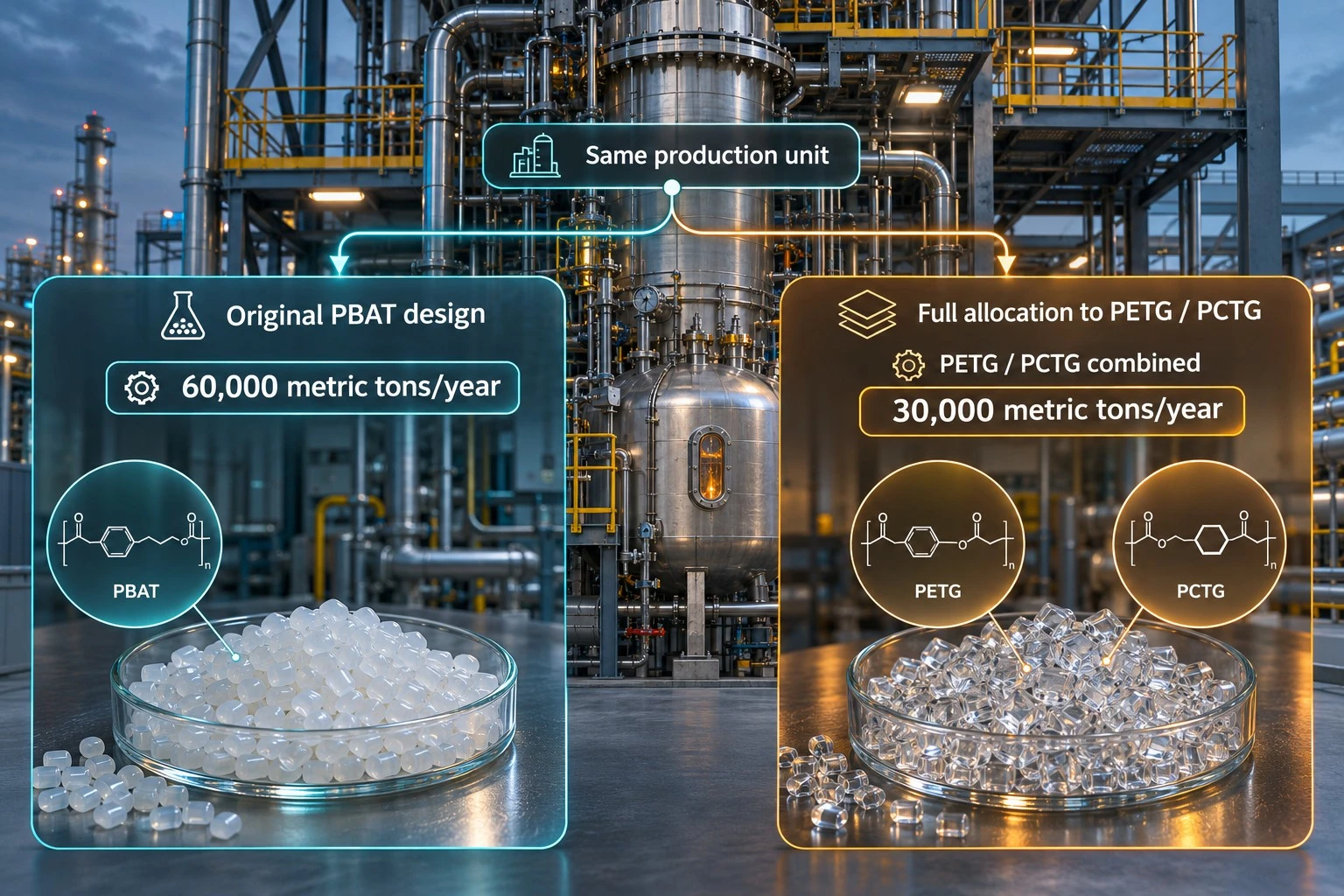

PETG and PCTG Serve Different Fabrication and Packaging Needs
Ruifeng describes PETG as a transparent, amorphous copolyester with good impact resistance and processability. Its filing identifies sheet and film, food containers, cosmetics packaging and 3D printing filament among the material's applications. PCTG has a higher proportion of units derived from 1,4-cyclohexanedimethanol. The company lists premium personal care packaging, thick-walled appliance housings and structural parts for consumer electronics among its uses. For packaging buyers, the application list shows where the two copolyesters can be considered, while individual grades will still need to meet the requirements of the specific product and manufacturing process.
Process Optimization and Customer Development Will Shape the Ramp-Up
With initial production underway, Ruifeng plans to refine operating parameters to improve efficiency and reduce costs. The company said it will also need time to develop customers and bring production into line with sales because PETG and PCTG are new businesses for Ruifeng. It identified downstream demand, broader economic conditions and industry competition as factors that could affect output, capacity utilization and profitability. Ruifeng said it expects the startup to have no material impact on its 2026 operating results, with commercial performance depending on the pace of the ramp-up and customer adoption.