A Formulation Award at SCS Formulate 2026
The Technology & Disruption prize is one of two Laura Marshall innovation award categories at SCS Formulate. The awards commemorate Laura Marshall, a former chair of the exhibition's Scientific Programme Committee, and recognise innovation in cosmetic formulation. Shortlisted teams presented their concepts on exhibition boards, giving judges and visitors a way to compare how each entry translated ingredient technology into a product format. At the same event, Ashland won the Sustainability & Ethics category for its Moonlight Milky Serum. Croda's award recognised the Adaptive Barrier Renewal Peptide Lotion as a finished formulation concept.
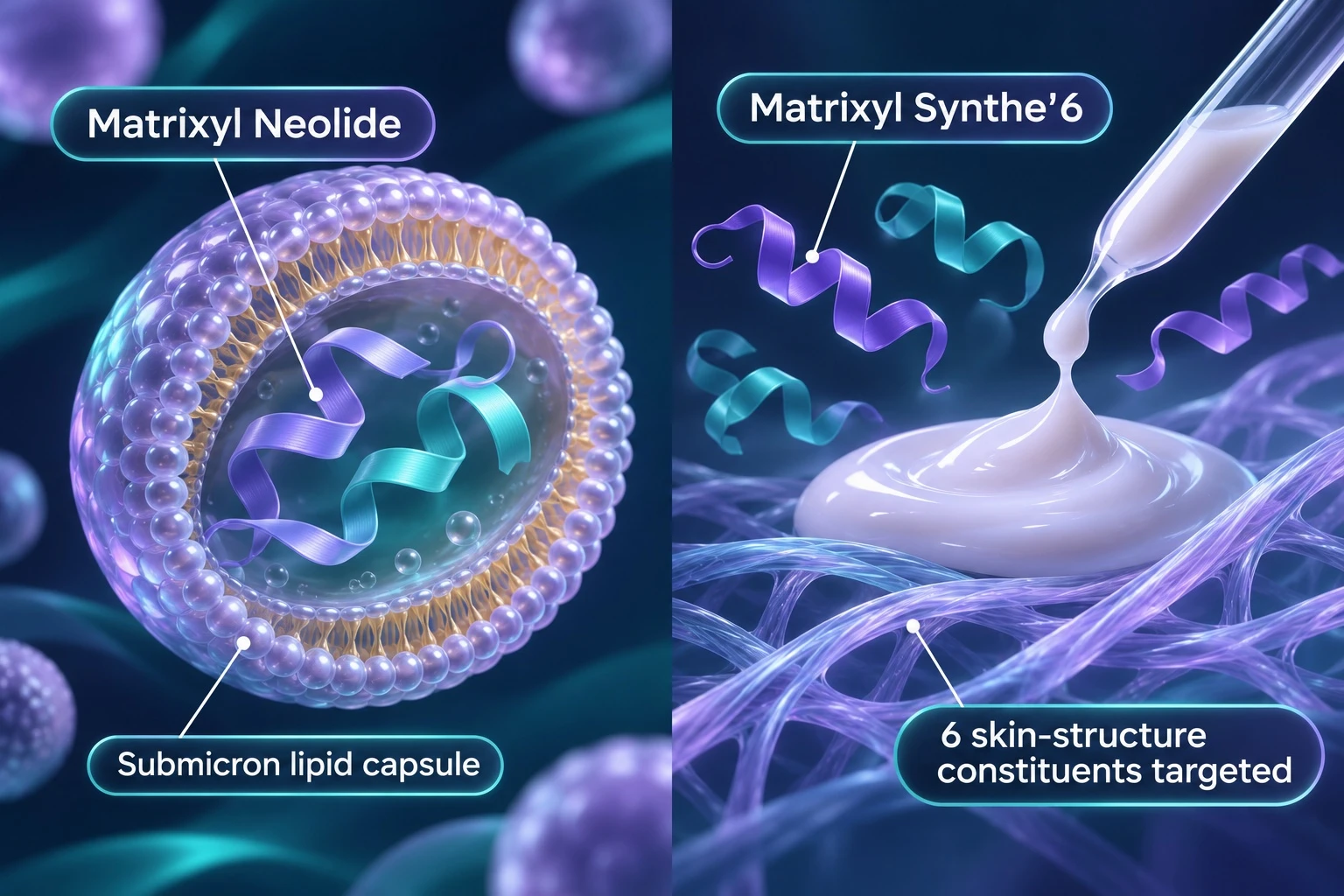
Two Matrixyl Technologies in One Lotion
Croda paired Matrixyl® Neolide™ with Matrixyl® Synthe'6® to address different cosmetic concerns associated with visible skin ageing. Matrixyl Neolide uses submicron lipid capsules to carry a Matrixyl peptide, and Croda positions it for early visible signs of ageing. The company positions Matrixyl Synthe'6 for more established lines, including those on the forehead and around the eyes. According to Croda, Synthe'6 is designed to promote the synthesis of six constituents associated with skin structure. The combination gives the lotion two distinct peptide components, each with a different role in the formulation concept.
Ceramides and Emollients Support the Moisturising Design
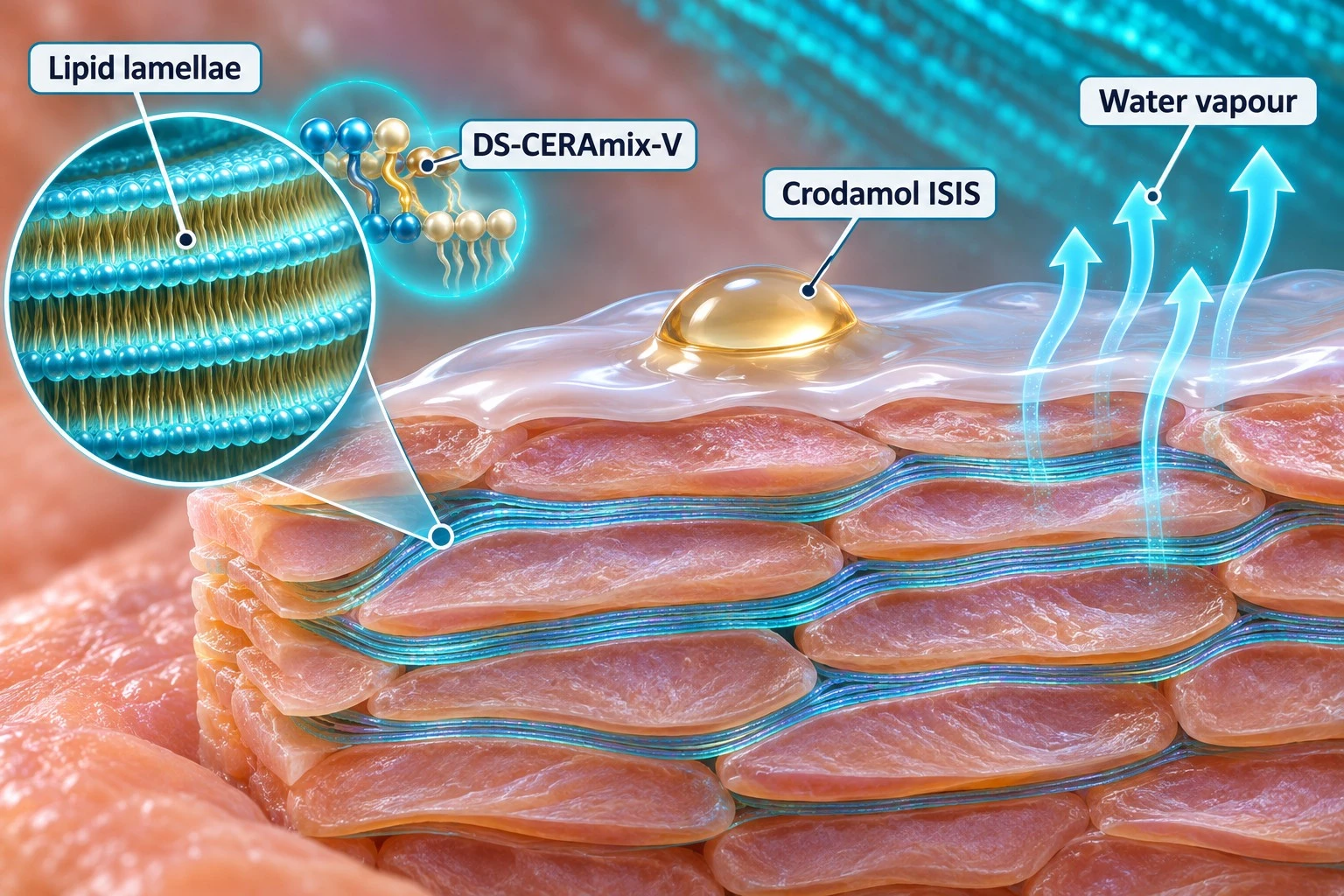
The lotion includes DS-CERAmix-V™, a blend of ceramides and other lipids that Croda describes as a lamellar liquid-crystal system. Lamellar structures consist of stacked layers, a feature relevant to the organisation of lipids in the skin's outer barrier. Croda selected the blend to support barrier function and help limit transepidermal water loss, which describes the movement of water through the skin into the surrounding air. The lotion also contains Crodamol™ ISIS, a plant-derived emollient that Croda includes for hydration. Together, the two ingredients contribute to the formulation's moisturising function.
A Multiple Emulsion Shapes the Lotion's Texture
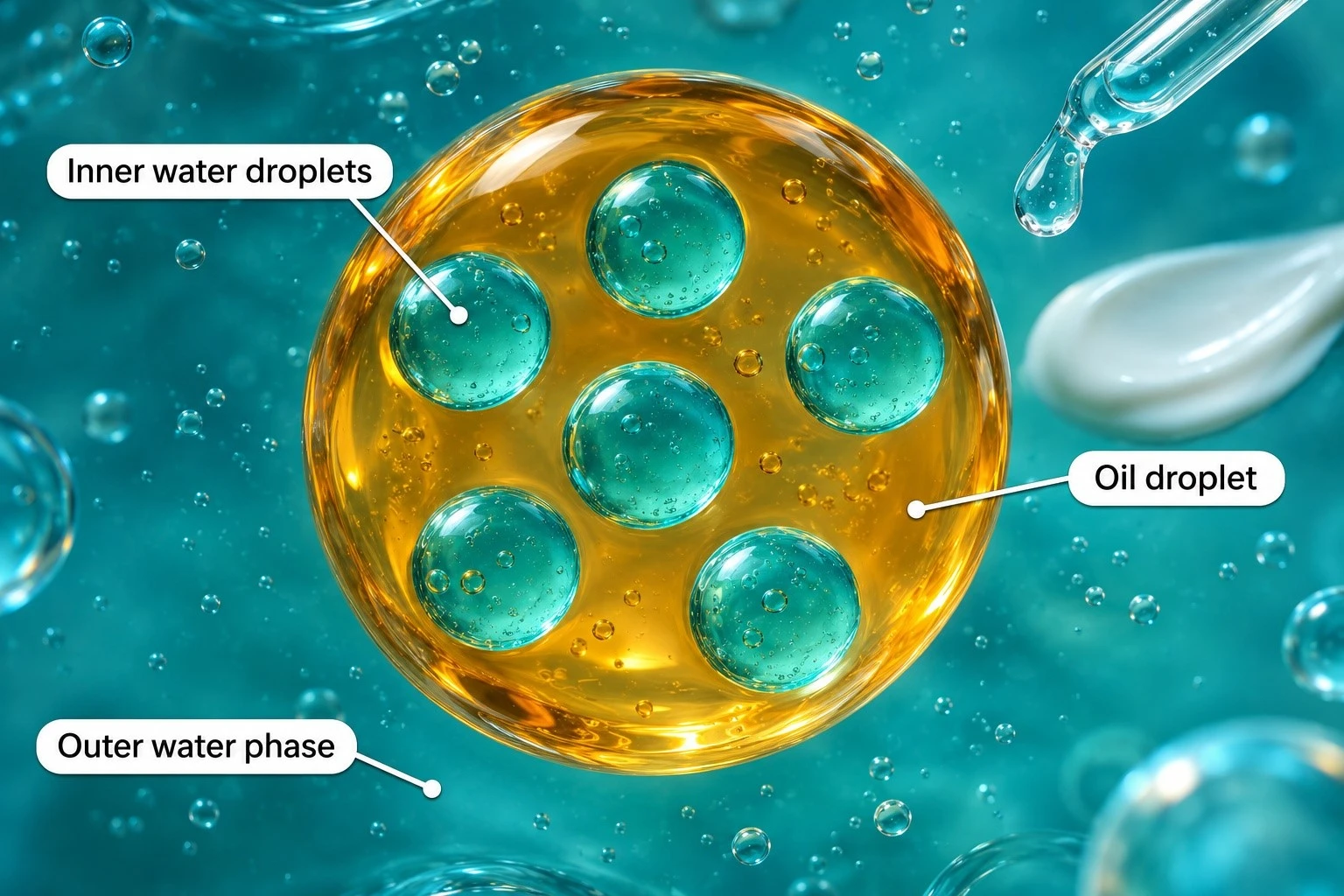
Natrineo™ CR8 enables the lotion's water-in-oil-in-water (W/O/W) structure. In this type of multiple emulsion, small water droplets sit inside larger oil droplets, and those oil droplets are dispersed throughout an external water phase. The nested structure gives formulators distinct compartments in which to place ingredients. Croda links the system to the lotion's texture during application and to its approach to active delivery. The company describes the finished formulation as an opaque, smooth lotion for face and neck care that leaves a soft feel after application.