Laboratory Testing Identifies Bacteria in One Seized Product
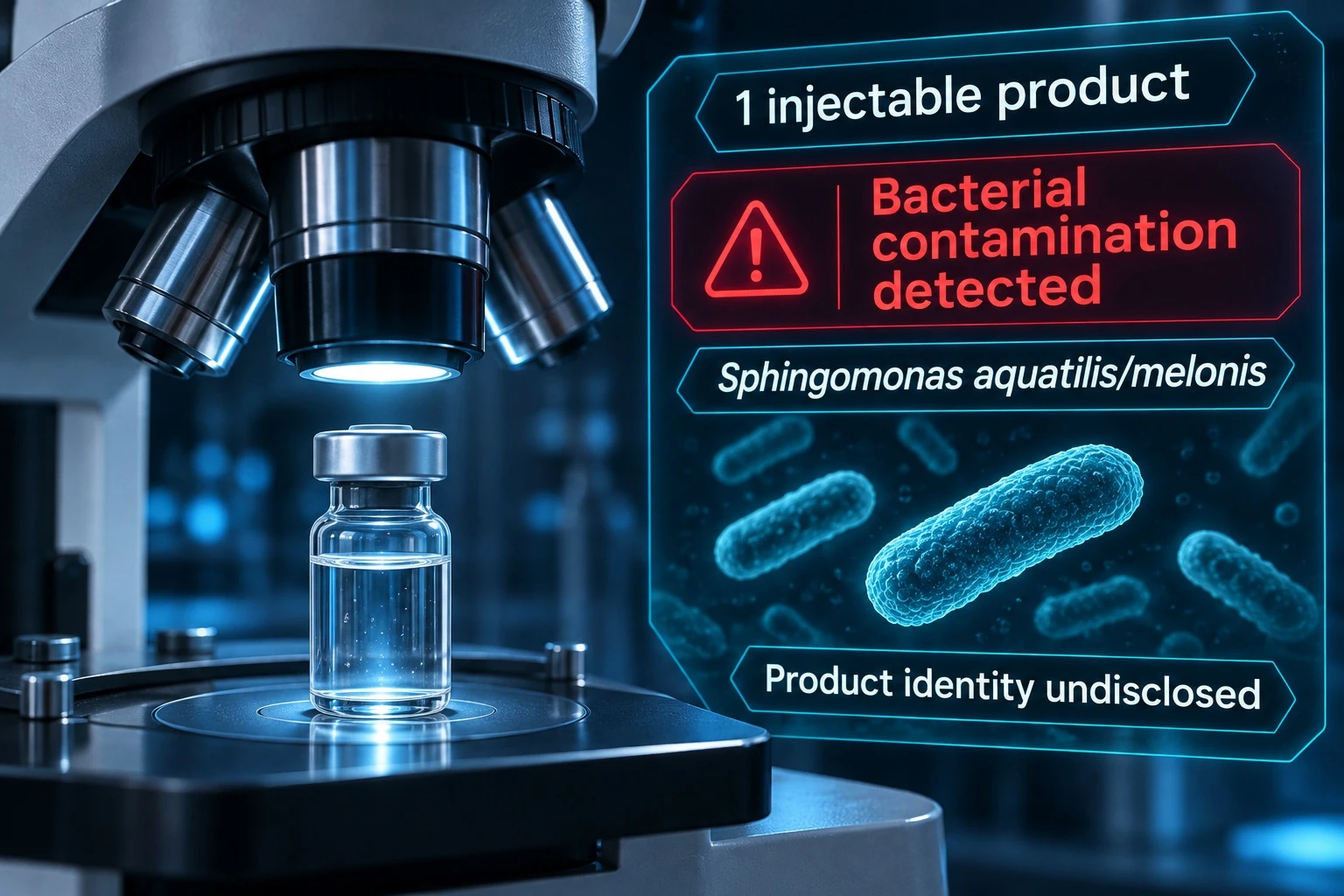
Health Canada reported the laboratory finding as Sphingomonas aquatilis/melonis. The advisory confirmed bacterial contamination in one injectable product and did not identify which listed product yielded the positive result. The advisory's broader product list covered both injectable products and an oral capsule. It included injectables labelled BPC-157, MOTS-C, retatrutide and tesamorelin, along with capsules labelled PURE BPC-157. The names come from the product labels. The laboratory finding announced on November 12 applies to a single injectable product within that wider group.
The Finding Raises Sterility and Product Quality Concerns
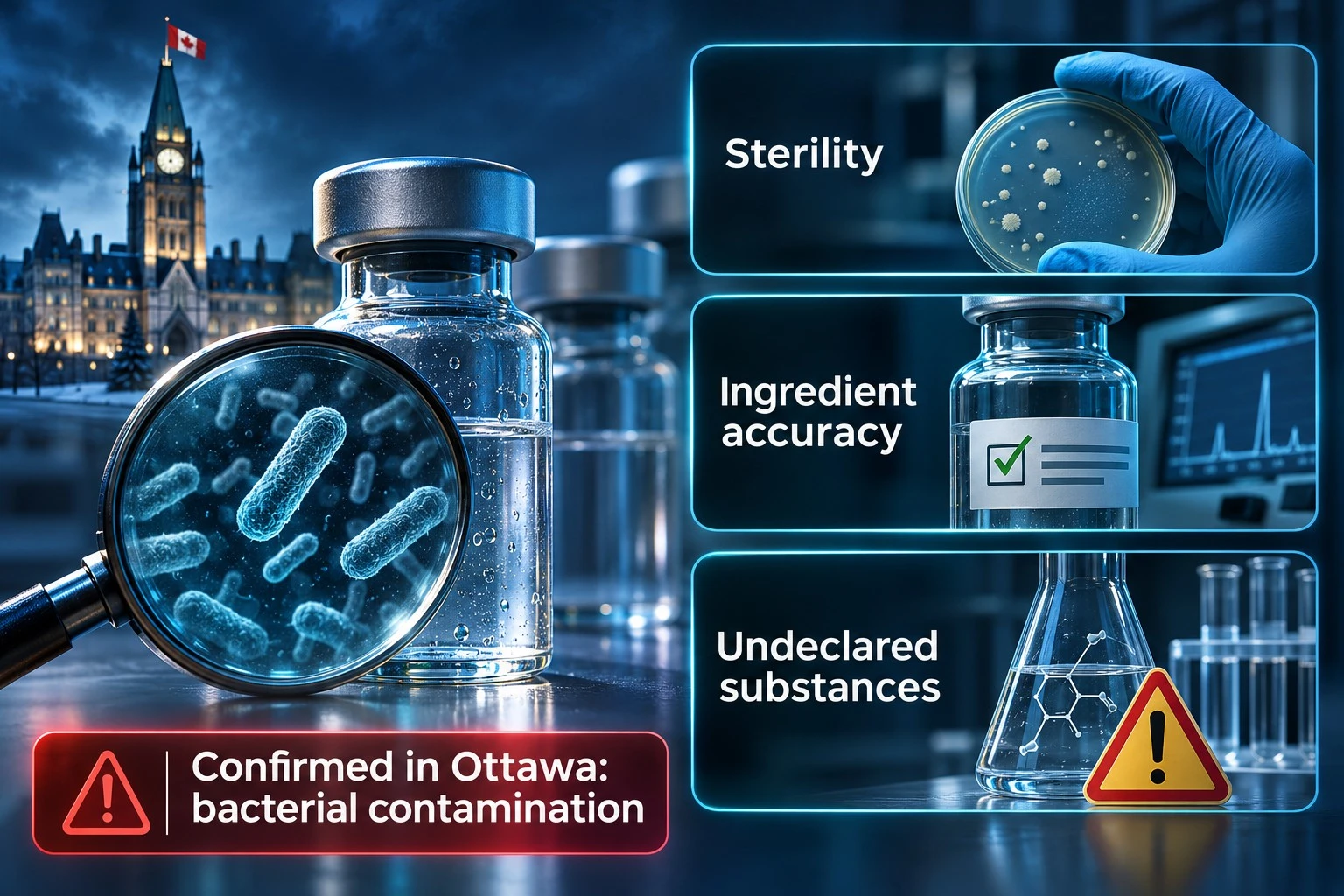
Health Canada said injecting a contaminated product can cause a serious infection that may require hospitalization and, in severe cases, can lead to life-threatening sepsis. The agency said people with weakened immune systems face a higher risk of infection. It also identified other quality concerns with unauthorized products, including inaccurate ingredient amounts, undeclared substances and contamination introduced during manufacturing, transport or storage. In the Ottawa case, the specific finding disclosed by the agency was bacterial contamination. The advisory did not specify where in the supply chain it occurred.
Research-Use Labels Carry No Exemption for Human-Use Sales
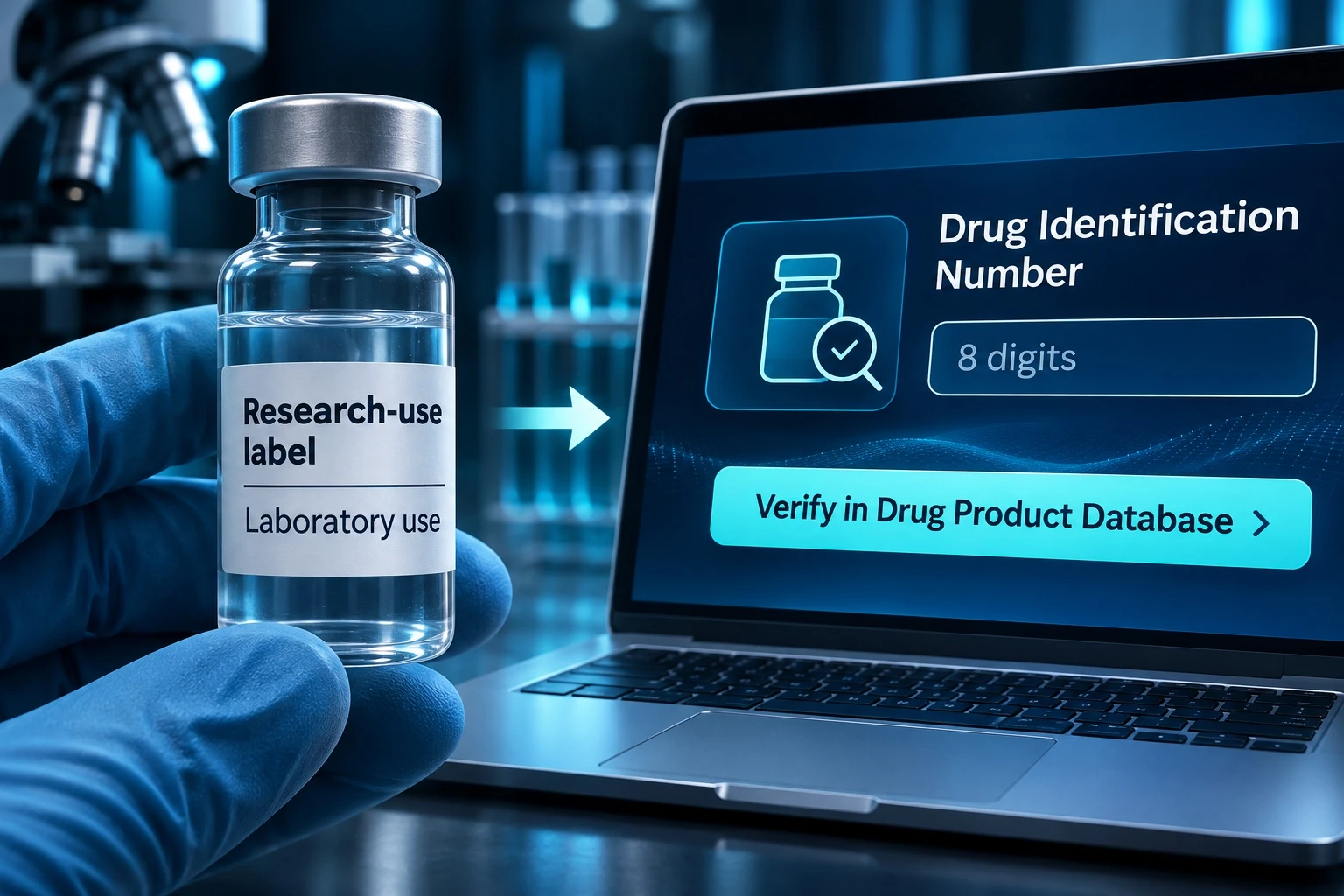
Some of the seized vials carried a research-use label. Health Canada said such products are intended for laboratory work and have not been manufactured or tested to the quality standards required for health products intended for people. Injectable peptides are generally regulated as prescription drugs in Canada, and a research-use label does not exempt a product from requirements governing its sale for human use. Health Canada advises buyers to verify a drug's eight-digit Drug Identification Number against the agency's Drug Product Database.
Enforcement Extends to Retail Sales and Incoming Shipments
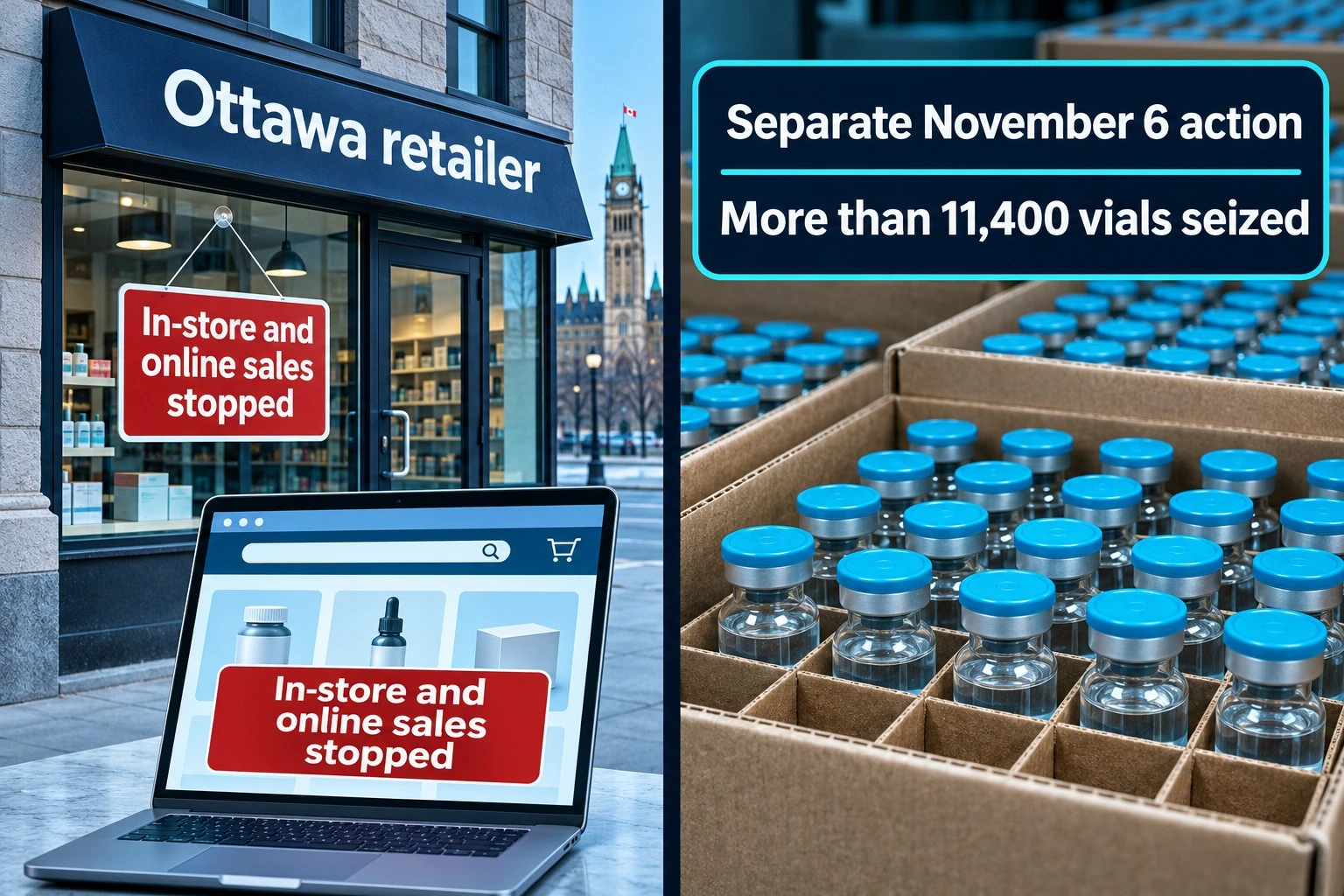
The Ottawa advisory followed a separate notice on November 6 involving Shanghai ERP Peptide Biotechnology and two Canadian online retailers. In that case, Health Canada reported bacterial findings in products it tested and said it had seized more than 11,400 vials across the supplier and the two retailers. Following the Ottawa action, the department said it would continue seizing unauthorized peptide products, disrupting distribution channels and working with the Canada Border Services Agency to intercept unauthorized shipments entering the country.