Core Pilot Objective – Removing Pyrolysis Oil Barriers for Steam Cracker Feeding
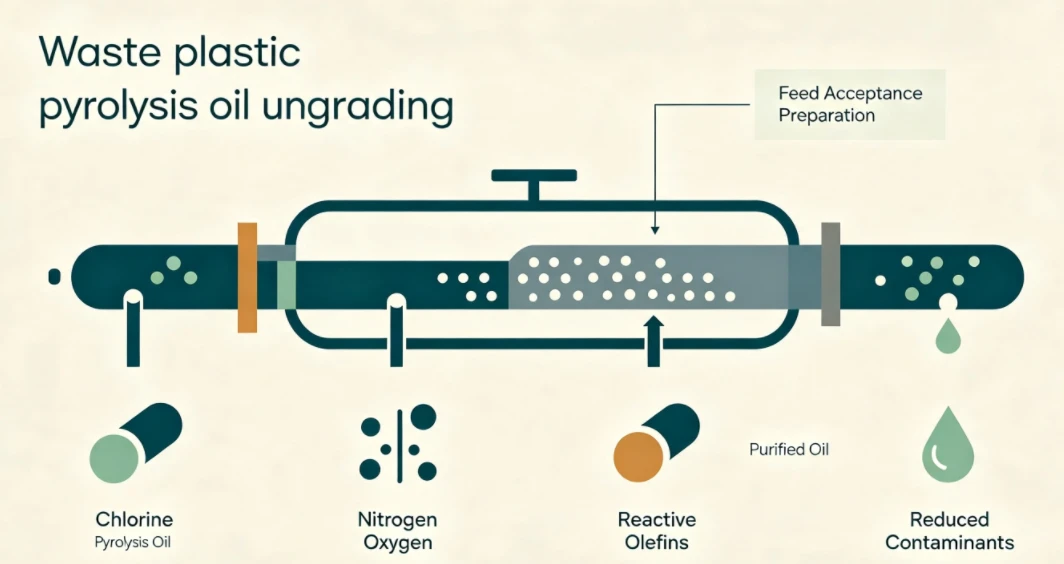
Raw pyrolysis oil from mixed waste plastics carries unwanted chlorine, nitrogen, oxygen and unstable olefins, which cause fouling, coking and catalyst damage inside steam cracking furnaces. This mid-scale upgrading pilot targets impurity reduction and molecular saturation to satisfy standard refinery feed acceptance criteria.
Controlled Upgrading Purification & Molecular Composition Tuning
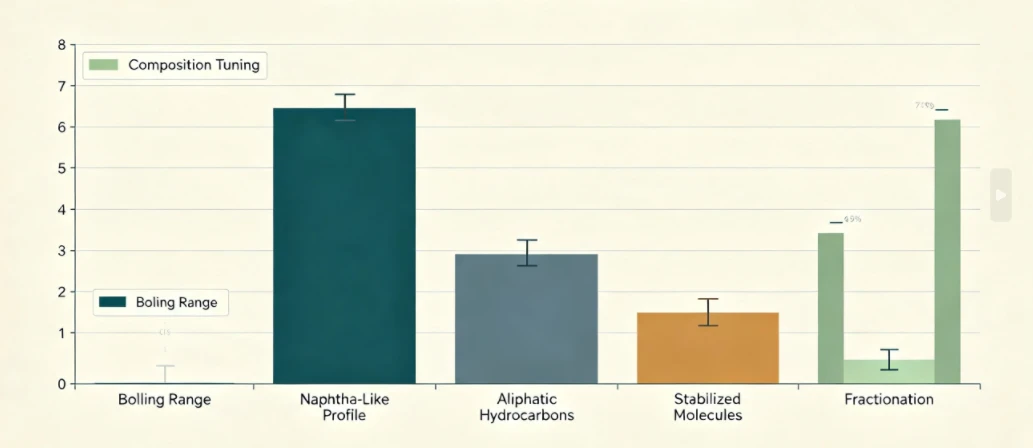
The pilot integrates catalytic hydrotreatment and fractionation to stabilize reactive components. It cuts heteroatom contaminants and narrows the boiling range, aligning the circular oil's hydrocarbon profile with conventional naphtha feed. The continuous trial maintains stable operation and consistent product quality across extended run durations.
Drop-In Compatibility With Existing Petrochemical Infrastructure
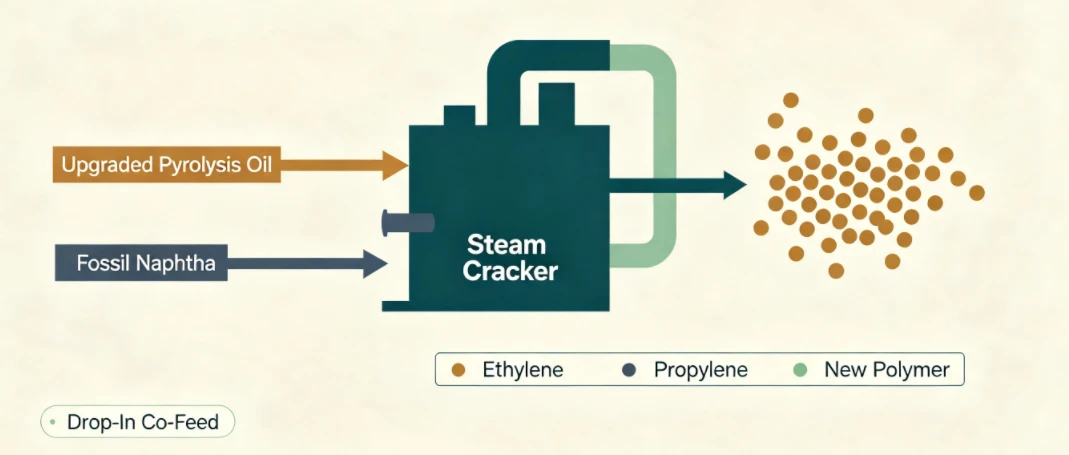
The upgraded pyrolysis oil functions as a fungible circular feedstock, requiring no major retrofits to established steam cracking units. It can be co-fed alongside fossil naphtha to produce ethylene and propylene, the fundamental monomers for new virgin-equivalent plastics without rebuilding plant hardware.
Paving Commercialization Path for Plastic Circular Economy
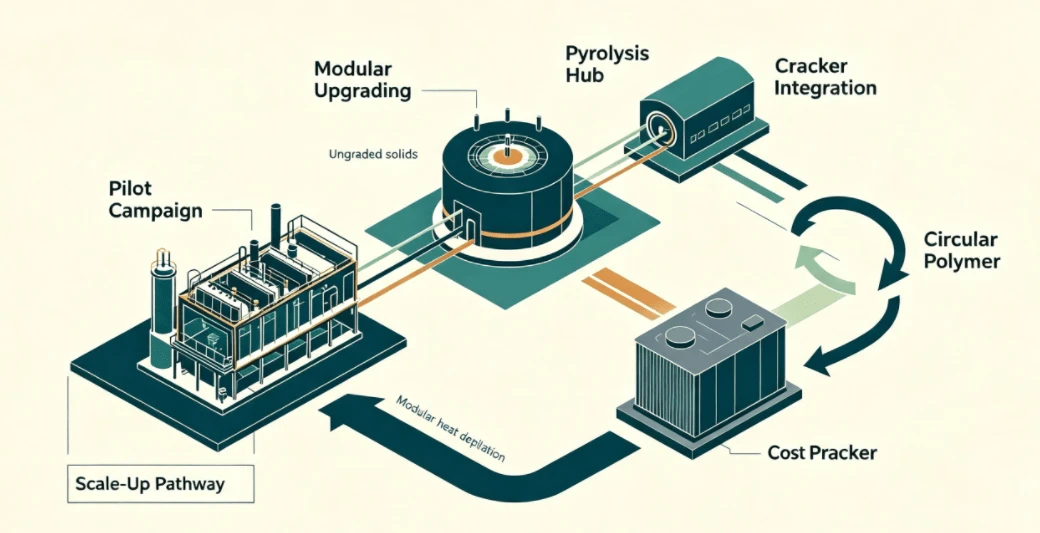
Positive pilot data de-risks scaled chemical recycling and supports lifecycle carbon reduction targets. This modular upgrading design can be deployed at pyrolysis hubs or adjacent to crackers, expanding market outlets for waste plastic pyrolysis oil and accelerating industry adoption of circular polymer manufacturing.