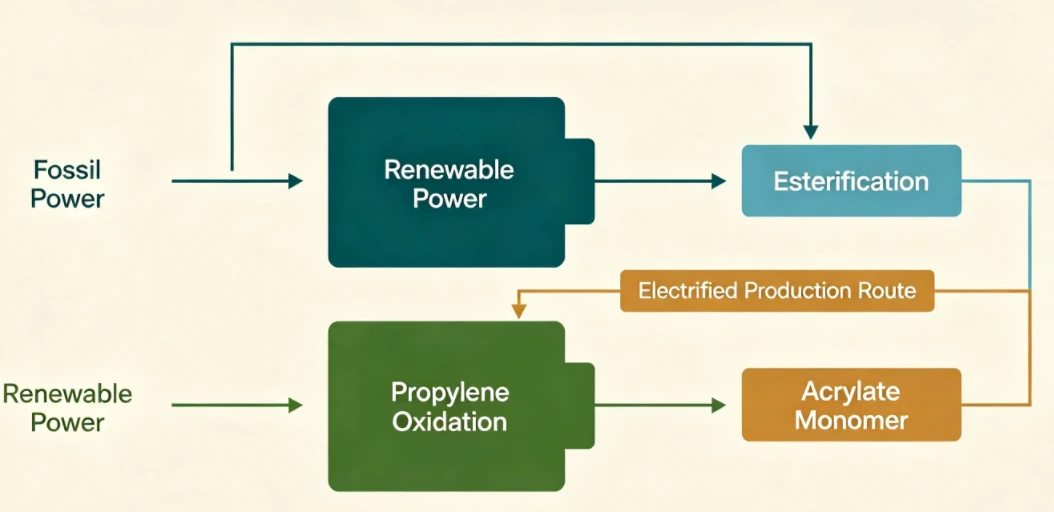
Core Technical Shift – Green Power Electrifies Established Acrylate Synthesis
Traditional acrylate production relies heavily on fossil-fuel derived power and heat for propylene catalytic oxidation. The renewable electricity route retains the proven core reaction chemistry but sources plant power from wind, solar or hydro via PPAs and verified green certificates, avoiding disruptive reinvention of the core catalytic process.
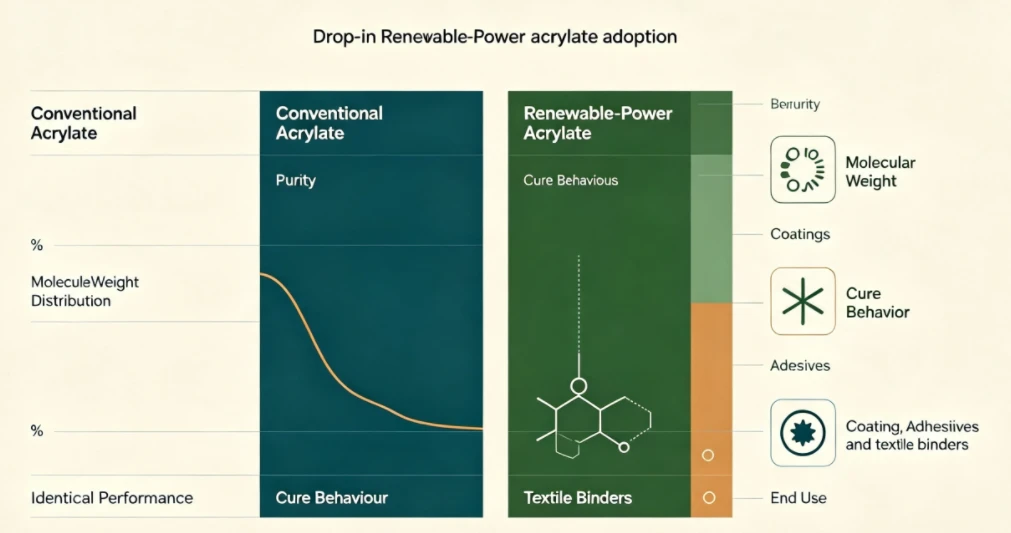
Identical Product Performance for Drop-In Industrial Adoption
Renewable-power acrylates match conventional grades in purity, molecular weight distribution and cure behaviour. Formulators for waterborne coatings, pressure-sensitive adhesives and textile binders can switch without reformulation or equipment changes, eliminating technical risk while enabling customers to claim verified lower cradle-to-gate carbon footprints.
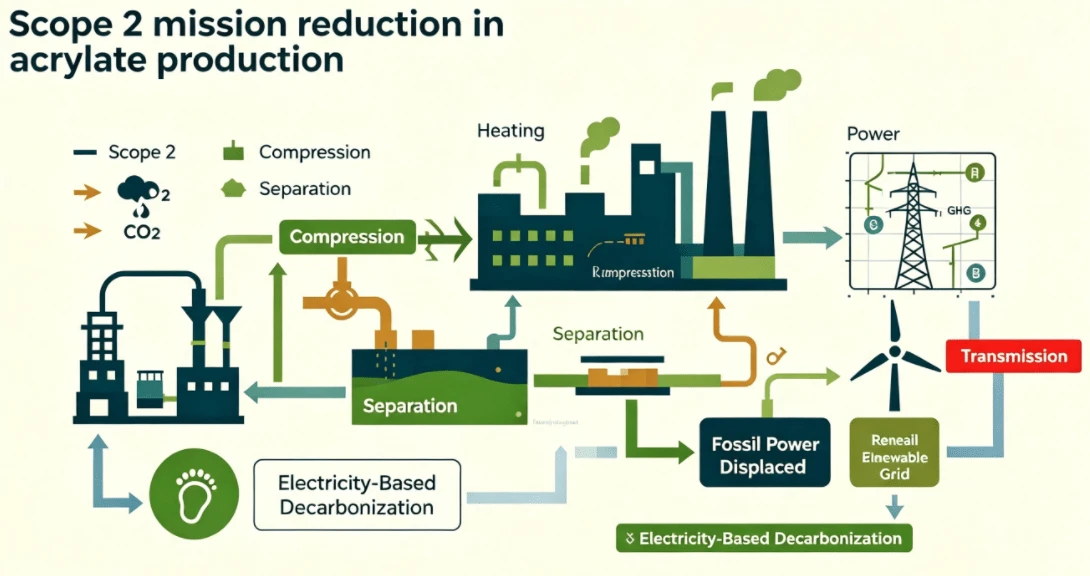
Carbon Footprint Reduction Focused on Scope 2 Emission Cuts
Emission savings centre on displacing grid fossil power used for compression, heating, separation and utilities. Life-cycle assessment confirms meaningful GHG reduction without altering feedstock chemistry, delivering a near-term decarbonization lever while longer-term bio-feedstock routes continue technical maturation.
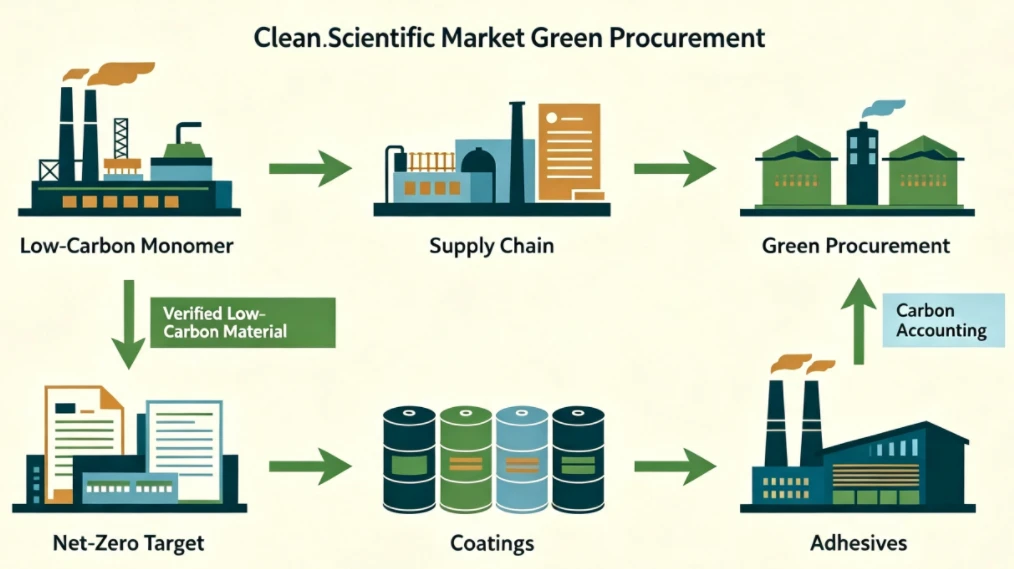
Market Alignment With Low-Carbon Material Mandates & Green Procurement
Brands and industrial buyers increasingly require verified low-carbon monomers for coatings, adhesives and construction materials. Renewable-power acrylate offers a commercially scalable transitional pathway, helping chemical producers meet corporate net-zero targets and comply with emerging carbon accounting and green public procurement rules.