Unique Botanical Background – Camel Thorn, A Hardy Desert Resource
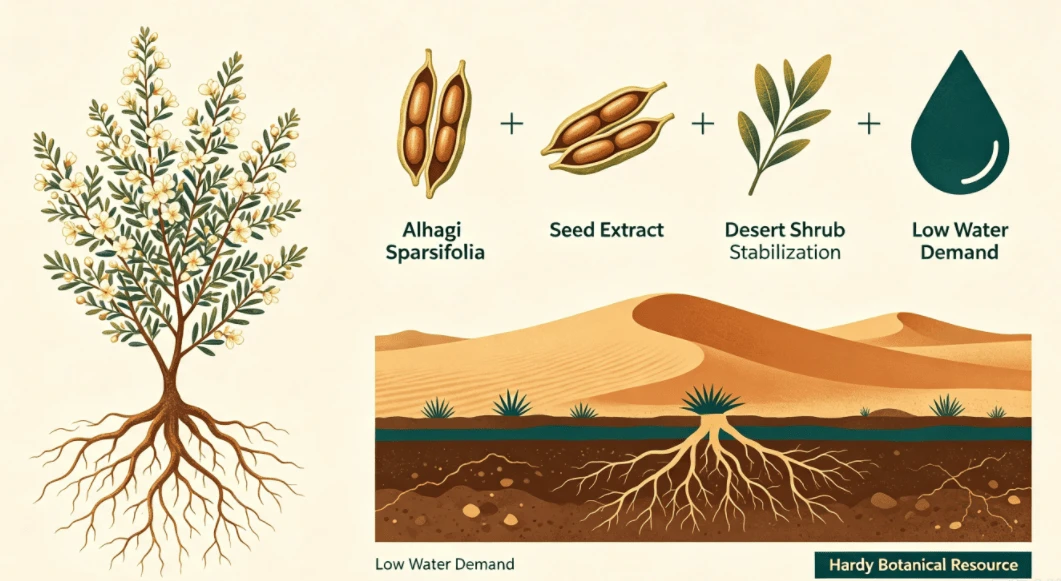
Alhagi sparsifolia, or camel thorn, is a perennial desert shrub adapted to arid, saline soil and water scarcity across northwest China's desert zones. Its seeds are a renewable by-product of ecological protection projects, requiring minimal freshwater input compared with conventional cosmetic botanicals. Harvesting avoids damaging wild vegetation and aligns with desert fixation and sand control initiatives.
Core Bioactivity – Antioxidant & Anti-Inflammatory Bioactive Profile
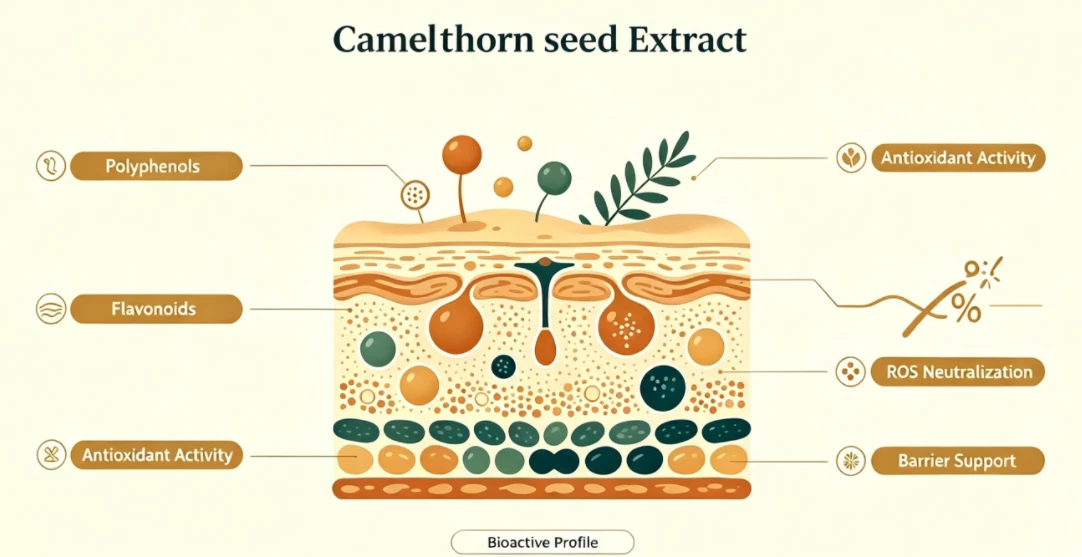
Camel thorn seed extract is rich in flavonoids, phenolic acids and polysaccharides. In in-vitro assays, these compounds neutralize reactive oxygen species and moderate pro-inflammatory mediators. Such properties make the extract suitable for soothing sensitive skin, mitigating oxidative stress from UV and environmental pollution, and supporting skin barrier maintenance in topical formulations.
Sustainable Sourcing Model Linking Desert Restoration & Raw Material Supply
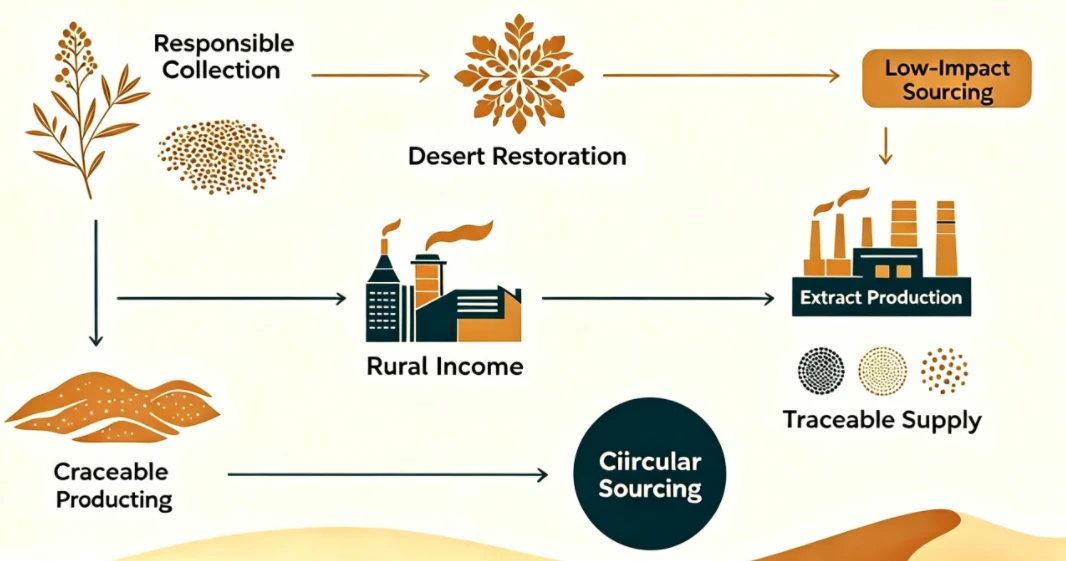
Unlike farm-grown plant materials with high irrigation demand, camel thorn grows naturally in desert ecosystems and stabilizes shifting sands. Responsible seed collection creates local rural income streams without competing for arable land or freshwater. This circular sourcing model delivers traceable botanical feedstock while advancing ecological carbon sequestration in arid regions.
Formulation Compatibility & Market Position in Sustainable Personal Care
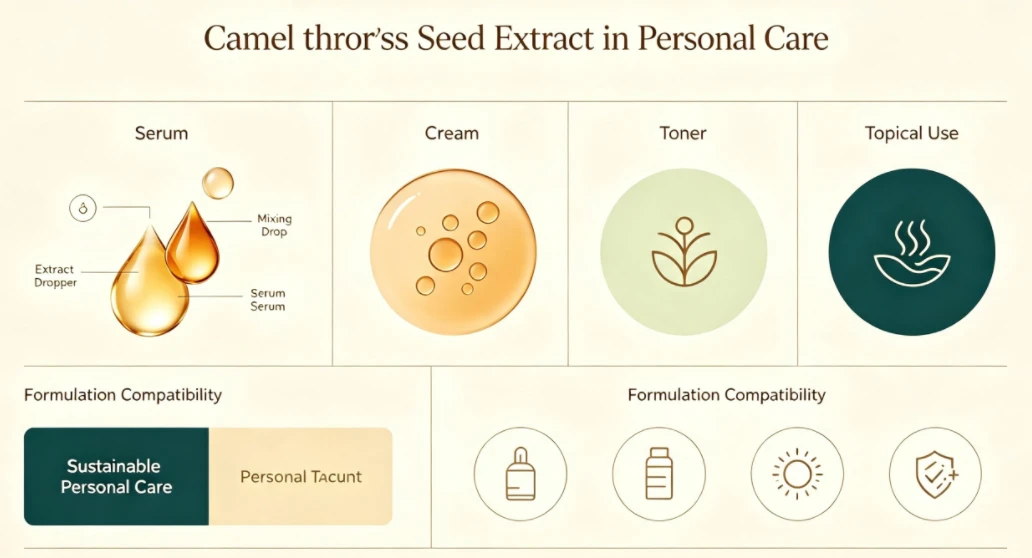
The extract demonstrates good compatibility with common cosmetic bases and is targeted for serums, creams and calming toners. Brands seeking nature-derived, low-water-impact actives can adopt this desert ingredient to enrich green product portfolios. It answers consumer demand for botanicals that balance skin benefits with verifiable environmental stewardship.