Vilon Peptide 99% is a synthetic dipeptide (Lys-Glu) from the Khavinson class of bioregulatory peptides developed at the Saint Petersburg Institute of Bioregulation and Gerontology. It is the shortest bioregulatory peptide in the Khavinson system, consisting of only two amino acids. Vilon is designed to target immune (thymic) tissue through proposed peptide-DNA interactions that modulate gene expression in thymocytes and immune cells. As a dipeptide, Vilon tests the minimal boundary of the Khavinson hypothesis - whether even a two-amino acid sequence can carry meaningful tissue-targeting information through its charge distribution and conformational properties.
Shaanxi Medibridge Biotech Co., Ltd. provides research peptides for laboratories, academic institutions, and biotechnology organizations worldwide. As a specialized peptide supplier, we provide lyophilized powder with ≥99% purity verified by HPLC, supported by lot-specific COA, MS/HPLC analytical data, and rigorous impurity control.
COA
|
|
||
|
Product Name |
CAS Number |
Batch Number |
|
Vilon Peptide 99% |
45234-02-4 |
MB2601262532 |
|
Manufacturer Date |
Analysis Date |
Expiry Date |
|
2026/2/18 |
2026/2/19 |
2028/2/17 |
|
Sample Qty Base |
Packing |
Test Method |
|
2.56KGS |
10GS/bottle |
HPLC |
|
|
||
|
Item |
Standard |
Results |
|
Appearance |
White lyophilized powder |
Conforms |
|
Identification (HPLC) |
Retention time consistent with reference standard |
Conforms |
|
Peptide Sequence |
Lys-Glu (KE) |
Conforms |
|
Molecular Formula |
C11H21N3O5 |
Conforms |
|
Molecular Weight |
275.3 |
Conforms |
|
Purity (HPLC) |
NLT 98.0% |
98.65% |
|
Solubility |
Soluble in water |
Conforms |
|
Water Content (Karl Fischer) |
NMT 5.0% |
2.54% |
|
Acetate Content |
NMT 12.0% |
5.98% |
|
Heavy Metals |
NMT 10 ppm |
Conforms |
|
Related Substances |
NMT 2.0% |
Conforms |
|
Microbial Limits |
Complies with laboratory reagent standards |
Conforms |
|
Storage |
Store in cool & dry place. keep away from strong light and heat |
|
|
Conclusion |
The batch conforms to the IN-HOUSE standard |
|
|
|
||


Mechanism Of Action
Vilon has been investigated for its proposed interactions with gene regulatory regions in immune cells, consistent with the Khavinson bioregulatory dipeptide model. Despite being only two amino acids in length, the Lys-Glu sequence carries a distinctive charge pattern (positive-negative) that may influence electrostatic interactions with DNA. Researchers from the Saint Petersburg group observed that Vilon treatment in lymphocyte culture models was associated with changes in proliferation markers and cytokine expression profiles. Studies suggest that Vilon may influence thymic epithelial cell function, modulating the thymic microenvironment that supports T-cell maturation. In aging models, researchers observed effects on immune competence markers and thymocyte differentiation indices.

Vilon At The Molecular Level

Vilon is a short peptide believed to influence cellular aging by selectively loosening facultative heterochromatin, the condensed form of DNA that silences genes needed for normal cell function. By restoring access to these age-suppressed genes, Vilon may reactivate ribosomal RNA synthesis, improve protein production, and support healthier immune activity. Research also suggests it may modulate the CHUK/NF-κB pathway, helping regulate inflammation and immune responses. In addition, early findings indicate that Vilon may help normalize telomere dynamics in lymphocytes. Together, these mechanisms suggest that Vilon acts as a targeted regulator of gene expression rather than a nonspecific cellular stimulant.
T-cell Proliferation And Maturation
Vilon stimulates the proliferative activity of thymocytes, the precursor cells within the thymus that eventually become mature T-cells. In animal models exposed to gamma radiation, which damages the immune system severely, Vilon administration led to measurable thymic recovery.
Histological analyses revealed enlargement of thymic lobules, primarily due to widening of the cortical layer where T-cell maturation occurs. The proliferative index, a measure of how actively cells are dividing, jumped from 26% to 37% with Vilon exposure. That is a 42% increase in cellular proliferation within the thymus.
More importantly, Vilon does not just increase cell numbers. It increases the right kind of cells. Studies show the peptide enhances expression of the CD5 differentiation marker on thymic cells. CD5 is found on mature T-helper cells and cytotoxic T-cells, the two populations most critical for adaptive immunity. Increased CD5 expression indicates that more precursor cells are successfully completing the maturation process, not just dividing aimlessly.

CD4 Expression And Helper T-cell Development

The CD4 molecule marks T-helper cells, the coordinators of immune response. Without adequate CD4+ T-cells, the immune system cannot mount effective responses to new threats, cannot coordinate antibody production, and cannot properly regulate inflammation. Vilon has been observed to increase CD4 molecule expression in thymic cell cultures, indicating enhanced maturation of lymphocyte precursors into functional helper T-cells.
Cytokine Modulation And IL-2 Signaling
Vilon helps regulate immunity by increasing IL-2 gene expression in splenic lymphocytes, which supports T-cell growth, survival, and activation. At the same time, it can markedly reduce pro-inflammatory cytokine production, helping control excessive inflammation. Through its effect on the CHUK/NF-κB pathway, Vilon appears to balance immune activation and inflammatory restraint, acting as an immunoregulator rather than a simple immune stimulant or suppressor.

Comparison With Other Longevity Peptides
What distinguishes Vilon is its mechanism. Chromatin remodeling affects everything downstream. While Epitalon works on telomere length and Thymalin uses a broad spectrum of immune modulation, Vilon targets the fundamental accessibility of genetic information. In theory, this makes it complementary to other longevity interventions rather than redundant.
|
Peptide |
Primary mechanism |
Target organ |
Complexity |
Research depth |
|
Vilon |
Chromatin remodeling |
Thymus/immune |
Dipeptide (2 AA) |
40+ years |
|
Epitalon |
Telomerase activation |
Pineal gland |
Tetrapeptide (4 AA) |
35+ years |
|
Thymalin |
Broad immunomodulation |
Thymus |
Complex extract |
45+ years |
|
Cartalax |
Cartilage bioregulation |
Joints/cartilage |
Tripeptide (3 AA) |
20+ years |
|
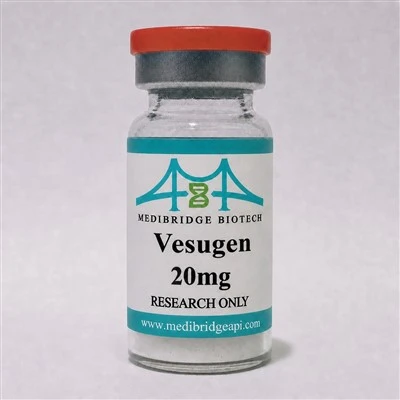
Vesugen |
Vascular regulation |
Blood vessels |
Tripeptide (3 AA) |
20+ years |
Many researchers combine Vilon with Epitalon in stacking protocols, reasoning that addressing both chromatin accessibility and telomere maintenance provides more comprehensive anti-aging coverage than either compound alone.
FAQ
What does Vilon peptide do?
Derived from thymus peptides, Vilon has demonstrated promising results in studies related to aging, immune restoration, and the maintenance of cellular homeostasis.
What peptide does Jennifer Aniston use?
The key, at least recently, is the OneSkin Peptide Topical Supplement and Skin Longevity Age Reversal Moisturizer that Jennifer Aniston also uses.
What is vilon for?
Vilon is a peptide with apparent immunomodulatory and anti-aging bioregulation potential.
What does the peptide vilon do?
In a nutshell, the Vilon peptide appears to potentially rejuvenate immune functions by reactivating genes that are silent by chromatin changes.
If you are looking for a high-quality Vilon Peptide 99% manufacturer with whom you can establish a long-term, stable partnership, then Shaanxi Medibridge Biotech Co., Ltd. would be your best business partner. Don't hesitate to contact us at hi@medibridgeapi.com.
Hot Tags: vilon peptide 99%, China vilon peptide 99% manufacturers, suppliers, factory, Bronchogen Powder, livagen peptide raw material, ovagen raw material, Testagen Powder, Vesugen Powder, vilon research peptide