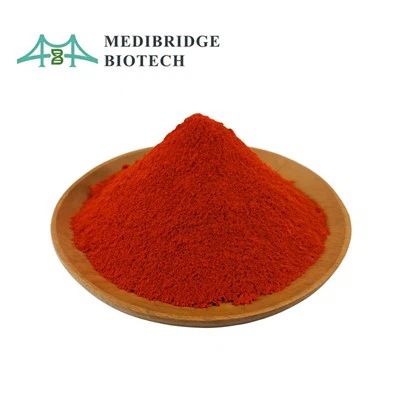
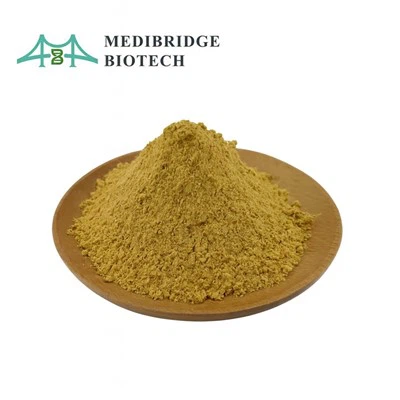
Black tea extract powder is made from fully fermented tea leaves of Camellia sinensis. During black tea processing, the leaves go through a complete oxidation stage, which changes how the natural tea compounds are formed. After extraction with water or a water-alcohol system, the liquid extract is concentrated and dried to obtain a stable powder. The final material keeps the general characteristics of black tea, rather than focusing on one single isolated substance.
In formulation work, black tea extract powder is usually handled as a tea-based, multi-component ingredient. It appears in dietary supplements, functional food and beverage systems, and various blended formulas where tea-derived materials are part of the overall design. In some projects, it is also used in cosmetic or personal care applications, where attention is placed on its botanical origin and how it fits with other plant-based ingredients.
Shaanxi Medibridge Biotech Co., Ltd. supplies black tea extract powder for long-term formulation use with attention to specification consistency and batch control. Parameters such as theaflavins range, caffeine level, and physical properties can be adjusted based on application needs. Quality documentation is provided with each batch, and bulk supply, customization, and OEM services are available for both development and commercial production.

COA
|
|
||
|
Product Name |
CAS Number |
Batch Number |
|
black tea extract powder |
Not applicable |
MB2601081000 |
|
Manufacturer Date |
Analysis Date |
Expiry Date |
|
2026-01-08 |
2026-01-09 |
2028-01-07 |
|
Sample Qty Base |
Packing |
Test Method |
|
300KGS |
25kg/drum |
HPLC |

|
Item |
Standard |
Results |
|
Appearance |
Brown to dark brown powder |
Conforms |
|
Odor |
Characteristic tea odor |
Conforms |
|
Identification |
Positive reaction |
Conforms |
|
Loss on Drying |
≤ 5.0% |
Conforms |
|
Ash Content |
≤ 8.0% |
Conforms |
|
Bulk Density |
0.30 – 0.60 g/mL |
Conforms |
|
Solubility |
Water-soluble or partially water-soluble |
Conforms |
|
Theaflavins |
≥ 0.5% |
1.83% |
|
Caffeine |
2.0% – 4.0% |
3.20% |
|
Heavy Metals (Total) |
≤ 10 ppm |
Conforms |
|
Lead (Pb) |
≤ 3.0 ppm |
Conforms |
|
Arsenic (As) |
≤ 2.0 ppm |
Conforms |
|
Cadmium (Cd) |
≤ 1.0 ppm |
Conforms |
|
Mercury (Hg) |
≤ 0.1 ppm |
Conforms |
|
Total Plate Count |
≤ 10,000 CFU/g |
Conforms |
|
Yeast & Mold |
≤ 1,000 CFU/g |
Conforms |
|
E. coli |
Negative |
Negative |
|
Salmonella |
Negative |
Negative |
|
Storage |
Store in cool & dry place. keep away from strong light and heat |
|
|
Conclusion |
The batch conforms to the IN-HOUSE standard |
|
|
|
||

Why It's Special
Black tea extract powder comes from tea leaves that have been fully fermented, which sets it apart from non-fermented or lightly processed tea materials. This fermentation step changes the overall composition of the extract and gives it the typical black tea profile seen after extraction, rather than a narrow focus on one compound.
Because of this background, the extract is usually treated as a complete tea ingredient instead of a high-purity active. In practical formulation work, several tea-derived components remain together, which helps the material perform in a more predictable way across different systems without relying on a single marker.
Fermentation also affects how the extract behaves in finished products. Its color tone and aroma tend to be softer compared with non-fermented tea extracts, which makes it easier to include in beverages, powders, and blended formulas where overall balance is part of the formulation goal.

Functional Role in Formulations
As a Tea-Based Ingredient
Black tea extract powder is often added as a tea-derived component within multi-ingredient formulas, where it supports the overall concept rather than acting as a standalone focus.

As a Blend Component
In complex formulations, it is used to introduce tea-related materials without relying on highly concentrated single compounds, allowing more flexibility during formulation.
For Integration Stability
Formulators frequently select this extract for its stable behavior in powder blends, beverage bases, and combination products that require consistent processing.

For Daily-Use Products
The extract is commonly positioned in products designed for regular, long-term use, where formulation compatibility is prioritized over short-term intensity.
Typical Application Scenarios
Dietary Supplements
Black tea extract powder is used in supplement formulas as part of multi-ingredient systems combined with other botanical or nutritional materials.
Functional Foods
In food applications, it appears in powdered or processed formats where plant-derived ingredients are already part of the formulation concept.
Functional Beverages
The extract is used in drink mixes and liquid concentrates, especially in tea-inspired or plant-based beverage designs.
Energy Blends
It is included in energy-related blends alongside other tea or botanical ingredients, contributing to the overall ingredient structure.
Beauty Products
In beauty-focused concepts, the extract may be used in ingestible or topical formats, depending on formulation design and positioning.

Internal vs. Topical Use
|
Aspect |
Internal Use (Ingestible) |
Topical Use (Cosmetic / Personal Care) |
|
Typical Format |
Capsules, tablets, powders, drink mixes |
Creams, serums, lotions, masks |
|
Formulation Focus |
Overall blend balance and daily-use positioning |
Texture, color control, and formula stability |
|
Ingredient Role |
Tea-based component within multi-ingredient systems |
Botanical extract used alongside other plant materials |
|
Sensory Consideration |
Mild tea profile within finished products |
Visual appearance and compatibility with base formulas |
|
Usage Orientation |
Long-term, routine intake concepts |
External application in skincare or personal care designs |
|
Selection Priority |
Consistency, batch stability, ease of blending |
Compatibility with cosmetic bases and processing conditions |
FAQ
Q: What is black tea extract powder?
A: It is a processed ingredient made from fully fermented black tea leaves through extraction and drying.
Q: What is black tea extract good for?
A: It is used as a tea-based ingredient in supplements, foods, beverages, and cosmetic formulations.
Q: Is black tea extract the same as black tea?
A: No, black tea extract is a concentrated ingredient, while black tea is usually consumed as a beverage.
Q: What happens if I drink black tea daily?
A: Daily intake provides tea-derived compounds and naturally occurring caffeine as part of regular consumption.
Q: How much caffeine is in black tea extract?
A: Caffeine content varies depending on raw material and processing and can be adjusted by specification.
Hot Tags: black tea extract powder, China black tea extract powder manufacturers, suppliers, factory, Epicatechin Powder, Guayusa Leaf Extract Powder, Hesperidinase, Horse Chestnut Escin, Pineapple Extract Bromelain Powder, Pure Resveratrol Powder