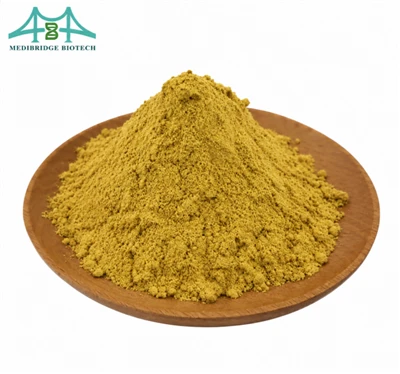


Colchicine Powder is an alkaloid extracted from the corms and seeds of *Colchicum autumnale* (a member of the Liliaceae family); it also occurs naturally in *Gloriosa superba* and *Iphigenia indica* (formerly *Colchicum luteum*), with concentrations of 0.11% and 0.1%, respectively. It appears as pale yellow needle-like crystals, has a slight odor, and a bitter taste. It has a melting point of 157°C and is readily soluble in cold water, alcohol, chloroform, and formaldehyde; however, it has poor solubility in hot water, is sparingly soluble in benzene and diethyl ether, and is virtually insoluble in petroleum ether. A 0.5% solution has a pH of 5.9, and its toxicity can be reduced through hydrolysis with ammonia. Colchicine exhibits anti-tumor properties and inhibits cellular mitosis. Italian researcher Pernice first discovered the effects of colchicine on mitosis in 1889; he described how the substance arrested cells in the metaphase stage of division within the gastrointestinal lining of dogs, disrupting the spindle apparatus, paralyzing chromosomal movement, and causing a large number of cells to remain stuck in an abnormal mitotic metaphase state. This type of abnormal division induced by colchicine is known as "C-mitosis" (colchicine mitosis). Colchicine is the most widely used chemical agent in karyotype analysis and the induction of polyploidy. The efficacy of the substance is positively correlated with the concentration of its aqueous solution; the higher the concentration, the stronger the effect. Different plant species and tissue types exhibit varying responses to colchicine.
Shaanxi Medibridge Biotech Co., Ltd. supplies plant extracts, nutritional ingredients, and custom specification products for different sourcing and formulation needs. We support stable supply, routine specification matching, and flexible packaging service for ingredient-based product development.
COA
|
|
||
|
Product Name |
CAS Number |
Batch Number |
|
Colchicine Powder |
64-86-8 |
MB2604052352 |
|
Manufacturer Date |
Analysis Date |
Expiry Date |
|
2026/4/05 |
2026/4/06 |
2028/4/05 |
|
Sample Qty Base |
Packing |
Test Method |
|
100KGS |
25KG/drum |
HPLC |
|
|
||
|
Item |
Standard |
Results |
|
Appearance |
Light Yellow powder |
Conforms |
|
Assay |
≥98% |
98.23% |
|
Mesh size |
100% pass 80 mesh |
Conforms |
|
Ash |
≤5.0% |
2.85% |
|
Loss on drying |
≤5.0% |
2.82% |
|
Heavy metal |
≤10ppm |
Conforms |
|
Pb |
≤2ppm |
Conforms |
|
As |
≤1ppm |
Conforms |
|
Hg |
≤0.1ppm |
Conforms |
|
Residue of pesticide |
Negative |
Negative |
|
Total plate count |
≤1000cfu/g |
Conforms |
|
Yeast&Mold |
≤100cfu/g |
Conforms |
|
E.coli |
Negative |
Negative |
|
Salmonella |
Negative |
Negative |
|
Conclusion |
The batch conforms to the IN-HOUSE standard |
|
|
|
||


Biological Activities & Molecular Mechanisms
Anti-mitotic / Cytoskeleton Targeting (core primary mechanism)
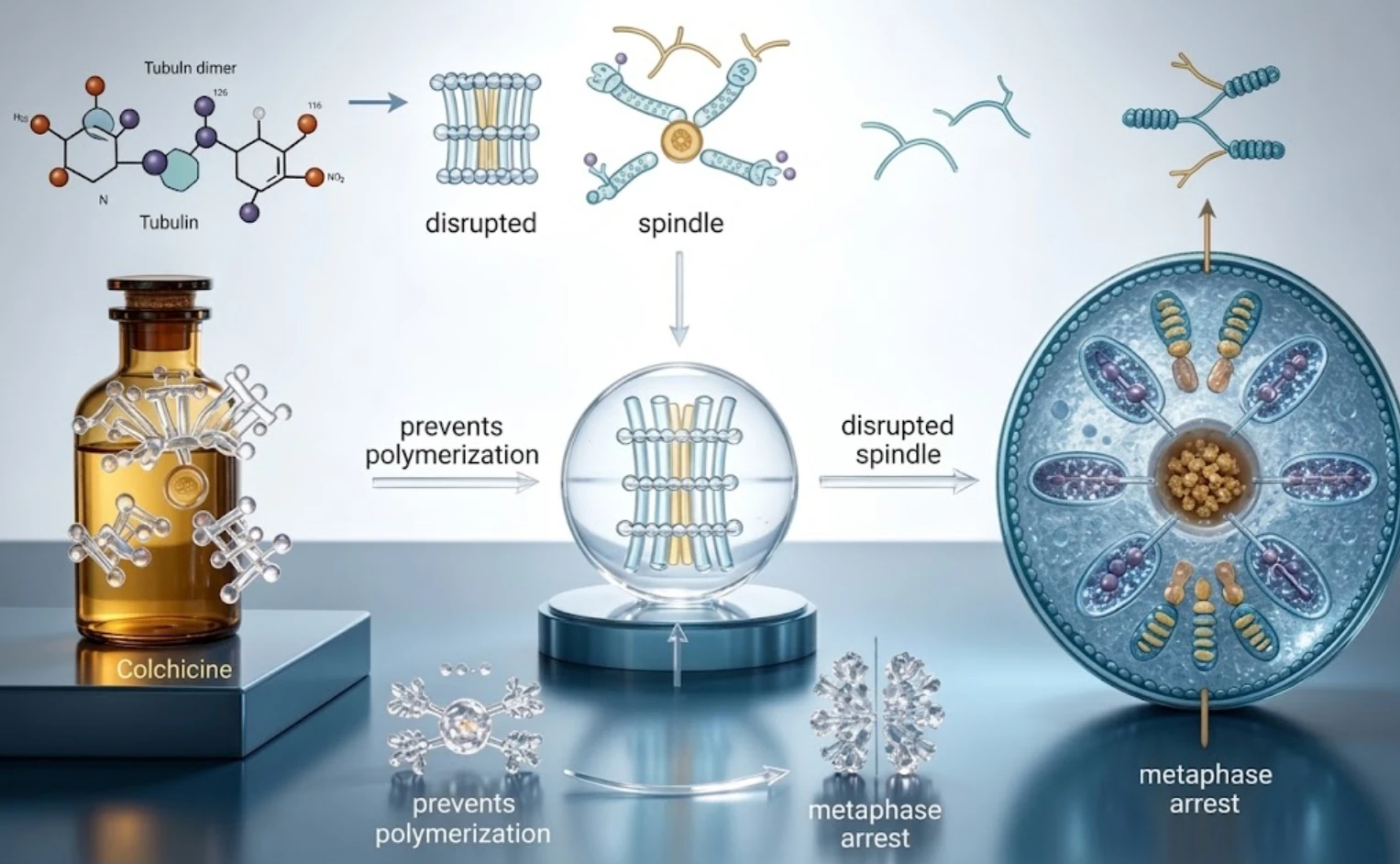
Colchicine binds reversibly to tubulin dimers, blocks tubulin polymerization into microtubules.
1. Suppresses microtubule assembly, disrupts spindle formation during cell mitosis.
2. Arrests cell cycle at metaphase.
> This is the basis for both its anti-proliferative effect and cellular toxicity.
Anti-inflammatory Activity (main clinical application mechanism)
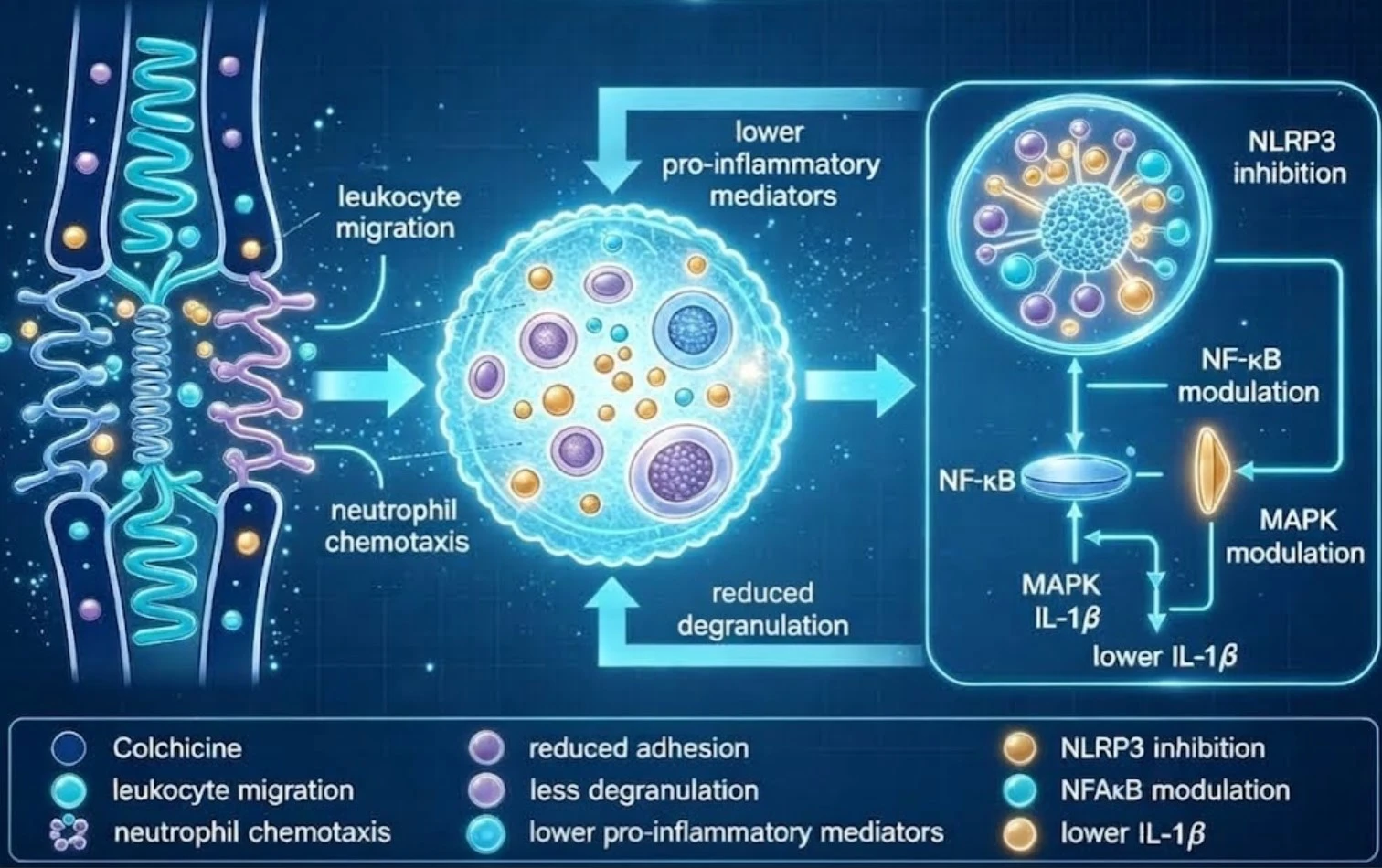
1. Inhibits microtubule-dependent leukocyte migration and neutrophil chemotaxis to inflammatory sites.
2. Reduces neutrophil adhesion and degranulation, suppresses release of pro-inflammatory mediators.
3. Inhibits NLRP3 inflammasome assembly and activation, lowers IL-1β secretion.
4. Modulates inflammasome, NF-κB and MAPK signaling cascades.
Anti-fibrotic Activity (active research area)
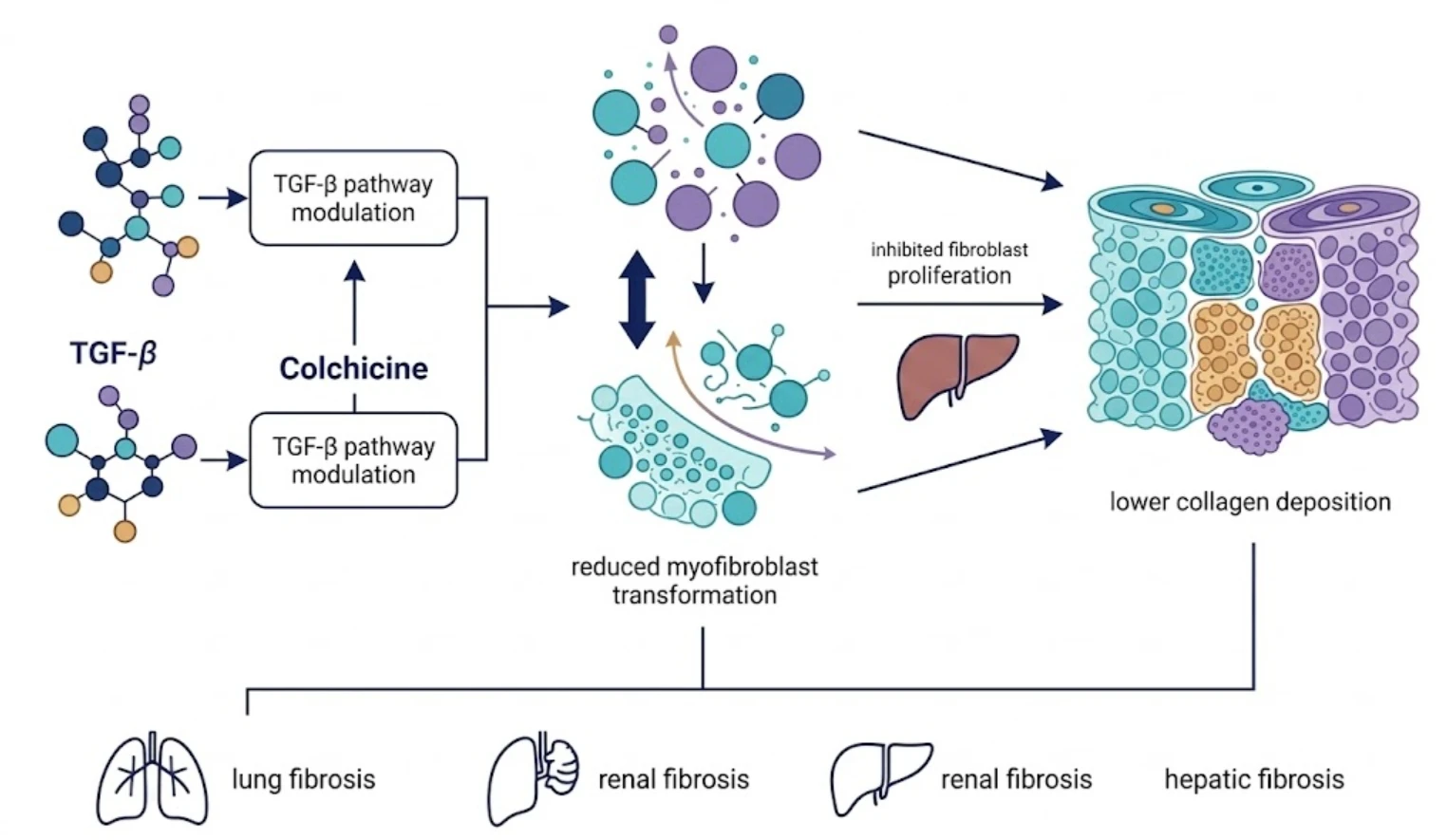
In preclinical models: inhibits fibroblast proliferation, collagen deposition, myofibroblast transformation via TGF-β pathway modulation. Studied in lung, renal, hepatic fibrosis models.
Cardiovascular & Vascular Research
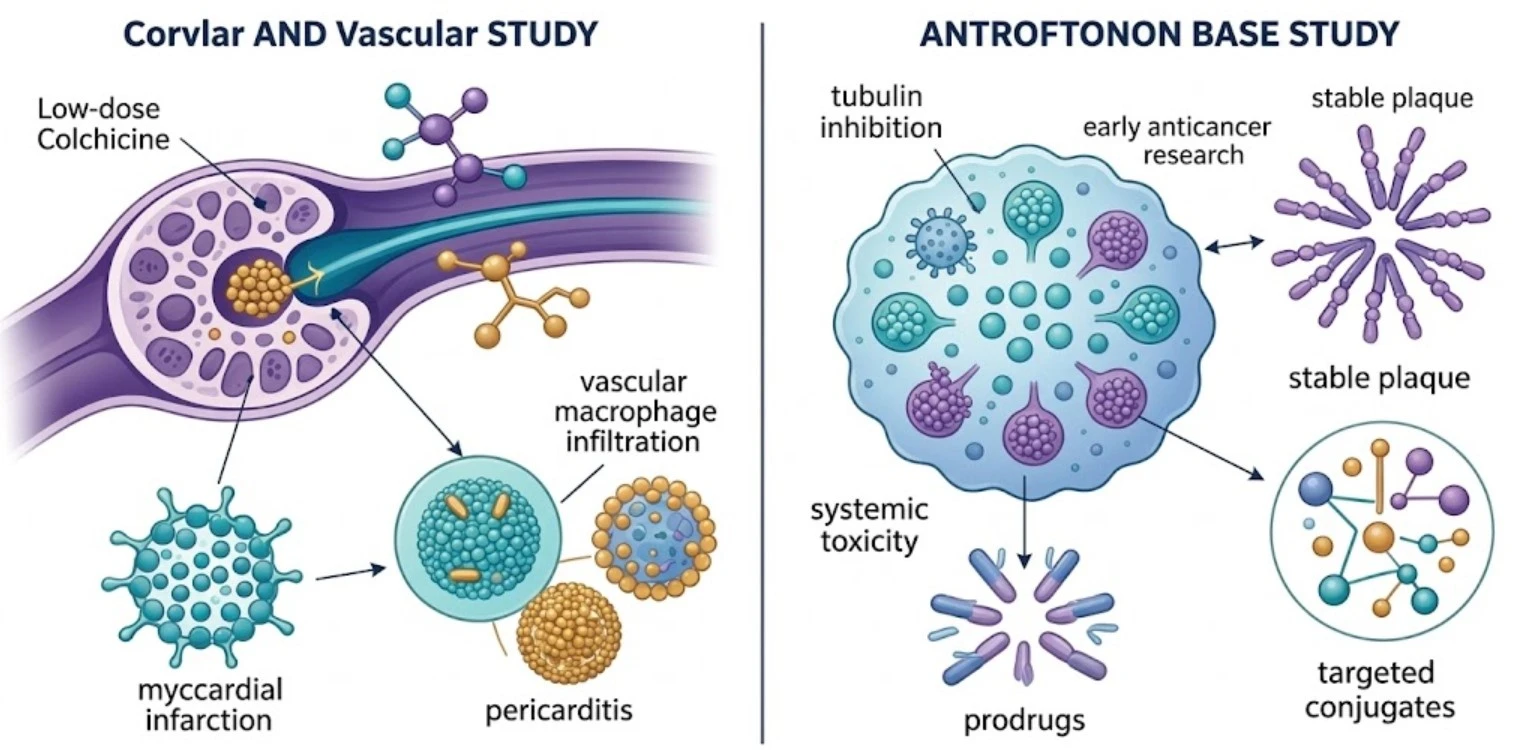
Low-dose colchicine research targets atherosclerotic inflammation: reduces vascular macrophage infiltration, stabilizes atherosclerotic plaques. Clinical trials explore its use for secondary prevention after myocardial infarction and pericarditis.
Anti-tumor Basic Research
Due to tubulin inhibition, colchicine was early investigated as anti-cancer agent. However, **systemic high toxicity limits direct clinical use as chemotherapy**. Many research programs focus on colchicine prodrugs, targeted conjugates and liposomal delivery to reduce systemic toxicity.
Application Fields
Pharmacological Research & Analytical Chemistry
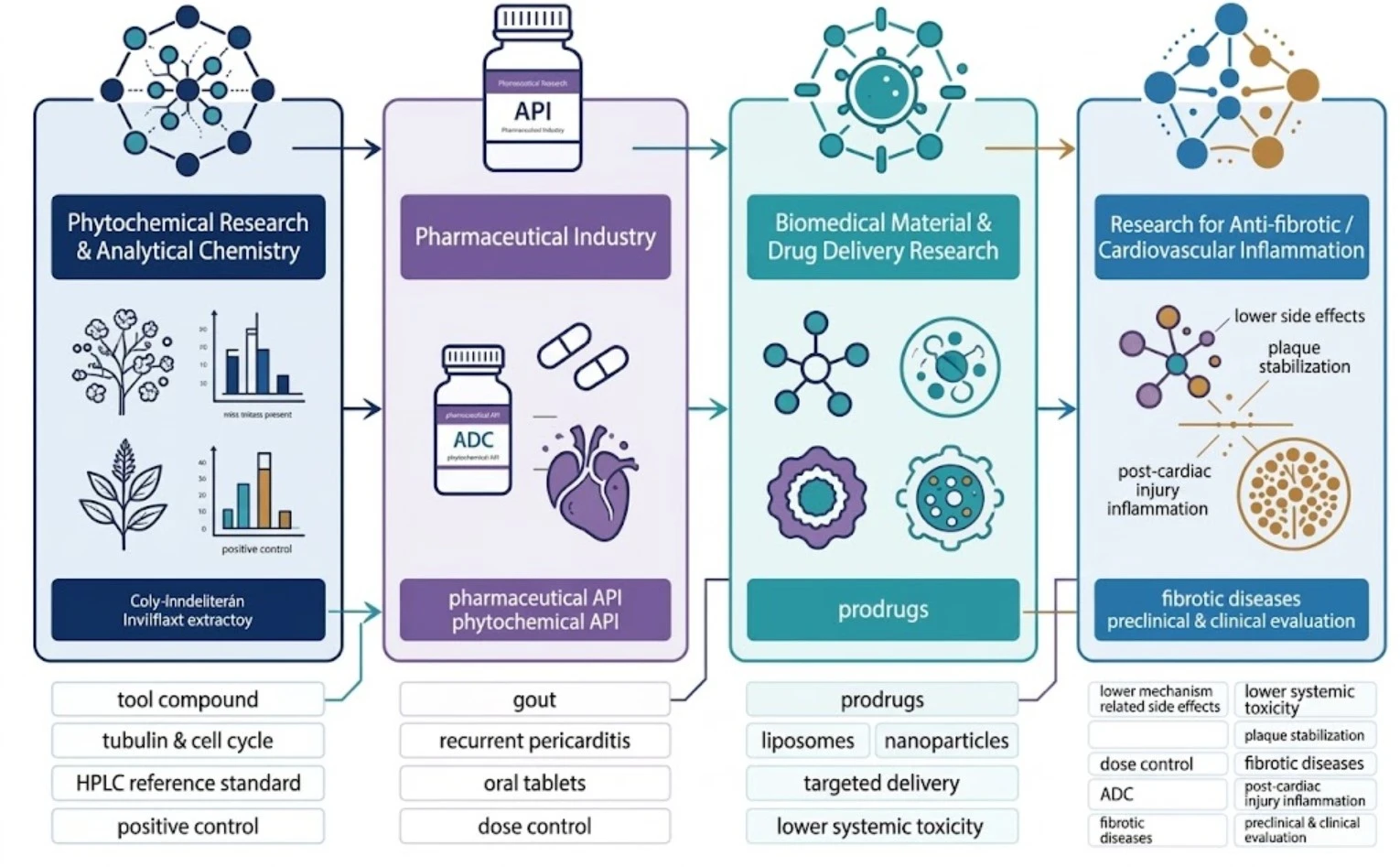
- Classic tool compound for cytoskeleton, tubulin and cell cycle research in cell biology.
- Reference standard for HPLC quantification of colchicine content in medicinal plants and extracts.
- Positive control for inflammasome and neutrophil inflammation studies.
Pharmaceutical Industry (dominant application)
Approved clinical indications:
1. Acute gout attack treatment and gout flare prophylaxis.
2. Recurrent pericarditis.
Form types: oral tablets. Strict dosage control required. Colchicine API is controlled raw material in many countries due to toxicity risk.
Biomedical Material & Drug Delivery Research
Prodrug design, liposome, nanoparticle and antibody-drug conjugate (ADC) research, to achieve targeted delivery and reduce systemic toxic exposure.
Research for anti-fibrosis / cardiovascular inflammation
Preclinical and clinical trials for plaque stabilization, post-cardiac injury inflammation, fibrotic diseases, still under ongoing evaluation.
Existing Research Gaps & Future Research Trends
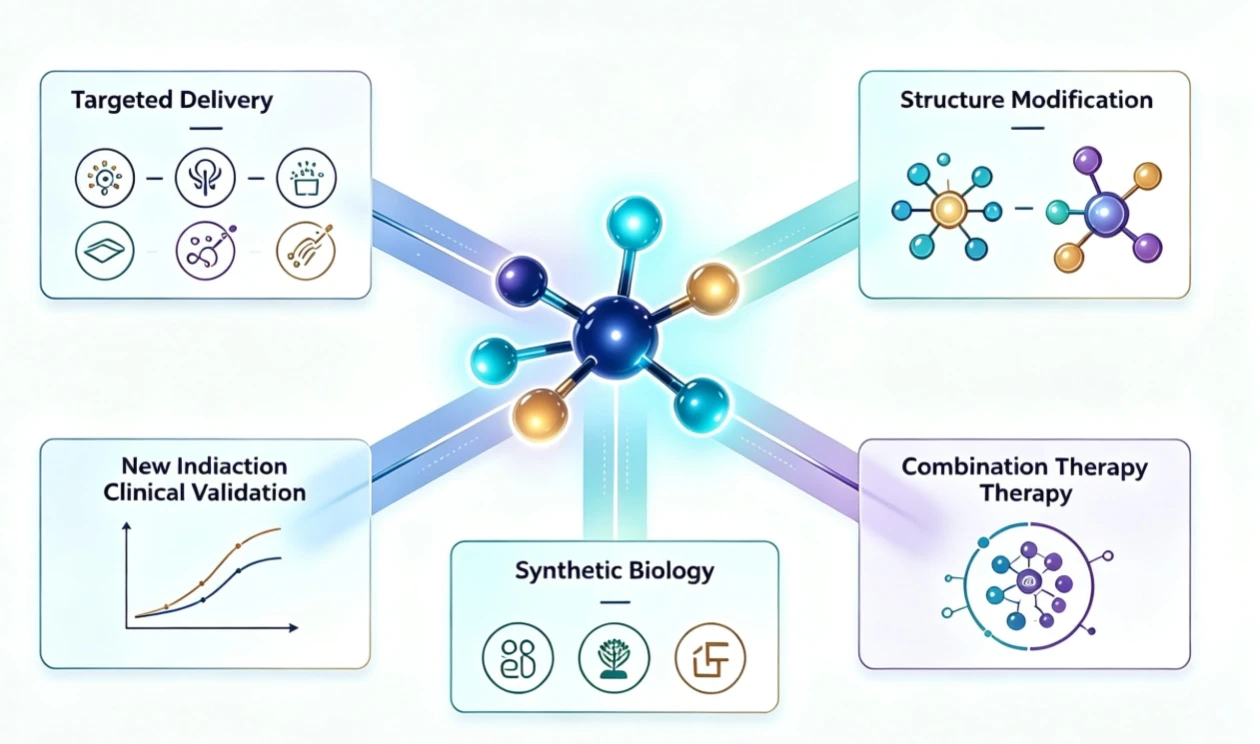
- Targeted delivery systems: liposomes, nanoparticles, prodrugs to lower systemic toxicity while retaining local bioactivity.
- Structure modification: semi-synthetic colchicine analogues to improve tubulin binding selectivity and widen therapeutic index.
- New indication clinical validation: long-term safety evaluation for cardiovascular inflammation and fibrotic disorders.
- Synthetic biology biosynthesis: engineered microbial or plant cell factories for sustainable colchicine production, reducing reliance on agricultural plant sources.
- Combination therapy research: low-dose colchicine combined with other anti-inflammatory agents for synergistic effects, reducing individual dosage.
FAQ
What is colchicine used for?
Colchicine is a prescription medication primarily used to treat and prevent gout flares and to manage familial Mediterranean fever (FMF).
Can colchicine be crushed?
Some standard Colchicine Oral Tablet formulations can be split or crushed, but you should always consult your pharmacist or doctor before altering any medication.
What is a natural form of colchicine?
Natural colchicine is a powerful plant chemical extracted mainly from the autumn crocus (Colchicum autumnale) and the glory lily (Gloriosa superba).
What is the biggest side effect of colchicine?
The biggest and most common side effect of colchicine is severe gastrointestinal distress, particularly diarrhea, along with nausea, vomiting, and stomach pain.
If you are looking for a high-quality Colchicine Powder manufacturer with whom you can establish a long-term, stable partnership, then Shaanxi Medibridge Biotech Co., Ltd. would be your best business partner. Don't hesitate to contact us at hi@medibridgeapi.com.
Hot Tags: colchicine powder, China colchicine powder manufacturers, suppliers, factory, Aloe Vera Extract Powder, Arecoline Hydrobromide Powder, fisetin supplement ingredient, ginkgo biloba extract health ingredient, ginkgo biloba extract plant extract powder, Orange Terpenes Powder