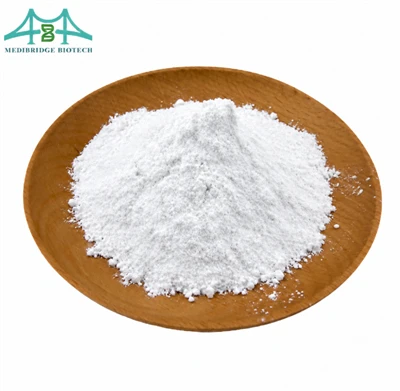
Extract Powder Camptothecin (CPT) is a pyrroloquinoline cytotoxic alkaloid. It is one of the more studied natural anti-pathological cell drugs besides paclitaxel. It is present in the fruits or roots of the Davidia plant Camptotheca acuminata. The root bark of Camptotheca acuminata has the effects of clearing away heat and detoxifying, dispersing knots, and reducing swelling. The fruit has the effect of activating blood circulation and removing blood stasis. It is often used to treat psoriasis, sores, and other symptoms.
CPT has significant anti-major disease properties, low solubility, and a high degree of adverse drug reaction properties in preliminary clinical trials. Medicinal chemists have, in turn, exploited these properties to develop a variety of synthetic CPTs and various derivatives to increase their beneficial effects. It is currently the only drug that acts on topoisomerase I, which has attracted renewed attention to CPT. Various CPT derivatives have been developed and applied, such as hydroxy CPT, topotecan, irinotecan, etc.
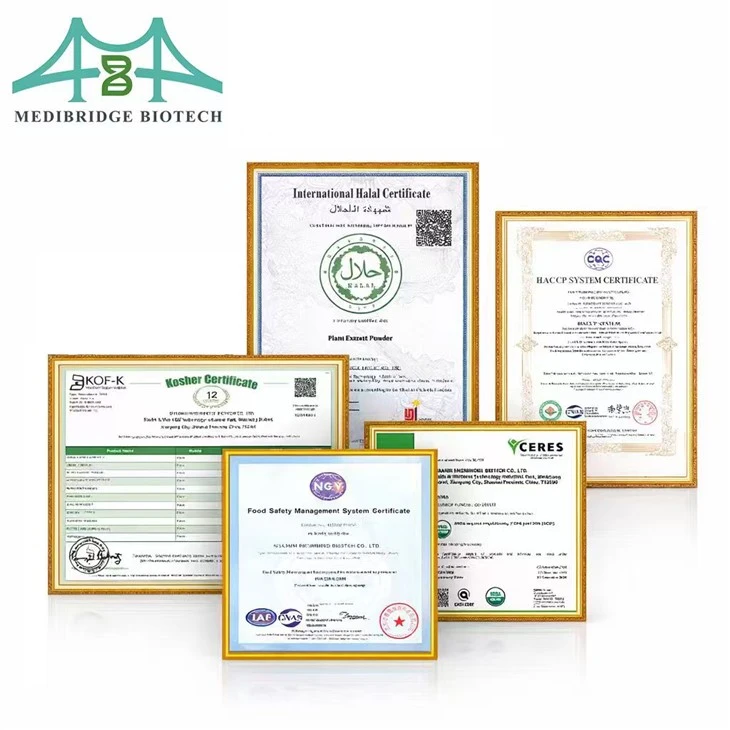
Shaanxi Medibridge Biotech Co., Ltd. supplies plant extracts, nutritional ingredients, and custom specification products for different sourcing and formulation needs. We support stable supply, routine specification matching, and flexible packaging service for ingredient-based product development.
COA
|
|
||
|
Product Name |
CAS Number |
Batch Number |
|
Extract Powder Camptothecin |
7689-03-4 |
MB2604151254 |
|
Manufacturer Date |
Analysis Date |
Expiry Date |
|
2026/4/15 |
2026/4/16 |
2028/4/15 |
|
Sample Qty Base |
Packing |
Test Method |
|
100KGS |
25KG/drum |
HPLC |
|
|
||
|
Item |
Standard |
Results |
|
Appearance |
Light yellow crystalline powder |
Conforms |
|
Melting point |
About 205°C |
206.4°C~206.7°C |
|
Identification |
Meet the requirements |
Conforms |
|
Appearance of solution |
Clear, not more intense than Y7 |
Conforms |
|
PH |
2.4~3.0 |
2.60 |
|
Loss on drying |
≤0.5% |
0.04% |
|
Sulphated ash |
≤0.1% |
0.01% |
|
Total Heavy metals |
≤10 ppm |
<10 ppm |
|
Arsenic |
≤3 ppm |
Conforms |
|
Lead |
≤3 ppm |
Conforms |
|
Related substances |
≤0.25% |
Conforms |
|
Assay |
99.0%~101.0% |
99.8% |
|
Total Plate Count |
≤1000cfu/g |
Conforms |
|
Yeast&Mold |
≤100cfu/g |
Conforms |
|
E.Coil |
Negative |
Negative |
|
Salmonella |
Negative |
Negative |
|
Conclusion |
The batch conforms to the IN-HOUSE standard |
|
|
|
||


Pharmacology & Mechanism of Action
Specific Targeting of Topoisomerase I (Topo I)
Mechanism: Camptothecin is the first known specific topoisomerase I (Topo I) inhibitor. During DNA replication and transcription, Topo I is responsible for cleaving and rejoining single-stranded DNA to relieve supercoiling tension. Camptothecin specifically binds to the "Topo I-DNA complex", forming a stable covalent ternary complex that prevents the re-ligation of DNA strands.
Cytotoxic Mechanism: As replication or transcription machinery collides with this ternary complex, it triggers irreversible DNA double-strand breaks (DSBs), activating apoptotic signaling pathways (such as p53) and inducing programmed cell death in S-phase tumor cells.

Core Pharmacophore and pH-Dependent Balance
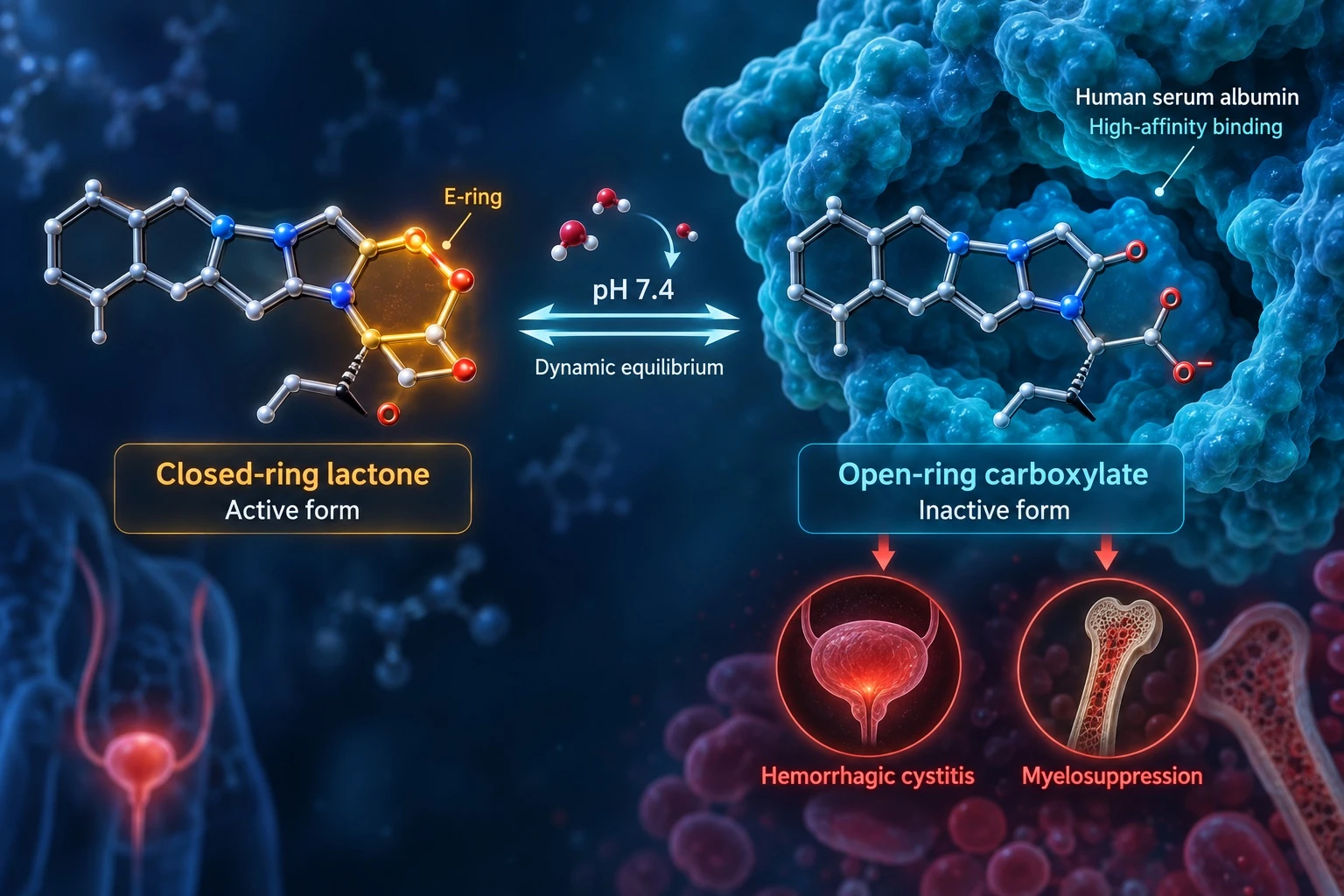
The camptothecin molecule contains a critical E-ring lactone structure.
pH-Dependent Interconversion: Under physiological conditions (pH 7.4), the open-ring carboxylate form and the closed-ring lactone form exist in a dynamic equilibrium. Only the closed-ring lactone form possesses anti-tumor activity. The open-ring carboxylate form lacks anti-tumor efficacy and binds with high affinity to human serum albumin (HSA), leading to severe toxic side effects such as hemorrhagic cystitis and myelosuppression.
Phytochemistry & Extraction Process
Botanical Sources & Extraction
Sources: Primarily extracted from the fruits (Fructus Camptothecae), root bark, or tree bark of Camptotheca acuminata.
Extraction Process: Conventional methods utilize organic solvents (such as chloroform, ethanol, or methanol) for leaching, followed by extraction, decolorization, recrystallization, or column chromatography for purification.


Synthetic Biology & Green Production (Future Directions)
To overcome the limitations of natural plant resources, synthetic biologists are elucidating the monoterpene indole alkaloid (MIA) biosynthetic pathway of camptothecin to construct heterologous biosynthetic platforms (cell factories) in hosts like yeast or tobacco, enabling sustainable and eco-friendly production of camptothecin precursors and raw materials.
Medicinal Chemistry & Structural Modifications
Due to the inherent drawbacks of natural camptothecin-such as poor water solubility (sparingly soluble powder), low plasma stability (unstable lactone ring), and high systemic toxicity-structural modifications based on the camptothecin core (CPT) have become a textbook example of medicinal chemistry.
- Semi-Synthetic Water-Soluble Derivatives:
Topotecan: A water-soluble side chain (-CH_2-N(CH_3)_2) is introduced at the C-9 position, and a -OH group at the C-10 position, significantly improving water solubility and bioavailability; it is used clinically for small cell lung cancer and ovarian cancer.
Irinotecan (CPT-11): Modified at C-10 with a water-soluble dipiperidino side chain, acting as a prodrug that releases the active metabolite SN-38 in vivo via carboxylesterase cleavage; it serves as a first-line treatment for colorectal cancer.
- Structural Modification Strategies:
A/B Ring Modifications: Substitutions with electron-withdrawing or electron-donating groups at C-9, C-10, or C-11 can substantially alter binding affinity to Topo I and enhance lactone ring stability.
E-Ring Protection: Preventing lactone ring opening and inactivation in plasma through prodrug design (e.g., esterification) or protection of the 20-position hydroxyl group.

Formulation & Novel Drug Delivery Systems (DDS)

Extracted natural camptothecin raw powder appears as a pale yellow to light yellow crystalline powder, serving as an ideal core ingredient for developing novel nanocarriers.
- Nanocarrier Encapsulation & Physical Protection
Liposomes & Polymeric Micelles: Encapsulating highly hydrophobic camptothecin within the hydrophobic core of nanocarriers isolates it from the plasma environment, protecting the lactone ring from alkaline hydrolysis/ring opening and extending its circulation half-life in vivo.
- Targeted & Precision Delivery
Antibody-Drug Conjugates (ADCs): Such as Sacituzumab Govitecan (SG) targeting TROP-2, where the toxic payload is the camptothecin derivative SN-38.
Nanoprodrugs & Self-Assembled Materials: Polymer chemistry is utilized to covalently link camptothecin to hydrophilic backbones via stimulus-responsive bonds (e.g., disulfide or acid-sensitive bonds), achieving responsive drug release within the tumor microenvironment.
FAQ
What is camptothecin used for?
Camptothecin is a plant-derived plant compound used as a topoisomerase I inhibitor to target and treat various cancers.
Is camptothecin a natural product?
Yes, camptothecin is a natural product.
Is camptothecin still used today?
While the original compound camptothecin is rarely used directly today due to poor water solubility and severe side effects, its semisynthetic derivatives and analogs are widely and successfully used in modern cancer chemotherapy.
What are the side effects of camptothecin?
Camptothecin and its modern derivatives (such as irinotecan and topotecan) commonly cause side effects like severe diarrhea, bone marrow suppression, nausea, vomiting, and hair loss.
If you are looking for a high-quality Extract Powder Camptothecin manufacturer with whom you can establish a long-term, stable partnership, then Shaanxi Medibridge Biotech Co., Ltd. would be your best business partner. Don't hesitate to contact us at hi@medibridgeapi.com.
Hot Tags: extract powder camptothecin, China extract powder camptothecin manufacturers, suppliers, factory, Alpha Pinene Liquid, corosolic acid crystalline powder, ginkgo biloba extract tablet ingredient, hesperidinase enzyme blend ingredient, Horse Chestnut Escin, Pure Green Tea Extract