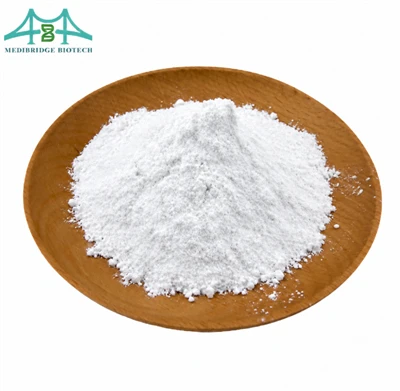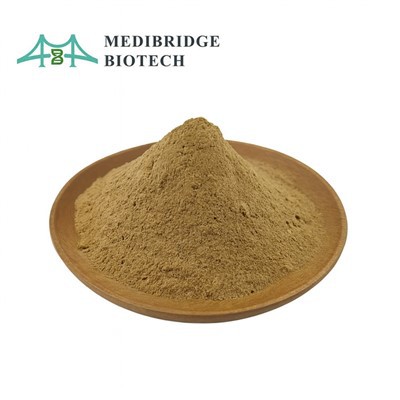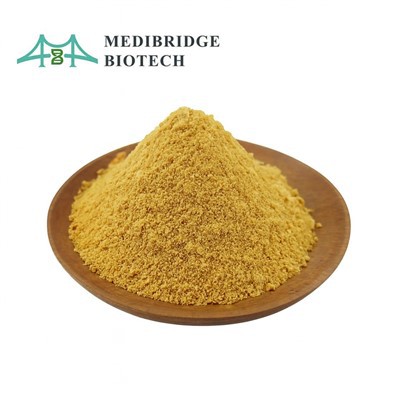


Tea Saponin Powder is a natural extract derived from various species of tea plants, primarily Camellia sinensis. Saponins are a type of chemical compound found in plants, known for their soapy and foaming properties. Tea saponins are specifically extracted from the seeds or husks of tea plants. The powder is commonly used in various industries and applications due to its versatile properties. It is often utilized as a natural surfactant, emulsifier, and foaming agent in cosmetics, personal care products, and cleaning agents. It can help create lather, stabilize emulsions, and improve the texture of formulations.
In agriculture, it is used as a natural pesticide and biocontrol agent against pests and plant diseases. It has insecticidal, fungicidal, and nematicidal properties, making it an eco-friendly alternative to synthetic chemical pesticides.
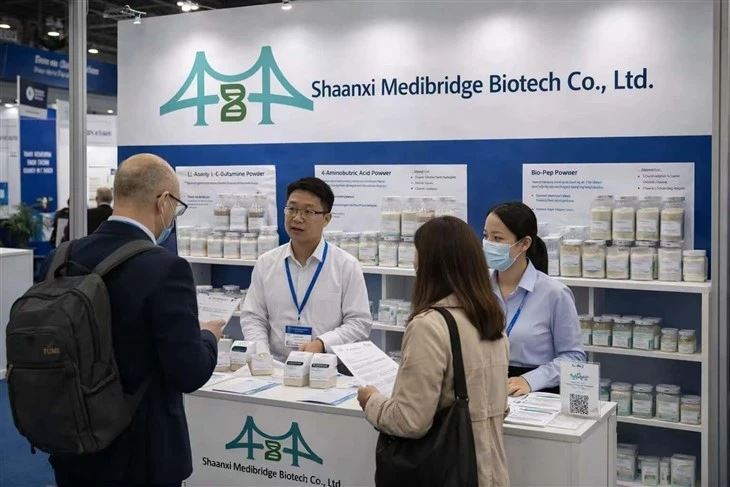
Shaanxi Medibridge Biotech Co., Ltd. supplies plant extracts, nutritional ingredients, and custom specification products for different sourcing and formulation needs. We support stable supply, routine specification matching, and flexible packaging service for ingredient-based product development.
COA
|
|
||
|
Product Name |
CAS Number |
Batch Number |
|
Tea Saponin Powder |
8047-15-2 |
MB2605121257 |
|
Manufacturer Date |
Analysis Date |
Expiry Date |
|
2026/5/12 |
2026/5/13 |
2028/5/12 |
|
Sample Qty Base |
Packing |
Test Method |
|
100KGS |
25KG/drum |
HPLC |
|
|
||
|
Item |
Standard |
Results |
|
Appearance |
Off-white Powder |
Conforms |
|
Odor |
Characteristic |
Conforms |
|
Sieve |
100% pass 80 mesh |
Conforms |
|
Assay |
≥98% |
98.28% |
|
Loss on drying |
≤5.0% |
3.80% |
|
PH |
5.0-7.0 |
6.0 |
|
Heavy Metals |
≤10ppm |
Conforms |
|
As |
≤2ppm |
Conforms |
|
Pb |
≤2ppm |
Conforms |
|
Hg |
≤0.5ppm |
Conforms |
|
Cd |
≤2ppm |
Conforms |
|
Microbiological |
||
|
Total Plate Count |
≤1000cfu/g |
Conforms |
|
Yeast & Mold |
≤100cfu/g |
Conforms |
|
Salmonella |
Negative |
Negative |
|
E.Coli |
Negative |
Negative |
|
Staphylococcus Aureus |
Negative |
Negative |
|
Conclusion |
The batch conforms to the IN-HOUSE standard |
|
|
|
||


Physicochemical Properties
Tea Saponin Powder is typically a light-yellow to yellow-brown powder with a mild botanical odor and a distinctly bitter taste. Its color and sensory profile may vary according to the botanical source, saponin purity, residual polyphenols, processing temperature, and degree of oxidation.
Tea saponins are amphiphilic molecules composed of a hydrophobic triterpenoid aglycone and hydrophilic sugar chains. This structure enables them to adsorb at air–water, oil–water, and solid–liquid interfaces.
Key physicochemical properties include:
- Soluble or dispersible in water, although lower-purity grades may produce turbid solutions;
- Capable of forming micelles or other molecular aggregates above the critical micelle concentration;
- Able to significantly reduce surface and interfacial tension;
- Strong foaming, wetting, emulsifying, dispersing, and detergent properties;
- Sensitive to concentration, temperature, pH, electrolytes, water hardness, and accompanying impurities;
- Potential for moisture absorption, agglomeration, discoloration, or performance changes during storage.

Foaming, Emulsifying & Cleaning Properties

Foaming Performance
Tea saponins rapidly adsorb at the air–water interface and form viscoelastic films around air bubbles. These interfacial films slow bubble coalescence and liquid drainage, resulting in strong foamability and relatively persistent foam.
High foamability is advantageous in shampoos, cleansing products, foam materials, and some agricultural formulations. However, excessive foam may be undesirable in beverages, fermentation, industrial circulation systems, and wastewater treatment.
Emulsifying Performance
At an oil–water interface, the hydrophobic triterpenoid portion interacts with the oil phase, while the hydrophilic sugar chains remain oriented toward the aqueous phase. This arrangement creates a protective interfacial layer around oil droplets.
Emulsification efficiency cannot be predicted solely from total saponin content. The molecular profile, interfacial elasticity, oil type, droplet size, pH, and ionic strength must also be considered.


Cleaning Performance
Tea Saponin can remove oily and particulate soils through wetting, emulsification, dispersion, and micellar solubilization.
Performance should be verified in the final formulation because results obtained with one purified Tea Saponin extract may not apply to all commercial grades.
Antioxidant & Anti-inflammatory Research
Tea Saponin mixtures and selected individual theasaponins have demonstrated antioxidant and anti-inflammatory activities in cellular and animal studies.
Reported mechanisms include:
- Reduction of reactive oxygen species;
- Inhibition of lipid peroxidation;
- Regulation of SOD, CAT, GSH, and related endogenous antioxidant systems;
- Activation of Nrf2-associated cellular defense pathways;
- Modulation of NF-κB and MAPK inflammatory signaling;
- Reduction of selected pro-inflammatory mediators;
- Protection against oxidative and inflammatory tissue injury in experimental models.

Antimicrobial, Antifungal & Agricultural Activities

Tea Saponin has been investigated against selected bacteria, fungi, insects, snails, and other agricultural pests.
Proposed mechanisms include:
- Interaction with sterols in biological membranes;
- Increased membrane permeability;
- Leakage of cellular contents;
- Disruption of energy metabolism;
- Damage to insect digestive or epithelial structures;
- Improved wetting, spreading, and penetration of pesticide formulations.
Aquaculture Applications
Tea seed meal and Tea Saponin preparations have traditionally been used in some aquaculture systems to control:
- Unwanted fish;
- Predatory or competing aquatic organisms;
- Snails;
- Jellyfish larvae or polyps;
- Selected pond pests.
This application is based primarily on differential toxicity rather than nutritional activity. Tea saponins can interact with gill membranes and other biological membranes, making many fish species particularly sensitive.

Hemolytic Activity & Membrane Interaction

Hemolytic activity is an important safety consideration for Tea Saponin.
Certain saponins can interact with cholesterol and other sterols in erythrocyte membranes. This interaction may disrupt membrane organization, increase permeability, and cause the release of hemoglobin.
FAQ
What are saponins' side effects?
Consuming normal amounts of saponins in food is generally safe, but high doses can cause digestive discomfort, and excessive amounts can lead to red blood cell breakdown and organ strain.
What is saponin used for?
Saponins are natural plant compounds used as natural soaps, foam stabilizers in beverages, and immune-boosting vaccine helpers.
Which chemical is used in tea powder?
Tea powder naturally contains a complex mix of beneficial plant chemicals, though occasional adulterants or processing residues may also be present.
Which foods are high in saponins?
Foods highest in saponins include legumes like chickpeas and soybeans, as well as certain herbs, pseudograins, and vegetables.
If you are looking for a high-quality Tea Saponin Powder manufacturer with whom you can establish a long-term, stable partnership, then Shaanxi Medibridge Biotech Co., Ltd. would be your best business partner. Don't hesitate to contact us at hi@medibridgeapi.com.
Hot Tags: tea saponin powder, China tea saponin powder manufacturers, suppliers, factory, Best Chamomile Extract, corosolic acid standardized powder, epicatechin medical grade powder, guayusa antioxidant extract powder, Hericium Erinaceus Extract, hesperidinase lyophilized enzyme powder