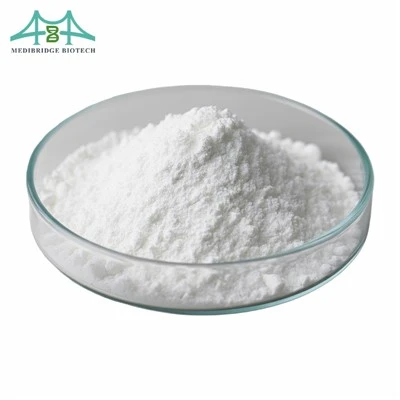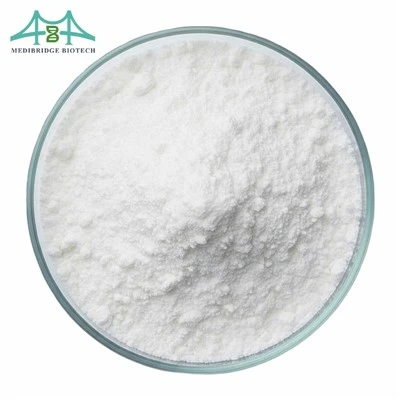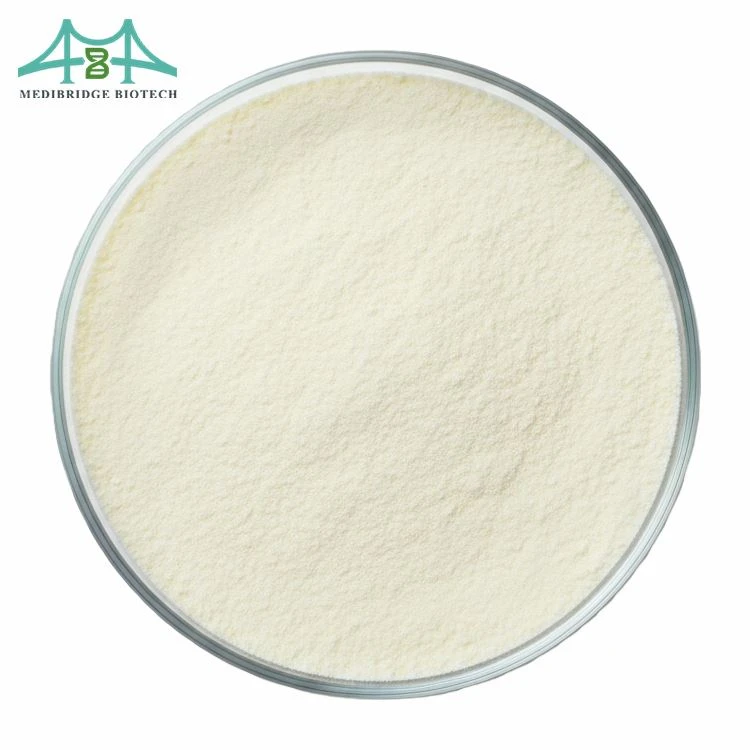


8-O-Methylurolithin A Powder refers to a powdered form of the compound 8-O-Methylurolithin A. It is also called Urolithin A 8-Methul Ether. It is a chemical substance that is the methylation product of urolithin A (uric acid). Urolithin A is an essential intermediate product of uric acid metabolism in the human body. Specifically, 8-O-methyl urolithin A is a compound produced by a methylation reaction on uric acid. It can be made by enzyme-catalyzed reactions in the human body or through the metabolic action of intestinal microorganisms. Urolithin A methyl ether (8-O-methyl urolithin A) is a metabolite derived from Ellagic acid. Olive acid is a polyphenolic compound found in many fruits, nuts, and vegetables, such as strawberries, raspberries, pomegranates, acorns, etc. Urolithin A methyl ether is a compound produced by intestinal microorganisms by metabolizing oleic acid during digestion.
The powder form of 8-O-Methylurolithin A may be used for various purposes, including dietary supplementation or as an ingredient in functional foods or nutraceutical products. It is thought to have anti-inflammatory properties that can help reduce inflammatory responses and related diseases. The compound also has antioxidant benefits, helping to fight free radical damage and oxidative stress. It also helps regulate gut microbial composition, promoting gut health and balance. However, research has indicated that 8-O-methyl urolithin A may offer protection against a number of chronic illnesses, including cancer and cardiovascular disease, which requires further verification.
Shaanxi Medibridge Biotech Co., Ltd. focuses on the supply of pharmaceutical raw materials and research-use compounds. We support customers with stable quality, clear specification communication, flexible packaging options, and document-related support for different project stages.
COA
|
|
||
|
Product Name |
CAS Number |
Batch Number |
|
8-O-Methylurolithin A Powder |
35233-17-1 |
MB2608083279 |
|
Manufacturer Date |
Analysis Date |
Expiry Date |
|
2026/8/08 |
2026/8/09 |
2028/8/08 |
|
Sample Qty Base |
Packing |
Test Method |
|
650GS |
10GS/bottle |
HPLC |
|
|
||
|
Item |
Standard |
Results |
|
Description |
Light yellow powder |
Complies |
|
Assay |
≥99% |
99.45% |
|
Melting point |
242 ℃ |
Complies |
|
Density |
1.375 |
Complies |
|
Moisture |
≤0.03% |
0.01% |
|
Ash |
≤0.1% |
0.01% |
|
Solubility |
Soluble in N, N-dimethylformamide, dimethylsulfoxide, slightly soluble in methanol, |
Complies |
|
Total plate count |
≤10000cfu/g |
Complies |
|
Yeast & Mold |
≤1000cfu/g |
Complies |
|
E.coil |
Negative |
Negative |
|
Salmonella |
Negative |
Negative |
|
GMO free |
Complies |
Complies |
|
Non-Irradiation |
Complies |
Complies |
|
Conclusion |
The batch conforms to the IN-HOUSE standard |
|
|
|
||


Phenolic O-Methylation and Intracellular ROS
Bialonska and colleagues compared several urolithins in a cell-based assay measuring phorbol 12-myristate 13-acetate (PMA)-induced intracellular reactive oxygen species (ROS). Urolithin A showed an IC50 of 13.6 μM. Under the same assay conditions, 8-O-methylurolithin A showed no detectable antioxidant activity. The paired comparison links the substitution of the 8-hydroxyl group with a methoxy group to a change in the cellular ROS readout.
|
Compound |
Substituents at C-3 and C-8 |
Cellular ROS assay result |
|
Urolithin A |
–OH and –OH |
IC50 = 13.6 μM |
|
8-O-Methylurolithin A |
–OH and –OCH₃ |
No detectable activity under the reported conditions |
CYP1-Dependent EROD Activity

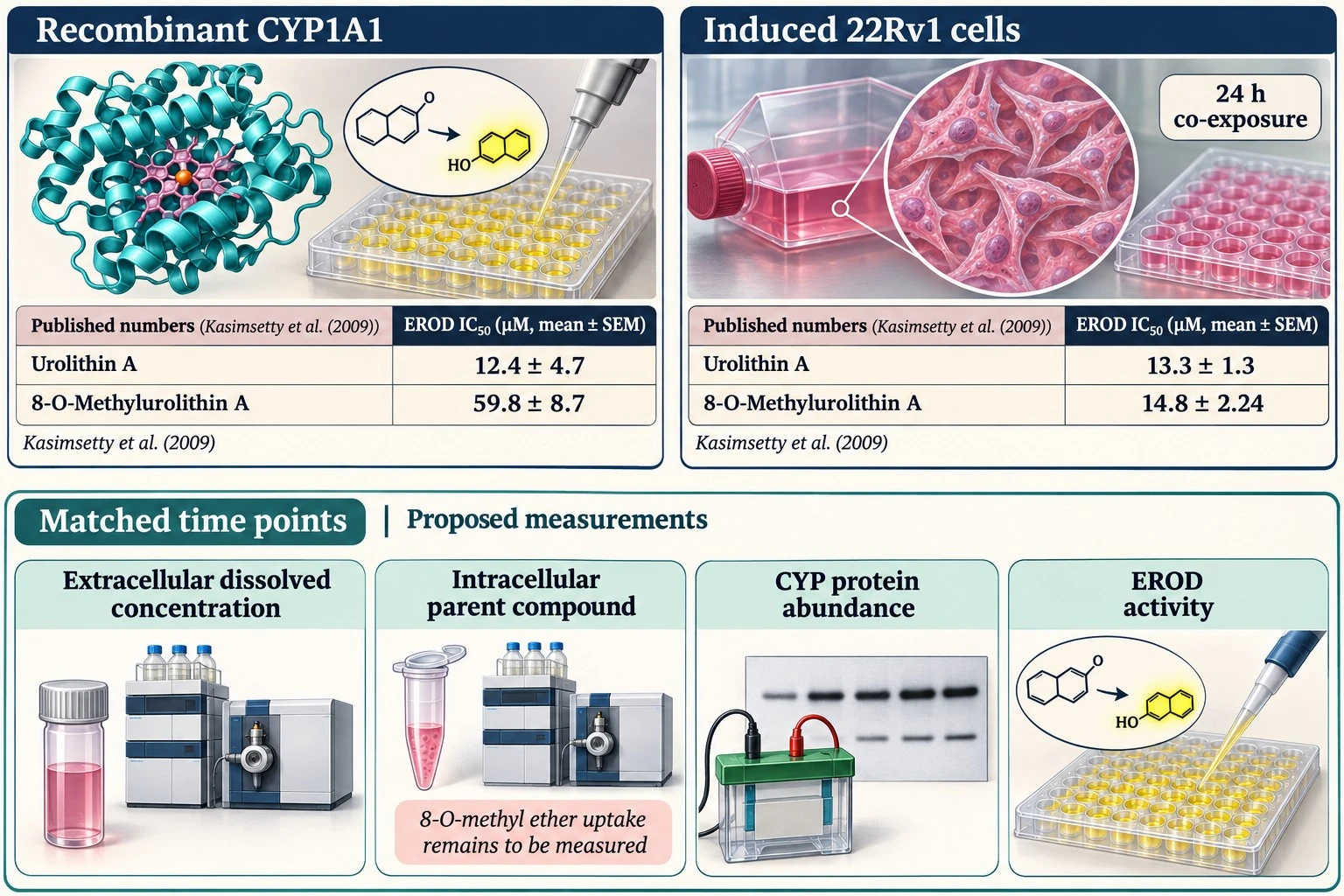
Kasimsetty and colleagues included 8-O-methylurolithin A in a comparative study of urolithins using 7-ethoxyresorufin O-deethylase (EROD) activity as a functional readout. The assay measures the conversion of 7-ethoxyresorufin to resorufin. The study reported weaker inhibition after 8-O-methylation of urolithin A, with the magnitude of the change varying by CYP1 isoform.
When comparing the parent compound and its methyl ether, match the enzyme system, substrate concentration, incubation conditions, and detection settings. Enzyme-free and substrate-free controls can help identify background fluorescence. A resorufin spike control can test whether either compound alters the signal from the assay product itself.
Recombinant CYP1A1 and CYP1B1
In recombinant enzyme assays, the effect of 8-O-methylation was larger for CYP1A1 than for CYP1B1. Relative to urolithin A, the methyl ether's IC50 point estimate was approximately 4.8-fold higher for CYP1A1 and 1.3-fold higher for CYP1B1. The two isoforms therefore showed different shifts in apparent inhibitory potency under the reported assay conditions.
|
Recombinant enzyme |
Urolithin A IC50 |
8-O-Methylurolithin A IC50 |
|
CYP1B1 |
1.15 ± 0.65 μM |
1.49 ± 0.39 μM |
|
CYP1A1 |
12.4 ± 4.7 μM |
59.8 ± 8.7 μM |
Recombinant Enzyme Activity and Whole-Cell EROD Responses
The same study measured EROD activity in induced 22Rv1 cells. After 24 hours of co-exposure, the reported IC50 values were 13.3 ± 1.3 μM for urolithin A and 14.8 ± 2.24 μM for 8-O-methylurolithin A. These point estimates were close in the whole-cell assay, while the recombinant CYP1A1 assay showed a larger difference. Whole-cell EROD activity integrates cellular exposure, enzyme abundance, and cell state, so isoform contributions require additional measurements.
A follow-up study could measure extracellular dissolved concentration, intracellular parent compound, CYP protein abundance, and EROD activity at matched time points. The original uptake time course covered urolithins A and B. Intracellular exposure to the 8-O-methyl ether therefore remains a variable to measure directly when explaining the whole-cell results.
Evidence for Identifying the Compound in Human Samples
The original comparative study obtained 8-O-methylurolithin A by chemical synthesis and used the characterized compound in vitro. Human dietary metabolism studies have reported urolithin A 3-O-glucuronide and conjugates of methylated ellagic acid. To establish whether 8-O-methylurolithin A occurs in human samples and at what concentration, the analytical method must directly identify and quantify the specific 8-O isomer.
|
Analytical observation |
Supported interpretation |
|
A structurally characterized synthetic standard produces a response in vitro. |
The identified compound has the reported activity under those assay conditions. |
|
A human sample shows an accurate-mass signal consistent with monomethylated urolithin A. |
The signal is a candidate. The 3-O and 8-O methyl ethers require further differentiation. |
|
The sample peak matches the 8-O reference standard in retention time and MS/MS, and the method resolves the positional isomers. |
The evidence supports assignment to 8-O-methylurolithin A. A validated matrix-specific assay can then establish its concentration. |
FAQ
Who should avoid urolithin A?
Pregnant or breastfeeding women, children and teens, and individuals with pre-existing medical conditions or those taking prescription medications should avoid or consult a doctor before taking urolithin A.
What are the benefits of taking Urolithin A+?
Urolithin A is a natural postbiotic compound produced by gut bacteria when they metabolize ellagitannins found in foods like pomegranates, walnuts, and berries.
Does urolithin A actually work?
Urolithin A does work to improve cellular and muscle metrics in clinical trials, though its real-world effects are modest and primarily benefit older or middle-aged adults rather than acting as a dramatic energy or fitness booster.
What are the side effects of taking urolithin A?
Clinical studies show that urolithin A is generally well-tolerated, with most reported side effects being mild and infrequent.
If you are looking for a high-quality 8-O-Methylurolithin A Powder manufacturer with whom you can establish a long-term, stable partnership, then Shaanxi Medibridge Biotech Co., Ltd. would be your best business partner. Don't hesitate to contact us at hi@medibridgeapi.com.
Hot Tags: 8-o-methylurolithin a powder, China 8-o-methylurolithin a powder manufacturers, suppliers, factory, dicyclanil laboratory grade powder, gabapentin medicinal chemical powder, heparin sodium injectable anticoagulant ingredient, Phenibut Bulk Powder, phenibut controlled compound powder, prilocaine micronized powder