


Four Hydroxyl Groups Define Fisetin's Structure
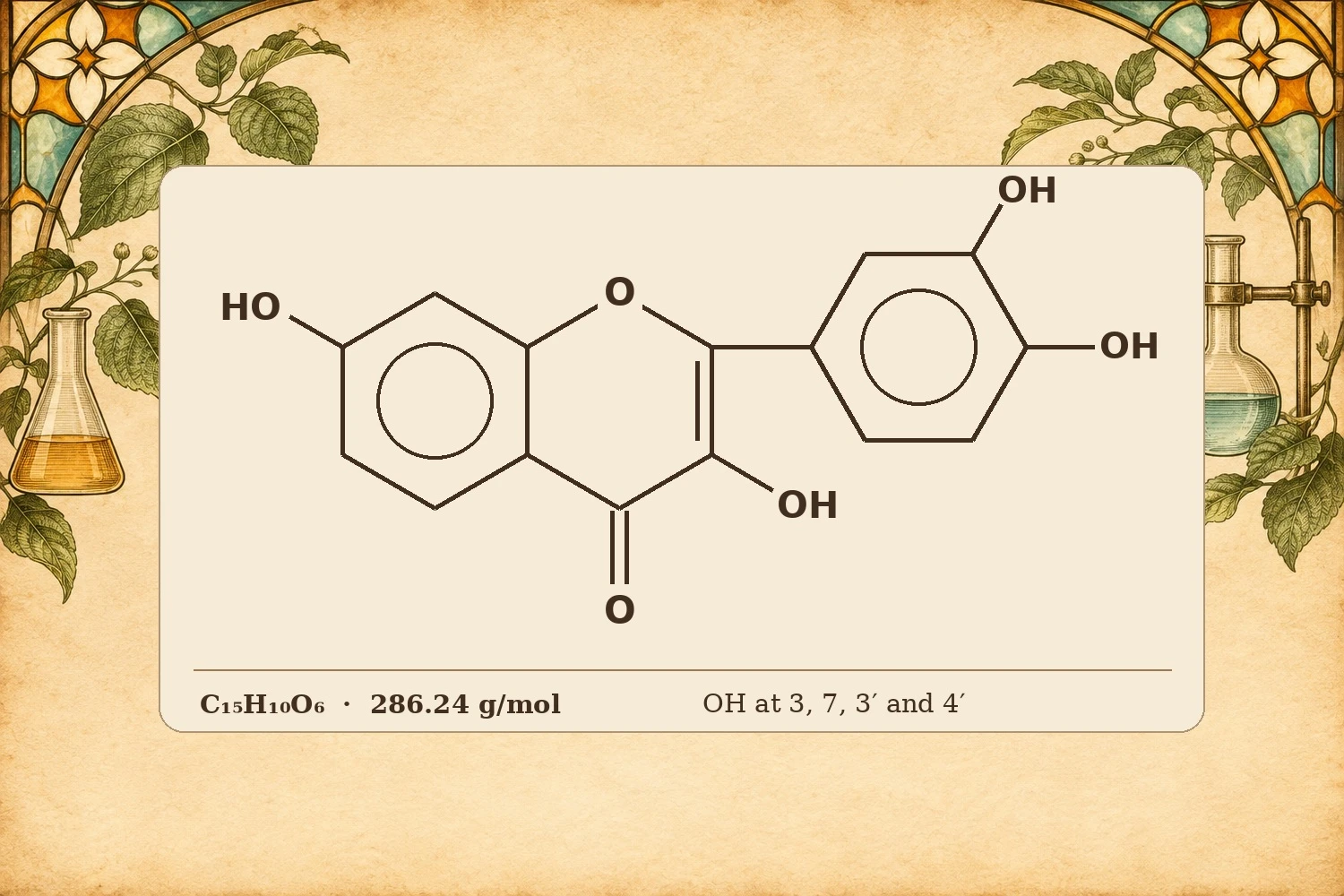
Fisetin has the molecular formula C₁₅H₁₀O₆ and a molar mass of 286.24 g/mol. Its four hydroxyl groups occupy positions 3, 7, 3′, and 4′ on the flavonol scaffold. The adjacent hydroxyl groups at 3′ and 4′ form a catechol unit, a structural feature relevant to oxidation studies. Quercetin shares much of this scaffold and carries an additional hydroxyl group at position 5. Comparing these two flavonols gives researchers a way to examine how a small structural difference relates to changes in chemical behavior under matched conditions.
What a Powder Assay Actually Measures
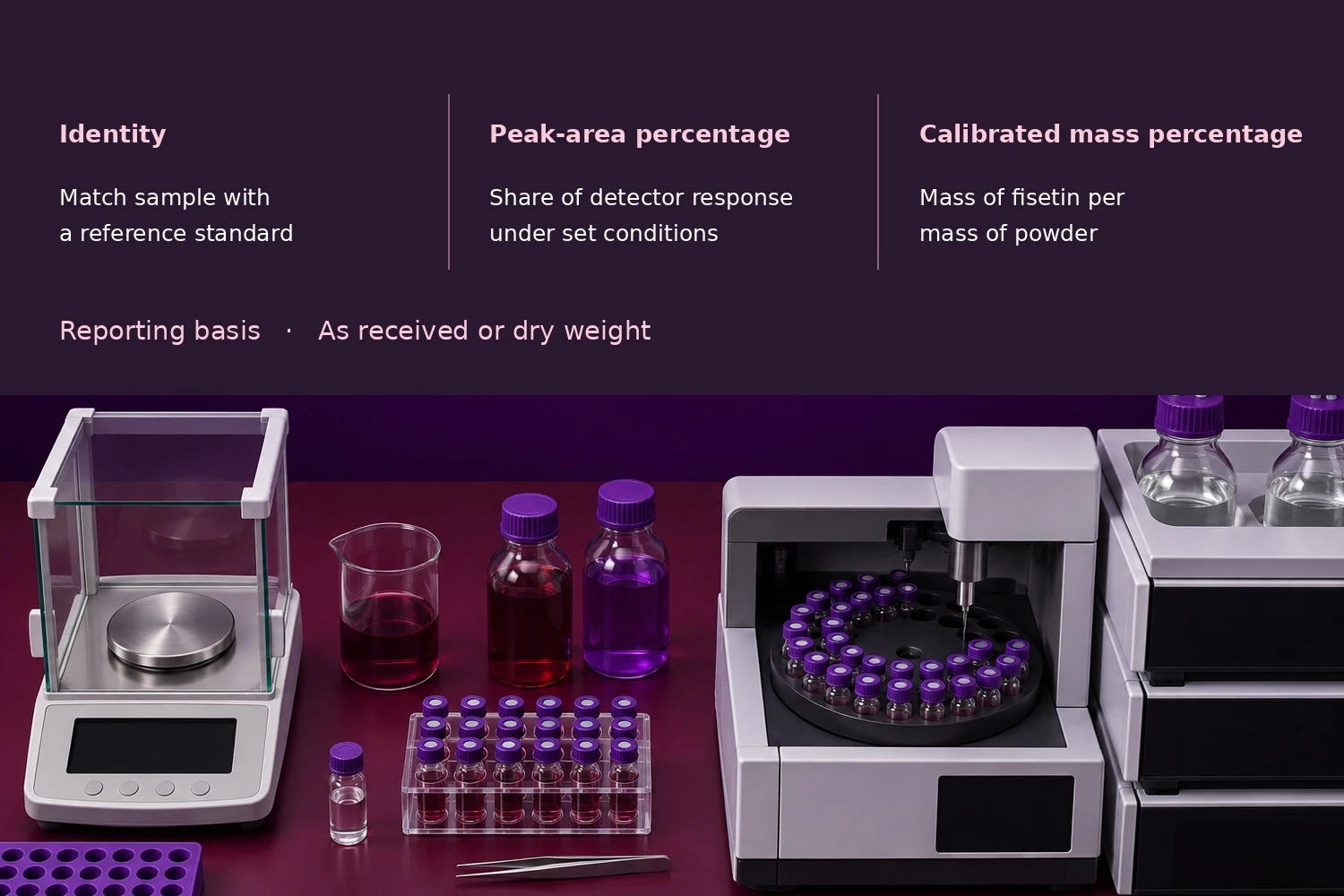
A bulk powder specification can report molecular identity, chromatographic purity, and loss on drying as separate measurements. For quantitative HPLC, researchers compare the fisetin peak response with a calibration prepared from a reference standard. A peak-area percentage describes fisetin's share of the detector response under the stated method. A calibrated mass percentage describes how much fisetin is present per gram of powder. The distinction matters because different compounds can produce different detector responses. When comparing lots, the assay method and the reporting basis, such as as-received or dry weight, give the percentage its meaning.
Why Solubility Depends on the Test Medium
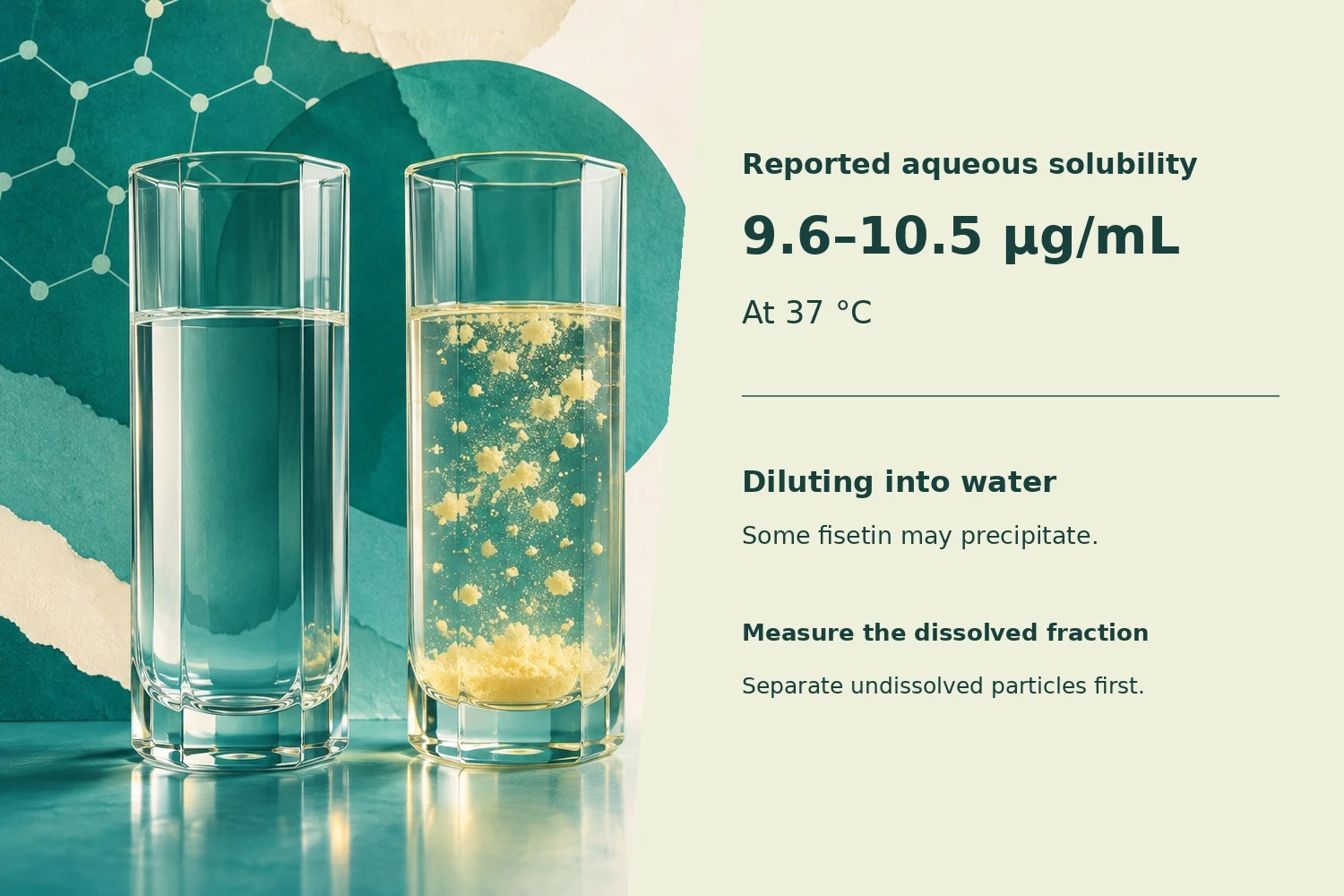
Published work cites an aqueous fisetin solubility of roughly 9.6–10.5 µg/mL at 37 °C. Higher concentrations have been reported in solvents such as ethanol and in ethanol–water mixtures. This difference matters when a concentrated stock solution is diluted into an aqueous test medium. Some fisetin may precipitate, leaving less in solution than the nominal concentration calculated from the dilution. For a meaningful solubility comparison, researchers record the final solvent composition, pH, and temperature, then separate undissolved particles before measuring the dissolved fraction. They can also check whether the concentration changes during equilibration.
How Researchers Characterize the Solid Powder
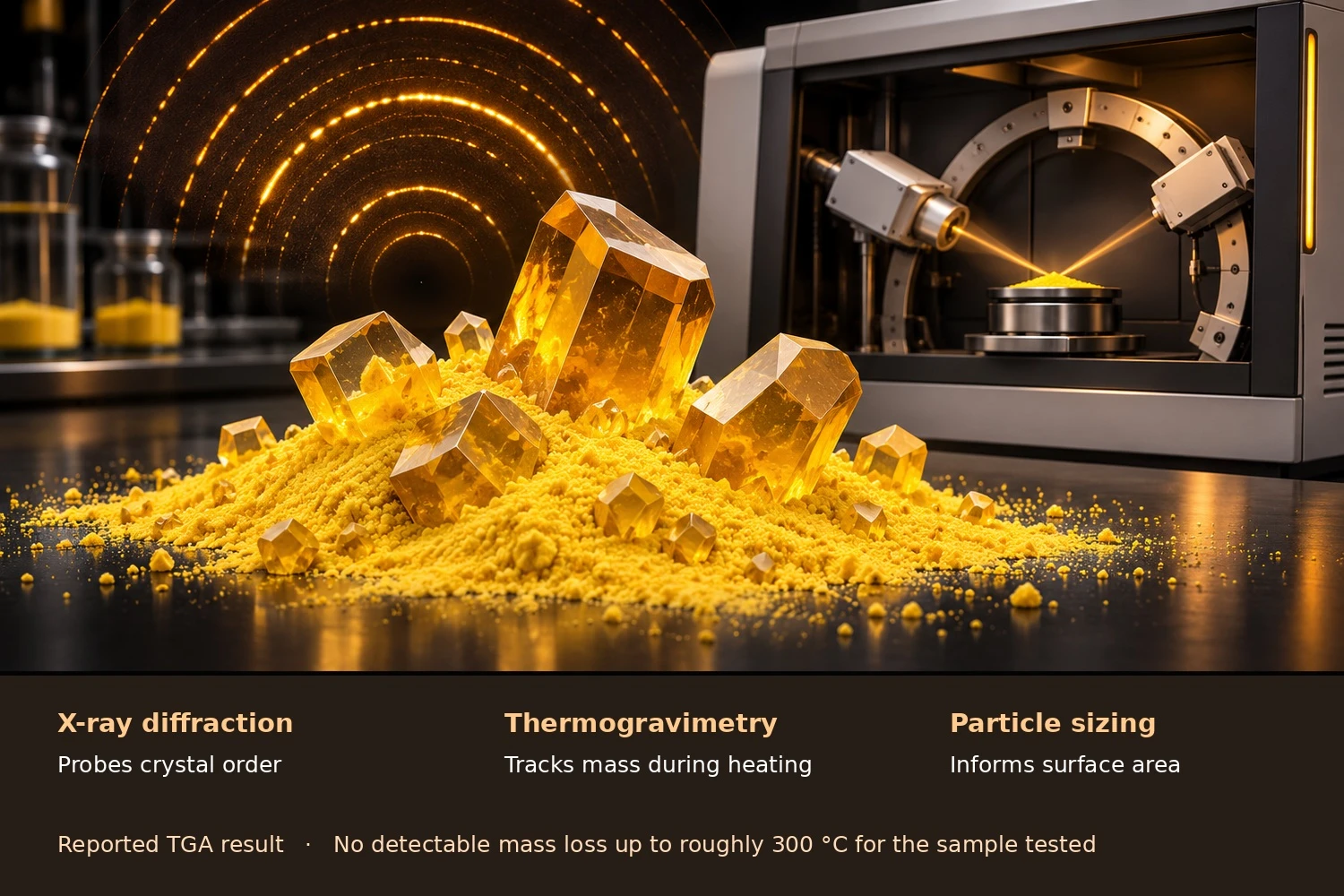
A chemical assay establishes how much fisetin a powder contains, while solid-state tests describe other features of the material. Powder X-ray diffraction probes crystal order, and thermogravimetric analysis tracks changes in mass during heating. In one study comparing fisetin with a gamma-cyclodextrin inclusion compound, the fisetin sample showed no detectable mass loss from room temperature to roughly 300 °C under the reported test conditions. Particle size adds another dimension because it influences the surface area available for dissolution. Together, these measurements help explain why powders with similar assay values can behave differently in a dispersion test.

How pH and Oxygen Affect Fisetin in Solution
In a spectroscopic study at 37 °C, the reported fisetin degradation rate constant rose from 0.00830 h⁻¹ at pH 6.0 to 0.202 h⁻¹ at pH 7.5, approximately a 24-fold increase under the tested conditions. A separate electrochemical study identified a benzofuranone derivative among the oxidation products and found that it could undergo further change in the presence of oxygen. These findings show why solution studies track pH, air exposure, and sample holding time. Chromatography can follow the parent compound alongside newly formed peaks, which helps clarify what happened when the fisetin concentration fell.
What Cyclodextrin Studies Reveal About Solubilization
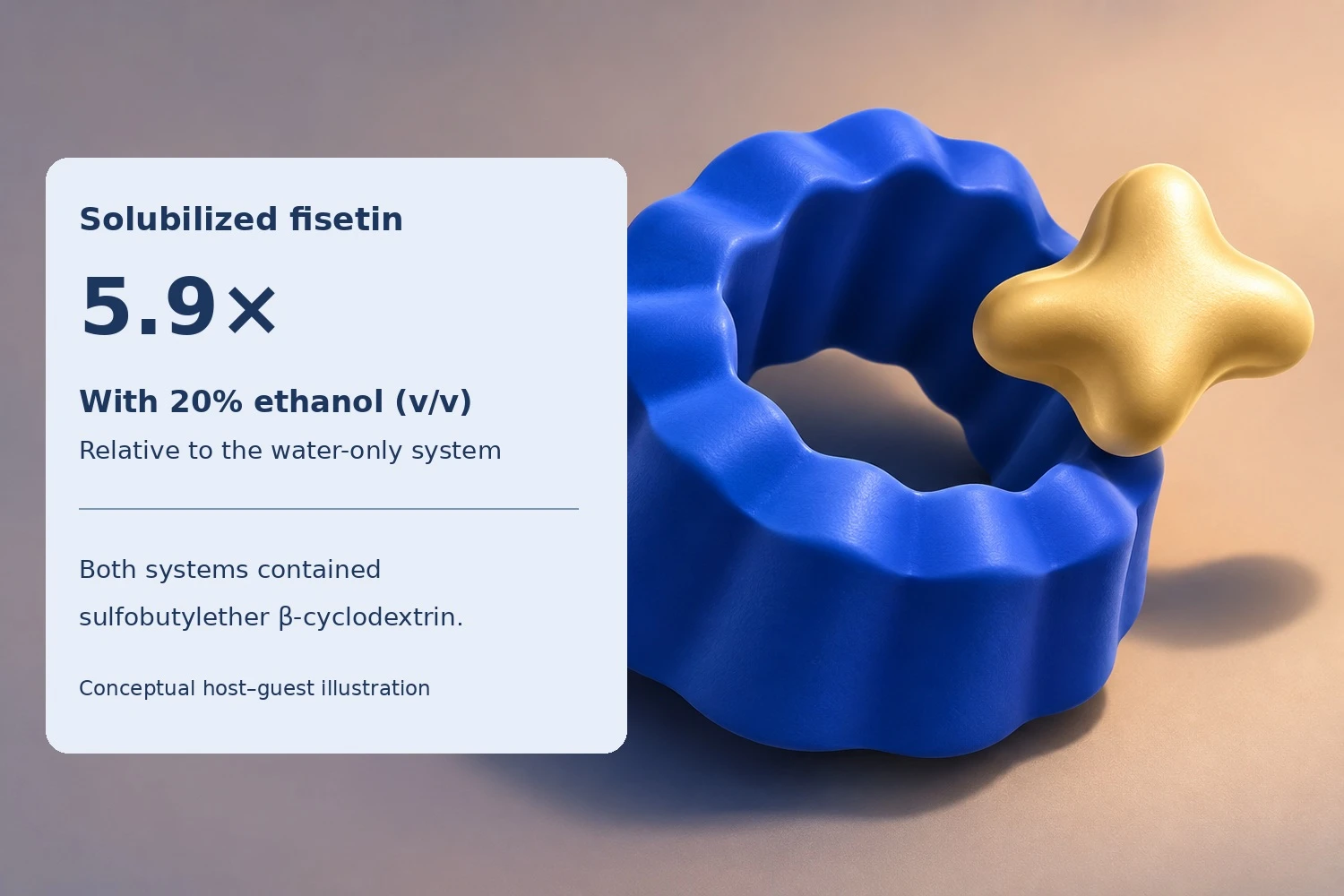
Cyclodextrins are ring-shaped carbohydrates with a cavity that can accommodate parts of other molecules. Researchers use them to study how molecular association changes the amount of fisetin that can be held in solution. In one study with sulfobutylether beta-cyclodextrin, adding 20% ethanol by volume increased the amount of solubilized fisetin 5.9-fold compared with the corresponding water-only system. That result belongs to the specific cyclodextrin and solvent conditions tested. A three-way comparison of fisetin in water, in the solvent mixture alone, and in the cyclodextrin system can help distinguish the contributions of solvent and complexation.
Shaanxi Medibridge Biotech Co., Ltd. is dedicated to supplying a wide range of research-grade products-including peptides, chemical compounds, and extracts - to laboratories, academic institutions, and biotechnology organizations worldwide. If you are seeking a partner for high-purity raw materials to establish a long-term collaboration, please email hi@medibridgeapi.com.


