


How Guarana Seeds Become an Extract Powder
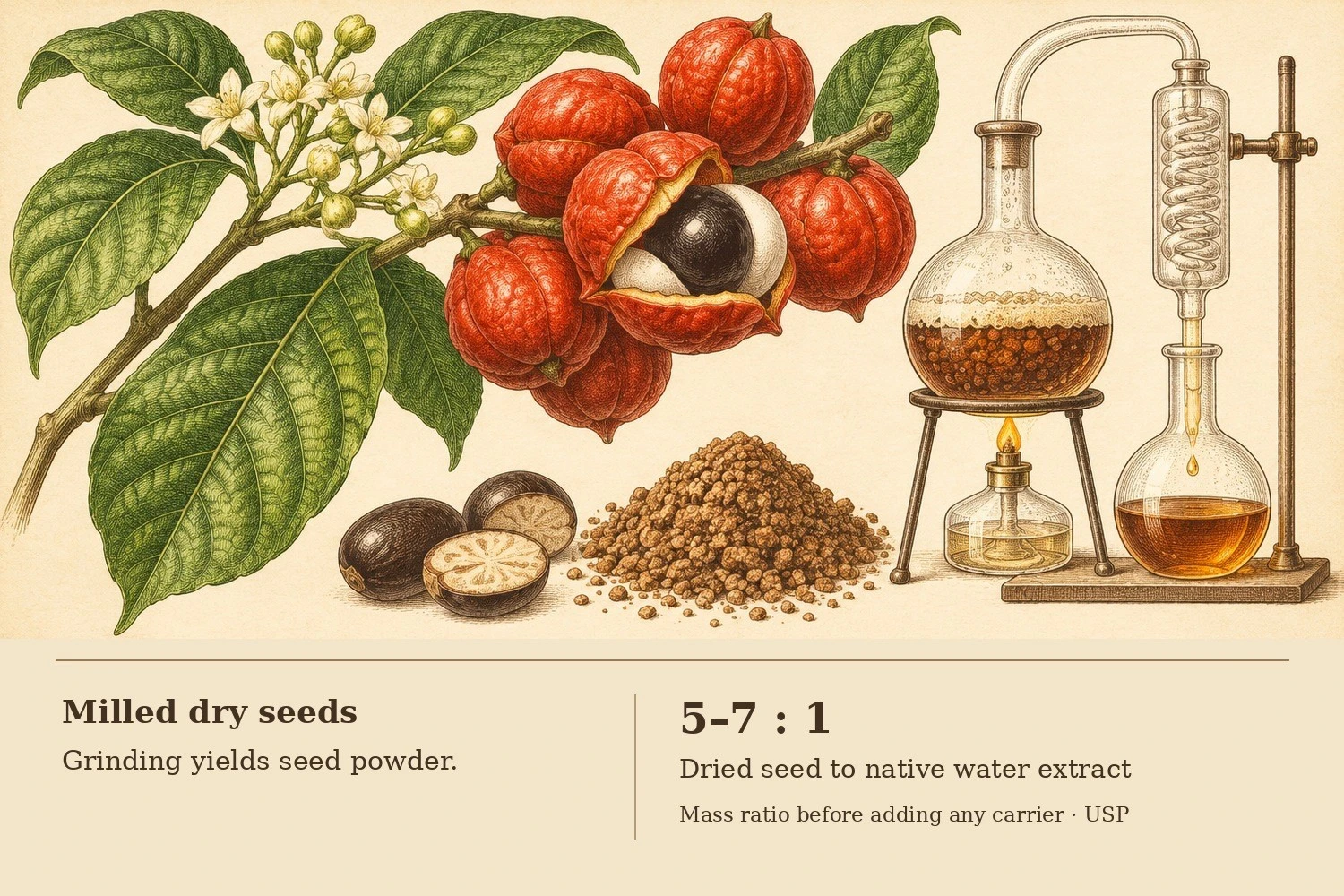
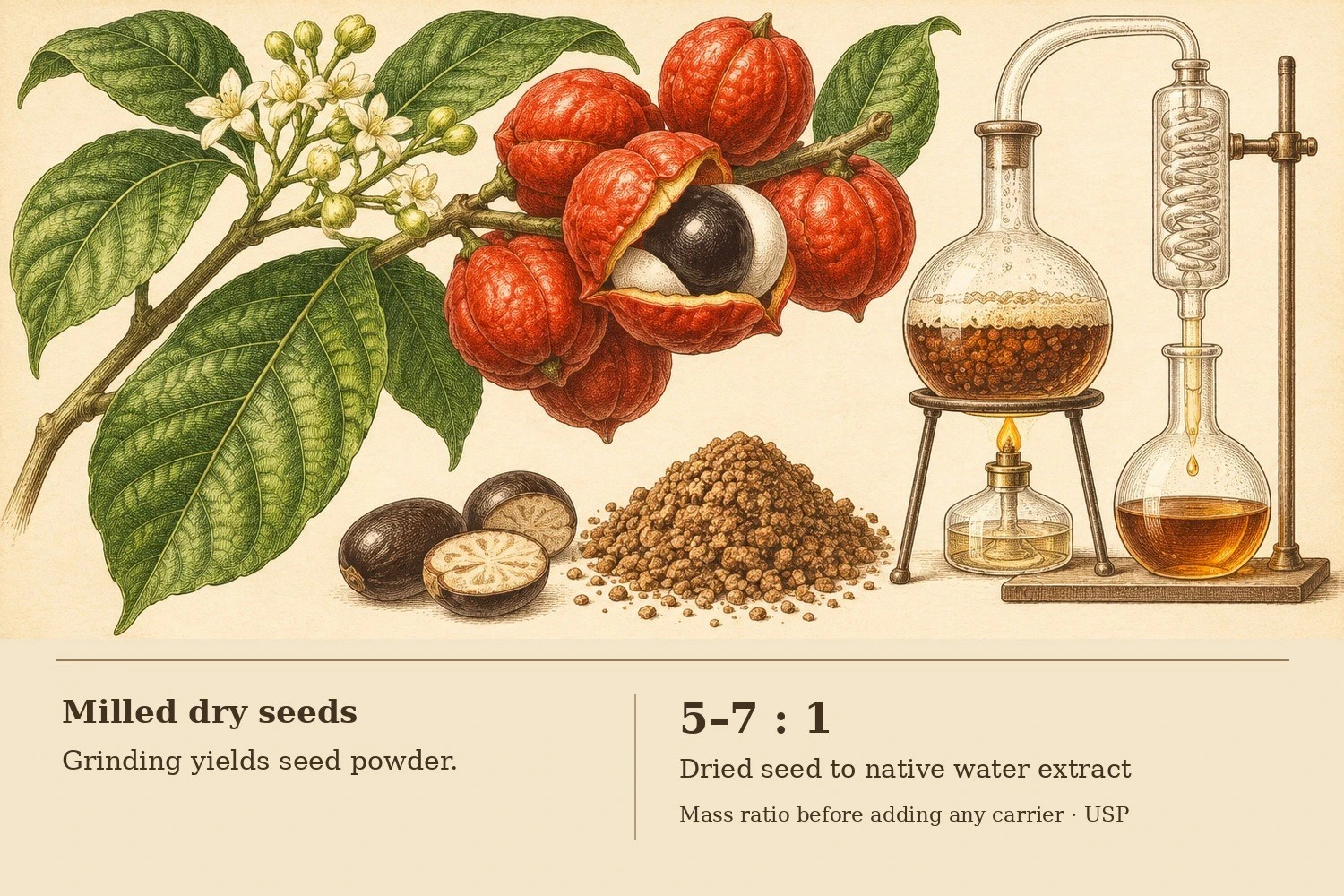
The seeds are the starting material for both guarana seed powder and guarana extract powder. Milling dried seeds produces seed powder. To make an extract powder, a solvent first dissolves selected seed constituents, and the recovered extract is then dried. The United States Pharmacopeia (USP) describes a water-extracted preparation with a 5–7:1 seed-to-native-extract ratio. That means 5–7 parts of dried seed are used to produce one part of native extract before any carrier is added. The ratio describes material input and output, while an assay measures the concentration of caffeine or another marker.
Caffeine, Catechins and Procyanidins
Guarana contains two groups of compounds commonly measured in the laboratory. The first includes caffeine, theobromine, and theophylline, all members of the methylxanthine family. The second includes catechin and epicatechin, along with procyanidins made from linked flavanol units. In one analyzed guarana seed extract, researchers measured 2.94% caffeine, 0.46% catechin, and 0.55% epicatechin. These figures describe one preparation under the study's extraction and measurement conditions. Reporting several compounds together gives a clearer chemical profile and helps researchers see which constituents vary when they compare batches.
Why the Extraction Solvent Changes the Profile
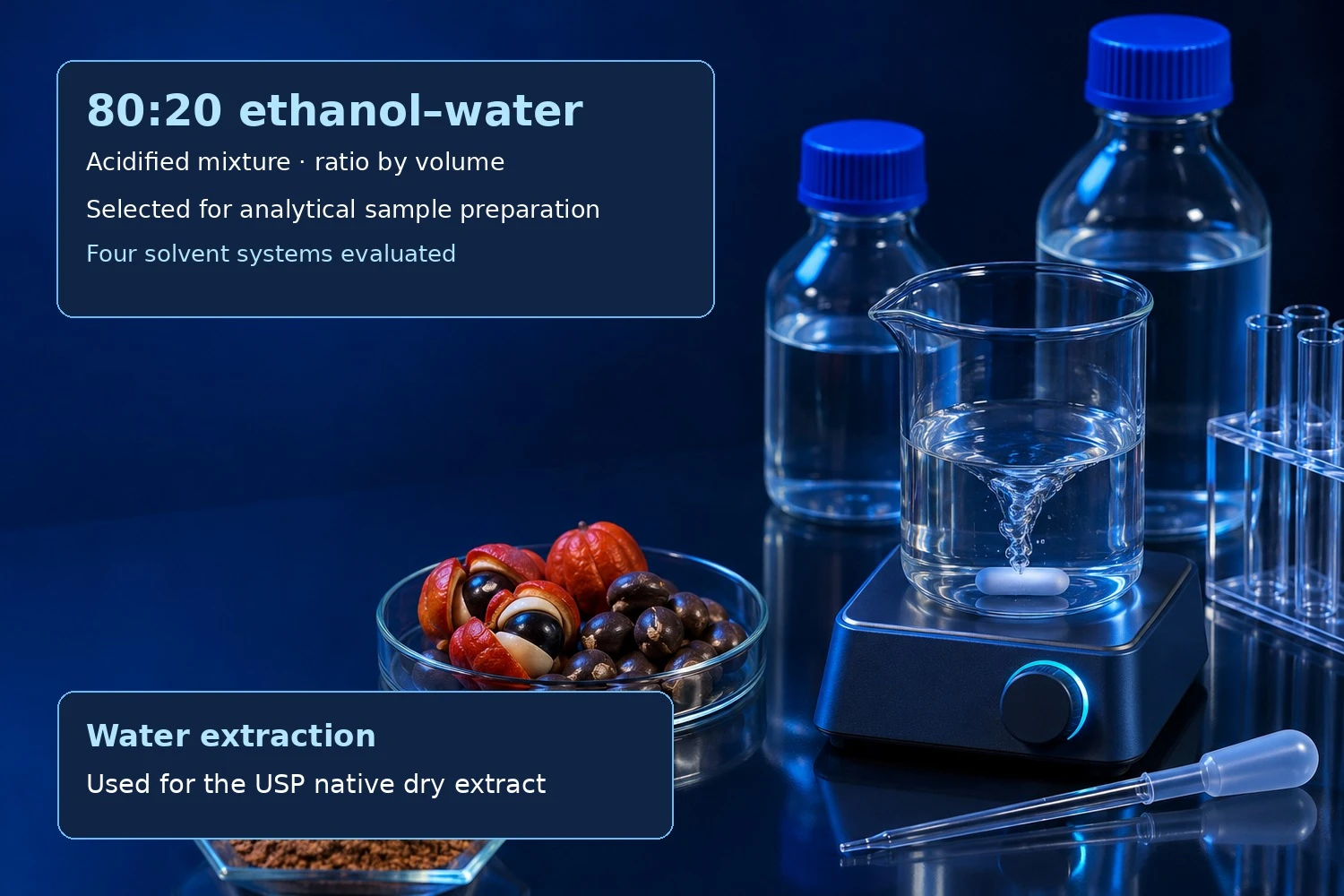
Solvent composition affects how much of each compound moves from milled seeds into solution. In a guarana method-development study, researchers compared four solvent systems, including ethanol alone and an ethanol–water mixture. They selected an acidified 80:20 ethanol–water mixture by volume for preparing analytical samples and measuring seven markers. The USP dry-extract monograph describes a preparation made by water extraction. These workflows serve different purposes. Recording the solvent system, temperature, and contact time helps researchers interpret why a laboratory assay preparation and a manufactured extract may show different proportions of seed compounds.
How Researchers Measure Seven Markers in One Run
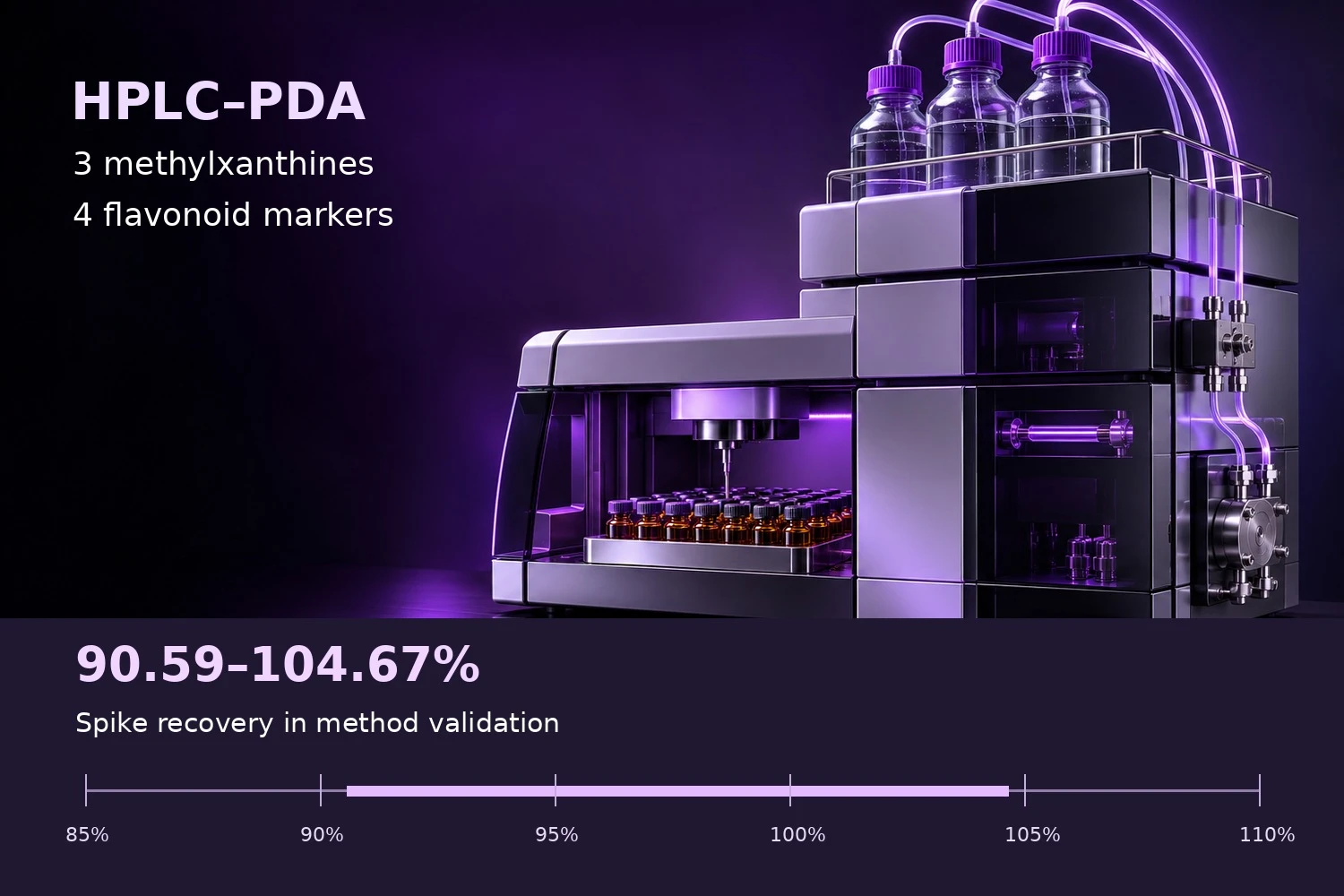
High-performance liquid chromatography with photodiode-array detection, or HPLC–PDA, separates compounds and records their ultraviolet absorption. In a guarana study, researchers used one method to quantify three methylxanthines and four flavonoid markers, including procyanidins A2 and B2. The method showed 90.59–104.67% recovery in validation experiments. Recovery indicates how closely the method measured a known amount added to the sample, helping researchers evaluate the accuracy of the assay. For batch comparisons, results are easier to interpret when the report identifies the individual markers, the analytical method, and the basis used to express each percentage.
What Seed Origin Can Reveal About Flavonoids
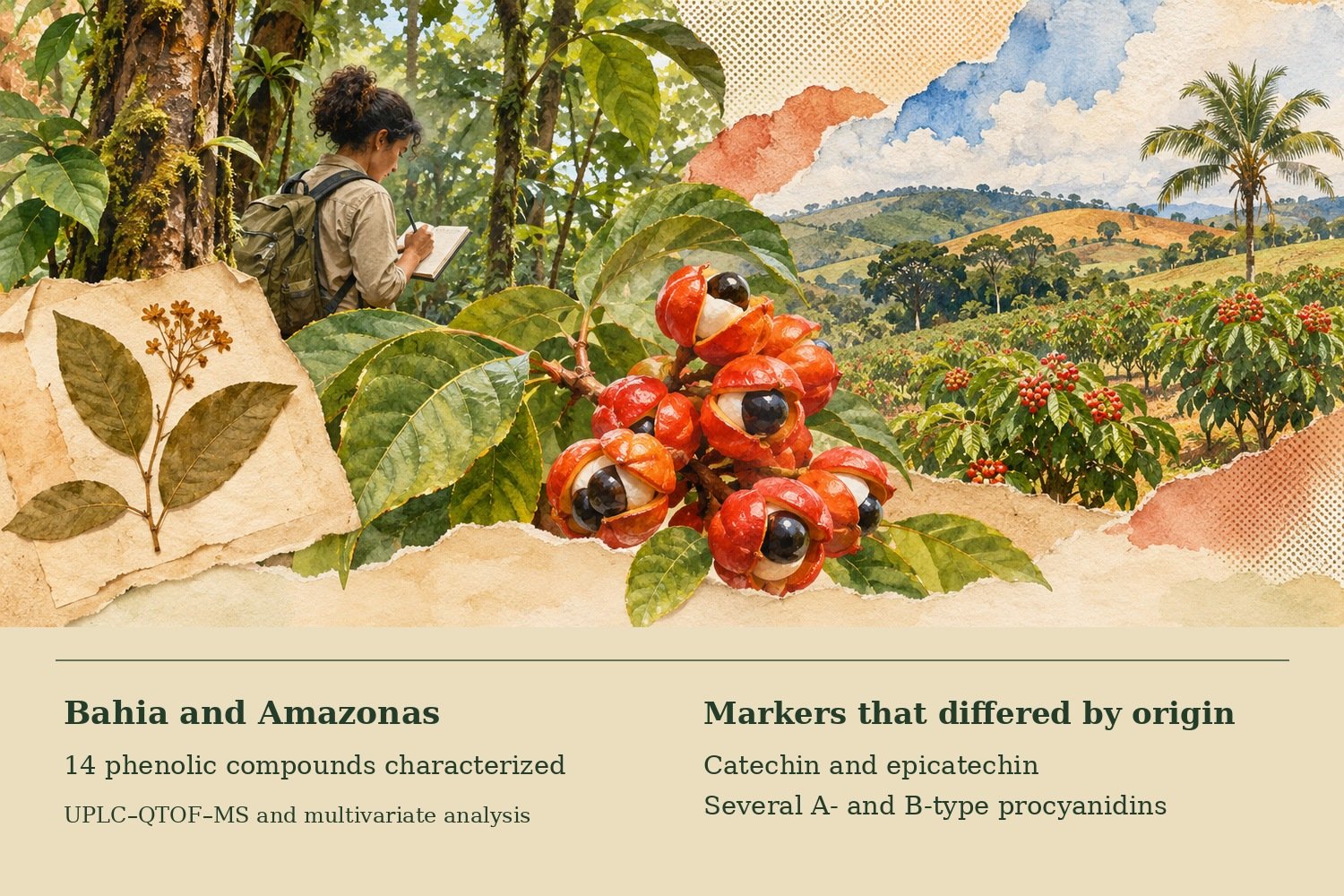
A study comparing guarana powders from the Brazilian states of Bahia and Amazonas used liquid chromatography, high-resolution mass spectrometry, and multivariate statistics to examine their chemical profiles. The researchers characterized 14 phenolic compounds. Catechin, epicatechin, and several procyanidins contributed to the differences between the samples from the two regions. The pattern describes the study's sample set. For a broader origin comparison, researchers would also need to account for factors such as harvest, seed processing, and storage, since these can vary alongside growing location and complicate the interpretation of a chemical fingerprint.
How Spray Drying and Carriers Shape the Powder
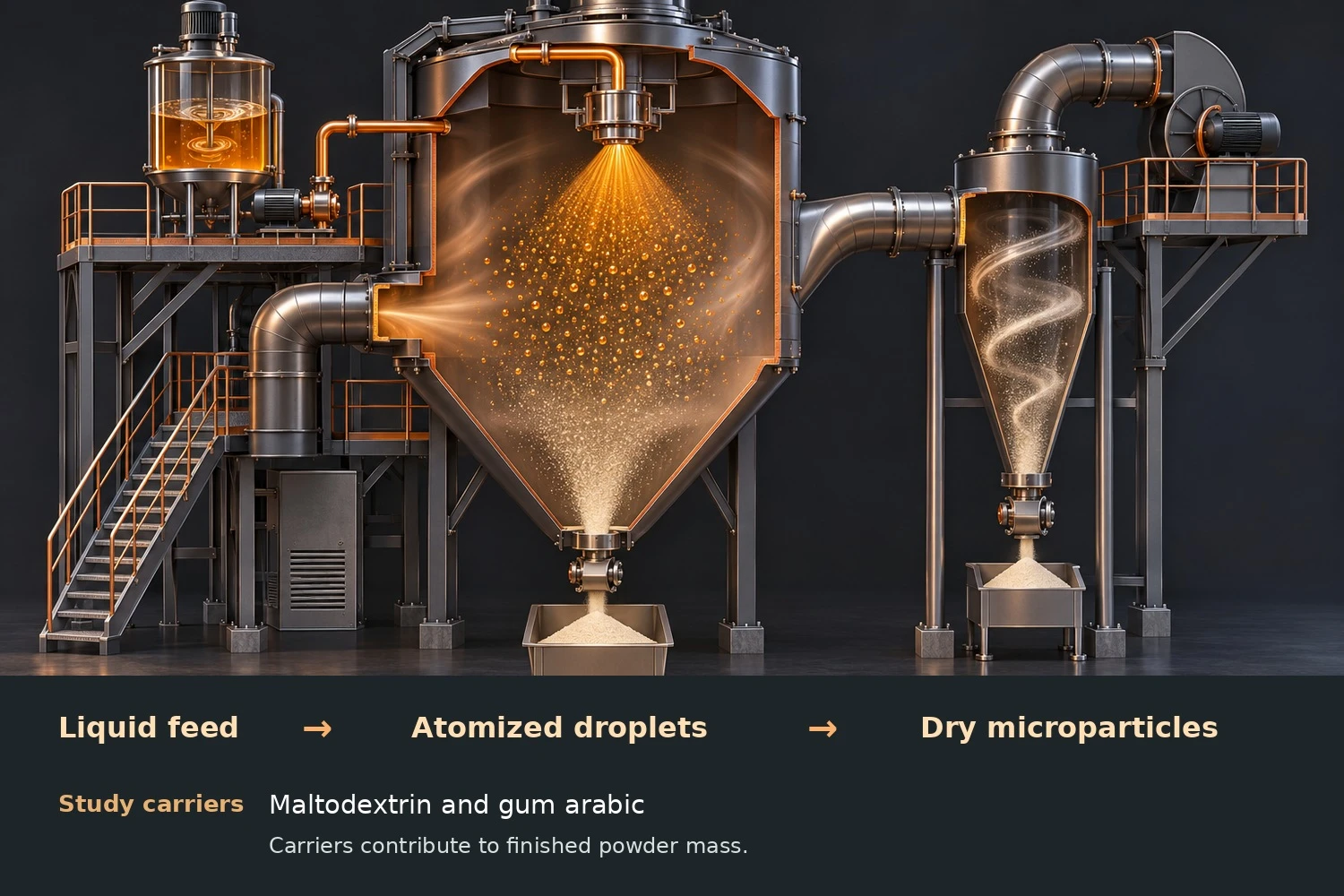
Spray drying turns a liquid feed into powder by atomizing it into fine droplets and evaporating the liquid in a stream of hot air. In a guarana study, researchers used maltodextrin and gum arabic to produce microparticles containing a semipurified seed extract. The added carriers form part of the finished powder mass, so their inclusion affects how much caffeine or flavonoid is present per gram of powder. When comparing a spray-dried formulation with a native extract, the carrier content and the basis of the reported assay help explain differences in concentration.
If you are looking for a high-quality manufacturer of peptides, compounds, plant extracts, and other products with whom to establish a long-term, stable partnership, Shaanxi Medibridge Biotech Co., Ltd. is your ideal choice. Please feel free to contact us at hi@medibridgeapi.com. Or message us on WhatsApp at +44 07548632075.


