


A Single Compound Within a Family of Saponins
In 1989, researchers isolated gymnemic acids I, II, III, and IV from a hot-water extract of Gymnema sylvestre leaves and assigned their structures using chemical and spectroscopic methods. The Roman numeral I identifies a particular molecule within that series. The leaf extract contains multiple constituents, some with closely related structures. This distinction matters when comparing experiments. A purified compound allows researchers to relate an observation to a defined molecule, while a leaf extract is better suited to questions about how a mixture behaves in a particular assay.
The Structural Features That Define Gymnemic Acid I
Gymnemic acid I has a five-ring oleanane-derived backbone and a β-D-glucuronic acid group attached at carbon 3. It also carries a tigloyl ester at carbon 21 and an acetyl ester at carbon 28. Its molecular formula is C₄₃H₆₆O₁₄, with a molar mass of approximately 807.0 g/mol. Closely related gymnemic acids share parts of this structure but can differ in the identity or position of their acyl groups. Those differences give researchers specific structural features to examine when comparing compounds from the same botanical source.


Measuring Gymnemic Acid I and Total Gymnemic Acids
An HPLC method targeting intact gymnemic acid I can estimate the amount of that individual compound in a botanical sample. Other methods hydrolyze a group of gymnemic acids to their shared aglycone, gymnemagenin, and quantify that common product. Once several constituents have been converted to the same aglycone, the measurement no longer retains information about how much each parent compound contributed. A research report should therefore identify the analyte, the reference standard, and the reporting basis. Those details determine whether two numerical results can be compared directly.
What Cell Assays Reveal About Sweet Taste
In a study using engineered HEK293 cells, a gymnemic acid mixture at 100 µg/mL reduced intracellular calcium responses to sweet compounds in cells expressing the human T1R2–T1R3 receptor. The researchers did not observe the same inhibition in cells expressing the mouse receptor under the tested conditions. Experiments that combined human and mouse receptor regions implicated the transmembrane domain of human T1R3. The reported concentration refers to the full mixture. Determining the potency of purified gymnemic acid I would require a concentration–response experiment with the individual compound.

What a Cyclodextrin Wash Can Tell Researchers
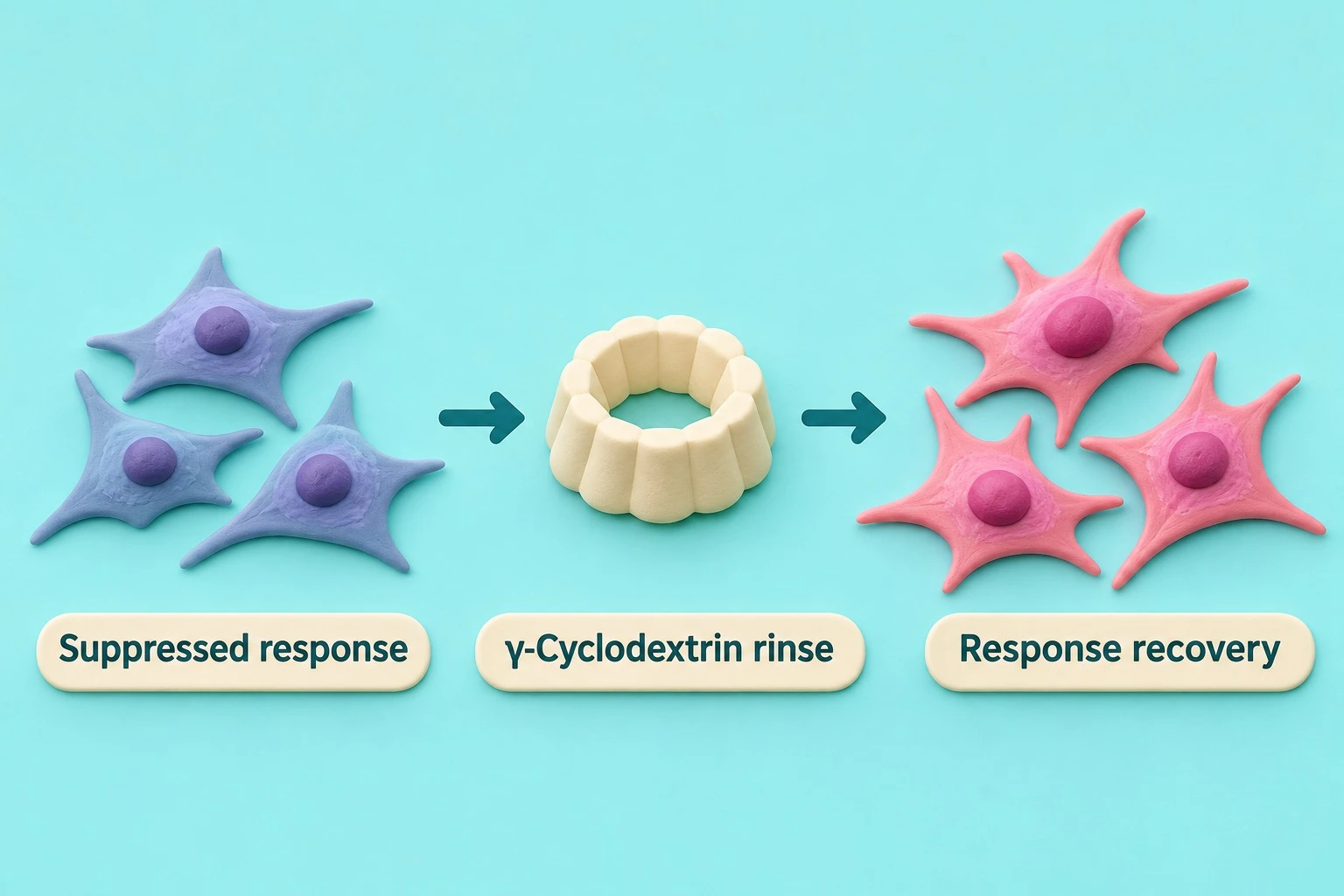
In the same cell study, sweet-stimulus responses recovered rapidly after the researchers rinsed the cells with γ-cyclodextrin. This cyclic molecule has a cavity that can accommodate parts of other molecules, making it a useful tool for testing how the inhibitory effect can be reversed. The recovery provides a functional readout, while the receptor experiments help identify which regions contribute to sensitivity. Testing purified gymnemic acid I in parallel with the mixture would help determine whether the individual compound shows a similar recovery pattern under the same assay conditions.
Shaanxi Medibridge Biotech Co., Ltd. is dedicated to supplying a wide range of research-grade products-including peptides, chemical compounds, and extracts - to laboratories, academic institutions, and biotechnology organizations worldwide. If you are seeking a partner for high-purity raw materials to establish a long-term collaboration, please email hi@medibridgeapi.com.


