


Fruiting Body and Mycelium Chemical Profiles
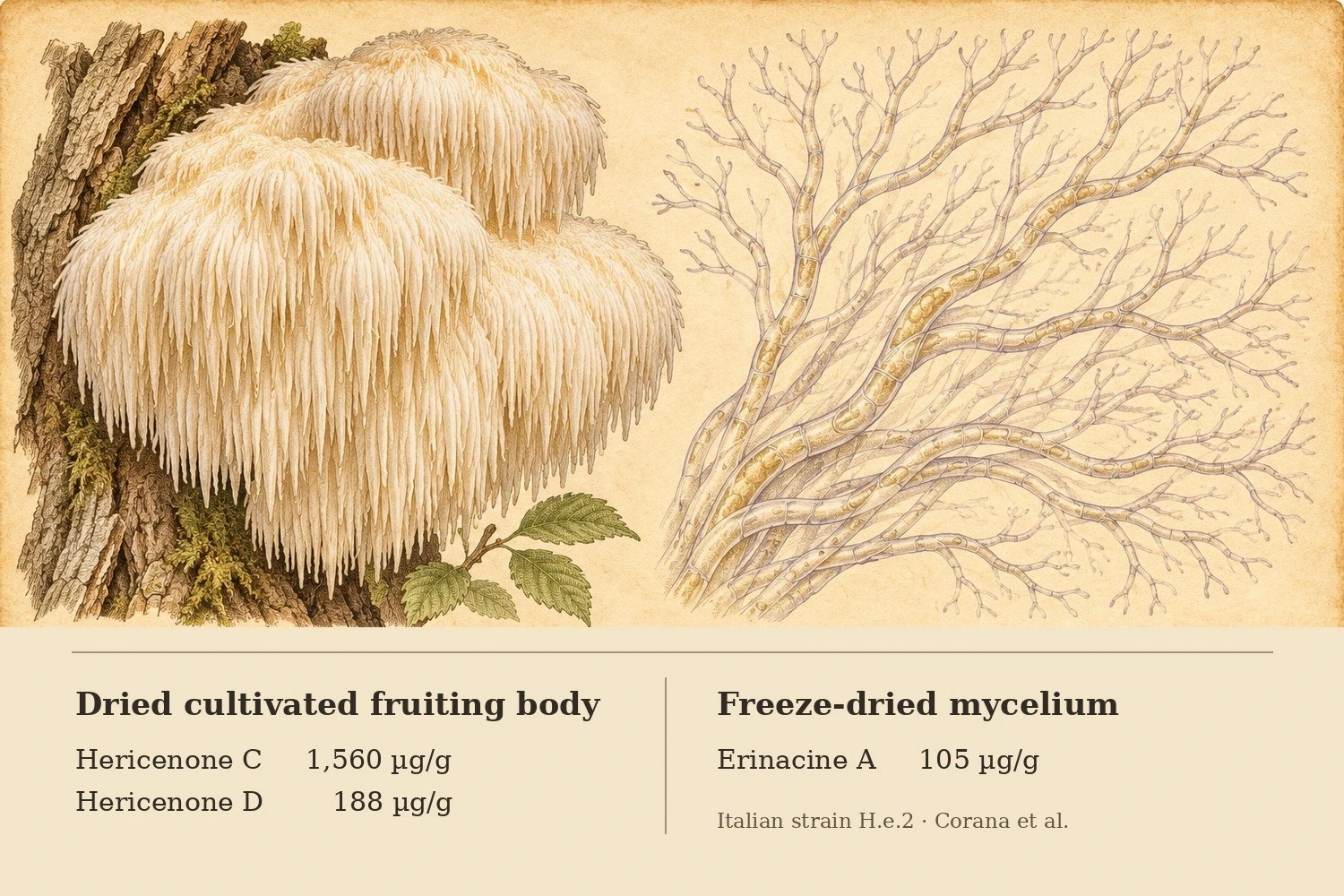
The fruiting body is the spore-producing structure of lion's mane. The mycelium is the network of microscopic filaments that grows through a substrate or in a liquid culture. In a study of an Italian strain, researchers measured 105 µg/g of erinacine A in freeze-dried mycelium. In dried cultivated fruiting bodies, they measured 1,560 µg/g of hericenone C and 188 µg/g of hericenone D. These values describe the samples tested. Identifying the fungal material and the compounds measured is the first step in comparing lion's mane extracts.
Strain Selection Can Change the Yield of Erinacine A
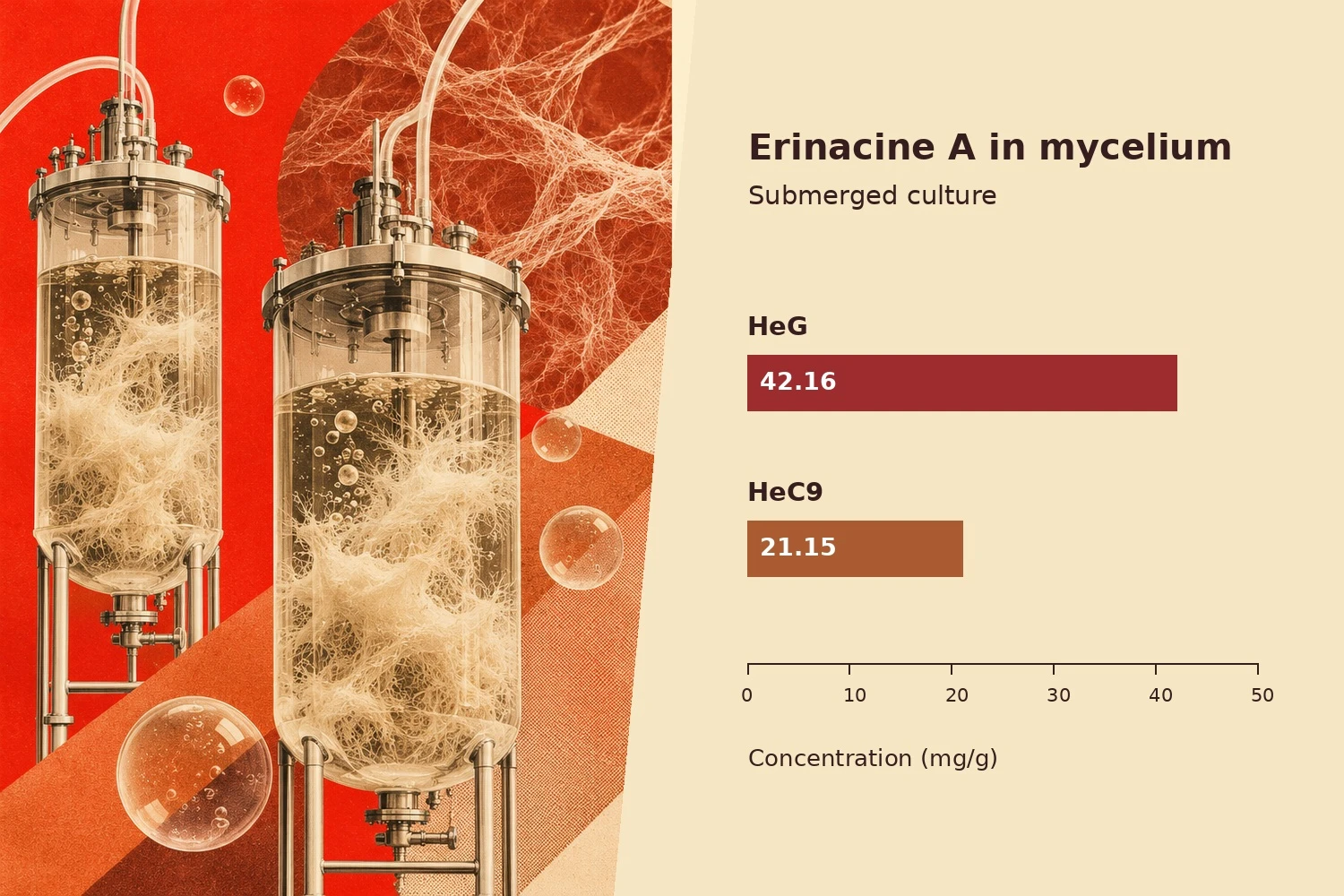
Two cultures can produce similar amounts of mycelium yet accumulate very different amounts of a target compound. In a submerged-culture study, researchers measured 42.16 mg/g of erinacine A in strain HeG and 21.15 mg/g in strain HeC9. The team also reported production per liter of culture, a separate measurement that depends on both the concentration in the mycelium and the quantity of biomass produced. Reporting both values helps explain whether a high-yielding culture grows more biomass, accumulates more erinacine A per gram, or does both.
Extraction Conditions Determine What Goes Into the Powder
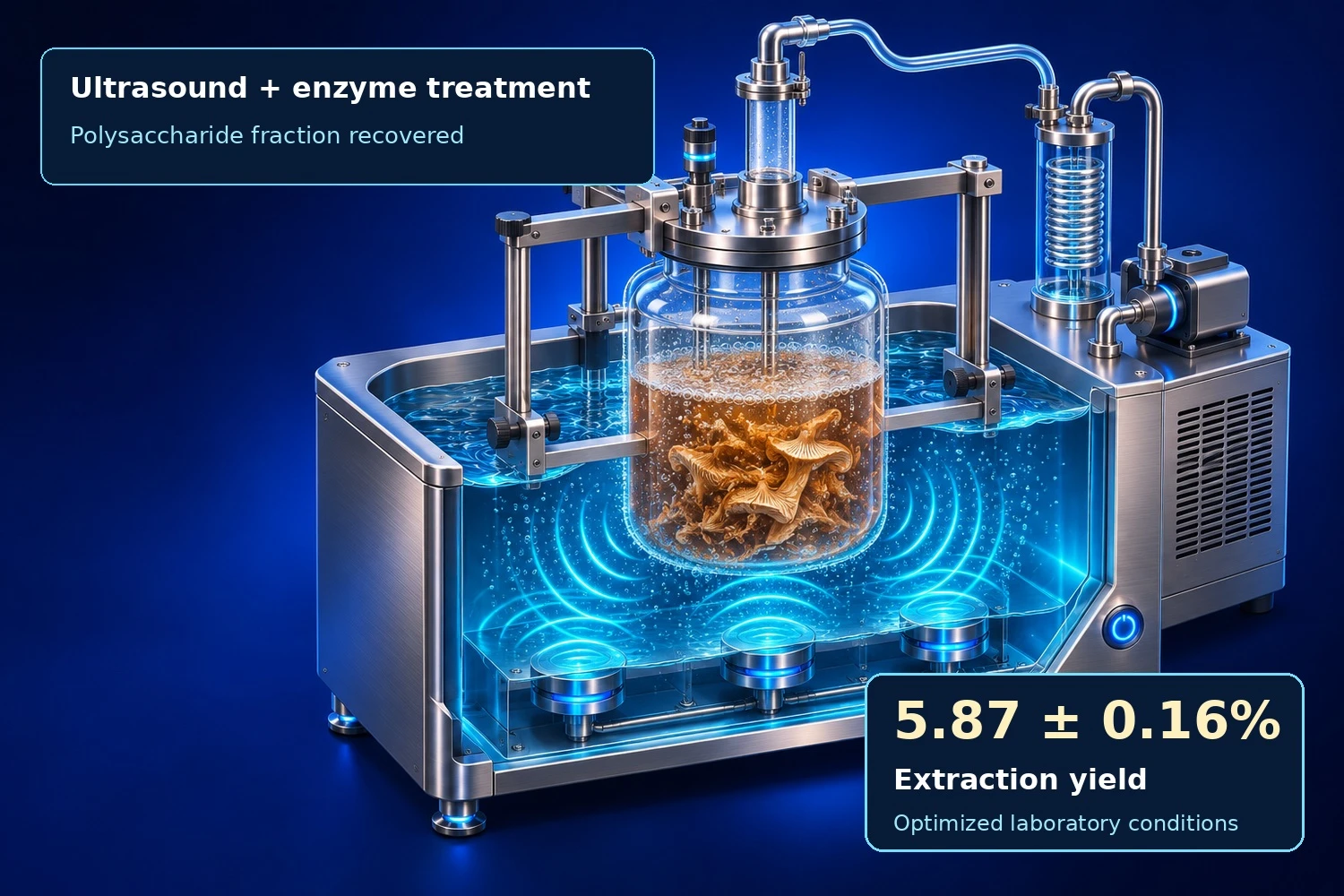
Water-based extraction can recover soluble polysaccharide fractions from lion's mane. Temperature, extraction time, and methods such as ultrasound or enzyme treatment can influence how much material is released. One study that combined ultrasound with enzyme-assisted extraction reported a 5.87 ± 0.16% polysaccharide extraction yield under its optimized conditions. That percentage describes recovery in the study's procedure. To compare extracts, it helps to read that yield alongside the composition of the recovered fraction, since two processes can recover similar amounts of material with different carbohydrate profiles.
Measuring Beta-Glucans Requires a Specific Assay
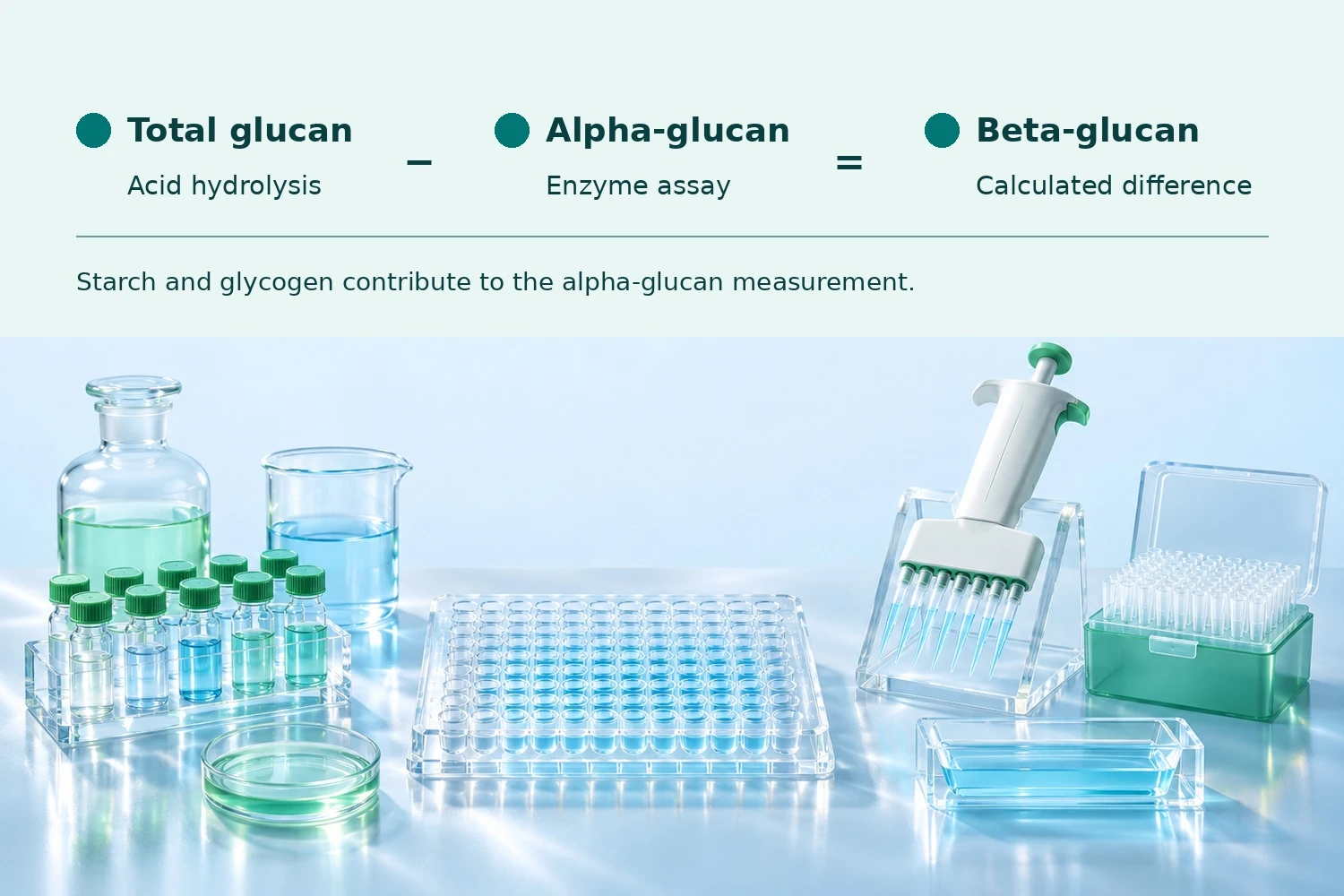
A total polysaccharide result can include several types of carbohydrates. To estimate beta-glucan specifically, a published method for mushroom and mycelial products measures glucose released during a total-glucan assay and subtracts the contribution measured in a separate alpha-glucan assay. Alpha-glucans include starch and glycogen, so this distinction matters when the starting material includes residual grain substrate. The researchers also found that the choice of hydrolysis procedure affected some results. For a meaningful batch comparison, use the same assay and check whether values are reported on a dry-weight basis.
Chromatography Helps Identify and Compare Small Molecules
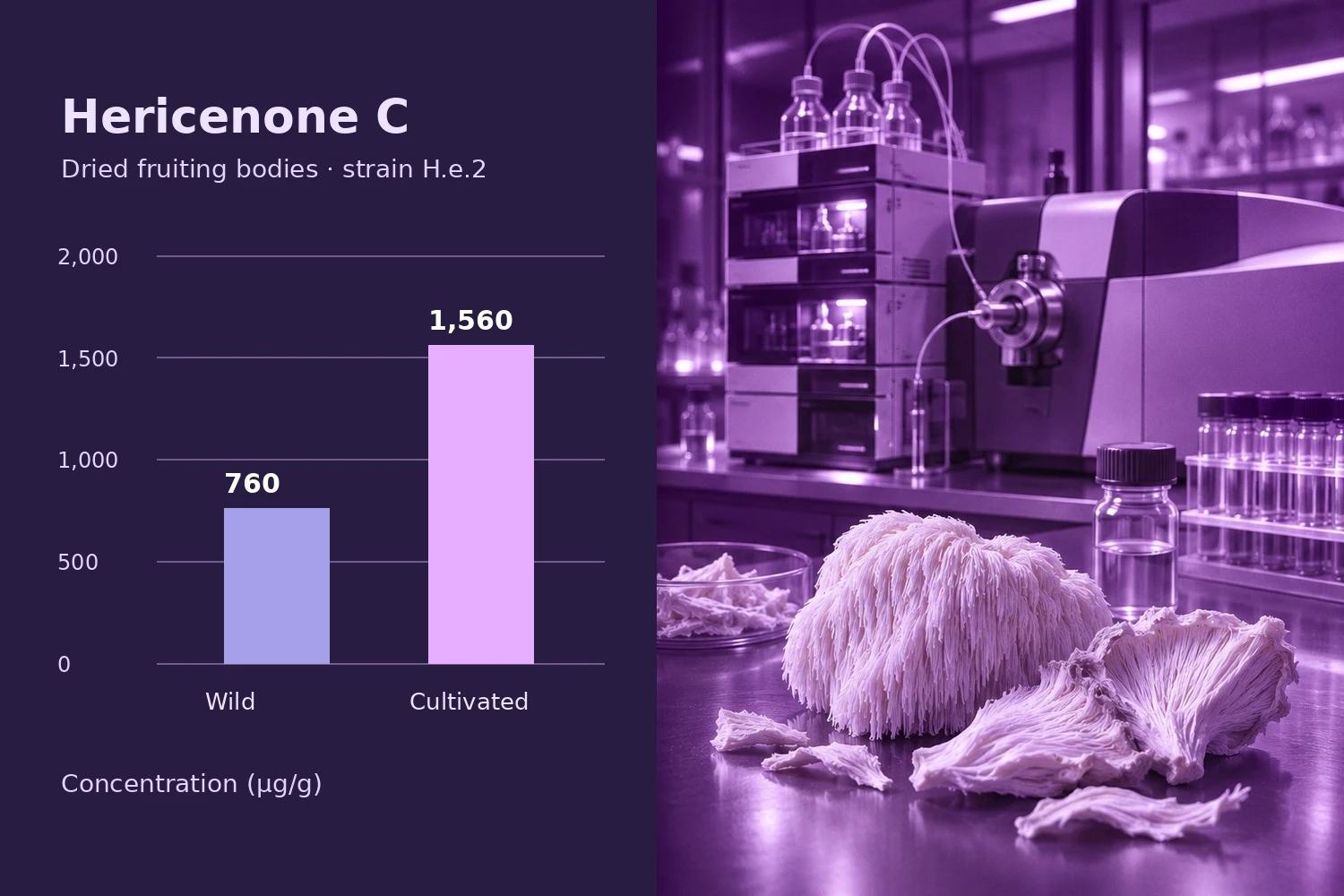
High-performance liquid chromatography separates compounds in a lion's mane extract into individual peaks. In one study, researchers combined chromatography with ultraviolet detection and mass spectrometry and used reference standards to identify and quantify selected compounds. For the strain they studied, dried cultivated fruiting bodies contained 1,560 µg/g of hericenone C, compared with 760 µg/g in the dried wild sample. The comparison shows how much a measured marker can differ between samples. It also illustrates why a chromatographic profile is more informative when the strain, cultivation history, and measurement basis are documented.
What Cultured Neurons Can Reveal About Isolated Compounds
Researchers can separate a complex extract into fractions and test individual compounds to see which ones affect a measurable cellular process. In one lion's mane study, isolated hericene A and a related compound called NDPIH promoted neurite outgrowth and branching in cultured hippocampal neurons. Neurites are projections that extend from a neuron, and their length and branching provide measurable features for studying cell development. The observations apply to the isolated compounds under the conditions tested. Comparing those findings with a whole extract would require measuring its composition and testing it in the same model.

If you are looking for a high-quality manufacturer of peptides, compounds, plant extracts, and other products with whom to establish a long-term, stable partnership, Shaanxi Medibridge Biotech Co., Ltd. is your ideal choice. Please feel free to contact us at hi@medibridgeapi.com. Or message us on WhatsApp at +44 07548632075.


