


The Sugar Linkages in Hesperidin
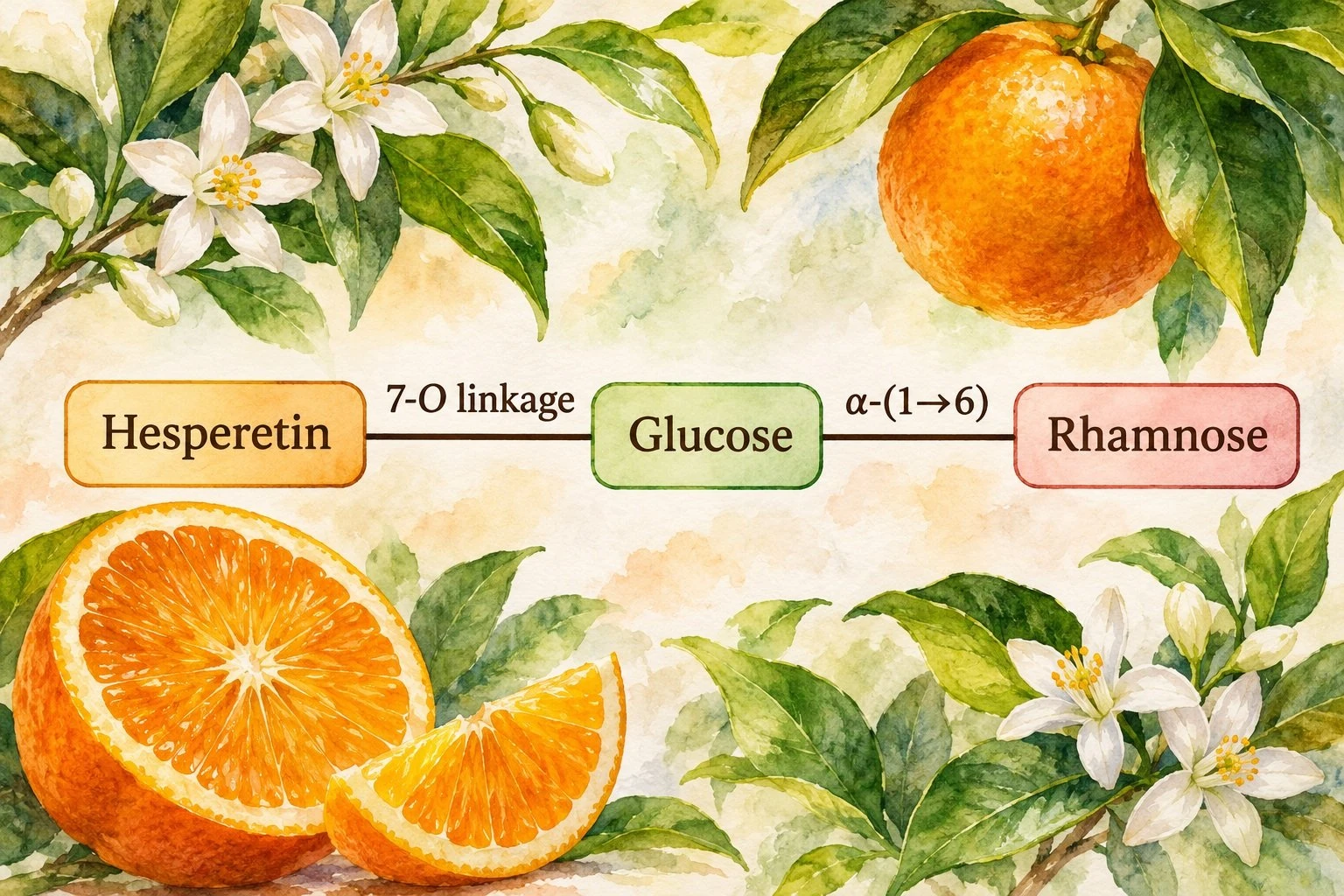
Hesperidin is hesperetin 7-O-rutinoside. Its sugar group, rutinose, consists of a terminal rhamnose linked to glucose through an α-(1→6) bond. The glucose is attached to hesperetin at the flavonoid's 7-position. This arrangement gives enzymes two distinct cleavage sites. Cutting between the sugars releases rhamnose and leaves hesperetin 7-O-glucoside. Cutting between the glucose and the flavonoid releases the entire disaccharide and yields hesperetin, the sugar-free form. Identifying which sugar products appear alongside hesperetin can therefore reveal how an enzyme preparation acts on the substrate.
One-Step and Sequential Hydrolysis
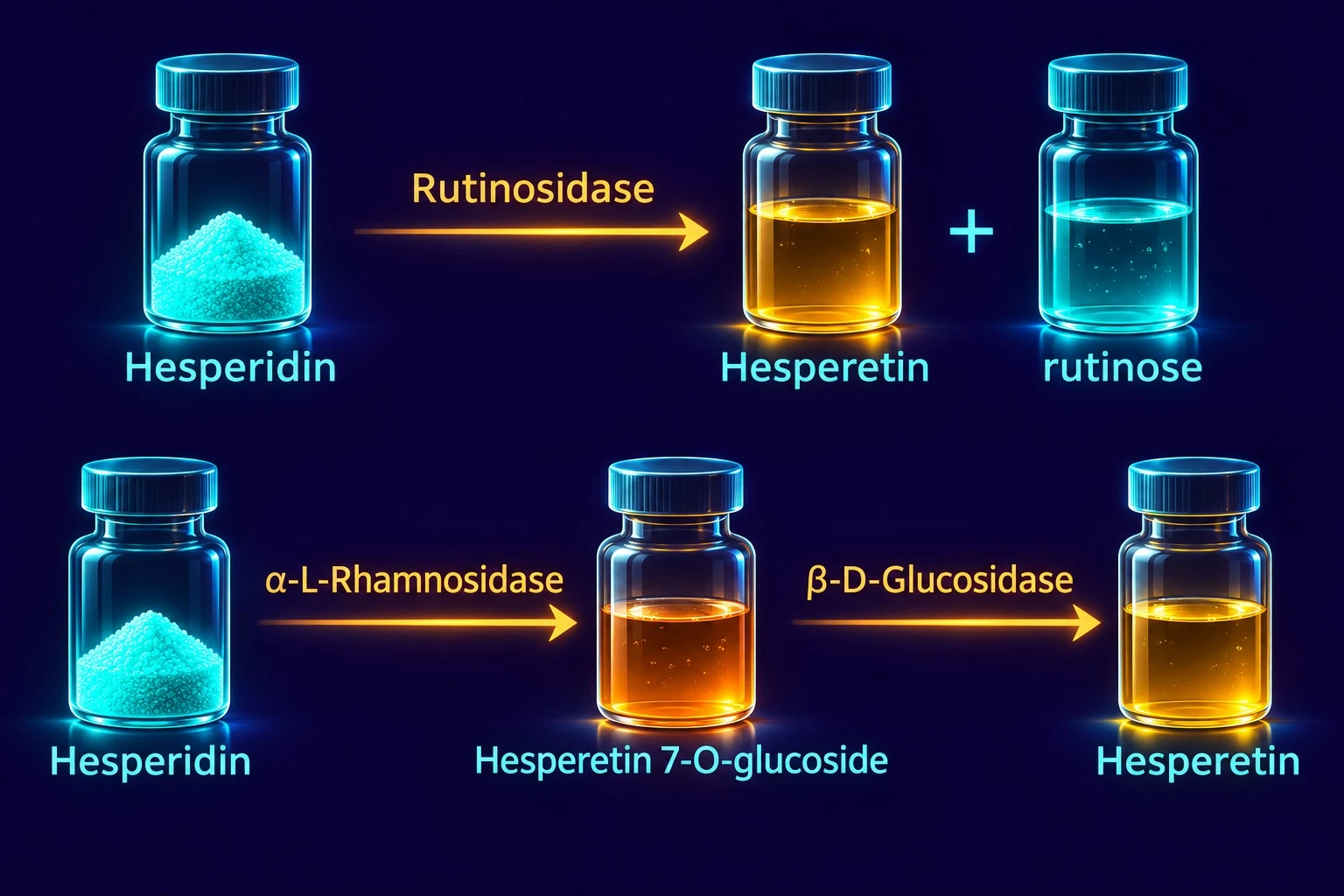
Rutinosidase (EC 3.2.1.168) releases intact rutinose and hesperetin in one hydrolytic step. In the sequential pathway, α-L-rhamnosidase first releases rhamnose, then β-D-glucosidase removes glucose from the resulting hesperetin 7-O-glucoside. Either pathway can yield hesperetin, so measuring that compound alone at the end of a reaction leaves the route unresolved. Sampling during the reaction can reveal whether the glucoside intermediate accumulates. Measuring liberated rutinose, rhamnose, and glucose provides an additional way to distinguish the pathways when the intermediate is consumed too rapidly to detect.
Measuring Enzyme Activity and Substrate Conversion
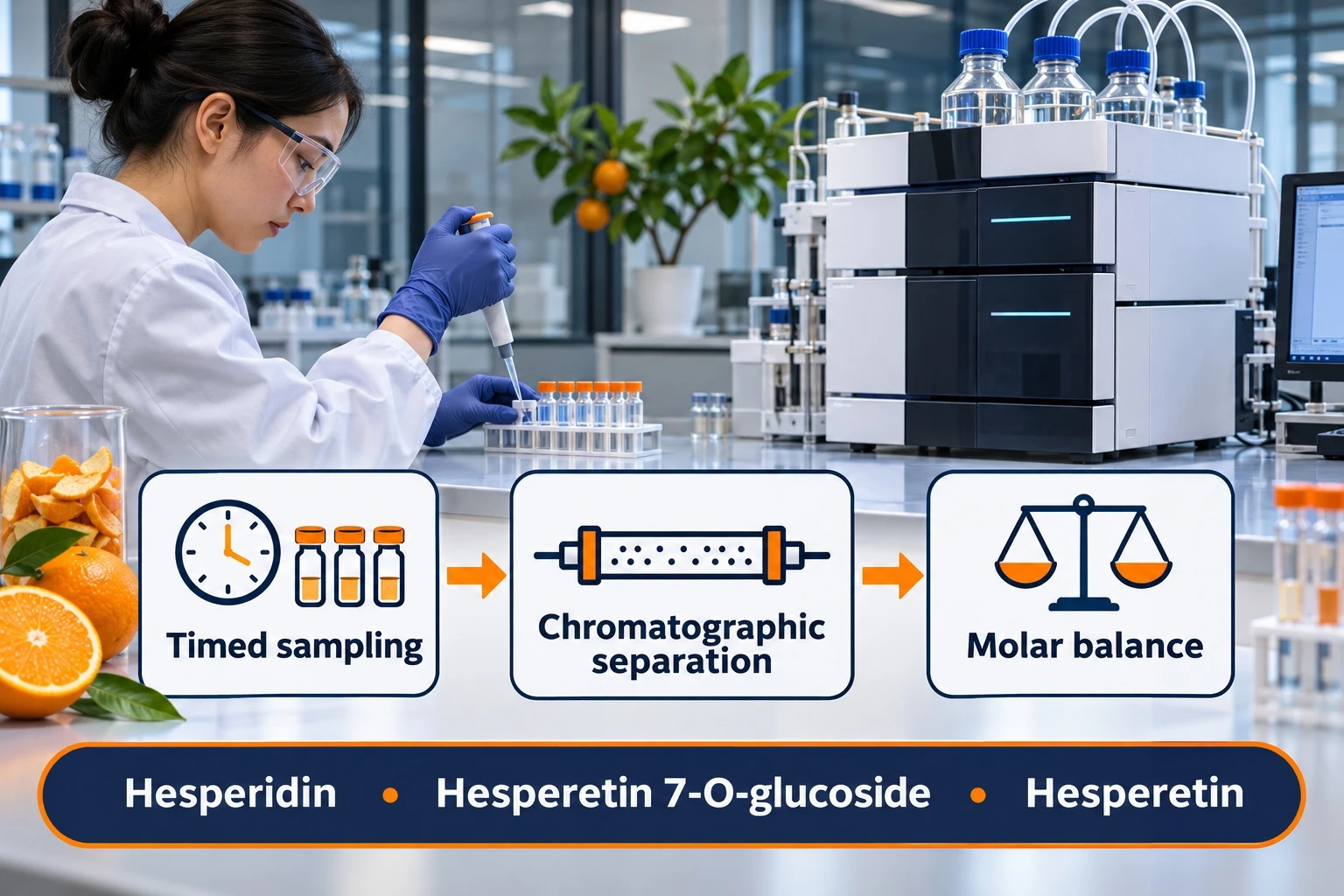
A chromatographic time course can follow hesperidin, hesperetin 7-O-glucoside, and hesperetin in the same experiment. The initial rate describes how quickly the reaction proceeds early on, while endpoint conversion describes how much substrate has been consumed by a specified time. For comparisons across enzyme preparations, researchers should report the substrate concentration, pH, temperature, enzyme loading, and analyte used to define activity. Comparing substrate loss and product formation on a molar basis also helps reveal whether the measured products account for the hesperidin that disappeared.
Why Substrate Solubility Matters
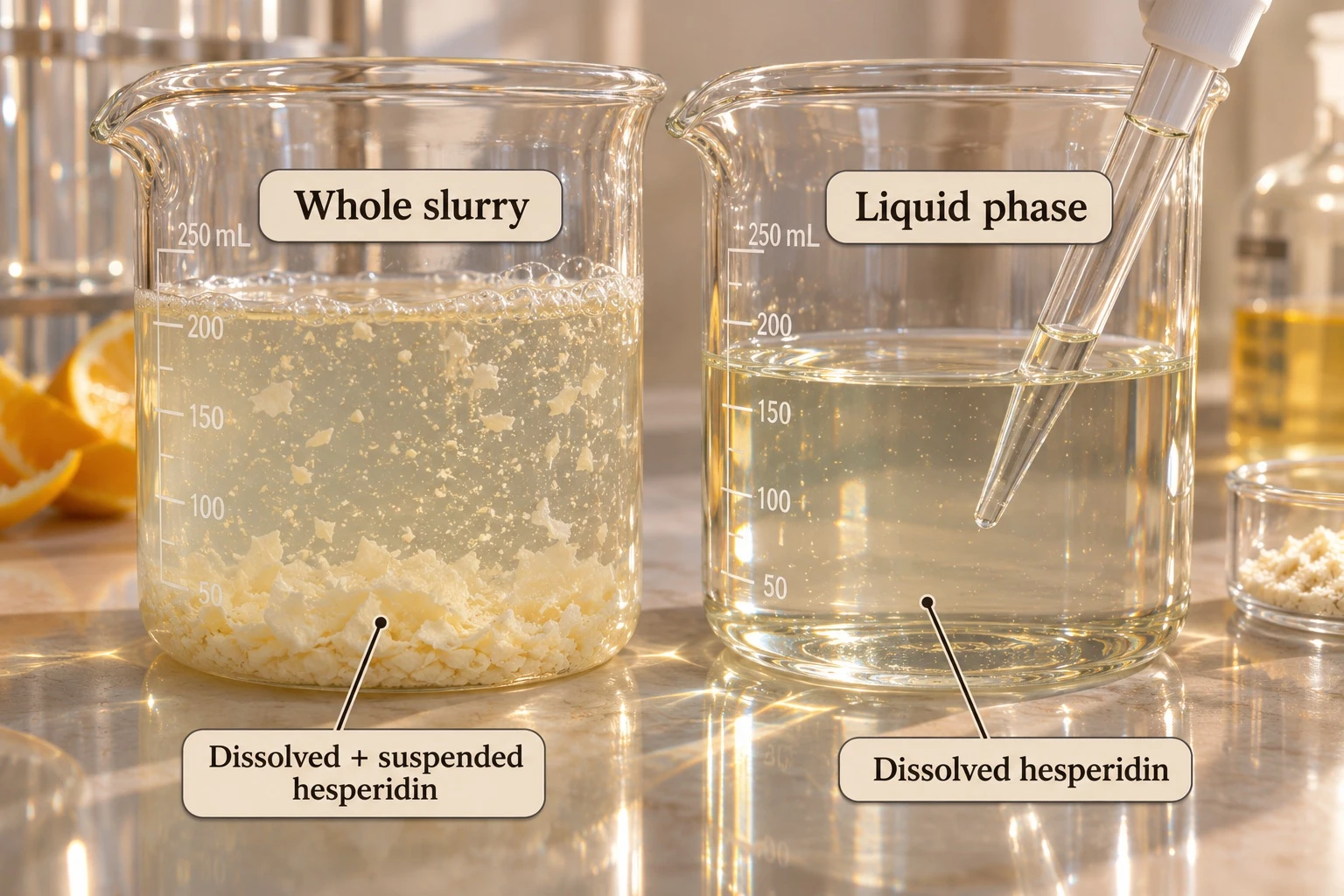
Hesperidin's limited solubility can complicate the interpretation of enzyme assays. When solid particles remain suspended, the concentration initially added to the vessel differs from the concentration dissolved in the liquid. A study comparing soluble and immobilized hesperidinase observed reaction rates above those expected from the low dissolved substrate concentration, suggesting that suspended hesperidin contributed to the reaction under the tested conditions. When comparing experiments, details such as mixing, particle size, and whether samples represent the whole slurry or only the liquid phase help explain differences in apparent reaction rates.
Tracking Conversion in Real Orange Juice
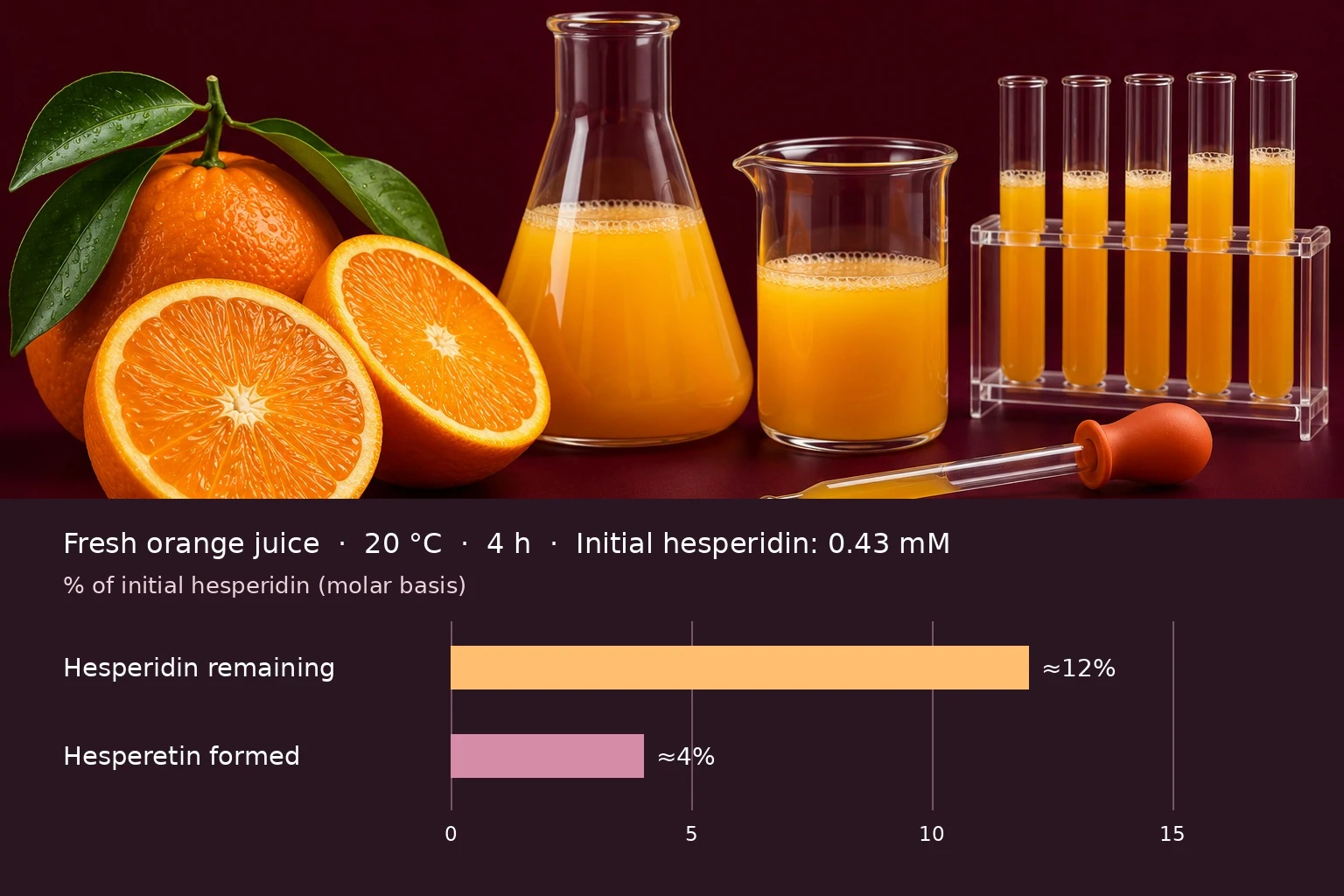
A study using a modified Aspergillus niger naringinase preparation found that hesperidin conversion proceeded more slowly in freshly squeezed orange juice than in a model juice. In the fresh juice, the starting hesperidin concentration was 0.43 mM. After four hours at 20 °C, approximately 12% of the initial hesperidin remained, and hesperetin represented about 4% of the starting amount. Hesperetin 7-O-glucoside was the principal product. This comparison illustrates why researchers measure the product profile in the actual juice matrix when assessing a process designed to retain the glucoside intermediate.
Using the Enzyme to Quantify Hesperidin
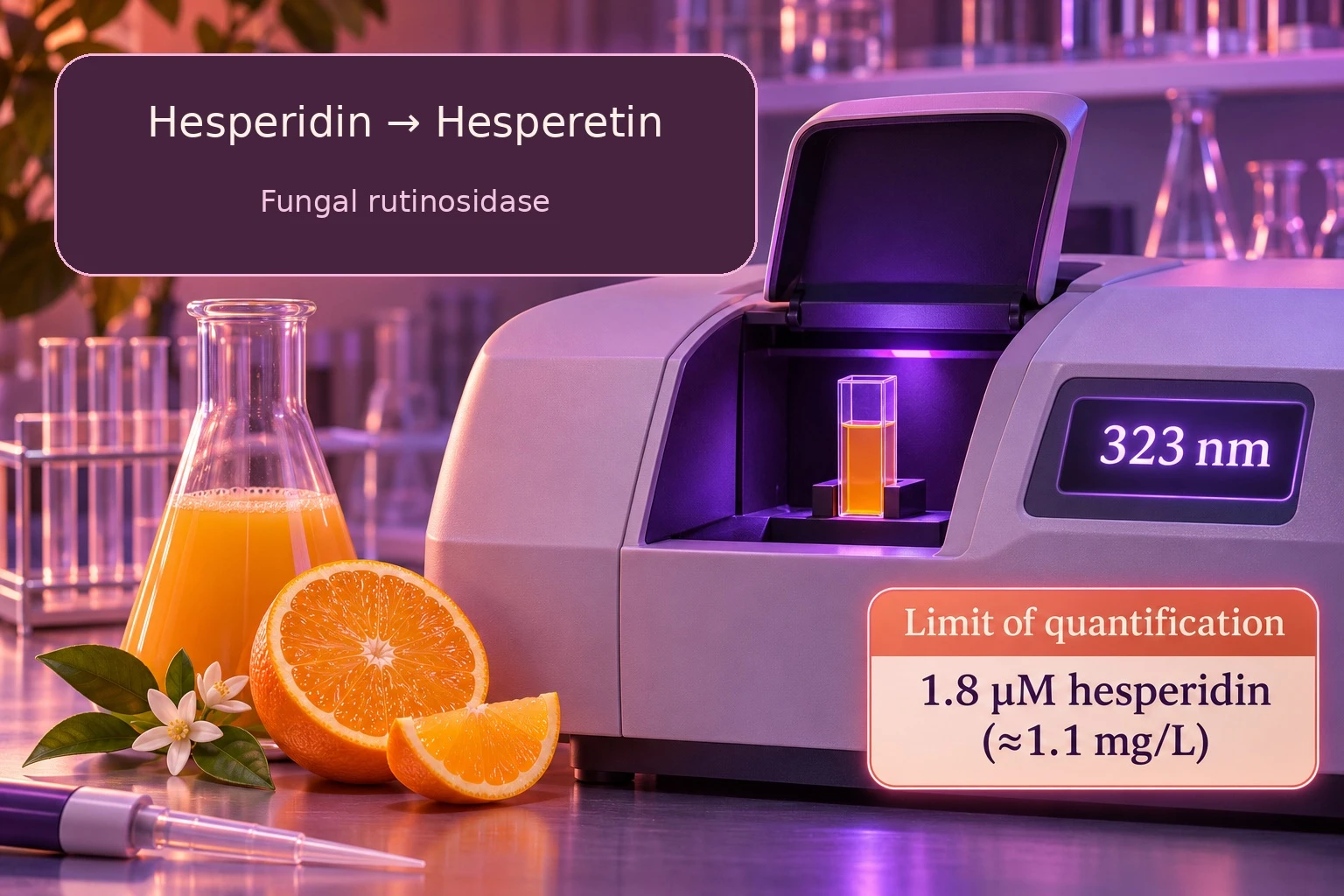
Researchers have also used a fungal rutinosidase as an analytical reagent. In a published method, the enzyme converted hesperidin to hesperetin, whose ultraviolet absorbance was measured at 323 nm. The reported limit of quantification was 1.8 µM hesperidin, equivalent to approximately 1.1 mg/L. The researchers compared the results with HPLC for the orange juices examined. The method illustrates how a predictable enzyme reaction can turn a naturally occurring compound into a measurable signal. For other citrus samples, matrix background and conversion completeness are useful checks when assessing whether the same method applies.
Shaanxi Medibridge Biotech Co., Ltd. is dedicated to supplying a wide range of research-grade products-including peptides, chemical compounds, and extracts - to laboratories, academic institutions, and biotechnology organizations worldwide. If you are seeking a partner for high-purity raw materials to establish a long-term collaboration, please email hi@medibridgeapi.com.


