


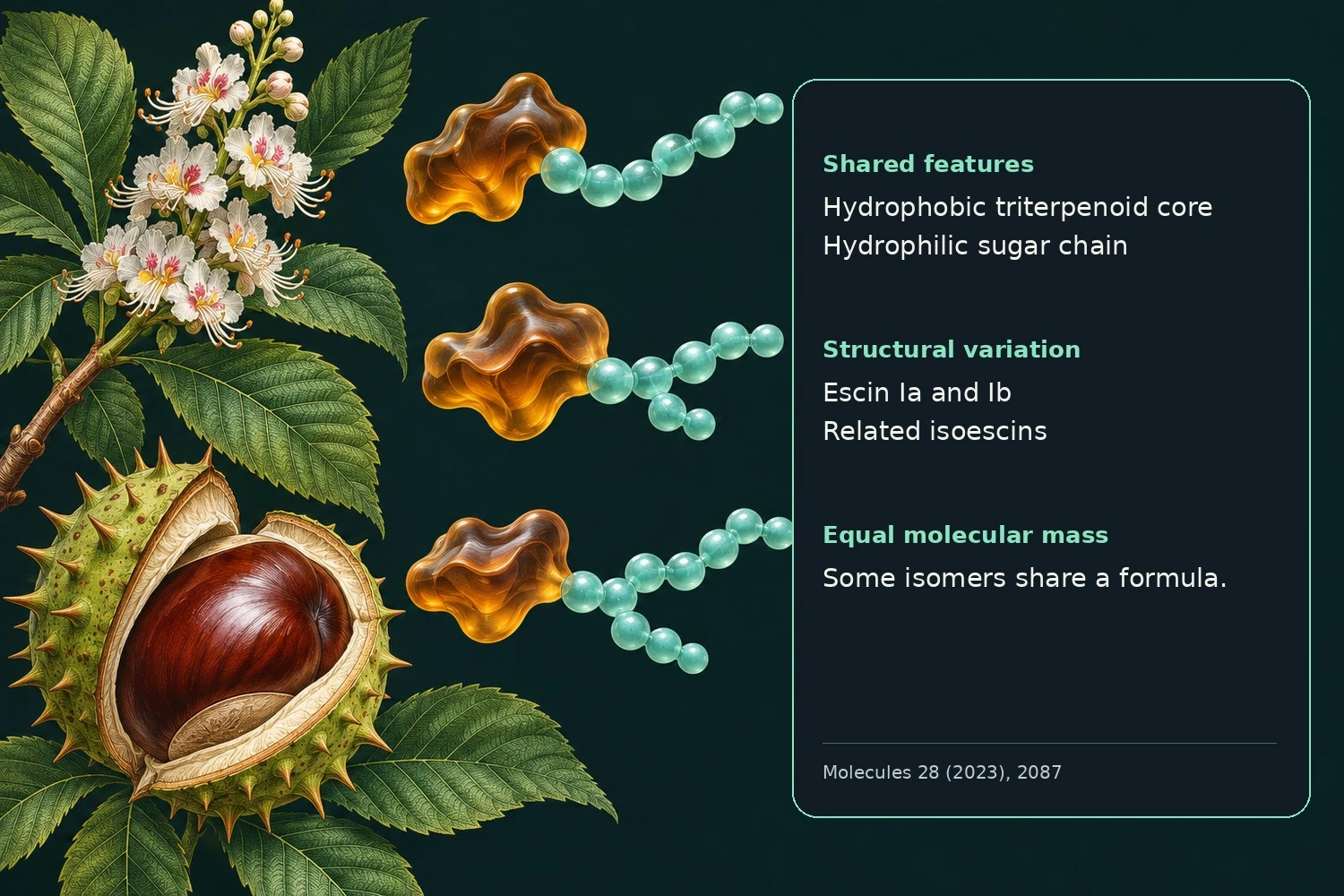
What Makes Escin a Family of Compounds?
Escin, also spelled aescin, refers to a group of triterpenoid saponins found in the seeds of the European horse chestnut (Aesculus hippocastanum). These molecules share a hydrophobic triterpenoid backbone and a water-attracting sugar chain. Differences in sugar composition, attached acyl groups, and the positions of those groups create distinct forms, including escins Ia and Ib and their corresponding isoescins. Some of these molecules have the same molecular formula, so a mass measurement alone can leave their identities unresolved. That structural diversity makes the composition of an escin sample an important part of its identity.
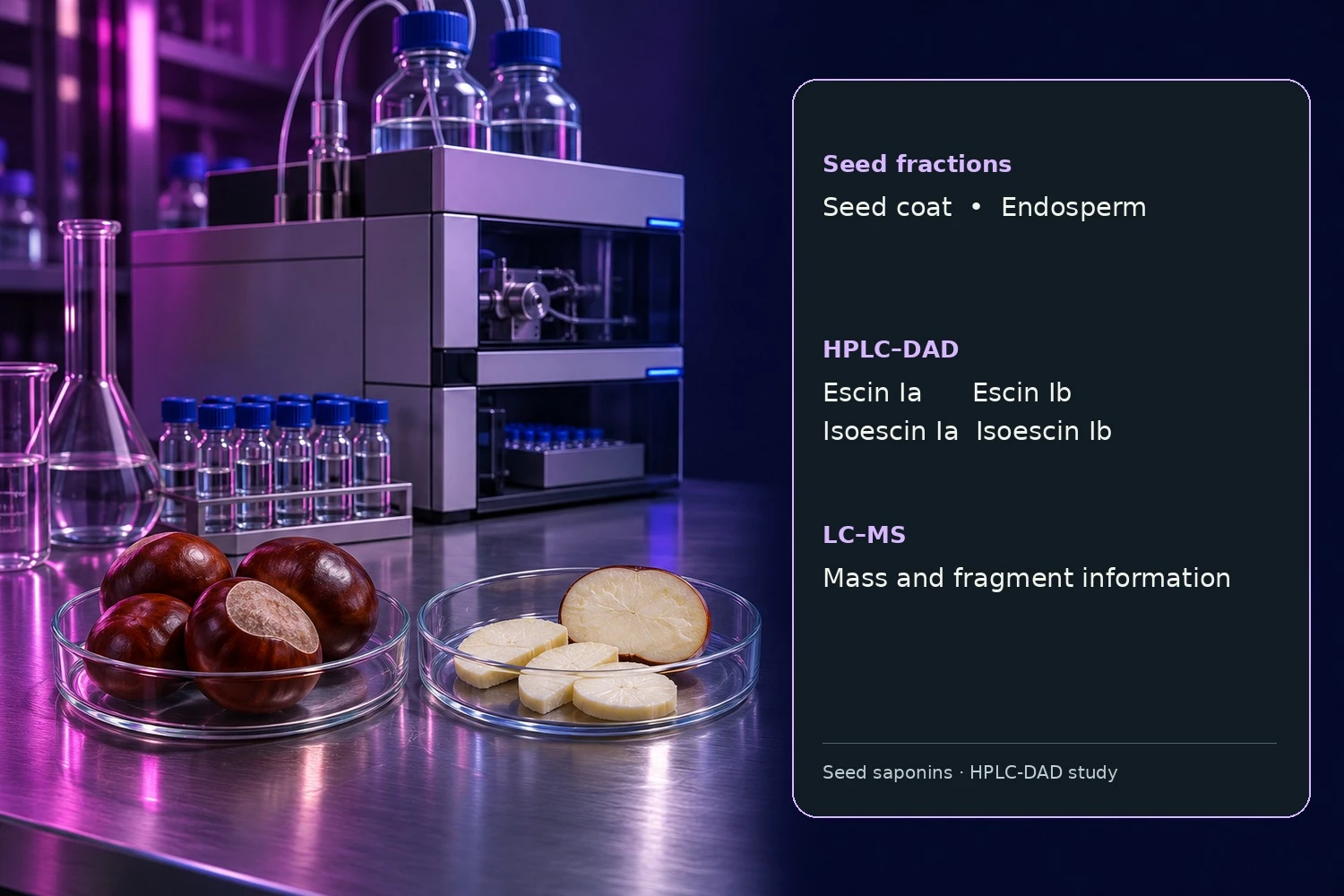
How Chromatography Reveals the Seed's Saponin Profile
A published study used high-performance liquid chromatography with diode-array detection to quantify four seed saponins individually. The researchers measured escin Ia, escin Ib, isoescin Ia, and isoescin Ib in extracts from the seed coat and endosperm. This approach shows how tissue-specific sampling and compound-specific measurements can reveal details that a single total-saponin value would hide. Liquid chromatography coupled with mass spectrometry adds molecular-mass and fragmentation information. When comparing raw-material batches, the individual peak profile and the list of compounds included in the reported total make the results easier to interpret.

When Heat Changes the Molecular Profile
Escin's ester groups can change during processing or laboratory sample preparation. In a controlled heating study, researchers observed shifts in the relative proportions of escins and isoescins and detected additional isomers. One documented transformation involves movement of an acetyl group from carbon 22 to carbon 28 within the same molecule. Because this rearrangement preserves molecular mass, researchers used chromatographic separation to follow changes in the mixture. The study illustrates why sample preparation time, temperature, and pH matter when comparing escin profiles, especially if the analytical method relies on relative peak areas.
How Escin Forms Micelles in Water
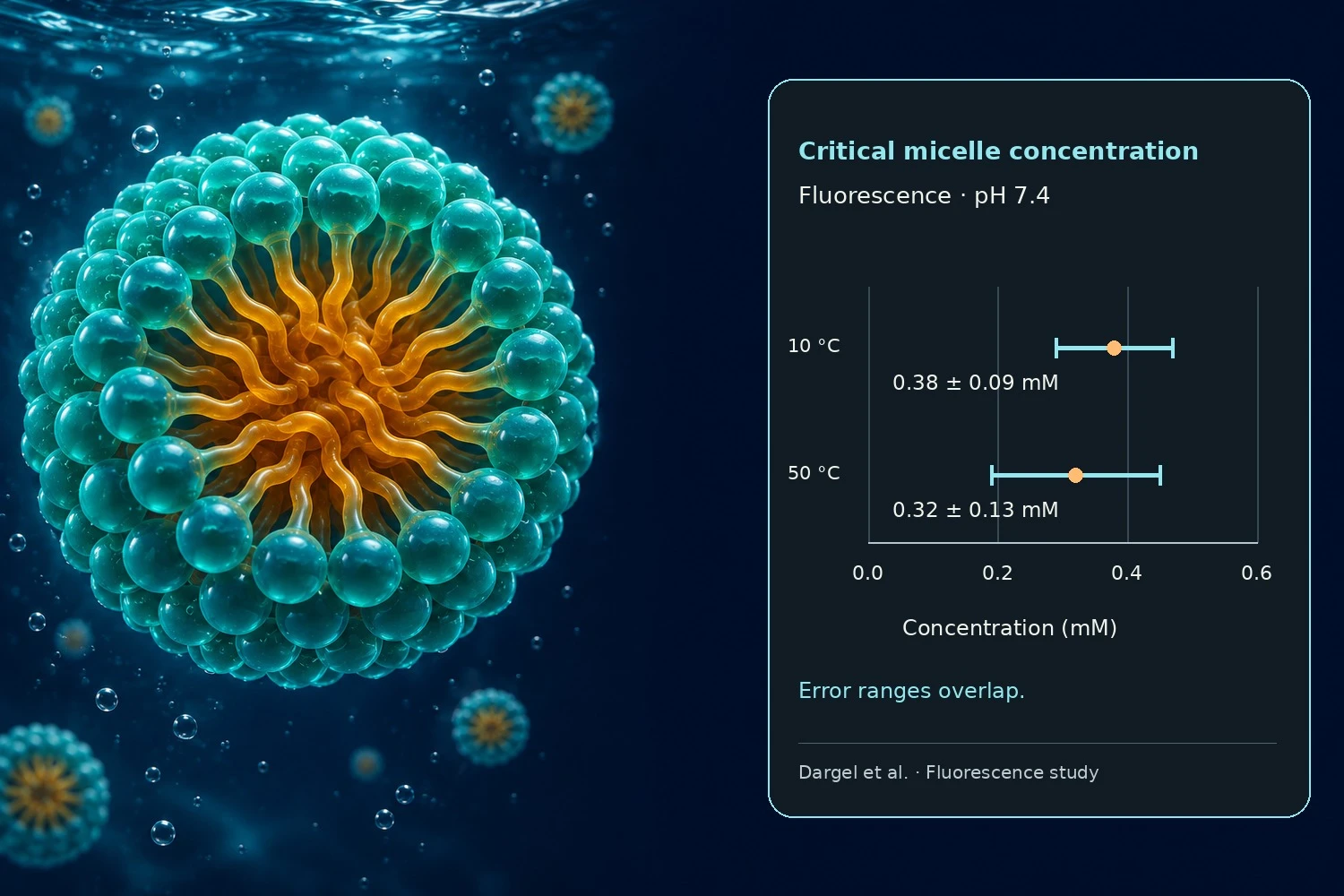
Escin's water-attracting sugar groups and hydrophobic backbone allow the molecules to assemble into micelles as their concentration rises. In a fluorescence study at pH 7.4, researchers estimated a critical micelle concentration of 0.38 ± 0.09 mM at 10 °C and 0.32 ± 0.13 mM at 50 °C. The uncertainty ranges overlap, so the two estimates provide limited evidence for a temperature difference. The team also used small-angle X-ray scattering to examine micelle structure. Together, these methods address two questions about self-assembly: when aggregation begins and how the resulting aggregates are organized.
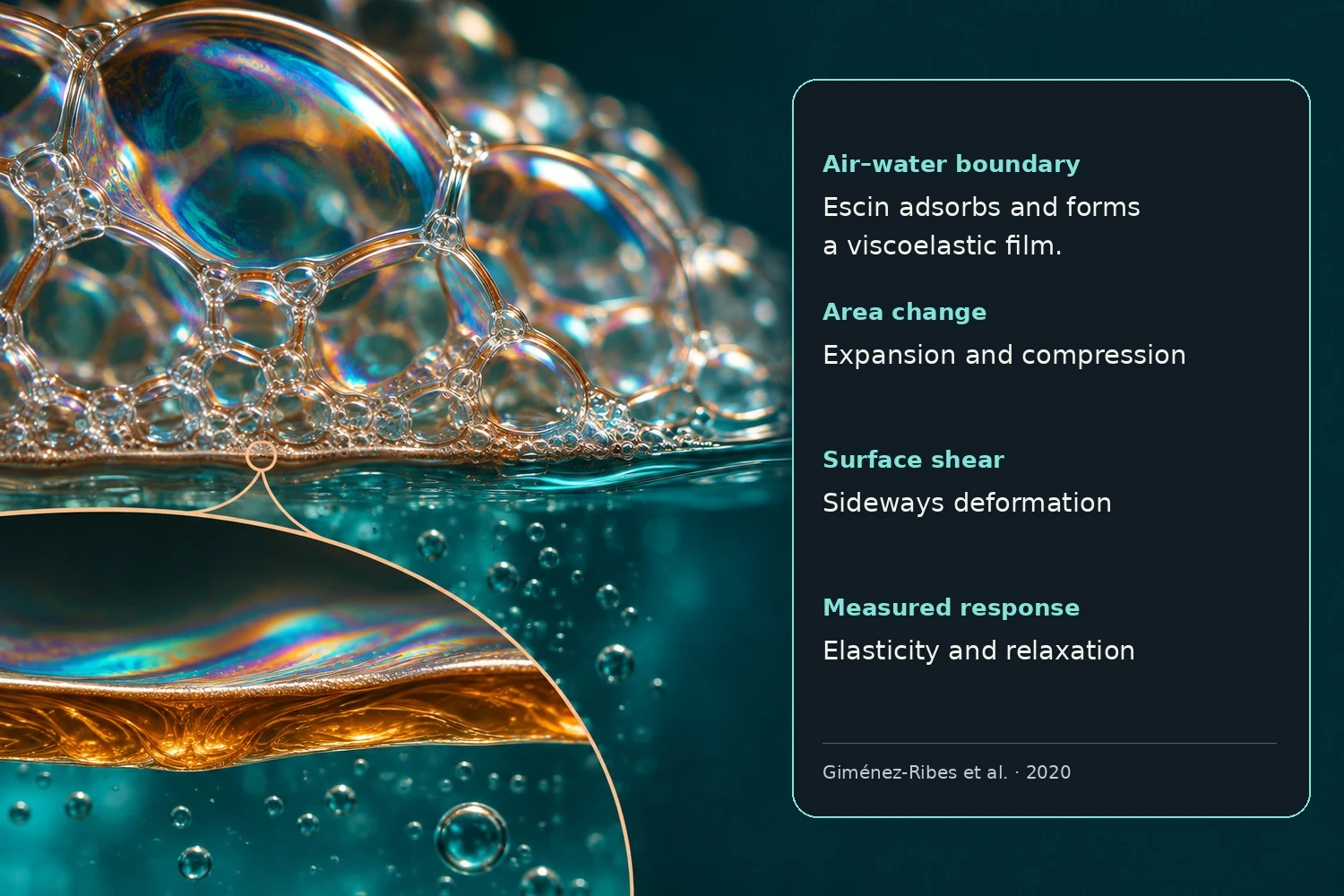
Why Escin Forms Elastic Films at the Air–Water Interface
Escin accumulates at the air–water interface, where adsorbed molecules can form a film that is both elastic and capable of dissipating energy. Researchers probed this behavior by changing the area of the interface and by shearing it sideways. These experiments measure how the film responds to deformation and how it relaxes afterward. Surface tension describes a different property: the energy required to create additional interfacial area under given conditions. This distinction helps explain why researchers use interfacial rheology alongside surface-tension measurements when studying plant saponins in model foams.
Why pH Matters in Escin Experiments
Escin contains a carboxyl group that can gain or lose a proton as solution pH changes. A study of escin solutions reported an apparent pKa of 4.7 ± 0.2. Below that range, the protonated form predominates, while above it, more molecules carry a negative charge. The study describes how protonated escin can form tightly packed layers with high interfacial elasticity. When comparing laboratory results, reporting the final pH, electrolyte composition, and escin concentration helps establish whether the measurements were made under comparable conditions.

If you are looking for a high-quality manufacturer of peptides, compounds, plant extracts, and other products with whom to establish a long-term, stable partnership, Shaanxi Medibridge Biotech Co., Ltd. is your ideal choice. Please feel free to contact us at hi@medibridgeapi.com. Or message us on WhatsApp at +44 07548632075.


