


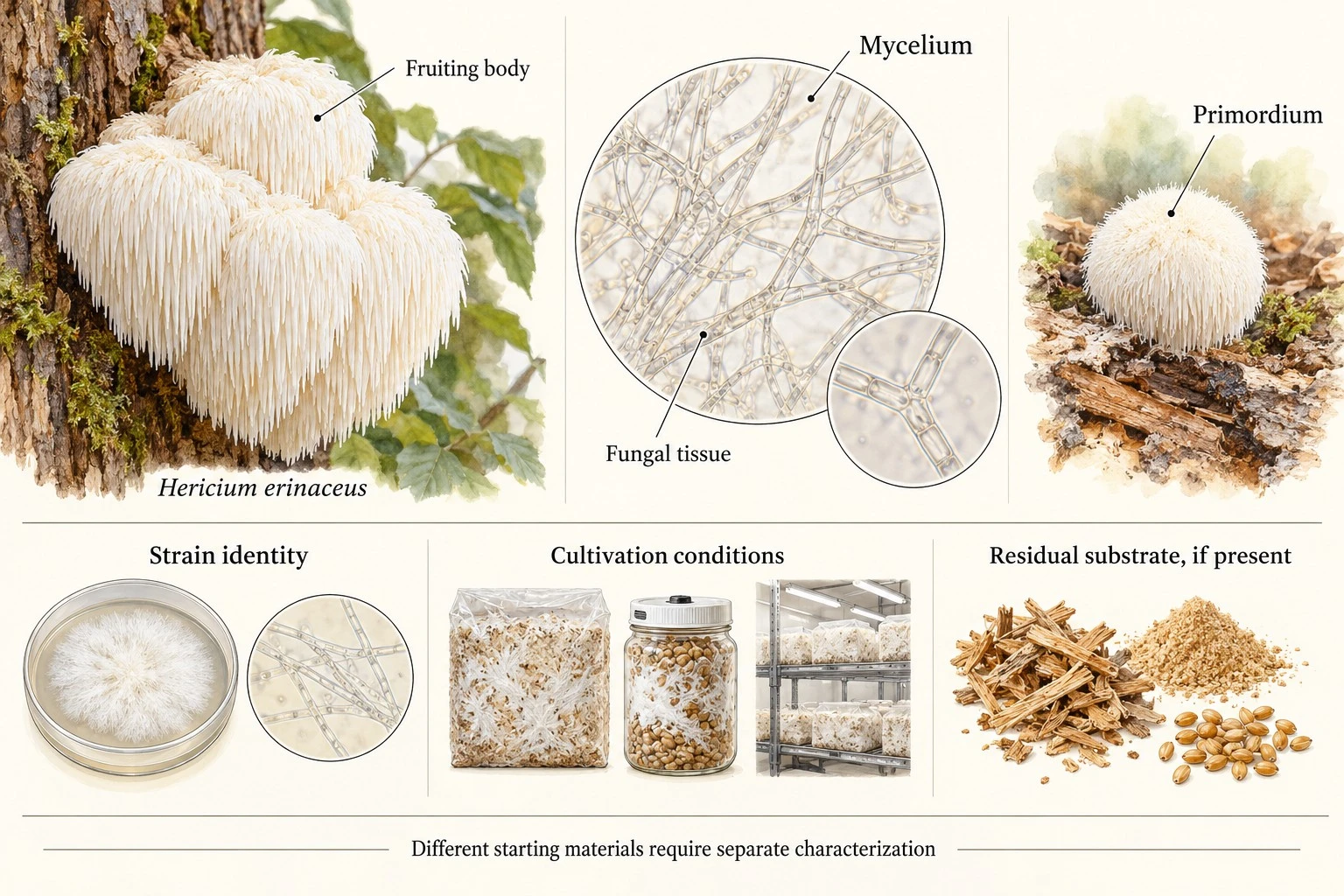
Fruiting Bodies and Mycelium Represent Different Materials
The visible mushroom is the fruiting body, while mycelium consists of the branching fungal filaments involved in growth and nutrient acquisition. Both belong to Hericium erinaceus, but their chemical profiles can differ. One study compared mycelium, developing primordia, and mature fruiting bodies, measuring selected metabolites against reference standards. This distinction matters when describing an extract: the species name alone does not identify the starting material. Research documentation should specify the fungal tissue, strain where available, cultivation conditions, and whether residual growth substrate is present in the harvested material.
Hericenones and Erinacines Expand the Chemical Picture
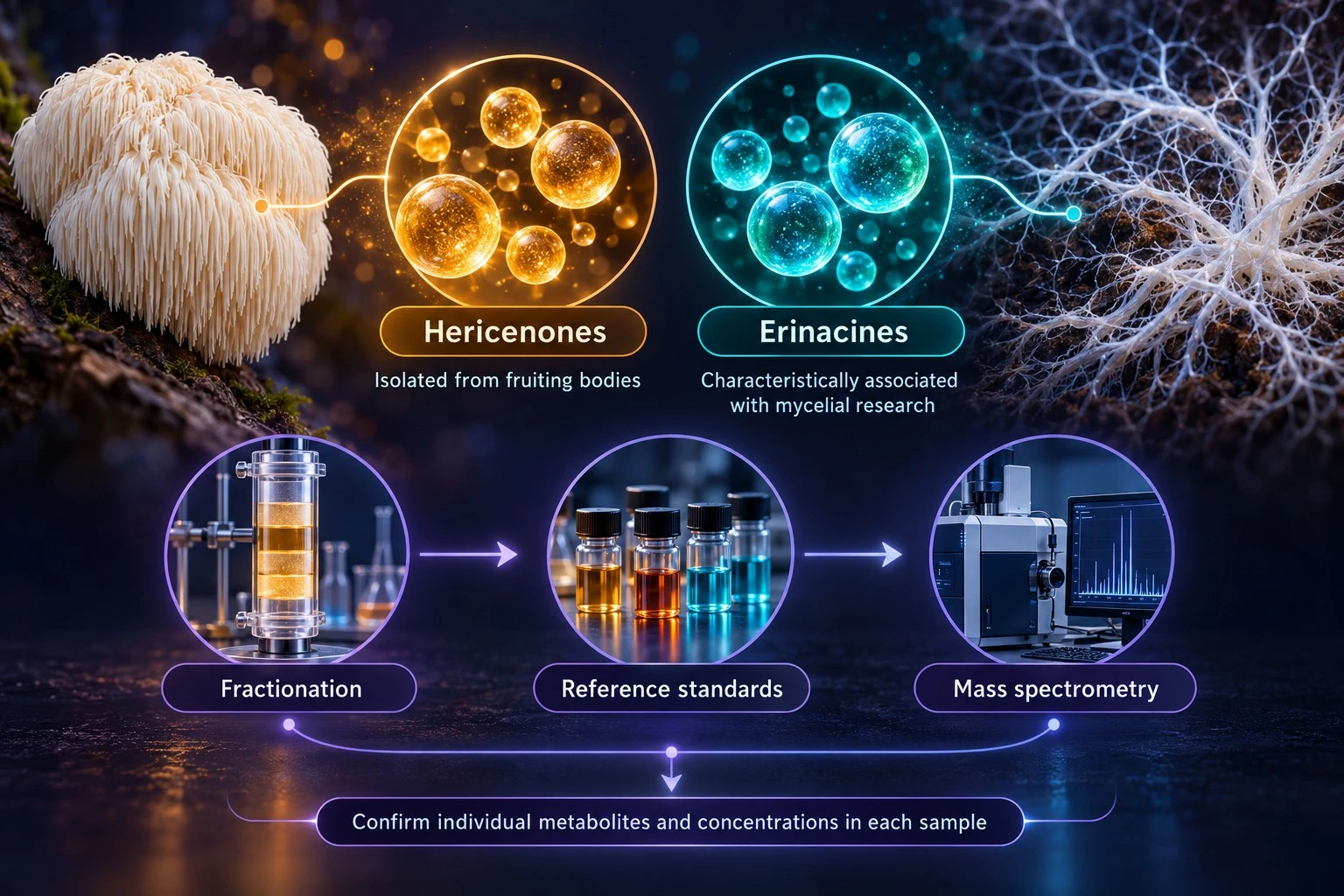
Hericenones and erinacines are two extensively investigated groups of specialized lion's mane metabolites. Hericenones have been isolated from fruiting bodies, while erinacines are characteristically associated with mycelial research. These associations provide useful starting points, but they should not replace direct analysis of a particular sample. Researchers have combined chemical synthesis, fractionation, and mass spectrometry to confirm additional endogenous hericenone-related compounds. This work illustrates how fungal chemistry continues to develop through experimental identification. An extract's name or source description alone cannot establish which individual metabolites it contains or their concentrations.
Polysaccharides Require Structural Characterization
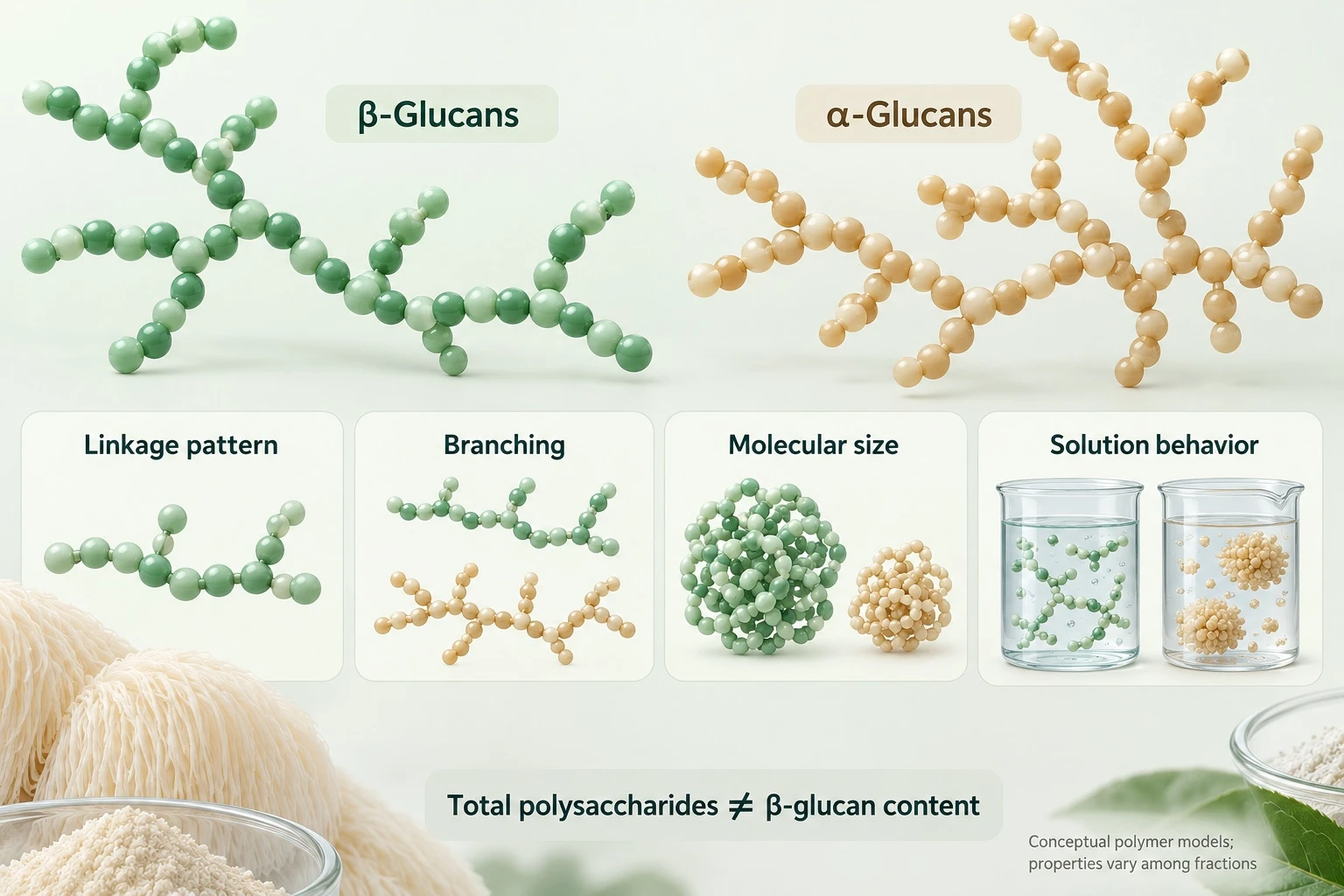
Lion's mane polysaccharides are diverse carbohydrate polymers rather than a single uniform ingredient. Research has characterized both beta-glucans and alpha-glucans from its fruiting bodies. Their properties depend on features such as linkage pattern, branching, molecular size, and behavior in solution. For example, one isolated beta-glucan was only slightly water-soluble, demonstrating why all mushroom polysaccharides should not be described as readily soluble. A total polysaccharide result also does not establish beta-glucan content. Detailed research can combine monosaccharide analysis, linkage studies, chromatography, and spectroscopy to describe the fraction actually being investigated.
Extraction Shapes the Finished Material
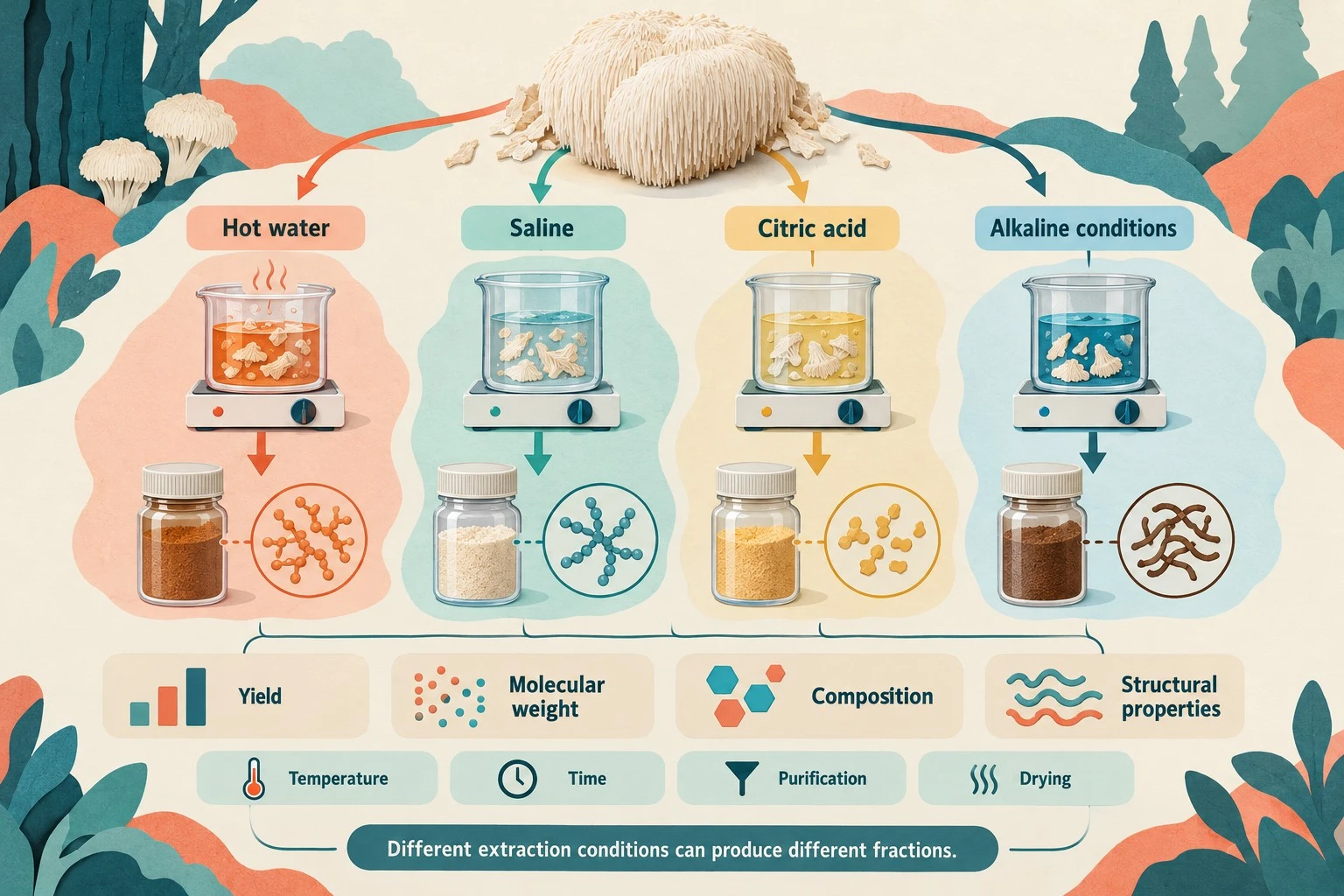
Extraction determines which components are recovered and can influence the characteristics of the resulting fractions. A comparative study used hot water, saline, citric acid, and alkaline conditions to extract lion's mane polysaccharides. The preparations differed in yield, molecular weight, composition, and preliminary structural properties. These findings explain why extracts made through different processes cannot be assumed equivalent. A useful material description should report the solvent system, temperature, extraction time, purification steps, and drying method. Extract ratios alone provide limited information unless they are accompanied by measured composition and a clear manufacturing description.
Cultivation Offers a Biotechnology Research Platform
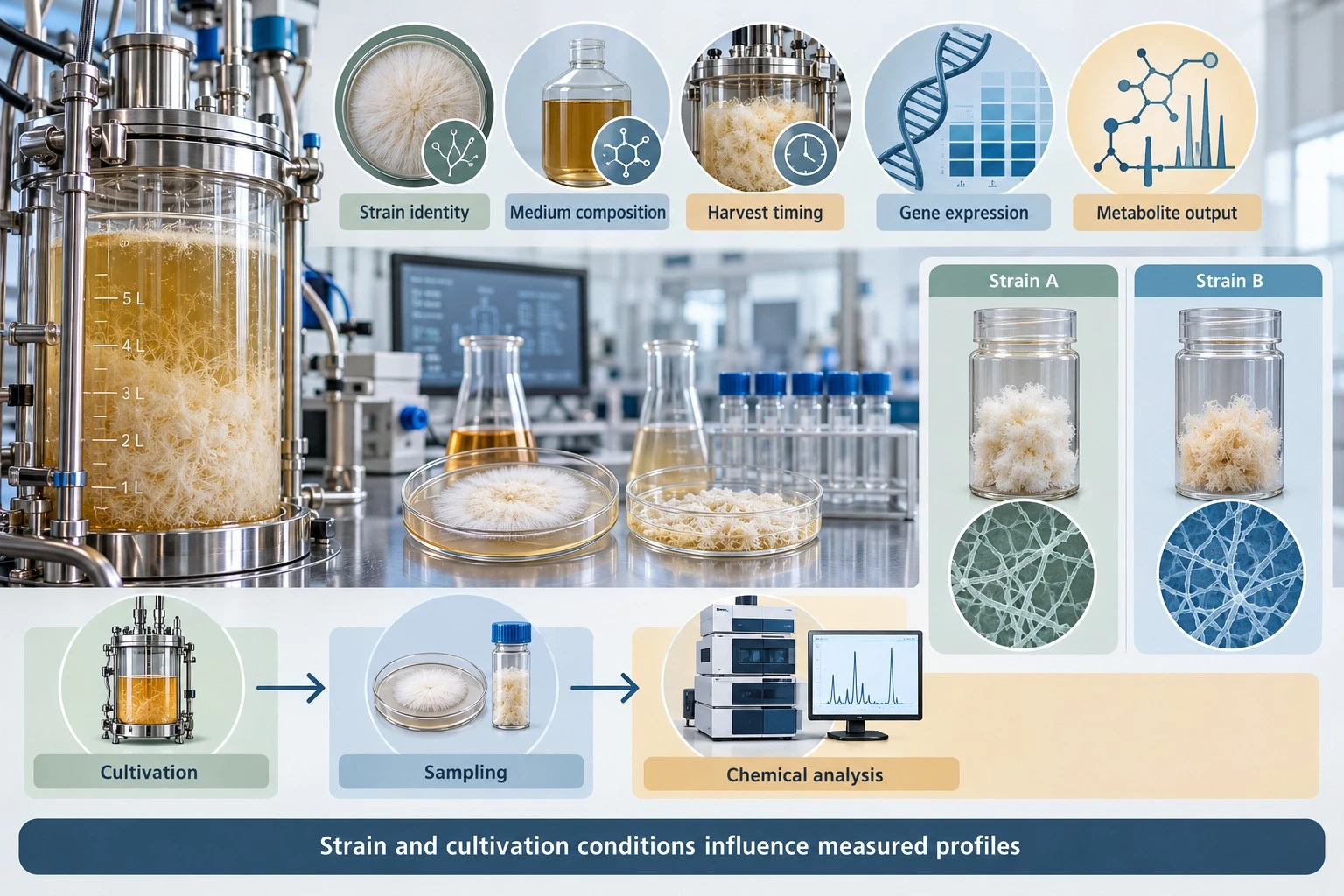
Lion's mane cultivation provides opportunities to investigate how fungal genetics and growth conditions influence metabolite production. An original study examined erinacine concentrations across mycelial strains and found significant strain-dependent differences in content and yield. Other research compared cultivation media and tissue types alongside expression of genes associated with erinacine biosynthesis. Together, these approaches connect culture conditions with chemical measurements rather than relying on appearance or biomass alone. For reproducible experiments, researchers should document strain identity, medium composition, harvest timing, and measured metabolite output under the conditions actually tested.
Analytical Quality Supports Meaningful Comparisons
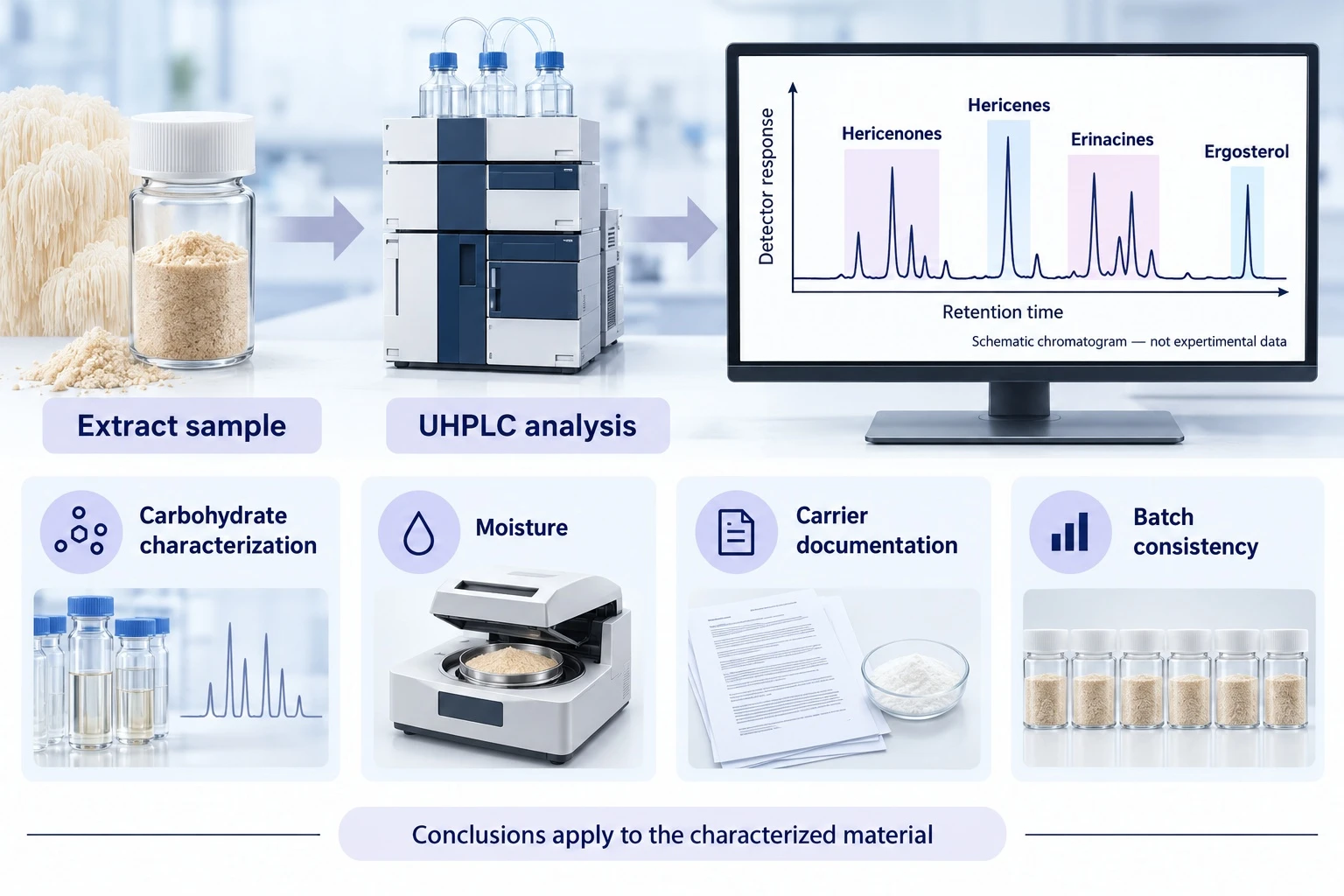
Reliable lion's mane research depends on knowing what the experimental material contains. Published analytical work has used UHPLC-based methods to separate and measure hericenones, hericenes, erinacines, and ergosterol in raw materials and products. Such measurements complement carbohydrate characterization rather than replacing it. A practical quality assessment can also document moisture, added carriers, and batch consistency, with methods selected for the intended experiment. Comparing extracts on this basis helps distinguish differences in composition from differences in testing conditions. It also keeps conclusions tied to the characterized material rather than every product bearing the same mushroom name.
Shaanxi Medibridge Biotech Co., Ltd. is dedicated to supplying a wide range of research-grade products - including peptides, chemical compounds, and extracts - to laboratories, academic institutions, and biotechnology organizations worldwide. If you are seeking a partner for high-purity raw materials to establish a long-term collaboration, please email hi@medibridgeapi.com.


