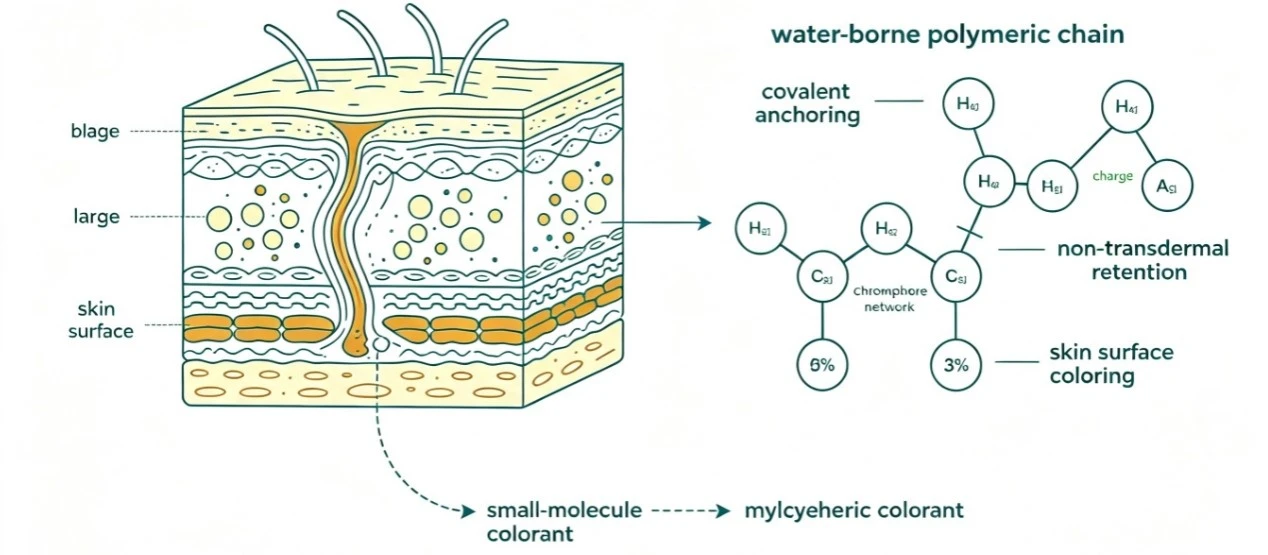
Core Technical Principle: Covalently-Bound Chromophore for Non-Transdermal Performance
Traditional small-molecule colorants feature low molecular weight and may penetrate skin barriers, bringing potential safety risks. This polymeric colorant chemically grafts chromophore groups onto waterborne polyurethane polymer chains via covalent bonding. Its molecular weight exceeds skin penetration thresholds, so it stays on the skin surface without crossing epidermal layers. The water-soluble structure delivers bright tinting effect, showing good compatibility within aqueous-based cosmetic systems for leave-on and rinse-off products.
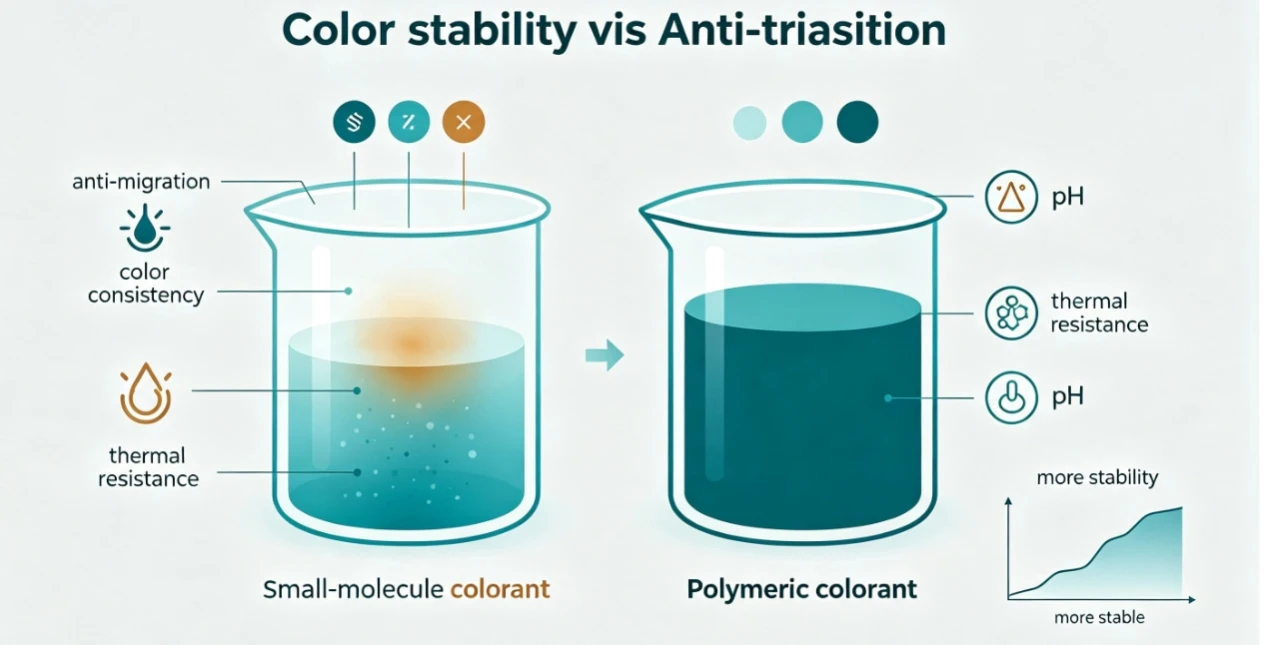
Improved Color Stability with Anti-Migration and Thermal-Resistant Properties
Beyond non-penetrating safety merits, this polymeric colorant achieves outstanding color fastness compared with conventional dyes. Covalent linkage prevents chromophore migration and leakage under temperature fluctuation or solvent interference. It maintains consistent shade across varied pH environments, reducing discoloration and fading risks in finished cosmetics. Formulators benefit from simplified color matching workflows. It performs steadily in toners, creams and cleansing products without extra dispersion processing requirements.
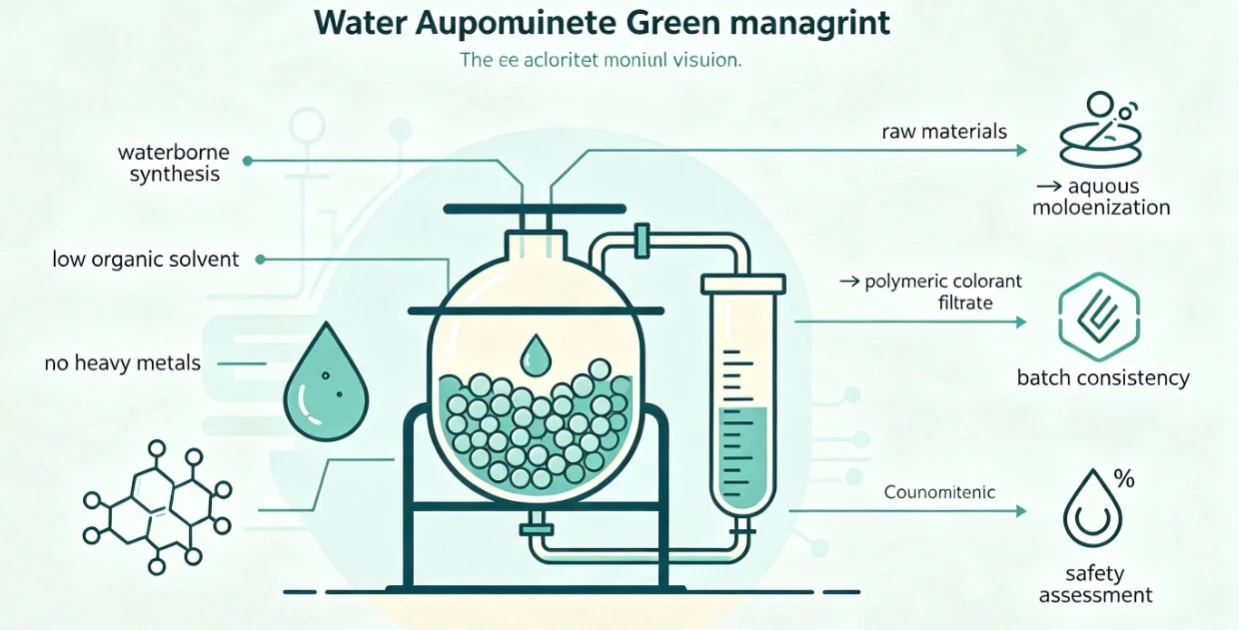
Green Manufacturing Profile Meets Modern Clean-Beauty Standards
The waterborne polyurethane synthetic route avoids organic solvent inputs and heavy-metal contaminants throughout production. Without toxic auxiliaries, the final ingredient passes systematic toxicological and dermatological safety assessments. Water-phase polymerization lowers waste discharge and environmental footprint during manufacturing. It aligns with global clean-beauty demands for low-irritation, eco-friendly color additives. Such production design supports large-scale stable batch output for industrial cosmetic manufacturing scenarios.
Industry Outlook: Reshaping Cosmetic-Coloring Market Landscape
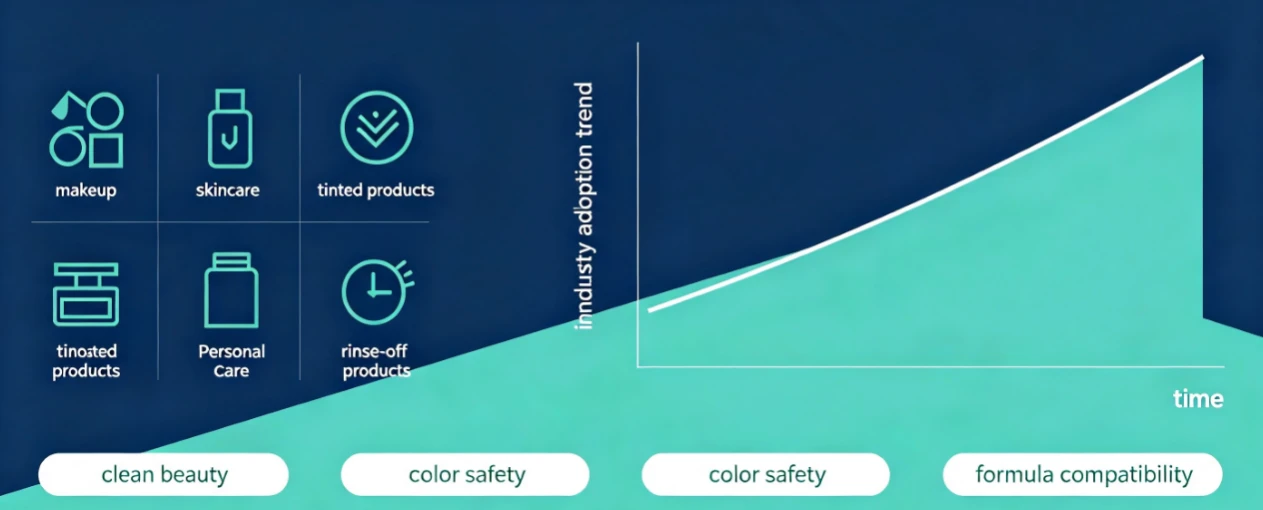
As the officially registered domestic polymeric colorant new raw material, it fills the technical gap of non-transdermal cosmetic coloring in China. Brands are exploring its application in makeup, skin-care tinted products and personal-care rinsable items. Regulators and formulators pay close attention to its follow-up shade expansion. Industry insiders expect this self-innovated raw material to drive further upgrade of global cosmetic color-system development in the near future.