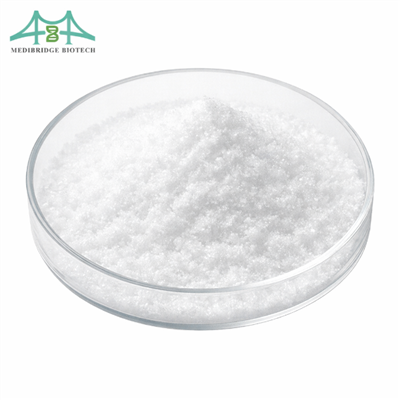
GHK-Cu Powder is a copper-binding peptide complex formed from GHK, a tripeptide made from glycine, histidine, and lysine, and copper ions. It is commonly discussed in therapeutic and cosmetic contexts because copper, collagen, fibroblasts, and extracellular matrix remodeling are central to skin repair biology.Human evidence is most relevant to topical skin and wound studies, while injectable and systemic anti-aging claims remain much less certain.
Shaanxi Medibridge Biotech Co., Ltd. supplies cosmetic raw materials and active ingredients for different formulation needs. We focus on stable quality, clear specifications, and flexible packaging options for customers working on skincare development, private label projects, or bulk ingredient purchasing. Bulk supply, custom packaging, and vial filling services can be arranged according to actual project requirements.
COA
|
|
||
|
Product Name |
CAS Number |
Batch Number |
|
GHK-Cu Powder |
89030-95-5 |
MB2602291258 |
|
Manufacturer Date |
Analysis Date |
Expiry Date |
|
2026/2/25 |
2026/2/28 |
2028/2/26 |
|
Sample Qty Base |
Packing |
Test Method |
|
5.36KGS |
0.52kg/drum |
HPLC |
|
|
||
|
Item |
Standard |
Results |
|
Appearance |
Blue powder |
Conforms |
|
Identification (HPLC) |
Retention time consistent with reference standard |
Conforms |
|
Molecular Formula |
C14H21CuN6O4 |
Conforms |
|
Molecular Weight |
400.91 |
Conforms |
|
Purity (HPLC) |
NLT 99.0% |
99.52% |
|
Solubility |
Soluble in dimethyl sulfoxide |
Conforms |
|
Loss on Drying |
NMT 1.0% |
0.52% |
|
Residue on Ignition |
NMT 0.5% |
0.32% |
|
Heavy Metals |
NMT 10 ppm |
Conforms |
|
Microbial Limits |
Complies with food/cosmetic grade standards |
Conforms |
|
Storage |
Store in cool & dry place. keep away from strong light and heat |
|
|
Conclusion |
The batch conforms to the IN-HOUSE standard |
|
|
|
||


Biological Mechanism Of Action
GHK-Cu may influence skin repair and regeneration through multiple biological pathways. It is reported to support extracellular matrix remodeling by regulating collagen, elastin, glycosaminoglycans, matrix metalloproteinases, and their inhibitors. This makes it biologically relevant to wound healing, skin elasticity, and photoaging-related tissue changes.
It may also modulate oxidative stress and inflammation. By binding copper in a biologically regulated form, GHK-Cu may affect copper-dependent antioxidant systems, reduce reactive oxygen species–related damage, and help limit excessive inflammatory responses in damaged or aging skin.
In addition, GHK-Cu has been studied for effects on angiogenesis, fibroblast activity, keratinocyte repair, and gene expression linked to tissue regeneration. These mechanisms suggest a broader role in restoring the skin microenvironment, although mechanistic plausibility should not be interpreted as definitive clinical proof.

GHK-Cu & Cellular Regeneration

Preclinical research on GHK-Cu explores fibroblasts, collagen, glycosaminoglycans, angiogenesis, inflammation, matrix metalloproteinases, tissue inhibitors, and wound models. These findings are valuable for mechanism, but they cannot substitute for controlled human outcomes.Human dermal fibroblasts are central to GHK-Cu research because fibroblasts help produce collagen and extracellular matrix molecules.
Relationship with Copper Ions
GHK-Cu's biological significance is closely tied to copper, an essential trace element involved in collagen and elastin cross-linking, antioxidant defense, mitochondrial energy metabolism, pigmentation, and neurotransmitter-related enzymes. By binding Cu²⁺, GHK may act as a carrier that presents copper in a more regulated and potentially less reactive form than free copper ions. This may support tissue repair and copper-dependent enzyme activity while reducing uncontrolled oxidative reactions. However, copper also carries risks: excessive or poorly regulated copper exposure can promote oxidative stress, inflammation, protein oxidation, lipid peroxidation, and cellular toxicity. Therefore, GHK-Cu should be understood as a dose-sensitive copper-peptide complex, not simply as a "more is better" active ingredient.

Anti-Aging Claims

GHK-Cu has biologically plausible topical anti-aging effects because collagen production, glycosaminoglycans, fibroblast activity, skin elasticity, and extracellular matrix remodeling are directly involved in skin aging. However, biological plausibility does not mean it has been proven to reverse aging or prevent disease. Current evidence is stronger for topical effects on skin appearance, photoaging, and wrinkle-related parameters than for broad systemic anti-aging claims such as longevity, cognitive improvement, liver repair, or chronic disease prevention. Online marketing often combines skin repair, hair growth, wound healing, anti-inflammatory, antioxidant, and injectable peptide therapy claims into one broad promise. Published evidence is more limited, focusing mainly on topical skin and wound-related studies, while human safety data for injectable GHK-Cu remain limited.
Research Value In Dermatology
Anti-Skin-Aging Research
Skin aging is a multifactorial biological process involving collagen reduction, elastic fiber fragmentation, increased matrix metalloproteinase activity, chronic low-grade inflammation, ultraviolet-induced oxidative damage, and declining fibroblast function.
GHK-Cu may help improve skin-aging-related parameters by supporting extracellular matrix repair and modulating inflammation and oxidative stress. However, from a rigorous scientific perspective, it is important to distinguish between in vitro cell studies, animal studies, small-scale human studies, cosmetic efficacy evaluations, and clinical therapeutic evidence.
At present, GHK-Cu is widely used in skincare products, but when discussing it as a drug or therapeutic intervention, the level of evidence should still be interpreted cautiously.


Wound and Scar Research
GHK-Cu has been investigated for use in acute wound healing, chronic wound repair, burn recovery, post-surgical scar management, and restoration of damaged skin barriers.
Its theoretical advantage is that it may not only promote tissue repair but also improve collagen organization and tissue remodeling. However, the final outcome can be strongly influenced by dosage, delivery system, route of administration, and the condition of the wound microenvironment.
Hair Growth-Related Research
GHK-Cu has also been studied in the context of hair growth and hair follicle biology.
Possible mechanisms include prolonging the anagen phase of the hair cycle, improving the microenvironment around hair follicles, modulating inflammation, promoting angiogenesis, and influencing dermal papilla cell activity.
However, compared with established treatments such as minoxidil and finasteride, the clinical evidence supporting GHK-Cu for hair loss remains relatively limited. Therefore, it is better regarded as an auxiliary or exploratory research candidate rather than a proven primary treatment.

Application Directions

GHK-Cu has several potential research applications, mainly in skin regeneration, anti-aging biology, hair follicle studies, inflammation and oxidative stress models, and biomaterial-based delivery systems. It has been explored for wound-healing dressings, post-procedure skin repair, chronic wound support, extracellular matrix regulation, fibroblast function, collagen metabolism, and photoaging models.
In hair research, it may be studied for effects on dermal papilla cells, follicle cycling, scalp inflammation, and angiogenesis. GHK-Cu is also relevant to ROS injury, UV-induced damage, inflammatory signaling, and macrophage-related studies.
In materials science, it may be incorporated into hydrogels, nanocarriers, microneedles, biodegradable polymers, or functional dressings for controlled topical delivery.
FAQ
What is GHK-Cu peptide used for?
GHK-Cu is a naturally occurring copper tripeptide found in human plasma, saliva, and urine that declines with age.
What are the negative side effects of GHK-Cu?
GHK-Cu is generally safe and well-tolerated, but it can cause mild side effects like local skin irritation, redness, itching, or injection-site pain.
What's the difference between GHK-Cu and ahk-Cu?
GHK-Cu and AHK-Cu are both copper-binding tripeptides, but they differ in their chemical structure, natural origin, and primary cosmetic use.
What does GHK-Cu do to you?
GHK-Cu is a naturally occurring peptide complex that promotes tissue repair, collagen production, and anti-inflammatory activity.
If you are looking for a high-quality GHK-Cu Powder manufacturer with whom you can establish a long-term, stable partnership, then Shaanxi Medibridge Biotech Co., Ltd. would be your best business partner. Don't hesitate to contact us at hi@medibridgeapi.com.
Hot Tags: ghk-cu powder, China ghk-cu powder manufacturers, suppliers, factory, biotinoyl tripeptide 1 powder, Carnosine Powder, Dipetide Diaminobutyroyl Benzylamide Diacetate, myristoyl pentapeptide 17 powder, Oligopeptide 1 powder, Tripeptide 1 Powder