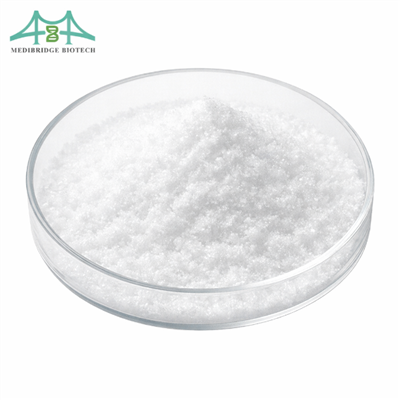
Tripeptide-1 powder is a synthetic tripeptide composed of glycine, histidine, and lysine (GHK), designed to replicate a naturally occurring peptide fragment associated with extracellular matrix (ECM) turnover. It is produced through controlled solid-phase peptide synthesis (SPPS), ensuring high sequence accuracy, consistent purity, and reproducible quality suitable for research and formulation applications.
As a minimal structural peptide, Tripeptide-1 is commonly utilized in studies related to peptide-based signaling and molecular interaction systems. Its defined sequence and compact size make it a representative model for exploring matrix-associated communication, peptide diffusion behavior, and metal-binding interactions within biochemical environments, without directly serving as a structural component.
Shaanxi Medibridge Biotech Co., Ltd. specializes in the development and supply of high-quality peptide raw materials, offering standardized production processes and flexible customization options to support diverse research and formulation needs.
COA
|
|
||
|
Product Name |
CAS Number |
Batch Number |
|
tripeptide 1 powder |
72957-37-0 |
MB2601291030 |
|
Manufacturer Date |
Analysis Date |
Expiry Date |
|
2026-01-29 |
2026-01-30 |
2028-01-28 |
|
Sample Qty Base |
Packing |
Test Method |
|
200KGS |
25kg/drum |
HPLC |

|
Item |
Standard |
Results |
|
Appearance |
White to off-white lyophilized powder |
Conforms |
|
Identification (HPLC) |
Retention time consistent with reference standard |
Conforms |
|
Peptide Sequence |
Gly-His-Lys (GHK) |
Conforms |
|
Molecular Formula |
C14H24N6O4 |
Conforms |
|
Molecular Weight |
~340.38 |
Conforms |
|
Purity (HPLC) |
NLT 98.0% |
98.75% |
|
Solubility |
Soluble in water |
Conforms |
|
Water Content (Karl Fischer) |
NMT 5.0% |
2.22% |
|
Acetate Content |
NMT 12.0% |
6.31% |
|
Heavy Metals |
NMT 10 ppm |
Conforms |
|
Related Substances |
NMT 2.0% |
Conforms |
|
Storage |
Store in cool & dry place. keep away from strong light and heat |
|
|
Conclusion |
The batch conforms to the IN-HOUSE standard |
|
|
|
||

Minimal Tripeptide Architecture & Functional Motif
Within this sequence, the histidine residue plays a central role due to its imidazole side chain, which provides a well-characterized coordination site for metal ions. The presence of glycine contributes to structural flexibility, while lysine offers a reactive terminal group that may participate in intermolecular interactions within aqueous and matrix-like environments.
This combination of simplicity and functional specificity enables Tripeptide-1 powder to act as a representative motif for investigating how short peptides maintain activity through limited but strategically positioned residues, making it particularly relevant in studies focused on minimal sequence design and structure–function relationships.

Fibroblast Sensory Activation Model
Tripeptide-1 functions as a matrix-derived signaling motif capable of interacting with fibroblast surface receptors and extracellular matrix (ECM) components. As a minimal tripeptide structure, it mimics naturally occurring peptide fragments generated during ECM turnover, allowing it to be recognized as a biological "repair signal" within the dermal microenvironment.
Upon interaction, fibroblasts respond by modulating cellular activity associated with matrix remodeling. This includes enhanced synthesis of structural proteins such as collagen and glycosaminoglycans, as well as improved coordination of ECM organization.
Due to its low molecular weight and defined sequence, Tripeptide-1 demonstrates efficient diffusion and accessibility within aqueous systems, making it a suitable model compound for studying fibroblast-mediated repair mechanisms and peptide-driven skin regeneration pathways.

Copper-Affinity Peptide System
Intrinsic metal-binding capability enabling functional peptide–ion interactions
Tripeptide-1 (GHK) possesses a well-characterized metal-binding motif, primarily attributed to the histidine residue within its sequence. This structural feature allows the peptide to form stable complexes with transition metal ions, particularly copper (Cu²⁺), under physiological or formulation-relevant conditions.
This copper-binding capability plays a significant role in biochemical systems, where metal ions are essential cofactors in enzymatic reactions, redox balance, and tissue remodeling processes. The peptide–metal interaction enhances the functional versatility of Tripeptide-1, positioning it as a foundational structure for studying metal-mediated biological activity.
Although distinct from pre-complexed copper peptides, Tripeptide-1 serves as a precursor framework capable of participating in dynamic metal coordination, offering flexibility in formulation design and mechanistic exploration in both cosmetic and research applications.

Peptide-Mediated Gene Signaling Framework
Modulates cellular signaling pathways associated with matrix synthesis and repair
Tripeptide-1 is widely utilized as a model signaling peptide in studies investigating peptide-mediated gene expression and intracellular communication. Its defined sequence and biological relevance enable it to participate in signaling cascades that influence the expression of genes related to extracellular matrix production and cellular repair mechanisms.
Research models suggest that peptides of this class may contribute to the upregulation of genes involved in collagen synthesis, while simultaneously modulating pathways associated with inflammation and oxidative stress. These signaling effects are not structural in nature but are mediated through biochemical communication between the peptide and cellular receptors.
As a result, Tripeptide-1 is frequently applied in peptide research, formulation development, and molecular modeling as a representative system for understanding how short-chain peptides regulate gene-level responses in complex biological environments.

FAQ
Q: What is the recommended usage level of Tripeptide-1 in formulations?
A: Tripeptide-1 is typically used at concentrations ranging from 0.01% to 0.1%, depending on formulation objectives and system compatibility. Optimization is recommended based on specific product development requirements.
Q: How should Tripeptide-1 powder be dissolved?
A: The powder is water-soluble and can be dissolved in purified water or aqueous buffers. It is recommended to add at low temperatures (<40°C) to maintain structural stability.
Q: Is Tripeptide-1 suitable for cosmetic applications?
A: Yes, Tripeptide-1 is widely used in cosmetic research and formulation development, particularly in products targeting anti-aging, skin repair, and conditioning applications.
Q: How should the product be stored to ensure stability?
A: Store in a cool, dry environment (2–8°C), protected from light and moisture. For long-term storage, keep in sealed containers to prevent degradation.
Q: Do you support customization or OEM services?
A: Yes, we offer flexible customization, including purity levels, packaging formats (vials or bulk), and OEM services such as blending, filling, and private labeling.
Hot Tags: tripeptide 1 powder, China tripeptide 1 powder manufacturers, suppliers, factory, Carnosine Powder, cosmetic peptides, Dipetide Diaminobutyroyl Benzylamide Diacetate, myristoyl pentapeptide 17 powder, Oligopeptide 1 powder, Tripeptide 1 Powder