




Butenafine Hydrochloride Powder is a topical antifungal drug that belongs to the class of allylamine antifungal drugs. This product works by preventing the production of fungal ergosterol, suppressing squalene epoxidase in the fungal cell membrane, and ultimately rupturing the fungal cell membrane to cause cell death. Butenafine's high efficiency, broad-spectrum antifungal activity, and fewer adverse reactions make it a commonly used topical drug in clinical practice.
It can be used in many different ways to treat cutaneous fungal diseases. Its significant antifungal activity and fewer side effects make it the first choice for topical drugs for common fungal infections. Whether it is common tinea pedis, tinea corporis, tinea cruris, or tinea versicolor and Candida albicans infections, butenafine has shown promising efficacy. Fungal infections are prone to recurrence, especially in humid, warm environments or without complete treatment. Butenafine can not only treat existing infections but can also be used as a preventive measure in people at high risk of fungal infections, such as athletes, miners, and others who have been in humid environments for a long time. Athletes are particularly susceptible to tinea pedis and tinea corporis due to frequent exercise and sweating. Butenafine can help these people quickly control infection and return to health. Diabetic patients have a weak immune system and are susceptible to fungal infections. Topical butenafine therapy can lower infection risk and accelerate recovery for these patients. So, as you can see, its application range is extensive.
Shaanxi Medibridge Biotech Co., Ltd. focuses on the supply of pharmaceutical raw materials and research-use compounds. We support customers with stable quality, clear specification communication, flexible packaging options, and document-related support for different project stages.
COA
|
|
||
|
Product Name |
CAS Number |
Batch Number |
|
Butenafine Hydrochloride Powder |
101827-46-7 |
MB2608250266 |
|
Manufacturer Date |
Analysis Date |
Expiry Date |
|
2026/8/25 |
2026/8/26 |
2028/8/25 |
|
Sample Qty Base |
Packing |
Test Method |
|
800GS |
15GS/bottle |
HPLC |
|
|
||
|
Item |
Standard |
Results |
|
Appearance |
Powder |
Complies |
|
Color |
White powder |
Complies |
|
Particle Size |
100% pass 80 mesh |
Complies |
|
Water |
1.4%- 2.0% |
1.45% |
|
Assay |
97.5%- 101.0% |
99.8% |
|
Sulfated ash |
≤0.2% |
0.07% |
|
Related Impurity by HPLC |
Impurity M≤1.0% |
0.13% |
|
Oder |
Characteristic |
Complies |
|
Taste |
Characteristic |
Complies |
|
Loss on Drying |
≤5.0% |
2.20% |
|
Residue on Ignition |
≤0.1% |
0.05% |
|
Residual a'cetone |
≤0.1% |
Complies |
|
Residual Ethanol |
≤0.5% |
Complies |
|
Heave Mentals |
≤10ppm |
Complies |
|
Na |
≤0.1% |
<0.1% |
|
Pb |
≤3 ppm |
Complies |
|
Total Plate |
<1000CFU/g |
Complies |
|
Yeast & Mold |
<100 CFU /g |
Complies |
|
E. Coli |
Negative |
Complies |
|
Salmonella |
Negative |
Complies |
|
Conclusion |
The batch conforms to the IN-HOUSE standard |
|
|
|
||


Inhibition of Squalene Epoxidation
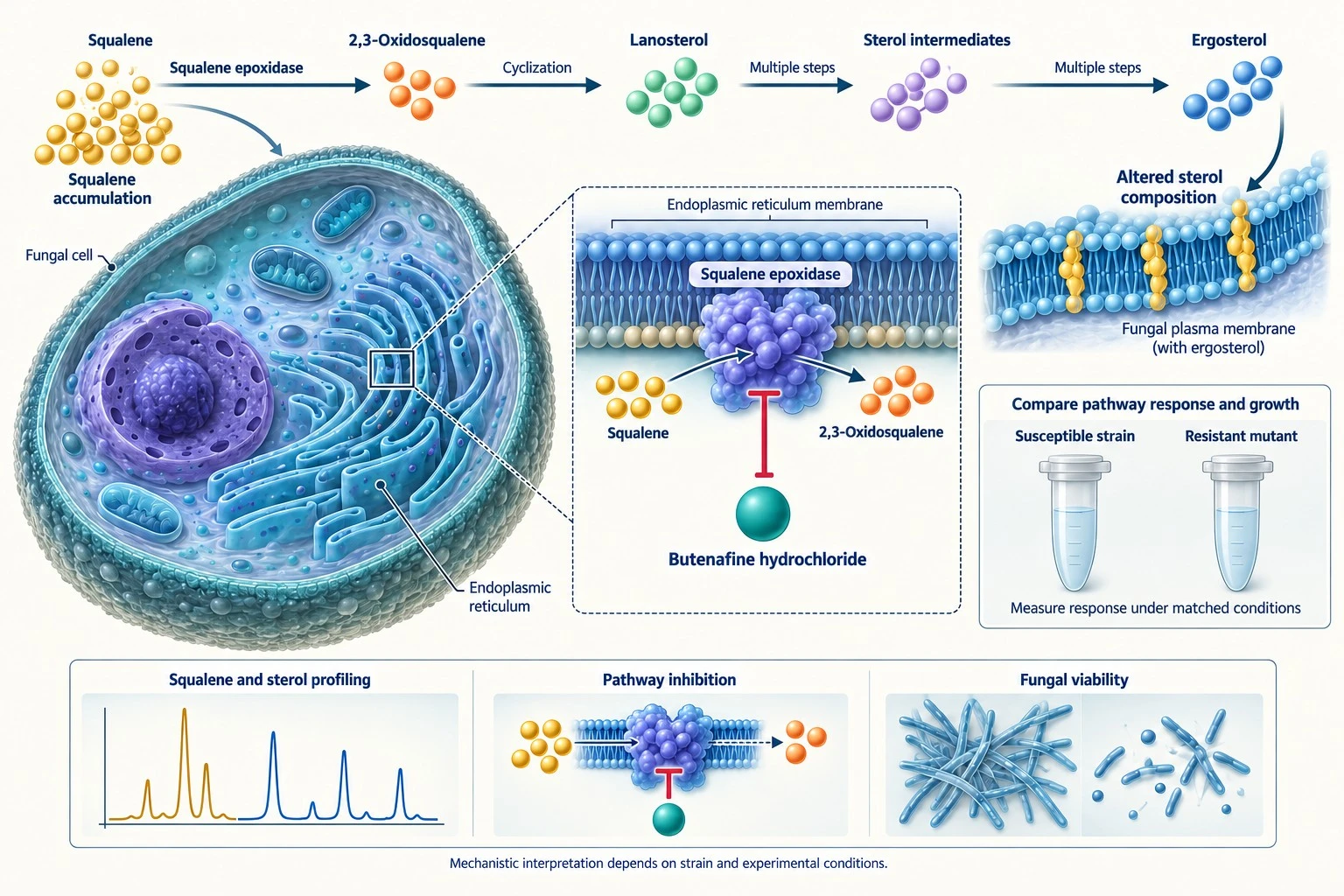
Butenafine hydrochloride is studied primarily for its inhibition of fungal squalene epoxidase, also called squalene monooxygenase. This enzyme participates in the conversion of squalene to 2,3-oxidosqualene, an early step in sterol biosynthesis.
The pathway can be simplified as:
Squalene → 2,3-oxidosqualene → lanosterol → subsequent sterol intermediates → ergosterol.
Original studies comparing susceptible strains and resistant mutants support the relationship between inhibition of squalene epoxidation and butenafine's antifungal activity.
Sterol Composition and Fungal Membrane Function
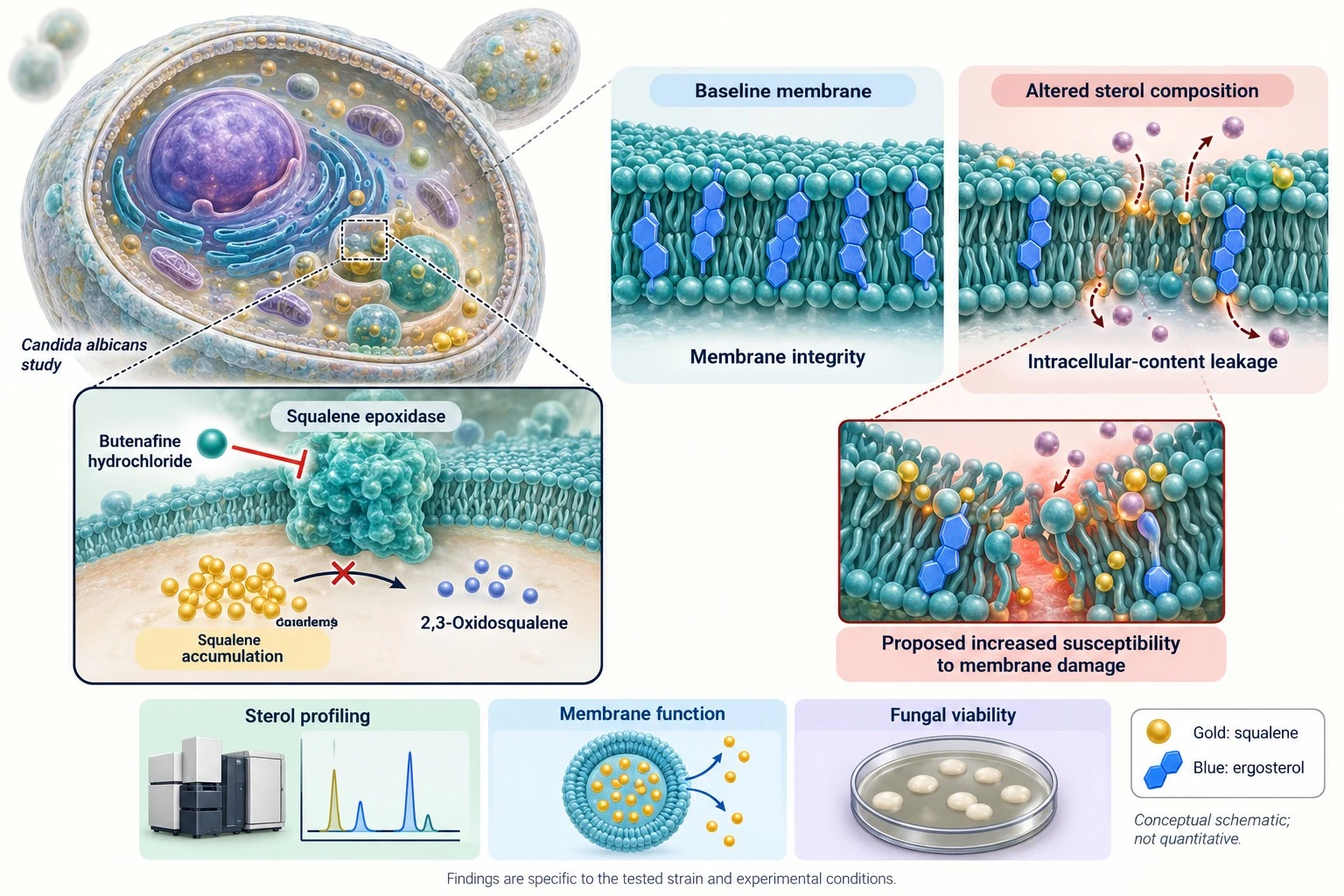
Butenafine research should examine squalene accumulation and changes in sterol composition alongside membrane function, rather than measuring ergosterol depletion alone.
An original Candida albicans study demonstrated inhibition of squalene epoxidation and membrane-related effects. The researchers proposed that altered cellular sterol composition increased susceptibility to butenafine's membrane-damaging activity. These findings apply to the tested strain and experimental conditions and should not automatically be generalized to all fungi.
Relationships with Azoles and Allylamines
Butenafine belongs to the benzylamine class and has a sterol-biosynthesis mechanism related to that of allylamine antifungals. Its action involves an earlier pathway step than the lanosterol 14α-demethylation process generally targeted by azoles.
|
Comparison |
Research purpose |
|
Butenafine versus allylamines |
Examine differences in activity and species susceptibility despite related target processes |
|
Butenafine versus azoles |
Compare the consequences of disrupting different stages of sterol biosynthesis |
|
Butenafine versus membrane-active compounds |
Distinguish metabolic effects on membranes from direct membrane damage |
Comparisons should use matched strains and experimental methods. Equal mass concentrations do not necessarily represent equal molar concentrations, and a shared pathway does not establish equivalent potency, killing kinetics, or resistance profiles.
Resistance and Cross-Susceptibility Research
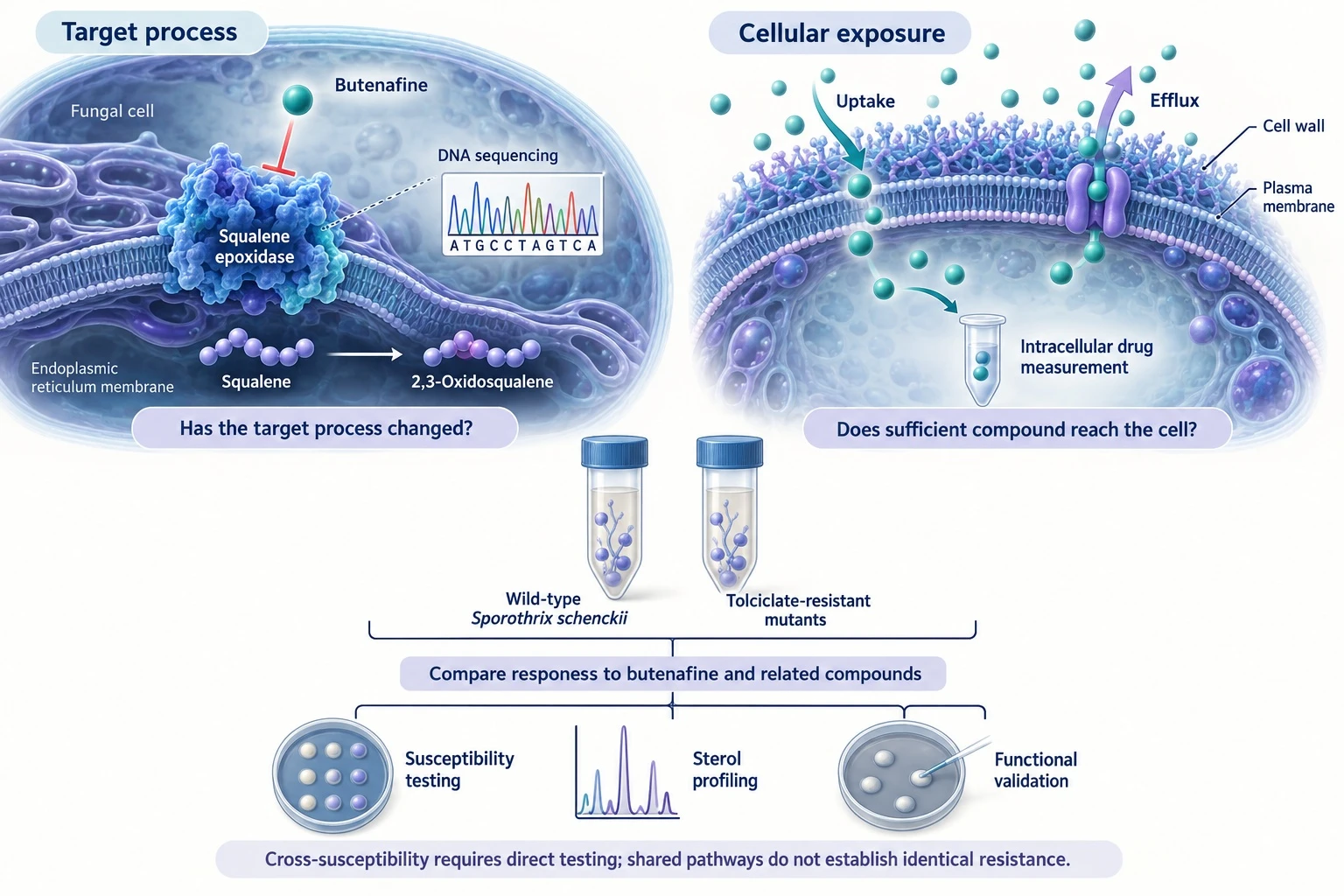
Resistance research should address two complementary questions: Has the target process changed, and does sufficient active compound reach the fungal cell?
Early work compared wild-type Sporothrix schenckii with tolciclate-resistant mutants and examined their responses to butenafine and related compounds. The findings supported a relationship between their target processes and the importance of squalene epoxidation inhibition in susceptible fungi.
Physicochemical Properties
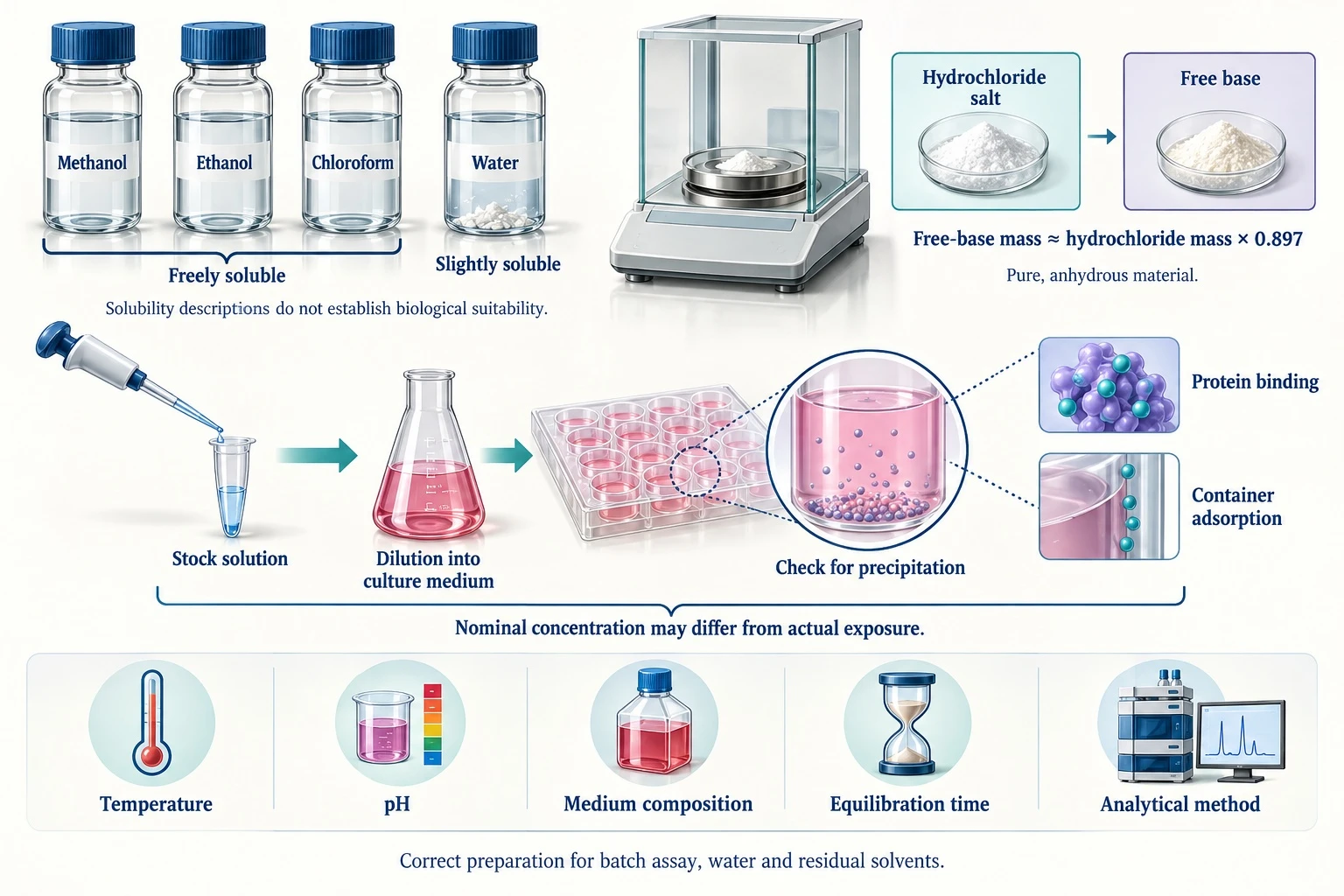
Official product information describes butenafine hydrochloride as freely soluble in methanol, ethanol, and chloroform, but only slightly soluble in water. These descriptions characterize its physical properties; they do not establish that each solvent is suitable for biological experiments or formulation development.
Solubility studies should specify temperature, pH, medium composition, equilibration time, and analytical method. Stock-solution dilution should be checked for precipitation, particularly after addition to culture medium.
Potential differences between nominal and actual exposure-including protein binding, container adsorption, and precipitation-should be investigated experimentally.
Salt and free-base quantities must also be distinguished. For pure, anhydrous material, the calculated hydrochloride-to-free-base mass conversion factor is approximately 0.897. Actual preparation should additionally account for batch assay, water, and residual solvents.
Distinguishing Release, Retention, and Permeation
Butenafine hydrochloride is relevant to studies of topical formulation release, skin distribution, and formulation comparability.
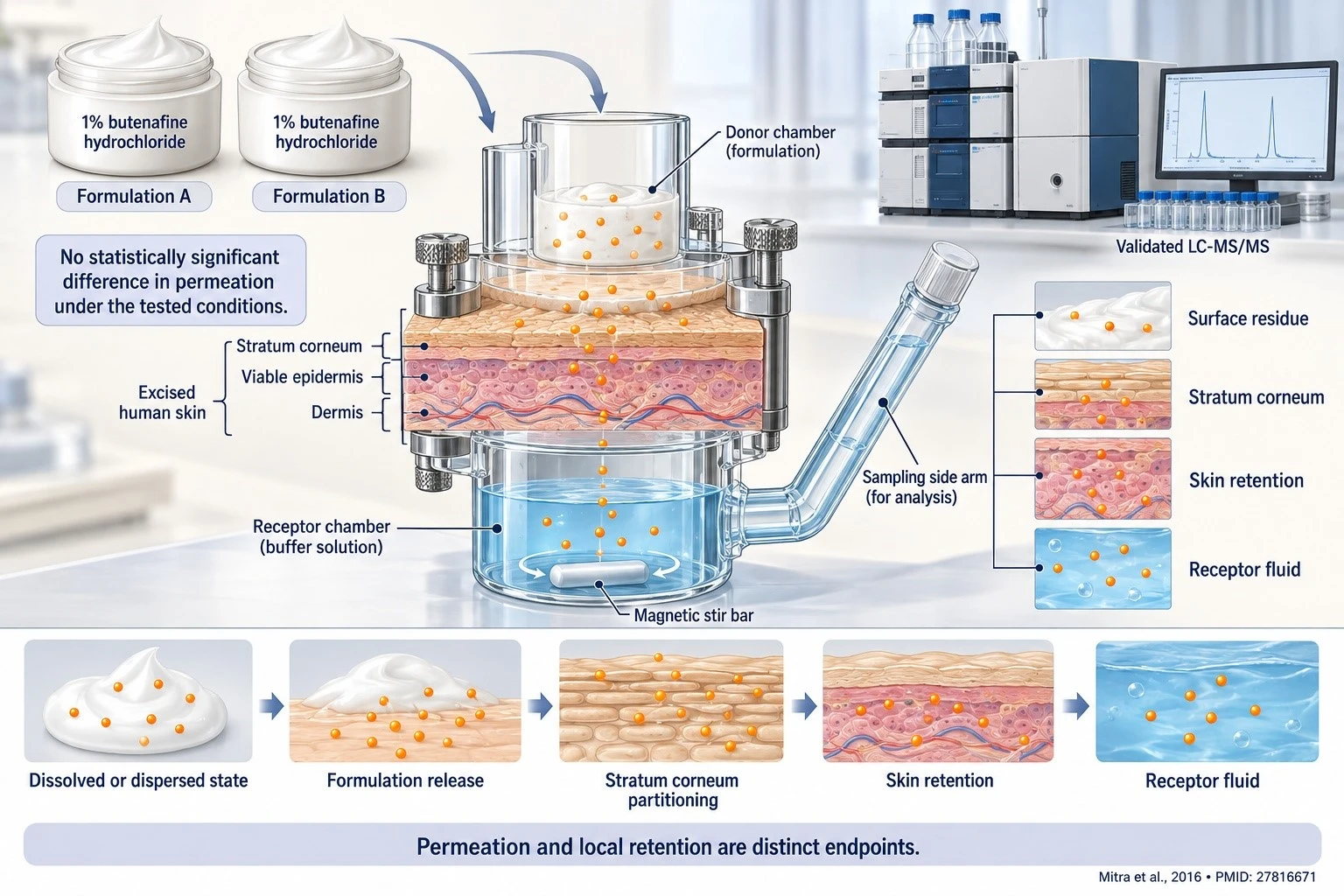
An original investigation used excised human skin and a validated LC-MS/MS method to compare two creams containing 1% butenafine hydrochloride. Under the tested conditions, the extent of skin permeation did not differ significantly between the formulations. pubmed.
The delivery process should be separated into distinct stages:
Dissolved or dispersed state → formulation release → stratum corneum partitioning → skin retention → appearance in receptor fluid.
FAQ
What is the most effective antifungal powder?
Antifungal powders containing 2% miconazole nitrate are widely considered the most effective option because they combine a proven antifungal agent with a moisture-absorbing base that eliminates the damp environment fungi need to grow.
Is it safe to use antifungal powder every day?
Yes, you can use antifungal powder daily.
Is butenafine hydrochloride a steroid?
No, butenafine hydrochloride is not a steroid.
Can I put antifungal powder on my feet?
Yes, you can put antifungal powder on your feet to treat or prevent conditions like athlete's foot.
If you are looking for a high-quality Butenafine Hydrochloride Powder manufacturer with whom you can establish a long-term, stable partnership, then Shaanxi Medibridge Biotech Co., Ltd. would be your best business partner. Don't hesitate to contact us at hi@medibridgeapi.com.
Hot Tags: butenafine hydrochloride powder, China butenafine hydrochloride powder manufacturers, suppliers, factory


